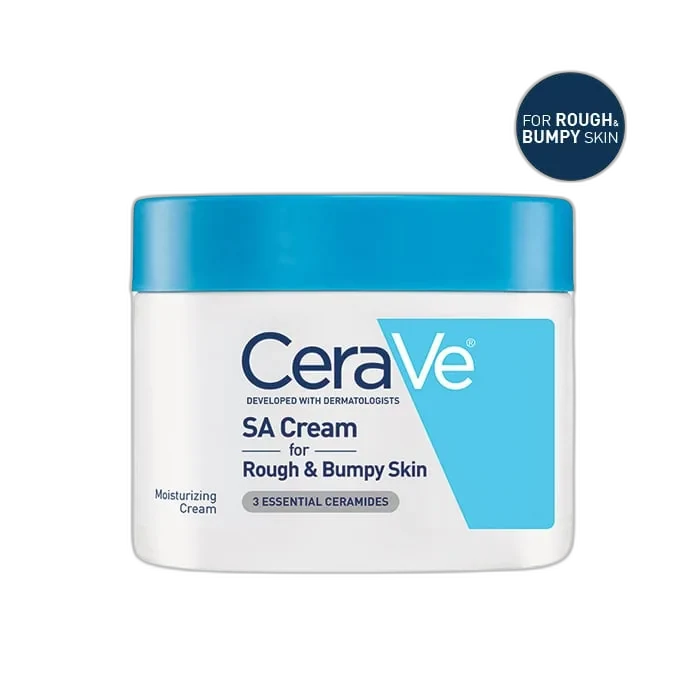
SA Smoothing Cream
KP Gold Standard
 Verified reviewer
Pros & cons.
- +Dual keratolytic action with BHA and AHA addresses rough, bumpy skin from two different pathways simultaneously
- +Ceramide MVE technology provides sustained barrier repair that prevents the dryness typical of acid-based body treatments
- +Visible smoothing of keratosis pilaris bumps within one to two weeks of consistent daily use
- +National Eczema Association Seal of Acceptance confirms safety for sensitive and eczema-prone body skin
- +Fragrance-free formulation avoids unnecessary irritation on already-compromised or bumpy skin
- +Niacinamide and vitamin D support long-term skin barrier health alongside the exfoliating acids
- +Exceptional value at approximately twenty-two dollars for a twelve-ounce jar lasting two to three months
- −Tub packaging with screw-off lid is less hygienic than tube or pump alternatives
- −Too occlusive for facial use due to the paraffin and mineral oil base
- −Can sting on broken skin, freshly shaved areas, or severely compromised barriers
- −Contains methylparaben and propylparaben which may concern some consumers
- −Thick texture may feel heavy in humid summer weather or with over-application
The full review.
Walk into any dermatology office in America and ask about keratosis pilaris — those persistent, rough, chicken-skin bumps that camp out on upper arms and thighs — and there is a reasonable chance you will walk out with “CeraVe SA Cream” scrawled on a sticky note. Not a prescription. Not a compounded formula. A twenty-two dollar tub from the drugstore aisle. That trajectory, from clinical recommendation to mass-market staple, tells you everything about what this product gets right.
The SA Smoothing Cream launched in 2013 as CeraVe’s answer to a problem that had frustrated dermatologists for years: patients with hyperkeratotic skin conditions needed effective chemical exfoliation, but the products available either stripped the barrier (pure acid formulas) or moisturized without actually addressing the keratin buildup (standard body creams). CeraVe’s solution was to stop treating exfoliation and hydration as separate steps.
The formula deploys two distinct keratolytic acids. Salicylic acid, the oil-soluble BHA, penetrates into hair follicles and pores to dissolve the keratin plugs from within — the structural cause of KP bumps. Ammonium lactate, an AHA salt, works at the skin surface to loosen the bonds between dead corneocytes, smoothing the rough texture from the outside in. This dual-pathway approach is the formulation’s central insight: attacking hyperkeratosis from both directions simultaneously produces faster, more thorough results than either acid alone.
But acids alone would leave the skin dry, irritated, and potentially worse off. This is where CeraVe’s ceramide complex earns its place. Three essential ceramides — NP, AP, and EOP — delivered through the brand’s patented MVE technology provide sustained barrier repair throughout the day. As the acids dissolve dead skin, the ceramides rebuild the lipid matrix underneath. Niacinamide amplifies this repair by stimulating the skin’s own ceramide production, and hydrolyzed hyaluronic acid draws moisture into the newly revealed layers. Cholecalciferol — vitamin D — supports normal cell differentiation, nudging the skin toward healthier keratinization patterns.
Texture
The texture is unmistakably a rich body cream. Thick and white, it has the density of a therapeutic moisturizer rather than the lightness of a daily lotion. It spreads more easily than its appearance suggests and absorbs into a satin finish that is not greasy, though heavy-handed application can leave a noticeable film. The key is restraint: a thin, even layer on each affected area, given a minute to sink in before dressing.
Results are genuinely impressive for a drugstore product. Within three to five days of daily use, chronically rough patches on the arms begin to feel smoother under the hand. By the end of the second week, the visible bumps of keratosis pilaris start to flatten, and the redness that often accompanies them fades. Full transformation — from sandpaper to smooth — typically takes four to six weeks, and the improvement is maintained as long as you keep using the cream. Stop, and the bumps return. KP is managed, not cured, and this cream manages it exceptionally well.
There is an important caveat about where to use it. Despite some online advice to the contrary, this cream was not designed for the face. The paraffin and mineral oil base creates an occlusive layer that most facial skin types will find too heavy, and the combination of two exfoliating acids in a leave-on format is more intensity than most faces need or can tolerate daily. CeraVe makes dedicated facial SA products with lighter vehicles — reach for those instead.
Packaging
The tub packaging is the product’s most obvious weakness. Scooping cream from an open jar with fingers introduces bacteria with every use, and the format is awkward in a shower setting. A pump tube would be a meaningful upgrade, and it is surprising that CeraVe has not offered one in the thirteen years since launch. The inclusion of methylparaben and propylparaben as preservatives will bother some consumers, though both remain well within safety guidelines established by regulatory agencies.
A mild stinging sensation on first application is normal, particularly on areas with active KP or compromised skin. It fades within minutes for most users and diminishes over the first week of regular use as the barrier strengthens. Severe or persistent stinging suggests the barrier may need repair time before introducing acids, and switching to a plain ceramide moisturizer for a week before retrying is a sensible approach.
The value equation is straightforward and favorable. A twelve-ounce tub at twenty-two dollars contains enough product for two to three months of daily arm and leg application. The only over-the-counter products that compete in terms of dual-acid keratolytic efficacy are prescription-grade ammonium lactate creams that cost more and lack the ceramide repair system. This cream offers clinical-level results in a consumer-friendly format at a consumer-friendly price.
The SA Smoothing Cream does not try to be everything to every skin concern. It is a specialist — a cream built to solve a specific problem that affects roughly forty percent of the adult population — and it solves that problem with a formulation sophistication that belies its drugstore shelf placement. When dermatologists keep recommending a twenty-two dollar body cream instead of writing prescriptions, the product has earned its reputation on merit.
Ingredient analysis.
Full INCI list
Water, Glycerin, Paraffin, Mineral Oil, Glyceryl Stearate, Cetearyl Alcohol, Triethanolamine, Salicylic Acid, Niacinamide, Cetyl Alcohol, Ammonium Lactate, Behentrimonium Methosulfate, PEG-100 Stearate, Corn Oil, Ceramide NP, Ceramide AP, Ceramide EOP, Carbomer, Dimethicone, Methylparaben, Sodium Lauroyl Lactylate, Cholecalciferol, Cholesterol, Phenoxyethanol, Disodium EDTA, Tocopherol, Propylparaben, Hydrolyzed Hyaluronic Acid, Phytosphingosine, Xanthan Gum
Skin match.
The science.
The Science
The SA Smoothing Cream treats keratosis pilaris using a dual keratolytic strategy backed by research. Salicylic acid is a lipophilic beta-hydroxy acid that penetrates oil-filled hair follicles where keratin plugs form. A 2015 study in Dermatology Research and Practice shows 5% salicylic acid achieved a 52% mean reduction in KP lesions over 12 weeks and improved skin barrier function via lower transepidermal water loss. That same study found 10% lactic acid — similar to the ammonium lactate in this formula — achieved a 66% reduction in KP lesions, suggesting the two acids in this cream offer additive benefits.
The ceramide delivery system fills a gap in traditional keratolytic therapy. The 2020 RESTORE Study in Dermatology and Therapy shows CeraVe's MVE ceramide formulations significantly improve skin barrier function in eczema-prone skin and reduce transepidermal water loss. The multivesicular emulsion technology uses concentric layers of ceramides to release lipids gradually for sustained barrier repair instead of a single burst.
A 2017 review in the Journal of Clinical and Aesthetic Dermatology confirms MVE ceramide-containing moisturizers manage skin disorders involving barrier dysfunction, such as atopic dermatitis. A 2020 study in the Journal of Drugs in Dermatology shows ceramide-containing moisturizers increase stratum corneum lipid levels in dry leg skin, which applies to using this cream on rough, depleted body skin.
Research in the British Journal of Dermatology (2000) shows niacinamide increases ceramide biosynthesis 4.1 to 5.5-fold dose-dependently. This amplifies the formula's barrier repair beyond the topically applied ceramides. This synergy between applied ceramides and stimulated ceramide production maintains skin barrier integrity during chemical exfoliation.
References
- Epidermal permeability barrier in the treatment of keratosis pilaris — Dermatology Research and Practice (2015)
- An Investigation of the Skin Barrier Restoring Effects of a Cream and Lotion Containing Ceramides in a Multi-vesicular Emulsion in People with Dry, Eczema-Prone Skin: The RESTORE Study Phase 1 — Dermatology and Therapy (2020)
- Multivesicular Emulsion Ceramide-containing Moisturizers: An Evaluation of Their Role in the Management of Common Skin Disorders — Journal of Clinical and Aesthetic Dermatology (2017)
- The Effect of a Ceramide-Containing Product on Stratum Corneum Lipid Levels in Dry Legs — Journal of Drugs in Dermatology (2020)
- Nicotinamide increases biosynthesis of ceramides as well as other stratum corneum lipids to improve the epidermal permeability barrier — British Journal of Dermatology (2000)
Dermatologist Perspective
Dermatologists recommend the CeraVe SA Cream as a first-line over-the-counter option for keratosis pilaris; it appears on more recommendation lists for this condition than almost any other product. Board-certified dermatologists note the dual keratolytic approach — combining BHA for follicular penetration with an AHA salt for surface smoothing — mirrors multi-agent prescription KP treatments in a gentler, daily format. The National Eczema Association Seal of Acceptance adds clinical credibility. Dermatologists advise applying the cream after showering when skin is warm and damp, and pairing it with the CeraVe SA Cleanser for a full exfoliation-and-repair routine.
Where it fits in your routine.
Apply a thin, even layer to clean, dry skin on rough or bumpy areas, such as the upper arms, thighs, chest, or back. Apply after showering when skin is warm and slightly damp to increase absorption. Wait one to two minutes for the cream to absorb before dressing. Use once or twice daily. If your skin is sensitive to acids, start once daily and increase to twice daily as tolerance builds. Do not apply to broken skin, freshly shaved areas, or open wounds. Use sunscreen on treated areas exposed to sunlight, as the exfoliating acids increase photosensitivity.
At approximately twenty-two dollars for twelve ounces, this cream provides clinical-grade keratolytic efficacy at a drugstore price. The dual-acid formula uses a full ceramide delivery system, niacinamide, hyaluronic acid, and vitamin D, which costs much more from specialty or professional brands. Walmart and Amazon sell larger sixteen and nineteen ounce sizes, which offer better per-ounce value for extensive body application. Because the primary competitor — prescription ammonium lactate creams — lacks the ceramide complex and costs more even with insurance, this cream is one of the best value options in the therapeutic body care category.
This works for anyone with keratosis pilaris, rough body skin, or persistent bumpy texture on arms, legs, or torso who wants one product to exfoliate and moisturize at once. It helps people who moisturized alone without addressing keratin buildup and those seeking dermatologist-recommended efficacy without a prescription.
People with very sensitive body skin or active eczema flares who cannot tolerate chemical exfoliants should start with a plain ceramide moisturizer. This is not a facial moisturizer; the occlusive base is too heavy for most facial skin types.
Product details.
fall winter Certifications National Eczema Association Seal of AcceptanceAllergy testedNon-comedogenicFragrance-freeHypoallergenic
The backstory.
CeraVe launched the SA Cream in 2013 to address a gap that dermatologists had long identified: patients with keratosis pilaris and rough body skin needed a product that could exfoliate aggressively enough to smooth texture but gently enough to use daily without wrecking their moisture barrier. The dual-acid formula with ceramide delivery became such a standard recommendation that it effectively created the category of barrier-friendly exfoliating body cream at the drugstore level.
About CeraVe
Established Brand (5–20 years)Dermatologists helped develop CeraVe in 2005. It is the number-one dermatologist-recommended skincare brand in the United States. Peer-reviewed research backs its patented MVE delivery technology and ceramide-based formulations, and several products carry the National Eczema Association Seal of Acceptance.
Common myths.
You should use the SA Cream on your face for acne
Some users apply this cream to acne-prone facial skin, but the formula targets the body. The paraffin and mineral oil base is too occlusive for most facial skin and can clog pores. CeraVe offers dedicated facial SA products with lighter bases.
Keratosis pilaris can be permanently cured with this cream
KP is a genetic condition. You can manage it, but not cure it. This cream smooths bumps and reduces redness with daily use, but the texture returns if you stop using the product. Consistent application maintains results.
FAQ.
How long does it take for CeraVe SA Cream to work on keratosis pilaris?
Most users notice smoother skin within the first week of daily use, with visible reduction in KP bumps by week two. The dual keratolytic action of salicylic acid and ammonium lactate in this formula works faster than single-acid alternatives. Full results typically develop over four to six weeks, and continued daily use is necessary to maintain the improvement since KP is a genetic condition that recurs without treatment.
Can I use CeraVe SA Cream on my face?
This cream is formulated for the body. Its paraffin and mineral oil base is occlusive and clogs facial pores, especially for oily or acne-prone skin. CeraVe offers facial products with salicylic acid — like the SA Smoothing Cleanser and the SA Lotion — that use lighter, non-comedogenic bases for facial skin.
Is the CeraVe SA Cream the same as AmLactin?
They target similar conditions but use different approaches. AmLactin relies primarily on ammonium lactate (an AHA) for exfoliation, while the CeraVe SA Cream combines salicylic acid with ammonium lactate for dual-pathway keratolysis. The CeraVe formula also includes three essential ceramides, niacinamide, and hyaluronic acid for barrier repair — ingredients that AmLactin does not contain. The CeraVe is generally considered the more complete formulation.
Does CeraVe SA Cream contain parabens?
This formula contains methylparaben and propylparaben as preservatives. Consumers often worry about parabens, but they are among the most well-studied and effective preservatives in cosmetic chemistry. The FDA and the European Commission's Scientific Committee on Consumer Safety have concluded that parabens at concentrations used in cosmetics are safe.
Can I use CeraVe SA Cream with retinol?
You can, but use caution on body areas where you apply both. The salicylic acid and ammonium lactate in this cream exfoliate heavily, so adding retinol increases irritation and dryness risks. If combining, alternate days or apply retinol in the evening and this cream in the morning. The ceramides and niacinamide in the formula buffer irritation.
Why does CeraVe SA Cream sting when I apply it?
Mild stinging upon initial application is normal. The salicylic acid and ammonium lactate contact skin with micro-disruptions in its barrier—common in KP, dry patches, or recently shaved skin. This sensation usually fades within minutes and decreases as the barrier strengthens with regular use. If stinging is severe or persistent, reduce application frequency or consult a dermatologist.
Is CeraVe SA Cream good for body acne?
Yes — salicylic acid penetrates pores to clear congestion and ammonium lactate smooths the skin surface. This makes the cream effective for mild to moderate body acne on the chest, back, and shoulders. The ceramide complex repairs the barrier without adding excess oil. For more severe body acne, use it with a benzoyl peroxide wash for a dual-treatment approach.
What the community says.
"Dramatically reduces keratosis pilaris bumps, often within one to two weeks"
"Effective for rough, bumpy skin on arms, legs, and body"
"Moisturizes deeply while exfoliating — a rare combination at this price"
"Fragrance-free and well-tolerated by most skin types"
"Absorbs well for its thickness without leaving a greasy residue"
"Affordable for a therapeutic body cream with multiple actives"
"Thick texture can feel heavy or greasy if over-applied in humid weather"
"Can pill or clump if layered over other products or applied to damp skin"
"Tub packaging is less hygienic than a tube or pump dispenser"
"Stings on broken skin, freshly shaved areas, or compromised barriers"
"Too occlusive for facial use on most skin types"