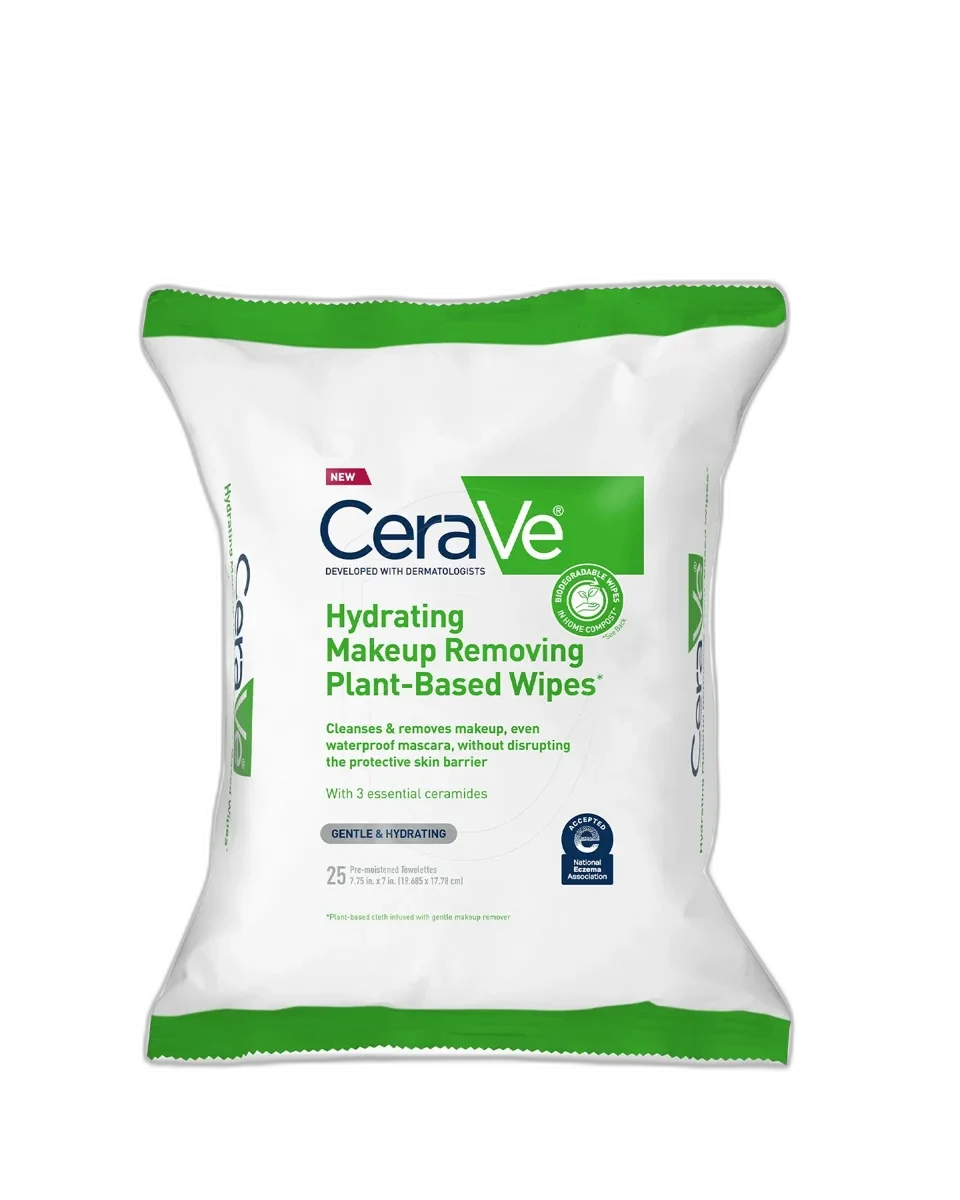
Makeup Removing Cleanser Cloths
Best-in-Class Makeup Wipe
 Verified reviewer
Pros & cons.
- +Ceramide-enriched formula actively supports barrier health during makeup removal
- +100% plant-based biodegradable fibers with compost certification reduce environmental impact
- +Effectively removes everyday makeup including waterproof mascara in one to two passes
- +Fragrance-free and ophthalmologist-tested for sensitive skin and the delicate eye area
- +National Eczema Association Seal of Acceptance validates suitability for reactive skin
- +Leaves skin feeling hydrated and comfortable — not tight, tacky, or stripped
- −Contains isopropyl myristate with high comedogenicity potential for acne-prone users
- −At $0.54 per wipe, significantly more expensive per use than liquid cleansers
- −Packaging adhesive flap loses seal over time, causing wipes to dry out
- −Mechanical friction from wiping can irritate delicate skin with daily use
- −Some users report stinging around the eye area from makeup-dissolving solvents
- −Lost niacinamide and hyaluronic acid in the reformulation from the original version
The full review.
Let’s address the bathroom reality: dermatologists generally dislike makeup wipes. Mechanical friction tugs at delicate skin, solvent-soaked cloths can leave residue that clogs pores, and convenience encourages skipping the proper cleanse skin needs. Millions still reach for a wipe after a long day when a double-cleanse routine feels as tedious as a tax audit.
CeraVe’s Makeup Removing Cleanser Cloths — sold as Hydrating Makeup Removing Plant-Based Wipes after a 2021 reformulation — attempt something unusual: making a wipe that removes makeup while supporting skin health. Including CeraVe’s signature three ceramides (NP, AP, EOP), cholesterol, and phytosphingosine turns these from a simple convenience into a barrier-aware product that tries to replace what wiping removes.
The shift from the original mineral oil-based cloths to the current isohexadecane-based plant-based wipes is both an upgrade and a trade-off. The biodegradable plant-based fibers (OK compost HOME certified by TUV Austria) improve environmental impact; most competing wipes use petroleum-derived polyester that stays in landfills for decades. However, the formula lost niacinamide and hyaluronic acid during the transition, streamlining the ingredient list but reducing the original’s skin-benefit complexity.
The wipes perform well at their primary job. Isohexadecane is an efficient, lightweight solvent that dissolves everyday makeup — foundation, concealer, powder, and even waterproof mascara — in one or two gentle sweeps. The wipes are well-saturated, soft, and large enough for most users to handle a full face of makeup with one wipe. Some reviewers tear wipes in half for lighter makeup days to save money.
CeraVe differentiates on post-wipe skin feel. While many wipes leave skin tight, tacky, or coated in a film, these leave skin clean and lightly hydrated. Glycerin provides immediate moisture, and the ceramides offer some barrier lipid replenishment, even if contact time is brief. This is not a full skincare step, but it feels better than dragging a solvent-soaked sheet across your face.
The fragrance-free formula and ophthalmologist testing make these suitable for sensitive skin and the eye area, with one caveat. Some users report stinging around the eyes, likely from the hexylene glycol and isopropyl myristate used to dissolve makeup. If you are sensitive, press the wipe gently against closed eyelids for a few seconds to let the solvents work, then wipe; reduced friction and solvent exposure usually helps.
Every wipe has limitations. The mechanical action of wiping — even with soft plant-based fibers — creates friction that can irritate skin, especially with daily use. This is physics, not a formula flaw, and why dermatologists prefer liquid cleansers.
Isopropyl myristate dissolves makeup effectively but has a high comedogenicity rating. If you are acne-prone and use these wipes nightly without a water cleanser, the residue may contribute to breakouts. This is true for most wipes containing similar solvents, not just CeraVe’s wipes.
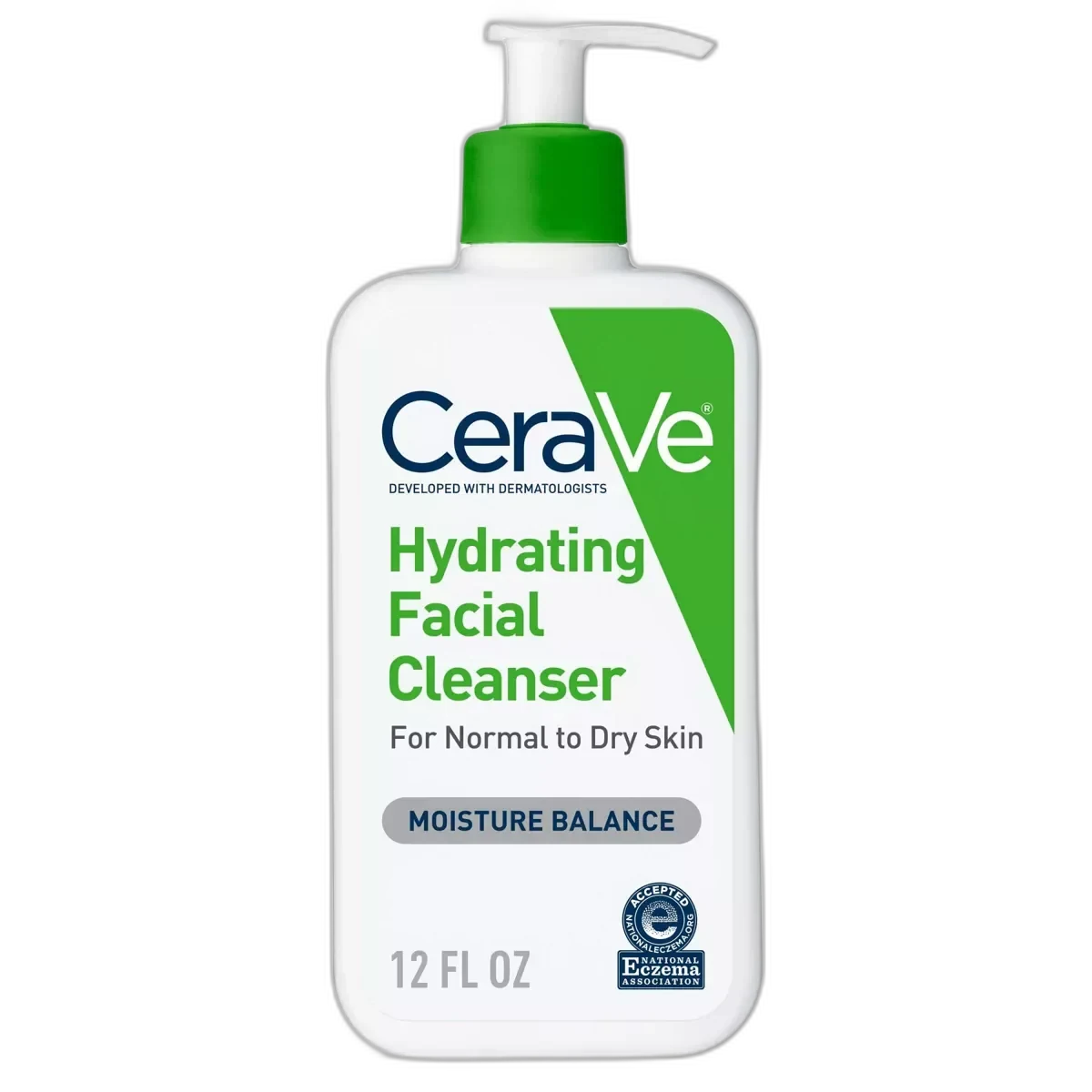
Per-use cost is the biggest practical limitation. At $13.49 for 25 wipes, you spend roughly $0.54 per use. A bottle of CeraVe Hydrating Micellar Water at $11.99 for 10 ounces provides dozens more uses for less money. A bottle of their Hydrating Cream-to-Foam Cleanser at $15.99 for 12 ounces lasts months. Wipes are expensive for daily use, though the cost is negligible for occasional convenience or travel.
The packaging has a flaw: the adhesive flap works well initially but loses its seal over time, which can dry out the wipes. Store the package upside-down and press the seal firmly after each use, or use them within a few weeks of opening.
The National Eczema Association Seal of Acceptance adds credibility for sensitive and eczema-prone skin, confirming the formula meets standards for this population. The biodegradable certification adds necessary environmental responsibility to the wipe category.
The verdict is nuanced. As makeup wipes go, these are among the best available; the ceramide inclusion, fragrance-free formula, and biodegradable material differentiate them from harsh, scented, synthetic alternatives. But a makeup wipe still has inherent trade-offs. Use them smartly: as a first-step remover before a proper cleanse, as a travel essential, or when you cannot avoid sleeping in makeup. In those cases, they earn their place in a skincare routine.
Formula
### PM routineIngredient analysis.
Full INCI list
Aqua/Water/Eau, Isohexadecane, Isopropyl Myristate, Glycerin, PEG-7 Glyceryl Cocoate, Hexylene Glycol, Dicaprylyl Ether, Ceramide NP, Ceramide AP, Ceramide EOP, Carbomer, Triethyl Citrate, Sodium Hydroxide, Sodium Lauroyl Lactylate, Cholesterol, Piroctone Olamine, Tocopherol, Hydroxyacetophenone, Caprylyl Glycol, Citric Acid, Trisodium Ethylenediamine Disuccinate, Phytosphingosine, Xanthan Gum, Acrylates/C10-30 Alkyl Acrylate Crosspolymer, Benzoic Acid
Skin match.
The science.
The Science
Makeup removal wipes present a unique dermatological challenge: they must dissolve and mechanically remove cosmetic products while minimizing the disruption this process causes to the stratum corneum. Research on the impact of cleansing wipes on skin barrier function has shown that the combination of solvent exposure and mechanical friction can deplete barrier lipids and increase transepidermal water loss.
The inclusion of ceramides NP, AP, and EOP in this formula is an evidence-based mitigation strategy. Man et al. (Journal of Investigative Dermatology, 1996) demonstrated that topical application of physiological lipid mixtures containing ceramides, cholesterol, and fatty acids accelerates barrier recovery. While the contact time during wipe use is brief, the lipid deposition provides partial replacement of the barrier lipids disrupted during the cleansing process — a meaningful advantage over wipes that only strip without replenishing.
Isohexadecane functions as the primary makeup-dissolving solvent — a lightweight hydrocarbon emollient with excellent spreading properties and low irritation potential. It dissolves oil-based and wax-based cosmetic components through a like-dissolves-like mechanism, removing makeup efficiently without the need for aggressive surfactants. Isopropyl myristate enhances this effect by improving the solvent's penetration into cosmetic films on the skin surface.
Glycerin, present as a humectant, counteracts the dehydrating effects of the cleansing process by drawing moisture to the skin's surface. This addresses one of the primary complaints about makeup wipes — the tight, dry sensation after use.
The plant-based fiber material represents an environmental consideration rather than a dermatological one, though the softer, more pliable plant fibers may generate slightly less mechanical friction than rigid synthetic alternatives — a potential secondary benefit for skin comfort.
References
- Optimization of physiological lipid mixtures for barrier repair — Journal of Investigative Dermatology (1996)
Dermatologist Perspective
Dermatologists generally advise against makeup wipes as a sole cleansing method due to concerns about mechanical friction and incomplete cleansing. However, board-certified dermatologists acknowledge that convenience products have a role in realistic skincare routines — and when a patient is choosing between sleeping in their makeup or using a wipe, the wipe is always the better option. CeraVe's ceramide-infused formulation is frequently cited as the preferred choice when wipes are necessary, as the barrier lipid replenishment partially offsets the disruption caused by the wiping process. Dermatologists recommend using these as a first-step makeup remover followed by a water-based cleanser for optimal skin health, reserving standalone wipe use for situations where proper cleansing isn't feasible.
Where it fits in your routine.
Remove one wipe and reseal the package immediately. Sweep the wipe across your face from the center outward. For eye makeup, press the wipe against closed eyelids for 10-15 seconds to dissolve mascara and liner before wiping; this reduces friction and stinging. Use a second wipe for heavy makeup. For best results, follow with a water-based cleanser to remove remaining residue. Apply moisturizer after cleansing. Dispose of the used wipe in waste — the fibers are home-compostable, but makeup residue on the used wipe may contain non-compostable components.
At $13.49 for 25 wipes ($0.54 per use), these cost more than most makeup wipes. However, the ceramide formula, biodegradable material, and NEA certification justify the premium over generic alternatives. The 3-pack (75 wipes, approximately $30-35) has better per-wipe value. Still, wipes cost more than CeraVe's liquid cleansers, which cost $12-16 for months of daily use. CeraVe's dermatologist-developed credentials mean the price reflects formulation quality. Buy them for travel, convenience, and first-step removal, not as an everyday cleanser replacement.
Use these for travel, on-the-go needs, or nights without a full cleansing routine. They work well for sensitive skin types who find most wipes too harsh or scented. They work as a first-step makeup remover for double-cleansing routines.
Isopropyl myristate may cause issues for acne-prone skin — use a micellar water or oil cleanser instead. If you use wipes as your only cleanser every night, a liquid cleanser works better and costs less over time. Those prioritizing minimal environmental impact should note even biodegradable wipes are single-use products.
Product details.
All Year Certifications non-comedogenicallergy-testedfragrance-freeophthalmologist-testednational-eczema-association-sealok-compost-home-certified
The backstory.
CeraVe originally launched these as Makeup Removing Cleanser Cloths around 2015 with a mineral oil-based formula that included niacinamide and hyaluronic acid. The product was reformulated around 2021-2022 into the current Hydrating Makeup Removing Plant-Based Wipes — swapping mineral oil for isohexadecane and upgrading to 100% plant-based biodegradable fibers. The ceramide core remained, but the reformulation prioritized environmental sustainability and lighter texture over the richer original formula.
About CeraVe
Established Brand (5–20 years)Dermatologists helped develop CeraVe in 2005. It is the #1 dermatologist-recommended skincare brand in the U.S. Peer-reviewed research backs its formulations, and multiple products carry the National Eczema Association Seal of Acceptance.
Common myths.
Makeup wipes harm your skin and are bad to use.
Makeup wipes cause issues through mechanical friction and the tendency to skip a proper cleanser afterward. This product uses soft plant-based fibers to reduce friction and ceramide-based barrier support to address the second issue. Wipes work as a reasonable part of a skincare routine when used as a first-step remover followed by a water cleanser, or occasionally as a standalone when washing is not possible.
All makeup wipes are identical; ingredient differences do not matter.
Formula matters. Many competing wipes use harsh surfactants, fragrance, and drying alcohols that increase irritation from wiping. This formula uses gentle solvents and ceramides for barrier protection. It is fragrance-free. This provides a different experience and outcome for the skin than discount wipes.
What the community says.
"Effectively removes all makeup including waterproof mascara in one or two passes"
"Leaves skin feeling soft and hydrated rather than stripped or tight"
"Gentle enough for sensitive skin and the delicate eye area"
"Fragrance-free — appreciated by those sensitive to scented wipes"
"Large wipe size can be torn in half for extended use"
"Plant-based biodegradable material for environmentally conscious users"
"Some users report burning or stinging around the eye area"
"Wipes dry out if the package flap isn't sealed properly after each use"
"Contains isopropyl myristate which may cause breakouts in acne-prone users"
"At $0.54 per wipe, significantly more expensive per use than liquid cleansers"
"Requires rubbing that can irritate delicate skin over time"