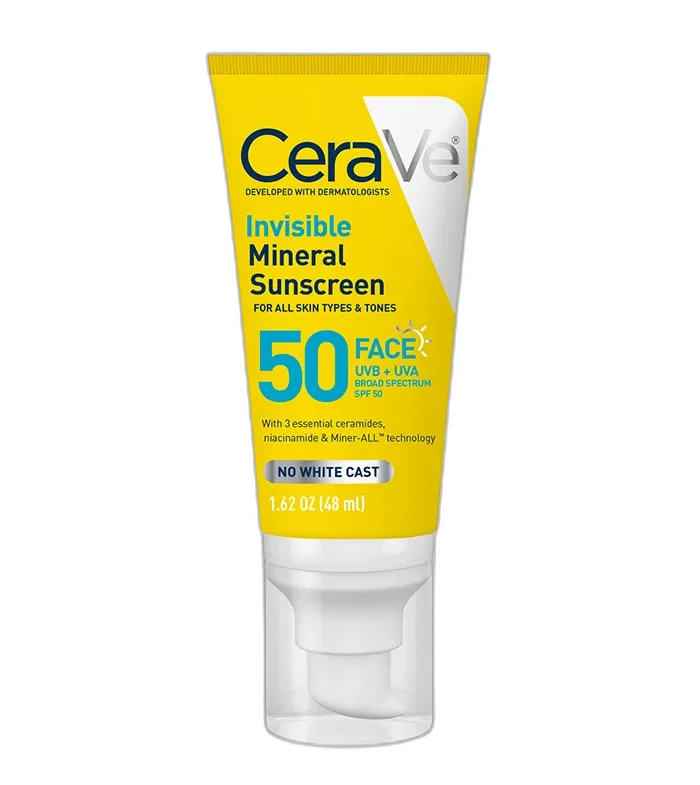
Invisible Mineral Sunscreen SPF 50
Sensitive-Skin Mineral MVP
 Verified reviewer
Pros & cons.
- +High 15.35% zinc oxide content for genuine SPF 50 protection
- +Ceramides and niacinamide support sensitive and compromised skin
- +Significantly less white cast than older mineral formulas
- +Lightweight satin finish blends into a natural look
- +Fragrance-free and pregnancy-safe
- +Excellent value compared to premium mineral SPFs
- +Works well for post-procedure and rosacea-prone skin
- −Still leaves a slight cast on the deepest skin tones
- −Small 1.75 oz tube doesn't last long with proper use
- −Can pill under silicone-heavy primers or makeup
- −Slightly thicker initial texture than chemical sunscreens
The full review.
Mineral sunscreens have a reputation problem that is mostly earned. For decades, drugstore options were thick white pastes in unattractive squeeze tubes. To get a meaningful SPF rating, users had to accept a ghostly cast that lasted until washing. Newer mineral SPFs—Australian imports, Korean innovations, and American outliers—fix most of these issues but cost $30-$50 per bottle. CeraVe’s contribution takes those high-end formula breakthroughs and delivers them for under $16.
The formula centers on its active ingredient ratio: 15.35% zinc oxide and 2.66% titanium dioxide. This zinc concentration is unusually high for a drugstore mineral sunscreen; most competitors stop at 10-12% to avoid increased white cast and chalky drag. CeraVe uses a silicone-rich base (cetyl PEG/PPG-10/1 dimethicone, isohexadecane, polyhydroxystearic acid) to disperse mineral particles into a slip system. This blends down significantly after thirty seconds of application. It is not literally invisible—marketing claims oversell slightly on darker skin tones—but it performs better than most American mineral SPFs in this price range and differs from the white wall of older zinc sunscreens.
The supporting ingredient list is more interesting than the cosmetic engineering. Most cheap mineral sunscreens use inactive ingredients as filler: silicones, water, and a preservative. CeraVe includes niacinamide, three ceramides via MVE technology, glycerin, sodium hyaluronate, and tocopherol. These are not technically necessary for sun protection, but they address the three main complaints regarding mineral SPFs: dryness, tightness, and irritation on compromised skin. This formula specifically avoids the tightness felt by users of basic zinc sunscreens by lunchtime.
The texture is a lightweight white lotion that pumps thicker than it looks but blends to a satin finish. It lacks the dewy, glow-pushing finish of some Korean chemical SPFs, but it is not flatly powdery or matte. Skin looks like skin. It has no scent beyond a faint zinc-mineral note that fades within a minute. Most users report it works fine under makeup, though silicone-heavy primers can cause pilling. To fix this, wait a few minutes after application before layering, or skip the primer entirely.
For sensitive skin—including rosacea, eczema-prone skin, post-procedure recovery, and reactive skin that flares from chemical filters—this is an easy drugstore recommendation. Mineral filters sit on the skin’s surface instead of absorbing, avoiding the systemic irritation pathways some people experience with avobenzone or octocrylene. The added ceramides and niacinamide actively soothe daily low-grade inflammation in sensitive skin. Dermatologists routinely recommend this product category for patients in the first weeks after a chemical peel, microneedling, or laser treatment, and this CeraVe formula fits that role.
Weak points involve size and skin tone reach. The 1.75 oz tube is small for daily use; at proper application amounts (two finger-lengths for face and neck), it lasts six to eight weeks. Travelers will like the 1.62 oz travel size, but a larger primary size would help. While the white cast is meaningfully reduced, it remains on the deepest skin tones. People with very deep complexions will see a faint lightening that requires careful blending, mixing with a tinted moisturizer, or choosing a tinted mineral SPF instead.
Value is a clear win. Comparable mineral sunscreens with high zinc and barrier-support ingredients usually start around $35. At $16, this drugstore product does not feel like a compromise; it feels like a deliberate choice. For those buying premium mineral SPFs due to drugstore frustration, this is worth swapping in. For those who avoided mineral sunscreen because they expected white, chalky, or uncomfortable formulas, this is a reasonable way to find out they were wrong.
Ingredient analysis.
Full INCI list
Active Ingredients: Titanium Dioxide 2.66%, Zinc Oxide 15.35%. Inactive Ingredients: Water, Caprylic/Capric Triglyceride, Niacinamide, Glycerin, Cetyl PEG/PPG-10/1 Dimethicone, Polyhydroxystearic Acid, Silica, Dimethicone, Isohexadecane, PEG-10 Dimethicone, Cetearyl Alcohol, Ceramide NP, Ceramide AP, Ceramide EOP, Carbomer, Behentrimonium Methosulfate, Tocopherol, Sodium Hyaluronate, Sodium Lauroyl Lactylate, Cholesterol, Phenoxyethanol, Disodium EDTA, Triethoxycaprylylsilane, Phytosphingosine, Xanthan Gum, Citric Acid, Caprylyl Glycol, Ethylhexylglycerin
Skin match.
The science.
The Science
A sunscreen's protective claim depends on its UV filter system. This formula uses two of the most studied filters in the FDA monograph. Zinc oxide at 15.35% provides the main broad-spectrum coverage. Zinc is the only approved US filter that covers the full UVA range (320-400 nm) and most of the UVB range alone; this allows high-zinc formulas to reach SPF 50 without chemical filters. Titanium dioxide at 2.66% adds UVB coverage and improves the cosmetic finish via its higher refractive index. Both filters work mostly by absorbing UV radiation and slightly by reflection, which corrects the inaccurate "physical sunblock" label. The supporting ingredients do work that pure-filter sunscreens skip. Niacinamide has studied photoprotective and barrier-supporting effects: a 2010 study in the British Journal of Dermatology showed 4% niacinamide reduced UV-induced inflammation and supported DNA repair in irradiated skin. The three-ceramide blend (NP, AP, EOP) targets the stratum corneum lipid matrix. A 2019 study in the Journal of Clinical and Aesthetic Dermatology showed ceramide-containing products improved barrier function in patients with sensitive and compromised skin. High-zinc protection plus barrier-supporting actives makes this formula appropriate for post-procedure use, when skin needs UV defense and active recovery support. MVE delivery technology, used throughout CeraVe's line, began as a pharmaceutical sustained release method and now delivers ceramides to extend lipid availability after application.
References
- Niacinamide: A B vitamin that improves aging facial skin appearance — Dermatologic Surgery (2005)
Dermatologist Perspective
Dermatologists often recommend mineral sunscreens for patients with sensitive skin, rosacea, melasma, and post-procedure recovery. This CeraVe formula is a budget-friendly option that maintains formulation quality. Board-certified dermatologists note the 15.35% zinc oxide concentration is high for drugstore mineral SPFs, providing genuine SPF 50 protection instead of the borderline ratings seen in lower-zinc products. The niacinamide and ceramides are also appropriate for the post-procedure window, when the skin barrier recovers and chemical filters might cause stinging or irritation. Dermatologists generally favor mineral filters for pregnant patients because they are the most well-studied option for systemic safety. This formula's lack of chemical UV filters and fragrance makes it a common recommendation for that group too.
Where it fits in your routine.
Apply this as the final morning step, after moisturizer and before makeup. Use two finger-lengths' worth for your face and neck; under-application causes mineral sunscreens to underperform. Squeeze the product onto your fingertips, dot it across your face, and rub in with circular motions for 30-60 seconds until the white cast blends. Wait 2-3 minutes before applying makeup to prevent pilling. Reapply every two hours during direct sun exposure, after swimming, or after heavy sweating. Cover your ears, neck, and the tops of your hands.
At about $16 for the 1.75 oz tube, this offers premium-tier formulation at drugstore pricing. Comparable mineral sunscreens with this zinc content, barrier support, and cosmetic refinement usually cost $30-$40. The $11-$13 travel size is a fair value for testing tolerance. The size is the caveat — at proper application amounts, the 1.75 oz tube lasts six to eight weeks, so the annualized cost exceeds the sticker price. Even so, the per-ounce price is lower than most premium mineral SPFs and the ingredient deck is more thoughtful. For sensitive skin types needing a daily mineral SPF without compromising price or formula quality, this is one of the best value plays in the category.
Sensitive skin types, people with rosacea or eczema, post-procedure recovery patients, pregnant or breastfeeding women, and budget-conscious shoppers want high-quality mineral SPF without premium prices. It works well for those who react to chemical filters or want a mineral option that ghosts less than older formulas.
Deep skin tones needing a cast-free sunscreen should use a tinted mineral version instead. Skip this if you want the dewy, glowy finish of Korean chemical sunscreens or need a larger size for body application. Heavy makeup wearers prone to pilling may prefer a chemical SPF.
Product details.
Lightweight white lotion that blends to a near-invisible satin finish
Fragrance-free with a faint zinc-mineral note
1. 75 oz squeeze tube, also available in 1.62 oz travel size
It applies white but blends down after 30-60 seconds of rubbing. Skin feels comfortable, not tight or greasy. First-time mineral sunscreen users may find it feels lighter than older zinc-only formulas.
Approximately 6-8 weeks with daily face and neck application
12 months
All Year
The backstory.
CeraVe expanded its mineral sunscreen lineup in 2024 in response to growing dermatologist demand for high-zinc options that wouldn't ghost on darker tones. The formulation borrows the brand's MVE ceramide delivery system to offset the dryness that high-zinc sunscreens typically cause, addressing one of the longest-standing complaints about mineral SPF.
About CeraVe
Legacy Brand (20+ years)Dermatologists helped develop CeraVe in 2005. It is one of the most clinically referenced drugstore skincare brands. Doctors widely recommend its sunscreen line for patients with sensitive or compromised skin.
Common myths.
Mineral sunscreens always leave a white cast.
This formula uses microfine zinc and titanium in a silicone base to reduce ghosting. It shows slightly on the deepest skin tones but works better than older mineral formulas.
Mineral SPF is less effective than chemical SPF.
With 15.35% zinc and 2.66% titanium dioxide, this product has an FDA-approved SPF 50 rating. This is the highest SPF claim allowed in the US. It provides full broad-spectrum protection.
FAQ.
Does it leave a white cast?
It leaves less residue than most mineral sunscreens, but it is not invisible on every skin tone. Light to medium tones see almost no cast after blending. Deeper skin tones see some lightening, though the high silicone content helps it disappear better than older zinc formulas.
Is it safe for sensitive skin and rosacea?
Yes — this is a strong choice for reactive skin. Mineral filters do not penetrate the skin like chemical filters. The fragrance-free formula uses ceramides and niacinamide to support compromised barriers.
Can I wear it under makeup?
Yes, but some users report pilling under heavy foundation. Let it set for 2-3 minutes after application before applying makeup, and avoid layering with silicone-heavy primers.
Is it reef safe?
Yes. Zinc oxide and titanium dioxide are reef-safer than oxybenzone and octinoxate, and this formula contains neither chemical filter.
How does it compare to CeraVe Hydrating Mineral Sunscreen?
The Invisible Mineral version is lighter, less moisturizing, and works under makeup. The Hydrating version is creamier and suits dry skin without makeup. Both use similar mineral filters.
Is it pregnancy-safe?
Yes. Mineral filters are the safest sunscreen option during pregnancy because they do not absorb systemically. This formula contains no chemical UV filters, retinoids, or essential oils.
What the community says.
"Genuinely less white than most mineral SPFs"
"Doesn't break out sensitive skin"
"Lightweight texture"
"Good value for SPF 50 mineral"
"Still leaves a slight cast on deep skin tones"
"Small tube size"
"Can pill under heavy makeup"