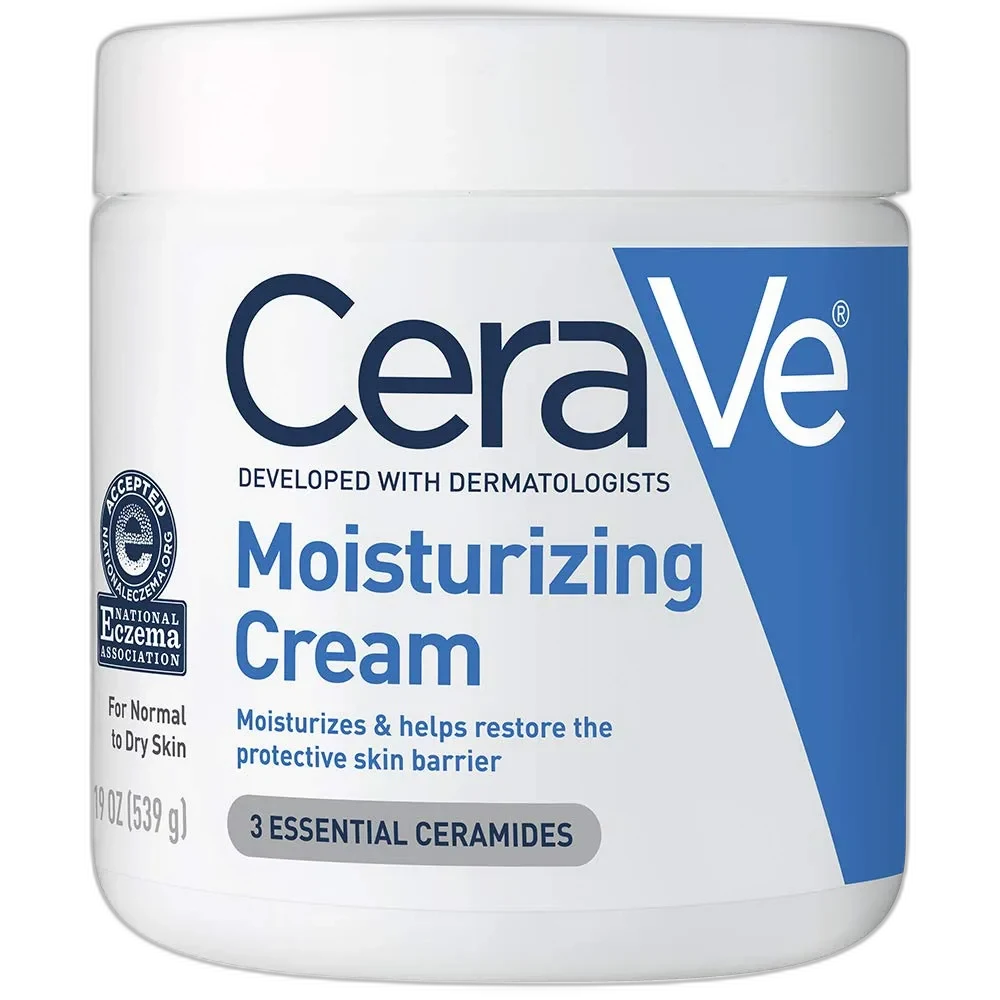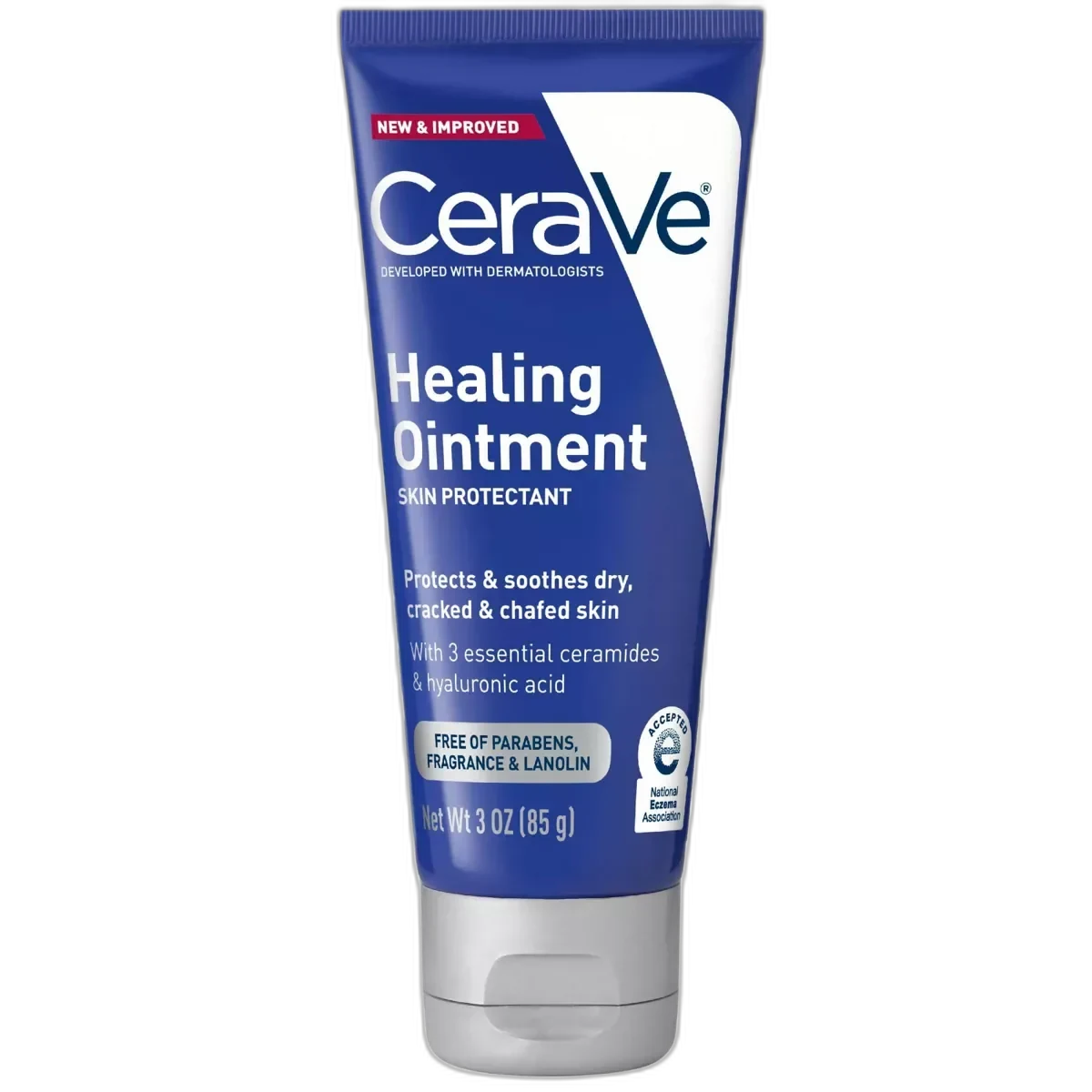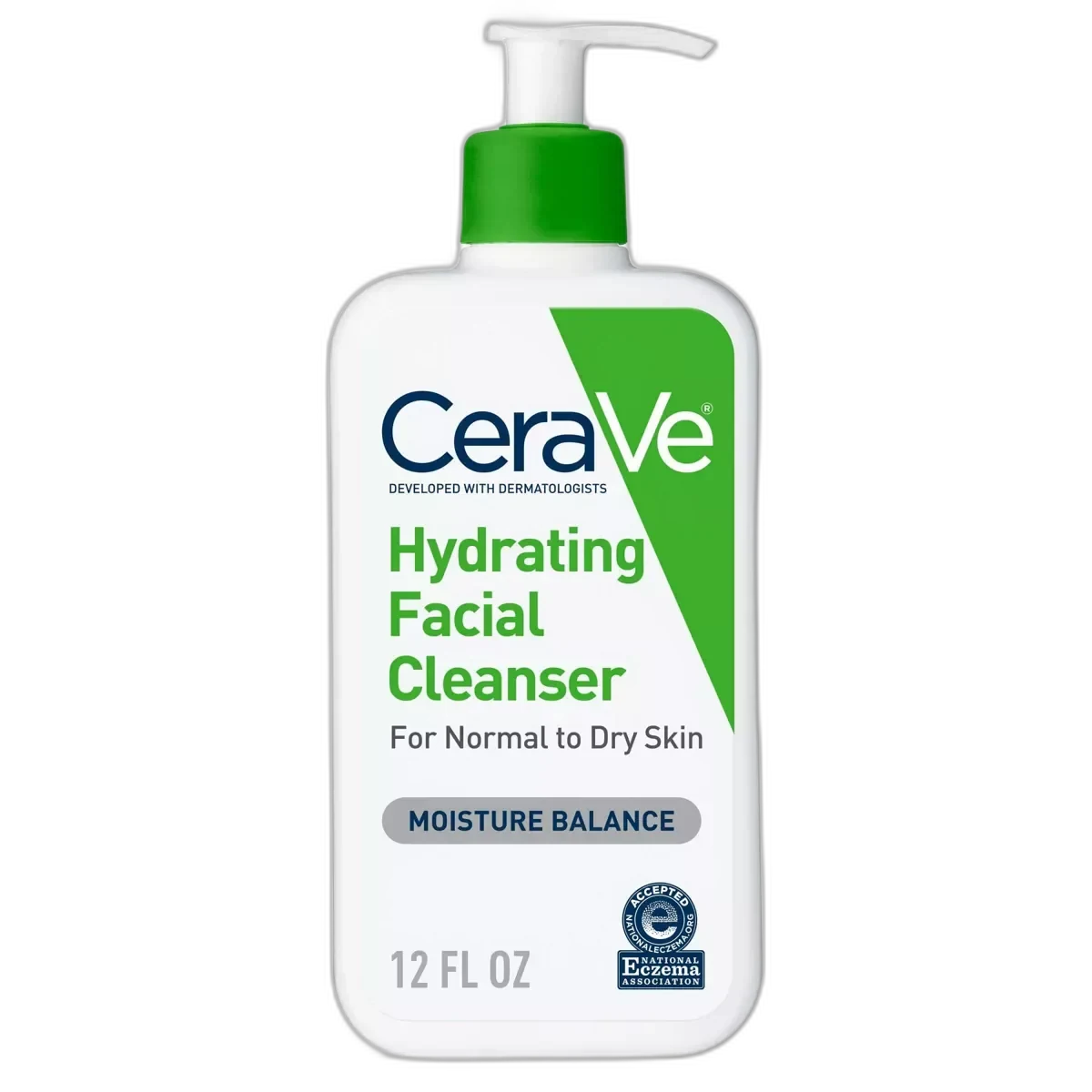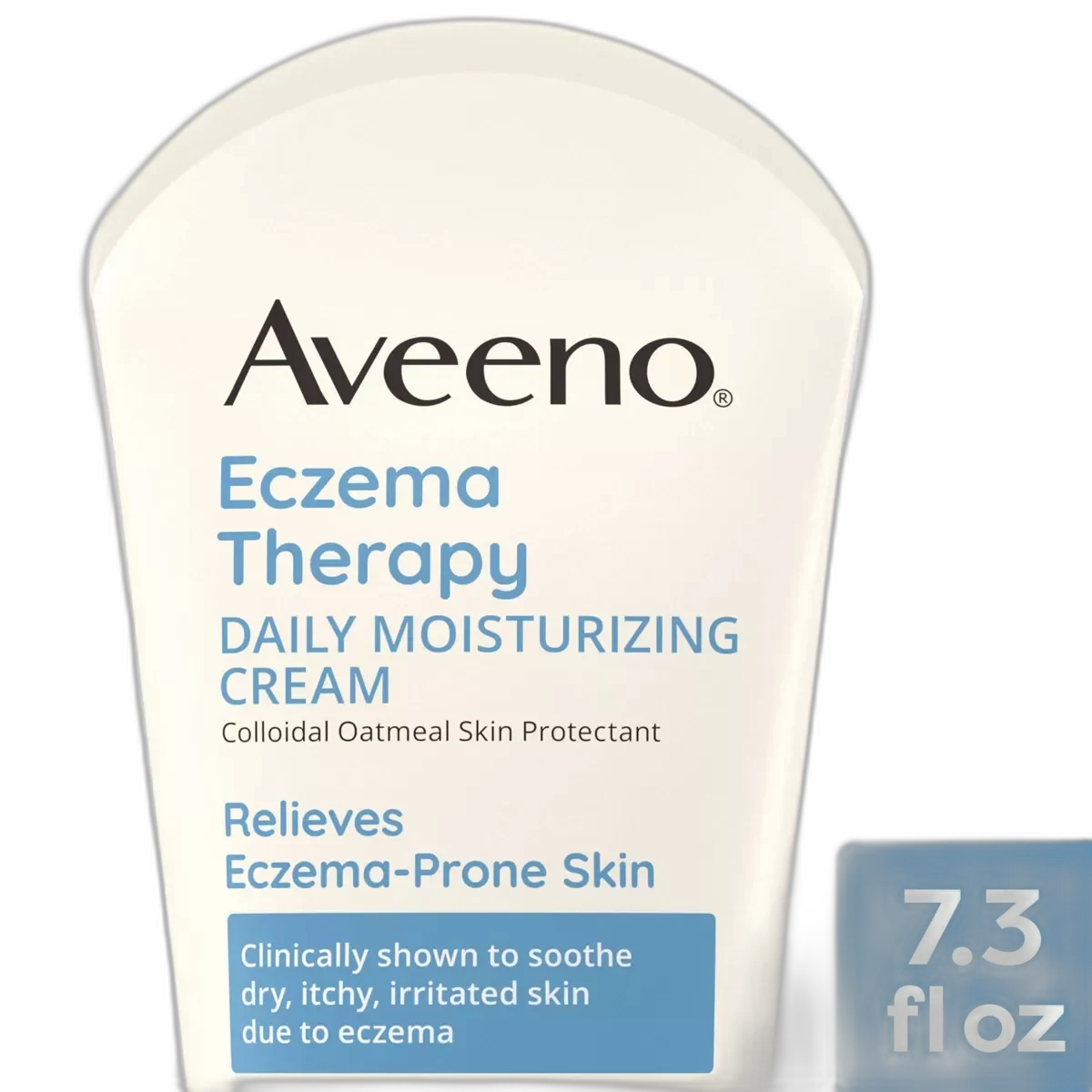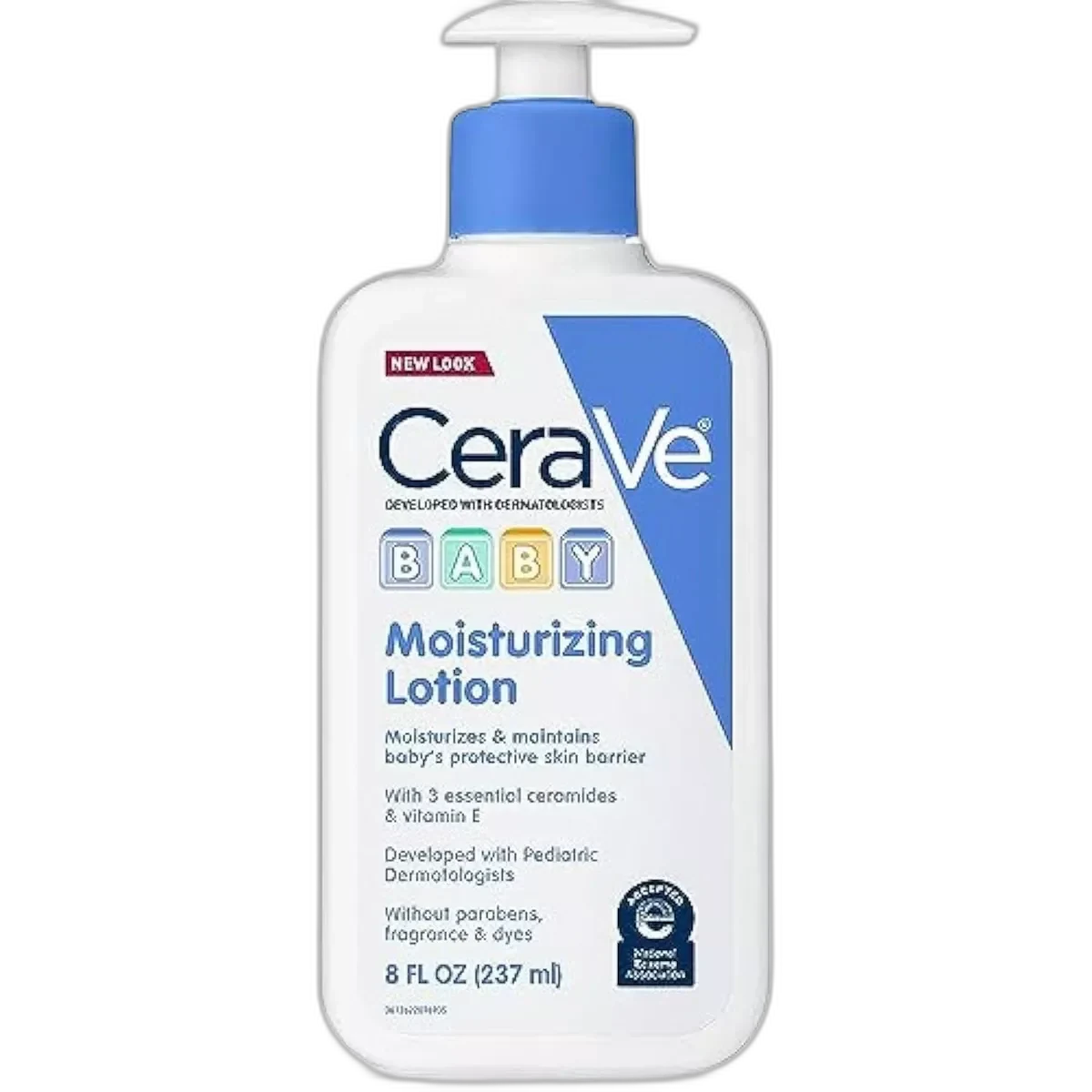
Baby Moisturizing Lotion
Pediatric Derm Gold Standard
 Verified reviewer
Pros & cons.
- +Three essential ceramides with MVE time-release technology — genuine barrier repair, not just surface moisture
- +Developed with pediatric dermatologists and backed by expert consensus on ceramides in infant skincare
- +National Eczema Association Seal of Acceptance validates suitability for eczema-prone skin
- +Outstanding value at under $10 for 8 oz of ceramide-based lotion
- +Lightweight, fast-absorbing texture with no greasy residue
- +Niacinamide boosts developing skin's own ceramide production alongside exogenous supply
- +Works well for adults too — popular as a gentle facial moisturizer for sensitive skin
- −May not be moisturizing enough for severe eczema or very dry winter skin (cream version better)
- −Contains fatty alcohols (cetearyl, cetyl) that some eczema-prone individuals react to
- −Not fungal acne safe due to fatty alcohol content
- −8 oz bottle can feel small for full-body application on a growing toddler
- −Rare reports of rash in some babies — individual sensitivity always possible
The full review.
Skincare hierarchies often place baby products below adult products in sophistication. Most baby lotion is basic and simple. CeraVe Baby Moisturizing Lotion changes that. Its ingredient list resembles a dermatologist’s prescription for barrier repair. A 2022 expert consensus links ceramide emollients to lower atopic dermatitis incidence in high-risk infants. This is not a basic baby lotion.
Infant skin differs structurally from adult skin. The stratum corneum is thinner, transepidermal water loss is higher, and ceramide levels are lower. The barrier is not fully formed. Most baby lotions use petroleum or mineral oil to create an occlusive seal; this reduces water loss but does not strengthen the barrier.
CeraVe uses a different approach. MVE (MultiVesicular Emulsion) technology delivers three essential ceramides—NP, AP, and EOP. This is the same patented time-release system in CeraVe’s adult Moisturizing Cream that dermatologists have recommended for nearly two decades. Concentric vesicles encapsulate the ceramides and open sequentially. This provides sustained release over 24 hours instead of a single burst. This engineering ensures continuous barrier repair rather than just one hour of activity.
The formula provides a complete lipid picture for developing skin. Ceramides need cholesterol and phytosphingosine as co-lipids to integrate into the stratum corneum’s lamellar structure. CeraVe includes both in a physiological ratio that mirrors healthy skin. Most ceramide-trend baby lotions include only one ceramide without supporting lipids, which lacks the necessary “mortar” for the “bricks.”
Niacinamide adds a layer most baby products omit. Research in the British Journal of Dermatology shows niacinamide increases skin ceramide biosynthesis 4.1- to 5.5-fold. This dual-source approach—supplying ceramides externally while stimulating production internally—supports natural barrier maturation.
Clinical evidence supports this for infants. Schachner et al. published a 2020 expert consensus in the Journal of Drugs in Dermatology recommending ceramide-containing moisturizers for neonatal and infant skin care. A 2022 consensus in the Italian Journal of Dermatology and Venereology reported that daily application of ceramide-containing emollient for three weeks during the neonatal period reduced atopic dermatitis incidence within the first year of life in a study of 321 high-risk infants. This prevents eczema rather than just treating dryness.
The product experience is straightforward. The lotion is slightly thick but spreads easily on baby or adult skin. It absorbs quickly without the greasy film common in baby lotions. The finish is lightweight and fast-absorbing, similar to an Asian beauty product. It is fragrance-free. Most users experience no stinging, redness, or reactions.
Allantoin and zinc citrate soothe the minor redness and irritation from drool, diaper changes, and environmental exposure. These gentle actives complement the barrier-repair mission without increasing irritation risk.
At $9.99 for 8 oz or $14.99 for the 16 oz pump bottle, the value is high. You get MVE ceramide technology, niacinamide, hyaluronic acid, and a complete lipid barrier system at a price comparable to petroleum-jelly baby lotions. The 16 oz pump is the better value for ongoing use and includes a locking mechanism to prevent spills and contamination.
One limitation: this is a lotion, not a cream. For babies with severe eczema, dry patches, or winter-ravaged skin, the lighter texture may lack enough occlusive power. CeraVe’s Baby Moisturizing Cream provides a thicker, more emollient formula for those needs. Use the lotion for daily maintenance and the cream for intensive rescue.
This product has crossover appeal. Many adults use this lotion as a facial moisturizer after discovering it while shopping for babies. It is lightweight, non-comedogenic, fragrance-free, and contains the same ceramide science as CeraVe’s adult line plus allantoin. Adults with sensitive skin who find CeraVe’s adult lotions too heavy often prefer this version.
The National Eczema Association Seal of Acceptance confirms the ingredient list: this product prioritizes infant skin barrier health and was developed with pediatric dermatologists. At under $10, it is one of the best values in CeraVe’s lineup and a scientifically underrated baby lotion on the drugstore shelf.
Ingredient analysis.
Full INCI list
Aqua/Water/Eau, Cetearyl Alcohol, Caprylic/Capric Triglyceride, Cetyl Alcohol, Phenoxyethanol, Niacinamide, Dimethicone, Allantoin, Potassium Phosphate, Ceramide NP, Ceramide AP, Ceramide EOP, Carbomer, Zinc Citrate, Behentrimonium Methosulfate, Sodium Lauroyl Lactylate, Sodium PCA, Arginine PCA, Sodium Hyaluronate, Cholesterol, Dipotassium Phosphate, Disodium EDTA, Tocopheryl Acetate, Tocopherol, Lauric Acid, Phytosphingosine, Xanthan Gum, Polyglyceryl-3 Diisostearate, Polysorbate 60, Ethylhexylglycerin
Skin match.
The science.
The Science
The CeraVe Baby Moisturizing Lotion's formulation rests on a growing body of evidence supporting ceramide-based emollients for infant skin care. A 2020 expert consensus by Schachner et al. in the Journal of Drugs in Dermatology (PubMed: 32845590) reviewed the importance of ceramide-containing skincare for neonates and infants, recommending that moisturizers containing barrier lipids help maintain the protective skin barrier with long-term benefits. Products should be fragrance-free and free of sensitizing agents — criteria this formula meets.
A follow-up 2022 consensus by Schachner et al. in the Italian Journal of Dermatology and Venereology (PubMed: 35005855) presented evidence from a study of 321 high-risk infants showing that daily application of ceramide-containing emollient for 3 weeks during the neonatal period reduced the incidence of atopic dermatitis within the first year of life. This positions ceramide-based moisturization not just as treatment but as potential prevention.
The niacinamide-ceramide synergy is supported by Tanno et al. (2000, British Journal of Dermatology, PubMed: 10971324), who demonstrated that niacinamide increases ceramide biosynthesis 4.1-5.5-fold dose-dependently, while also increasing free fatty acid and cholesterol synthesis — all components of the natural lipid barrier. This dual-source approach is particularly meaningful for infant skin where endogenous ceramide production is still developing.
The MVE delivery technology that differentiates CeraVe from competitors was evaluated by Zeichner and Del Rosso (2016, Journal of Clinical and Aesthetic Dermatology, PMC5300724), who confirmed its sequential vesicle-opening mechanism for sustained ceramide release and documented its clinical benefit in eczema management.
References
- A Consensus About the Importance of Ceramide Containing Skincare for Normal and Sensitive Skin Conditions in Neonates and Infants — Journal of Drugs in Dermatology (2020)
- Expert consensus on ceramides containing skincare in newborns and infants and potential mitigation of atopic dermatitis — Italian Journal of Dermatology and Venereology (2022)
- Nicotinamide increases biosynthesis of ceramides as well as other stratum corneum lipids to improve the epidermal permeability barrier — British Journal of Dermatology (2000)
- Multivesicular Emulsion Ceramide-containing Moisturizers: An Evaluation of Their Role in the Management of Common Skin Disorders — The Journal of Clinical and Aesthetic Dermatology (2016)
Dermatologist Perspective
Pediatric dermatologists consistently recommend this lotion as a first-line moisturizer for infant skin care, citing the three-ceramide formula as aligned with current understanding of neonatal skin barrier development. Board-certified dermatologists note that the complete lipid profile — ceramides plus cholesterol plus phytosphingosine — distinguishes this from baby lotions that list ceramides without the supporting co-lipids necessary for proper barrier integration. The National Eczema Association endorsement reflects formal evaluation for suitability with eczema-prone skin. Dermatologists advise applying to damp skin after bathing to maximize ceramide absorption and using the cream version for more severe dryness or eczema patches.
Where it fits in your routine.
Apply liberally to a baby's entire body after bathing while skin is slightly damp. This helps ceramides absorb better and locks in bath water moisture. Focus on dry areas: cheeks, arms, legs, and torso. Reapply throughout the day for dry patches. Adults using this as a facial moisturizer should apply a thin layer to clean skin after cleansing and any serums.
At $9.99 for 8 oz (or $14.99 for 16 oz), this ceramide-based lotion with MVE technology offers exceptional value. This is the same core technology in CeraVe products that cost $15-20 for similar volumes. For daily full-body application on an infant, the 8 oz lasts 2-3 months and the 16 oz lasts 4-6 months, making the annual cost approximately $30-50. Premium baby skincare brands charge $15-25 for 4-8 oz without comparable ingredient quality, so the value is outstanding. The 16 oz pump bottle has the best per-ounce value and works best for ongoing daily use.
Parents need a gentle, evidence-based moisturizer for infant and toddler skin, specifically for babies with eczema-prone or dry skin. The formula also works for adults with sensitive, reactive, or easily irritated skin who want the ceramide-niacinamide formula in the lightest, most gentle format CeraVe offers.
Parents of babies with very severe eczema need a thicker, more occlusive cream format. This is not ideal for those concerned about fungal acne triggers (fatty alcohols), though this concern applies mostly to adults rather than infants.
Product details.
This lightweight lotion dispenses slightly thick but spreads easily and absorbs fast. It leaves no greasy or sticky film—unusually elegant for a baby lotion.
Fragrance-free — essentially unscented with no detectable smell
8 oz white plastic bottle uses a flip-top cap and CeraVe Baby branding (light blue and white). The 16 oz version has a locking pump dispenser to prevent spills and contamination. Sturdy, practical packaging works for one-handed use during diaper changes.
This lotion with ceramide technology absorbs fast. Skin feels soft and smooth immediately without sticky or oily residue. It causes no stinging, irritation, or fragrance reaction. Baby skin looks hydrated and calm within minutes. Many parents see dry patches improve within the first few applications.
The 8 oz bottle lasts about 2-3 months if applied to an infant's full body daily. The 16 oz pump bottle lasts 4-6 months. Use duration depends on the baby's size and how often you apply it.
12 months
All Year
The backstory.
Launched in 2015, CeraVe Baby represented the brand's expansion from adult skincare into pediatric territory. Developed with pediatric dermatologists, it applied the same ceramide-MVE technology that had made CeraVe's adult Moisturizing Cream a dermatological staple, but in a lighter lotion format designed for the thinner, more permeable skin of infants. The product fills the gap between basic petroleum-jelly baby products and expensive specialty baby skincare brands, offering clinical-grade ceramide barrier support at drugstore pricing.
About CeraVe
Established Brand (5–20 years)Dermatologists co-developed CeraVe in 2005, and it launched in 2006. Pediatric dermatologists developed the Baby line, which launched in 2015. CeraVe is the #1 dermatologist-recommended skincare brand in the US and was acquired by L'Oréal in 2017. Peer-reviewed research and expert consensus statements on infant skin care back the brand's ceramide formulations.
Common myths.
Baby lotion needs to be thick and heavy to be effective
This lightweight lotion provides 24-hour moisturization using MVE time-release ceramide delivery instead of thick occlusion. The three-ceramide system integrates into the skin barrier rather than sitting on top of it. This provides more sustained and biologically meaningful hydration than heavier petroleum-based alternatives.
Adults do not use baby skincare products because these formulas do not address adult concerns.
This formula uses the same three ceramides, niacinamide, and hyaluronic acid found in CeraVe's adult products, plus allantoin and zinc citrate to soothe. Many adults with sensitive or reactive skin use this lotion as a facial moisturizer because the gentler formulation lacks irritants found in some adult products.
FAQ.
Can adults use CeraVe Baby Moisturizing Lotion on their face?
Yes — the formula has the same niacinamide, hyaluronic acid, and three ceramides found in CeraVe's adult products, plus zinc citrate and allantoin. Many adults with reactive or sensitive skin use this as a facial moisturizer because the baby formulation lacks certain ingredients in adult products that cause sensitivity. It is non-comedogenic and fragrance-free.
Myth
Is CeraVe Baby Moisturizing Lotion good for baby eczema?
Reality
Yes — it has the National Eczema Association Seal of Acceptance. The three-ceramide formula repairs the compromised barrier that underlies eczema. A 2022 expert consensus shows ceramide-containing emollients applied during the neonatal period reduce atopic dermatitis incidence in high-risk infants. Apply liberally to damp skin after bathing for best results.
What is the difference between CeraVe Baby Moisturizing Lotion and CeraVe Baby Moisturizing Cream?
The lotion absorbs fast and feels lighter, making it ideal for daily use and warmer climates. The cream is thicker and more occlusive, better for very dry skin, winter conditions, or severe eczema patches. Both use the same three essential ceramides and MVE technology. Use the lotion for general maintenance and the cream for intensive moisture.
Is CeraVe Baby Moisturizing Lotion safe for newborns?
Yes — pediatric dermatologists developed this product for infant skin. It is fragrance-free, paraben-free, dye-free, and has the National Eczema Association Seal of Acceptance. The three-ceramide formula supports the developing skin barrier. Patch-test on a small area first if your baby has known skin sensitivities.
Does CeraVe Baby Moisturizing Lotion contain parabens?
No — the formula uses phenoxyethanol and ethylhexylglycerin as preservatives instead of parabens. It is also free of fragrance, dyes, phthalates, and sulfates.
Is CeraVe Baby Moisturizing Lotion pregnancy safe?
Yes — the ingredient list lacks retinoids, salicylic acid, or other common pregnancy-unsafe ingredients. All components are gentle moisturizing and barrier-repair agents. This is a safe, fragrance-free body and face moisturizer for pregnant individuals.
What the community says.
"Extremely gentle and effective on sensitive baby skin — no irritation or rashes"
"Lightweight texture absorbs quickly without greasy residue on baby's skin"
"Visibly improves eczema-prone dry patches within days of consistent use"
"Fragrance-free formula that doesn't irritate or overwhelm baby's senses"
"Works well for the whole family — adults use it on face and body too"
"May not be moisturizing enough for very dry or winter-affected skin (cream version preferred)"
"Contains cetearyl alcohol which some eczema-prone individuals react to"
"8 oz bottle can feel small when using for full-body application on a growing toddler"
"Not fungal acne safe due to fatty alcohol content"
"Rare reports of rash in some babies — individual sensitivity varies"