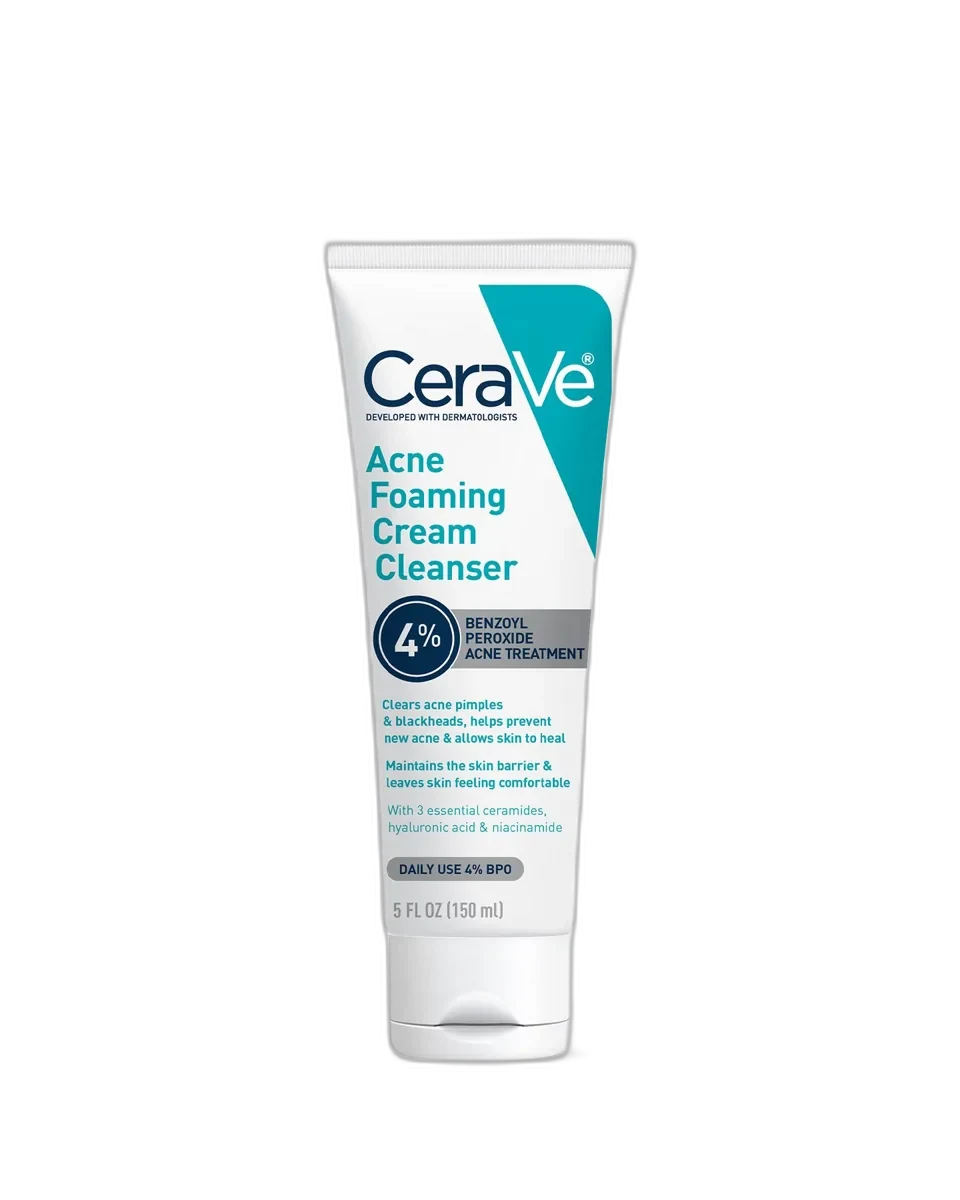
Acne Foaming Cream Cleanser
Gentle BPO Workhorse
 Verified reviewer
Pros & cons.
- +4% benzoyl peroxide — the gold standard acne antibacterial at an effective daily-use concentration
- +Ceramide barrier protection prevents the dryness and peeling BPO typically causes
- +Niacinamide reduces inflammation and supports barrier repair alongside the BPO
- +Cream-to-foam texture feels gentle and non-stripping during use
- +Fragrance-free and non-comedogenic for acne-prone skin
- +Exceptional value at under $12 with FSA/HSA eligibility
- +Pregnancy-safe acne treatment option
- +20,000+ reviews with a consistent 4.4-star average validates long-term performance
- −Bleaches towels, pillowcases, and all colored fabrics on contact
- −Initial dryness and peeling common in the first week of use
- −5 oz tube is relatively small for a daily-use cleanser
- −Formula reportedly changed — some long-term users preferred the earlier version
- −Not effective for comedonal-only acne where bacteria isn't the primary factor
- −Cannot be used simultaneously with retinol as BPO can deactivate it
The full review.
Benzoyl peroxide has a reputation problem. Anyone who had teenage acne remembers the burning, peeling, bleached pillowcases, and skin that felt chemically audited. BPO works—dermatologists confirm it is still the most effective topical ingredient for inflammatory acne, outperforming salicylic acid, tea tree oil, and most internet alternatives. But efficacy does not equal tolerability. Most people stop using benzoyl peroxide not because it fails, but because the side effects make daily use feel like punishment.
CeraVe’s Acne Foaming Cream Cleanser attempts to solve this compliance problem using a classic CeraVe approach: take a proven active, wrap it in ceramides, add niacinamide and hyaluronic acid, and engineer a formula gentle enough for daily use. The 4% concentration is deliberate. Research shows lower BPO concentrations (2.5-5%) are as effective as 10% for most acne types but cause fewer side effects. The antibacterial mechanism—generating oxygen radicals to kill anaerobic C. acnes bacteria in clogged pores—works at these lower levels. Higher percentages increase irritation rather than efficacy.
The cream-to-foam texture signals this is not traditional benzoyl peroxide. It dispenses as a smooth white cream, turns into a gentle lather on wet skin, and rinses without the typical tight, stripped sensation. Ceramides NP, AP, and EOP provide this post-rinse comfort by repairing barrier disruption caused by the active ingredient before you even reach for a towel.
Niacinamide is critical here. A 2023 pilot study found that a fixed combination of 4% benzoyl peroxide and niacinamide effectively reduced acne lesions and sebum production without altering skin barrier function. This cleanser follows that clinical model: BPO kills acne-causing bacteria while niacinamide reduces inflammatory redness, regulates oil production, and helps the ceramides rebuild barrier damage from BPO’s oxidative action. This three-ingredient system uses each component to fix a weakness of the active.
Hyaluronic acid adds hydration retention. Because BPO causes dehydration, sodium hyaluronate helps by drawing moisture into the skin during cleansing. This small addition prevents the desperate need for moisturizer after use.
Acne performance is strong and consistent. Inflammatory breakouts—the red, painful kind BPO targets—show improvement within one to two weeks. Twice-daily use significantly reduces the responsible bacterial population. By four to six weeks, most users report fewer active breakouts and new ones. Over 20,000 reviews averaging 4.4 stars across major retailers show a consistent story: this product works during long-term use.
The caveats are standard for all BPO products. It will bleach towels, pillowcases, and any colored fabric it touches. White towels and white pillowcases are requirements. Initial dryness and mild peeling during the first week are common as skin adjusts to the oxidative action. Do not layer this on a routine already heavy with actives; combining BPO with retinoids, AHAs, or other exfoliants risks barrier destruction that even three ceramides cannot prevent.
At under $12 for 5 ounces, the value is exceptional. This OTC drug product contains pharmaceutical-grade active ingredients and barrier-supporting ceramides. It carries the backing of the #1 dermatologist-recommended cleanser brand and costs less than a typical lunch. One tube lasts six to eight weeks with daily use. It is FSA/HSA eligible. After five years on the market and 20,000 reviews, it remains one of the most reliable acne cleansers at any price point.
Benzoyl peroxide’s reputation problem was about user experience, not efficacy. CeraVe did not reinvent the active ingredient; they reinvented the experience of using it. For the millions of people who would respond to BPO if they could tolerate it, that is the real innovation.
Ingredient analysis.
Full INCI list
Active Ingredient: Benzoyl Peroxide 4%. Inactive Ingredients: Water, Glycerin, Propylene Glycol, Cocamidopropyl Hydroxysultaine, Sodium C14-16 Olefin Sulfonate, Xanthan Gum, Potassium Hydroxide, Ceramide NP, Ceramide AP, Ceramide EOP, Carbomer, Niacinamide, Glycolic Acid, Sodium Chloride, Sodium Citrate, Sodium Hyaluronate, Sodium Lauroyl Lactylate, Sodium Hydroxide, Cholesterol, Phenoxyethanol, Propanediol, Citric Acid, Tetrasodium EDTA, Diethylhexyl Sodium Sulfosuccinate, Phytosphingosine, Ethylhexylglycerin, Benzoic Acid
Skin match.
The science.
The Science
Benzoyl peroxide is the most validated topical acne ingredient after decades of research. It works via an antibacterial mechanism: BPO generates free oxygen radicals on the skin, killing the anaerobic Cutibacterium acnes bacteria that colonize pores and cause inflammatory acne.
BPO is uniquely valuable because bacteria never develop resistance to it. Unlike topical antibiotics, which face rising resistance rates that force dermatologists to limit standalone use, BPO stays effective. This durability comes from BPO's non-specific oxidative mechanism, which avoids targeting single bacterial pathways that could mutate.
Comparative efficacy research supports the 4% concentration in this cleanser. Studies show 2.5% BPO reduces acne as well as 10% BPO, but with fewer side effects like dryness, scaling, and erythema. The 4% concentration provides an effective antibacterial dose for daily facial use.
A 2023 pilot trial in Cosmetics (MDPI) tested a fixed combination of 4% benzoyl peroxide and 4% niacinamide. It found effective reductions in acne lesions and sebum production without changing skin barrier function—a result that applies to this product's BPO-niacinamide approach. Also, a 2021 study in the Journal of Clinical and Aesthetic Dermatology compared 2.5% BPO plus 5% niacinamide to BPO alone, finding the combination better for mild-to-moderate acne.
The ceramide component solves a known clinical problem: patients stopping treatment due to side effects. Acne treatment non-compliance is 50% or higher, mostly due to irritation. Adding ceramides during acne treatment reduces transepidermal water loss and clinical irritation, helping patients stay on effective actives.
References
- Comparison of the efficacy of benzoyl peroxide 2.5% plus niacinamide 5% and benzoyl peroxide 2.5% alone in mild-to-moderate acne — Journal of Clinical and Aesthetic Dermatology (2021)
- Ceramide and niacinamide-containing formulations improve acne outcomes — Journal of Cosmetic Dermatology (2024)
Dermatologist Perspective
Dermatologists rank benzoyl peroxide as the first-line topical treatment for inflammatory acne. The 4% concentration in this cleanser follows clinical guidance that favors lower-concentration BPO for the face. Board-certified dermatologists note the ceramide-niacinamide formula targets the main reason patients stop using BPO: irritation-driven non-compliance. This product is a common recommendation for the cleanser step in an acne regimen—used in the morning while a retinoid is used at night—providing antibacterial coverage without the irritation of multiple harsh products.
Where it fits in your routine.
Wet the affected area. Rub a small amount of cleanser into the skin for 10-20 seconds until it lathers. Rinse well and pat dry. Use once daily, then increase to 2-3 times daily as tolerated. Reduce use if skin peels or feels dry. Use white towels only — benzoyl peroxide permanently bleaches colored fabrics. Apply moisturizer and SPF during the day.
At approximately $11.49 for 5 fl oz, this is one of the cheapest treatment cleansers in the acne category. Each wash costs roughly $0.15-0.20, which makes daily long-term use affordable. Comparable BPO cleansers from premium brands cost $20-40 for similar volumes, and prescription-grade BPO washes can exceed $50. FSA/HSA eligibility lowers the effective cost. This product combines the #1 acne antibacterial with CeraVe's full ceramide support system for exceptional value.
This is for anyone with inflammatory acne — red, painful breakouts — who wants the most evidence-backed topical treatment in a gentle daily-use format. It works for oily, combination, and normal skin types. It is safe during pregnancy, so it is one of the few effective acne treatment options for expecting mothers. It also suits people who stopped using BPO products because of dryness and irritation.
Dry, very sensitive, or eczema-prone skin types may find this gentler BPO formula too drying. A salicylic acid cleanser targets comedonal acne (blackheads and whiteheads without inflammation) more directly. Choose non-BPO alternatives if you do not want to switch to white towels and pillowcases.
Product details.
Dispenses as a smooth, creamy white paste. It turns into a thick foaming lather when mixed with water and massaged onto skin. Rinses clean without residue or tightness.
Fragrance-free. It has a faint clinical benzoyl peroxide smell, but no added fragrance.
White squeeze tube with teal CeraVe branding in a cardboard carton. Flip-top cap. 5 fl oz (150 mL).
The cream-to-foam transformation happens immediately. Skin feels clean and comfortable after the first use — it feels less stripped than many BPO cleansers. Mild dryness or tightness can develop during the first few days, especially when used with other acne treatments. Initial purging is possible as antibacterial action clears existing comedones.
6-8 weeks with once-daily facial use. 4-5 weeks with twice-daily use.
12 months
All Year
The backstory.
CeraVe developed this cleanser to address the most common reason people stop using benzoyl peroxide: it's too drying. By wrapping the gold-standard acne antibacterial in their signature ceramide barrier technology, they created a BPO cleanser that treats acne without the punishing side effects that drive most users to abandon the ingredient — one of dermatology's most frustrating compliance challenges.
About CeraVe
Legacy Brand (20+ years)Dermatologists helped develop CeraVe in 2005. It is the #1 dermatologist-recommended cleanser brand for acne in the US. The formulations combine acne-fighting actives with the brand's signature ceramide barrier technology.
Common myths.
Higher percentages of benzoyl peroxide work better for acne.
Research shows 2.5-5% BPO works as well as 10% for most acne but has fewer side effects. This cleanser's 4% concentration hits the efficacy sweet spot. It causes less dryness, peeling, and irritation than higher concentrations, which matters for a daily-use facial cleanser.
Benzoyl peroxide thins your skin over time.
BPO does not thin the skin; topical steroids do that, not peroxide-based acne treatments. BPO works by creating oxygen radicals that kill anaerobic C. acnes bacteria. The ceramides in this formula support barrier thickness during treatment.
FAQ.
What percentage of benzoyl peroxide is in CeraVe Acne Foaming Cream Cleanser?
It contains 4% benzoyl peroxide. Research shows this moderate concentration kills acne-causing bacteria as well as 10% concentrations, but causes less dryness and peeling. CeraVe also sells a separate 10% BPO wash for face and body use.
Will CeraVe Acne Foaming Cream Cleanser bleach my towels?
Yes — all benzoyl peroxide products permanently bleach colored fabrics like towels, washcloths, pillowcases, and clothing. Use white towels and pillowcases with any BPO product. This is a property of the active ingredient, not the formulation.
Can I use CeraVe Acne Foaming Cream Cleanser during pregnancy?
Yes — most dermatologists and the American College of Obstetricians and Gynecologists consider benzoyl peroxide safe during pregnancy. It works on the skin's surface without significant systemic absorption, so it is a safer acne treatment option for pregnant women.
Can I use CeraVe Acne Foaming Cream Cleanser with retinol?
Yes, but not simultaneously—benzoyl peroxide can oxidize and deactivate retinol. Use this BPO cleanser in the morning and apply retinol at night, or on alternate nights. The ceramides in this cleanser help maintain barrier integrity for retinol tolerance.
How long does it take for CeraVe Acne Foaming Cream Cleanser to work?
Most users see visible improvement in inflammatory breakouts within 1-2 weeks. Acne reduction typically occurs after 4-6 weeks of consistent twice-daily use. Mild dryness or purging in the first week is normal and usually resolves as the skin adjusts.
What the community says.
"Effectively reduces active breakouts and prevents new ones"
"Gentle enough for daily use despite containing benzoyl peroxide"
"Cream-to-foam texture feels non-stripping"
"Ceramides prevent the dryness BPO usually causes"
"Affordable for an acne treatment cleanser"
"Some users report 5+ years of consistent use"
"Bleaches towels, pillowcases, and colored fabrics"
"Some initial purging and increased breakouts in weeks 1-2"
"Can cause dryness and peeling when combined with other actives"
"Small 5 oz tube runs out quickly with daily use"
"Formula reportedly changed at some point — some long-time users preferred the original"