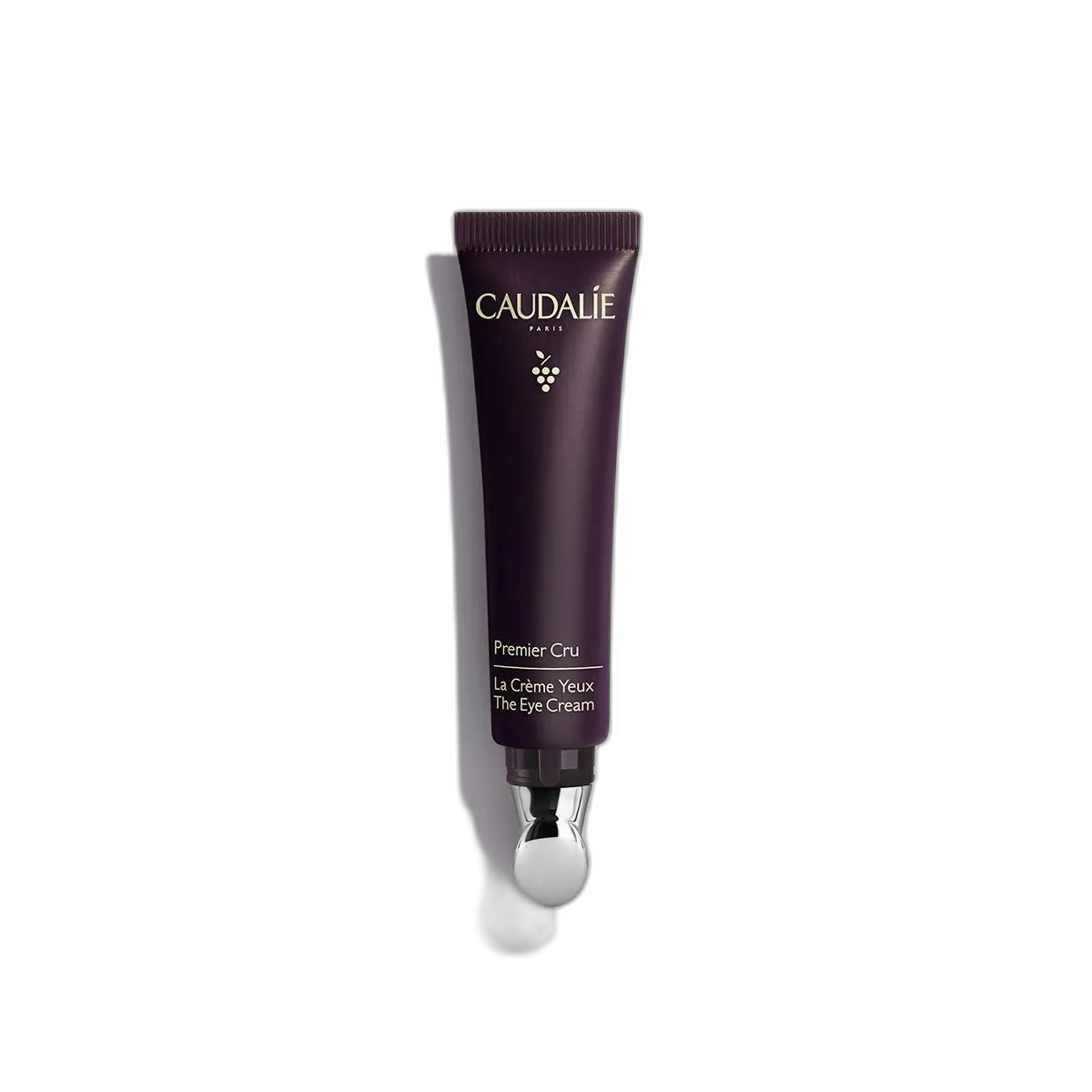
Premier Cru The Eye Cream
Luxury Counter Pick
 Verified reviewer
Pros & cons.
- +Contains resveratrol, Viniferine, and acetyl tetrapeptide-5 as legitimate hero ingredients
- +Luxurious rich cream texture that absorbs well and sits comfortably under makeup
- +Shea butter and grape seed oil deliver real emollient benefits for dehydrated eye area
- +Caudalie holds actual patents and research history around grape polyphenols
- +Cruelty-free and vegan
- +Refillable packaging in the European market aligns with brand sustainability claims
- −Contains parfum plus limonene, linalool, citronellol, and geraniol in an eye product
- −Ninety-two dollars for 15ml is very expensive per milliliter
- −Not fungal-acne safe due to isopropyl palmitate
- −Dark circle improvement is subtle and only addresses pigmentation-based causes
- −Fragrance load is inappropriate for sensitive or rosacea-prone users
The full review.
Caudalie has a genuine scientific origin. Mathilde and Bertrand Thomas founded the brand in 1995 after a conversation at their family winery with Professor Joseph Vercauteren. They built the brand on the idea that grape seed and vine polyphenols work as skincare actives. This history has substance: Caudalie holds patents for stabilized resveratrol and the signature Viniferine molecule, and the company invests in research instead of just using wine imagery for marketing. The Premier Cru range is the most expensive part of the lineup, named after Bordeaux’s top wine classification. The Premier Cru Eye Cream is a flagship in that range, which raises a question: does the premium price buy better science or just a better jar?
The formulation uses real hero ingredients. Resveratrol is the main antioxidant; it is grape-derived and documented in cosmetic research for free-radical scavenging, though topical efficacy depends on stabilization and delivery. Viniferine — diglucosyl gallic acid — is Caudalie’s patented molecule from grapevine sap, used for tyrosinase inhibition and brightening. The inclusion of acetyl tetrapeptide-5 is a targeted move: this synthetic peptide studies show it reduces periorbital puffiness and eye bags, signaling a formula that addresses water-retention dark circles rather than just providing hydration. Shea butter makes the cream a thick emollient, grape seed oil provides polyphenols and linoleic acid, and hyaluronic acid handles surface hydration. On paper, this is a well-considered eye cream with a defensible ingredient story.
The fragrance situation is strange. This product contains parfum plus limonene, linalool, citronellol, and geraniol — four common fragrance allergens in the European labeling schedule, all in a product for the sensitive periocular skin. Periorbital contact dermatitis is a well-documented dermatological problem, and fragrance or essential oils are common triggers. This is not a theoretical concern. For users without fragrance reactions, this cream is likely fine; many reviewers like the light floral-grape scent and the luxury experience. But for anyone with a history of sensitivity, rosacea, eczema, or contact allergy, putting this product near the eye is an unnecessary risk. The choice is odd because most dermatologists recommend fragrance-free products for the eye area. It suggests Caudalie designs for the sensory experience of the French luxury market rather than the best clinical choice.
Texture
The cream has a lovely texture. It is thick enough to feel substantive without being heavy, melts into the skin, and leaves a satin finish that works with makeup. It hydrates effectively, smooths fine lines from dehydration, and delivers visible improvement in orbital skin surface quality over several weeks of consistent use. The peptide content can produce modest reductions in morning puffiness for users with water-retention bags, though the effect is subtle. Pigmentation-based dark circles may respond to the Viniferine and resveratrol over six to eight weeks, though results are more pronounced in users whose dark circles stem from melanin activity rather than vascular or structural causes. No topical product — regardless of price — fixes dark circles caused by thin skin showing underlying blood vessels.
Packaging
The fifteen-milliliter size at around ninety-two dollars is the second structural issue. That is roughly six dollars per milliliter, among the higher per-unit costs in the eye cream category. Equivalent luxury eye creams from La Mer, Sisley, or La Prairie cost more, so Caudalie isn’t the most expensive option — but that is faint praise. Most ingredients in this formula, including the resveratrol and peptide content, exist in more affordable eye creams that deliver comparable or better performance with cleaner formulations. Paula’s Choice, Naturium, and Good Molecules all offer peptide-based or vitamin-C-based eye creams with thoughtful formulations at a quarter of the price. The premium pays for the Caudalie brand, French provenance, packaging, the European refill-bottle ethos, and the sensory experience. Whether that is worth the money is a personal judgment.
Who Should Buy
This cream makes sense for: someone who values the Caudalie brand experience, enjoys luxury skincare, has normal or non-sensitive skin that tolerates fragrance, and wants a cream with both sensory qualities and legitimate hero ingredients. For that user, this eye cream is a pleasant, defensible purchase. For someone prioritizing ingredient quality per dollar, or anyone with sensitive or reactive skin, the fragrance and price make it hard to recommend over cleaner, cheaper alternatives. Caudalie has better products in its lineup; the Premier Cru Eye Cream feels more like a prestige line extension than the strongest expression of the brand’s research.
Formula
Ingredient analysis.
Full INCI list · pH 6
Aqua/Water, Isopropyl Palmitate, Glycerin, Dicaprylyl Carbonate, Pentylene Glycol, Butyrospermum Parkii (Shea) Butter, Cetearyl Alcohol, Isononyl Isononanoate, Cetearyl Olivate, Sorbitan Olivate, Polyglyceryl-3 Stearate, Vitis Vinifera (Grape) Seed Oil, Vitis Vinifera (Grape) Flower Cell Extract, Hydroxystearic/Linolenic/Linoleic Polyglycerides, Sodium Hyaluronate, Tocopherol, Hydrolyzed Vegetable Protein, Acetyl Tetrapeptide-5, Diglucosyl Gallic Acid, Carbomer, Xanthan Gum, Sodium Hydroxide, Parfum/Fragrance, Limonene, Linalool, Citronellol, Geraniol, Phenoxyethanol, Ethylhexylglycerin
Skin match.
The science.
The Science
The ingredient story here hinges on three actives with varying levels of evidentiary support. Resveratrol, the stilbene polyphenol most famously associated with red wine, has been studied extensively in vitro and in animal models for its antioxidant and anti-inflammatory activity, but topical efficacy data in humans is more limited. A 2014 study in the Journal of Cosmetic Dermatology showed that a resveratrol-containing formulation reduced the appearance of fine lines and improved skin roughness over twelve weeks, providing some support for its use in anti-aging formulations, though the effect size was modest. Viniferine — diglucosyl gallic acid — is Caudalie's patented molecule, and published research on its tyrosinase-inhibitory activity exists in the brand's own internal studies, with more limited independent validation. For a commercial ingredient claim, the evidence is promising but not as well-established as that for vitamin C or tranexamic acid for pigmentation. Acetyl tetrapeptide-5 is the most interesting ingredient from a clinical standpoint, with documented effects on periorbital puffiness in a small number of published studies, including a 2012 study showing reductions in subcutaneous edema with topical application. The mechanism is thought to involve inhibition of angiotensin-converting enzyme activity in the dermal capillary bed, which reduces fluid retention in the under-eye area. The evidence for this peptide is emerging rather than well-established, but it represents the kind of targeted formulation choice that makes a product an actual eye cream rather than just a richer moisturizer for the orbital area. The fragrance and essential oil load in this formulation is the main formulation concern — a 2008 study in Dermatitis documented that fragrance is one of the most common causes of periorbital contact dermatitis, and dermatologists broadly advise against fragrance in eye products for users with any history of sensitivity.
Dermatologist Perspective
Dermatologists frequently caution patients against fragrance in eye area products because of the well-documented risk of periorbital contact dermatitis. Board-certified dermatologists note that the skin around the eyes is thinner and more permeable than facial skin, making it more vulnerable to irritant and allergic reactions from cosmetic ingredients. In clinical settings, fragrance-free eye creams are generally preferred, especially for patients with sensitive skin, rosacea, or a history of atopic dermatitis. The resveratrol and peptide content of this specific cream has modest clinical support for antioxidant and anti-puffiness benefits, but the overall formulation choices — particularly the fragrance and essential oil inclusions — would make this a harder recommendation for patients with any history of eye-area sensitivity. It is the kind of product clinicians might recommend to patients who specifically ask for a French luxury option and do not have fragrance sensitivity, rather than a first-line clinical pick.
Where it fits in your routine.
Apply a small amount (rice-grain size) to the ring finger. Tap gently along the orbital bone, moving from the inner corner outward, then across the brow bone. Do not rub or drag the delicate eye area skin. Use twice daily after serums and before moisturizer. In the morning, let it absorb fully before applying sunscreen and concealer to prevent pilling. For best results, use consistently for at least six to eight weeks to see the effect on pigmentation-based dark circles.
At around ninety-two dollars for 15ml, this eye cream costs as much as high-end department store products. It is cheaper than top luxury brands but costs significantly more than effective peptide and vitamin C eye creams from ingredient-forward lines. The formulation uses genuine hero ingredients like acetyl tetrapeptide-5 and the patented Viniferine to justify part of the premium. However, the fragrance content and allergen load show the brand prioritizes a luxury sensory experience over a defensible clinical formulation. Paula's Choice Peptide Booster, Naturium Multi-Peptide, and Good Molecules Caffeine Solution all provide targeted eye-area actives in fragrance-free bases for much less. The Caudalie name, the glass jar, the refillable European packaging, and the brand experience add value for some users. For others, the math does not work.
This eye cream suits users who like luxury French skincare, value the Caudalie brand and its grape polyphenol research, and have normal or non-sensitive skin. It works for those seeking a thick, pleasant eye cream with targeted actives. It also fits anyone with dehydration-based fine lines who wants a more emollient eye treatment.
Use this if you have sensitive, reactive, or rosacea-prone skin, a history of fragrance allergy or periorbital contact dermatitis, or fungal acne concerns. Skip this if you prioritize ingredient quality per dollar, as more clinically-focused eye creams cost significantly less.
Product details.
Thick but aerated cream that melts into skin on contact and leaves a smooth finish.
Light floral-grape signature Caudalie fragrance.
Heavy glass jar with metallic cap, refillable in the brand's French market.
The first use feels hydrating and the fragrance is noticeable. Fragrance-sensitive users or those with a history of periorbital contact dermatitis should be cautious. No purging occurs.
About 3-4 months with twice-daily eye area application.
12 months
fall winter
The backstory.
Caudalie was founded in 1995 by Mathilde and Bertrand Thomas after a chance conversation with Professor Joseph Vercauteren at Château Smith Haut Lafitte, the family winery. Vercauteren's research on grape polyphenols became the foundation of the brand, and the Premier Cru range is the company's most expensive, prestige-focused line named after Bordeaux's top wine classification.
About Caudalie
Established Brand (5–20 years)Caudalie was founded in 1995 in Bordeaux around the skincare applications of grapevine polyphenols, and holds multiple patents related to resveratrol and viniferine. The brand's Premier Cru line is its prestige-tier anti-aging range.
Common myths.
Eye creams must be separate products from regular moisturizer.
Most users can use a gentle facial moisturizer on the eye area. Dedicated eye creams work when they contain ingredients for eye-area concerns (caffeine, peptides for puffiness) or have textures suited to thinner orbital skin.
FAQ.
Is Caudalie Premier Cru Eye Cream worth the price?
Choose Caudalie if you value the brand heritage, the luxury experience, and the Viniferine and resveratrol technology. If you prioritize ingredient quality per dollar, other peptide and vitamin C eye creams offer cleaner formulations at half the price.
Does it really reduce dark circles?
Viniferine and peptide content target pigmentation-based dark circles. Topical products, including this one, do not work on dark circles caused by structural shadowing, thin skin, or vascular issues.
Is the fragrance safe around the eyes?
The fragrance load is high for an eye product and contains several common allergens (limonene, linalool, citronellol, geraniol). Users with fragrance sensitivity or a history of periorbital dermatitis should use a fragrance-free alternative.
Can I use it during the day under makeup?
Yes — the cream absorbs fast and sits well under concealer. Wait one or two minutes for full absorption before applying makeup to prevent pilling.
Is it safe during pregnancy?
The formula lacks retinoids, salicylic acid, or hormonally active ingredients. Topical use of Viniferine and resveratrol shows no pregnancy concerns. Always confirm with your OB.
How does it compare to Caudalie's Resveratrol-Lift Eye Cream?
Premier Cru is the prestige-tier, more expensive line with a richer texture and higher fragrance profile. Resveratrol-Lift is positioned as firming and is generally more affordable, with somewhat different ingredient targeting.
Community
What the community says.
"Luxurious texture"
"Smooths fine lines around eyes"
"Hydrates without heaviness"
"Beautiful packaging"
"Very expensive for 15ml"
"Contains fragrance near the eyes"
"Essential oils may irritate sensitive skin"
"Dark circle improvement is subtle at best"
Featured in.
People also looked at.