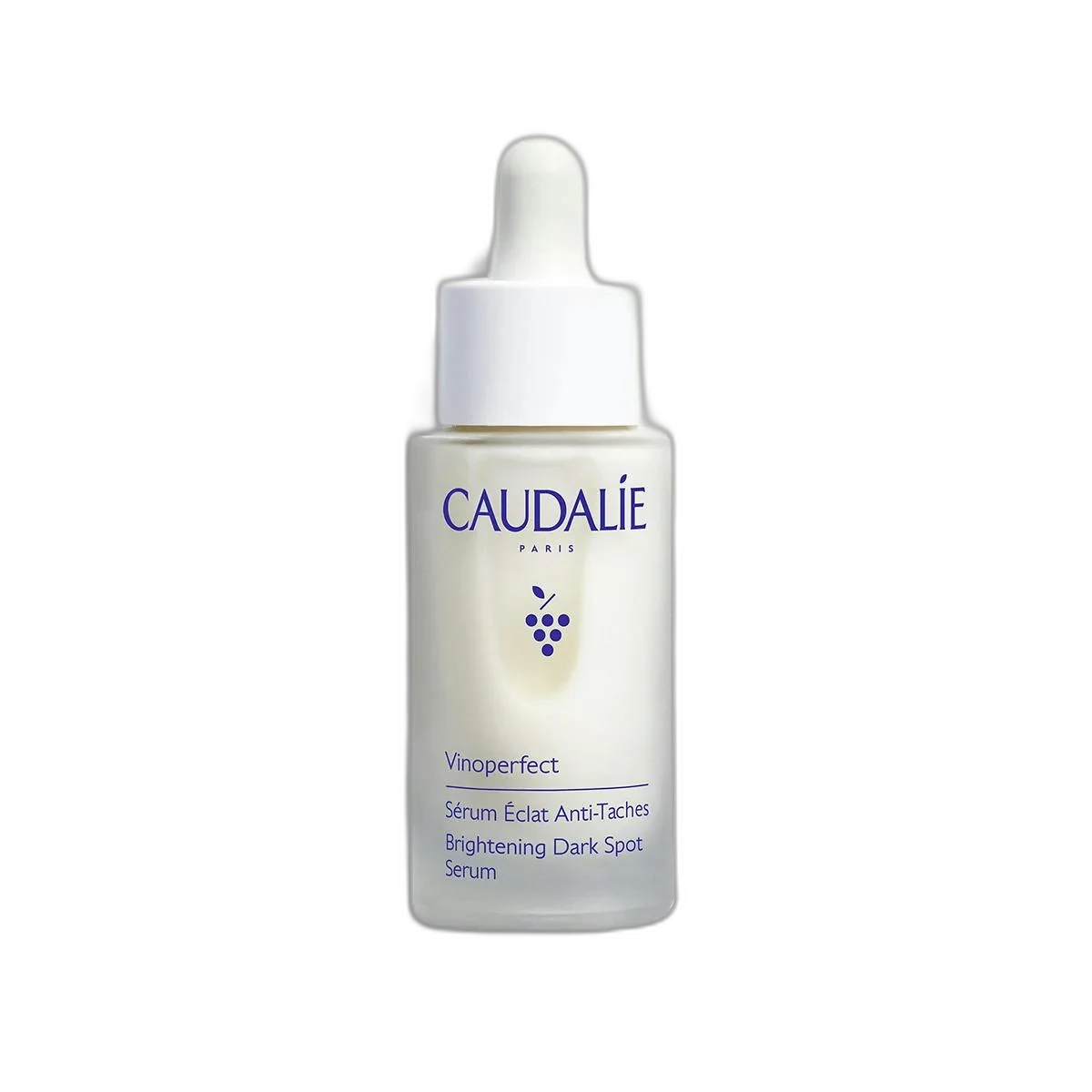
Vinoperfect Radiance Serum
The Dark-Spot Classic
 Verified reviewer
Pros & cons.
- +Patented viniferine delivers proven tyrosinase inhibition
- +Niacinamide-viniferine combination hits pigmentation through two mechanisms
- +Silky fast-absorbing texture comfortable for twice-daily use
- +Broad compatibility across skin types including sensitive
- +Pregnancy-safe brightening option with long track record
- +Layers well with vitamin C, retinol, and exfoliants
- +Leaves a subtle satin glow that works under makeup
- −Premium pricing at $85 for a 30ml bottle that lasts 3 months
- −Fragrance complex limits use for very reactive skin
- −Results require 8-12 weeks of consistent use to show clearly
- −Pipette dropper can be fragile and messy
- −Less dramatic on deep melasma than prescription options
The full review.
About Caudalie
Most brands use well-studied public-domain actives like niacinamide, retinol, vitamin C, and azelaic acid. These work well, and brands can succeed with them. But Caudalie took a different path in 2006. They partnered with University of Bordeaux researchers to identify viniferine, a polyphenol in grapevine sap, and patented it as a tyrosinase inhibitor. Twenty years later, viniferine remains exclusive to Caudalie, and Vinoperfect Radiance Serum remains the brand’s bestseller. The question isn’t whether the serum works—users and some independent dermatologists confirm it does. The question is whether the patent premise holds up, and if paying $85 for a 30ml bottle of a proprietary polyphenol makes sense now that the public-domain brightening toolkit has evolved.
Texture
The formulation is excellent. Water and propanediol form the base, with glycerin and dimethicone providing a light, silky slip. Squalane adds an emollient buffer that keeps the texture comfortable on dry skin without becoming too thick for oily skin.
Works for
Niacinamide appears high on the list. This matters because niacinamide and viniferine attack pigmentation through different mechanisms. Viniferine slows tyrosinase, the enzyme that produces melanin; niacinamide blocks melanin transfer from melanocytes to keratinocytes. One slows the factory, the other blocks the delivery trucks. Together they work better than either alone, showing the formulation intelligence of a thoughtful serum rather than a single-ingredient showcase. The viniferine comes from palmitoyl grapevine shoot extract, grape sap extract, and grape flower cell extract—a polyphenol stack of three grape-derived complexes.
Common Praise
Caudalie’s consumer studies, published on the brand site, claim a 62% reduction in dark spot appearance after six weeks. Independent verification of that specific claim is limited, but user reports align: noticeable brightening within 4-8 weeks, continued fading of discrete spots at 3 months, and slower improvement for deeper melasma patches.
Best for
Vinoperfect feels slow if you expect hydroquinone’s dramatic clearance curve. It feels comparable to or gentler than over-the-counter vitamin C.
Texture
The texture helps build a loyal following. Most brightening serums are either aqueous, sometimes-stingy vitamin C formulations or heavier, greasy botanical blends. Vinoperfect is a silky milk that sits between them. It absorbs in under a minute, leaves a subtle satin glow from the silica, and disappears under makeup or sunscreen. It does not tingle, warm, or cause reactivity. Twice-daily use is comfortable, which is vital since benefits require 8-12 weeks of consistent application. A brightening serum you won’t use provides no results.
Who Should Buy
Almost everyone with post-inflammatory marks, sun spots, melasma, or general dullness who wants a gentler path than hydroquinone and reacts poorly to strong vitamin C. The niacinamide-squalane base is gentle enough that rosacea and eczema patients often tolerate it. Dermatologists widely recommend it as a pregnancy-safe brightening option because the entire ingredient list is pregnancy compatible. It layers well with vitamin C in the morning, retinoids at night, or exfoliating acids on alternating evenings.
Common Complaints
The caveats are limited. The fragrance complex includes linalool, geraniol, limonene, citronellol, and benzyl salicylate; this is a dealbreaker for those with fragrance allergies. The price is premium, especially for a 30ml size that lasts 2.5-3 months—costing roughly $30-35 per month for brightening. The 50ml size improves per-ounce value and is better for a full course. Results require patience; this won’t provide dramatic fading in three weeks.
Best for
Vinoperfect has earned its cult status if you want gradual, gentle, reliable brightening that you can use twice a day on nearly any skin type. The patent premise holds. The formula is better now than at launch. Recommending a skincare product nearly twenty years after its launch is impressive in an industry built on novelty.
Ingredient analysis.
Full INCI list · pH 5.5
Aqua/Water/Eau, Propanediol, Glycerin, Dimethicone, Squalane, Niacinamide, Pentylene Glycol, Silica, Ammonium Acryloyldimethyltaurate/VP Copolymer, Glyceryl Stearate, PEG-100 Stearate, Vitis Vinifera (Grape) Flower Cell Extract, Vitis Vinifera (Grape) Sap Extract, Palmitoyl Grapevine Shoot Extract, Tocopherol, Phenethyl Alcohol, Caprylyl Glycol, Papaver Rhoeas Flower Extract, Glyceryl Linoleate, Butylene Glycol, Xanthan Gum, Sodium Hydroxide, Parfum/Fragrance, Citric Acid, Disodium EDTA, Linalool, Geraniol, Benzyl Salicylate, Limonene, Citronellol.
Skin match.
The science.
The Science
Viniferine is the trans-epsilon-viniferin molecule, a resveratrol dimer from grapevine sap. Caudalie stabilizes it as palmitoyl grapevine shoot extract. The brand's patent claims say viniferine inhibits tyrosinase more potently than vitamin C on an equal-weight basis, but most data comes from brand-sponsored industry publications rather than peer-reviewed dermatology journals. The resveratrol family has scientific grounding for antioxidant and anti-tyrosinase activity; in vitro work supports the tyrosinase inhibition mechanism, and studies show topical resveratrol works for hyperpigmentation. Vinoperfect's smart move is pairing it with niacinamide, which has stronger peer-reviewed evidence. Multiple randomized controlled trials show topical 2-5% niacinamide reduces hyperpigmentation by inhibiting melanosome transfer. This pathway differs from tyrosinase inhibition, making the combination biologically sensible rather than redundant. Squalane and glycerin create a barrier-friendly base that avoids the mild inflammatory cascade driving post-inflammatory pigmentation in reactive skin. Regarding evidence limits: independent verification of the viniferine-vs-vitamin-C potency claim is difficult, and the largest clinical dataset for the finished product comes from Caudalie's consumer studies instead of independent trials. However, the efficacy signal from tens of thousands of user reports and two decades of dermatologist recommendations is meaningful, and the formulation's biology is sound.
Dermatologist Perspective
Dermatologists often recommend Vinoperfect as a first-line brightening serum for patients who cannot tolerate hydroquinone, are pregnant or nursing, or want a lower-irritation option for pigmentation treatment. Board-certified dermatologists note that niacinamide alone justifies its place in a hyperpigmentation routine; adding viniferine and other polyphenols provides complementary mechanisms without increasing irritation risk. For active melasma, it serves as a supportive rather than primary treatment. Dermatology-led protocols typically combine it with daily SPF 50, a prescription retinoid, and sometimes azelaic acid or tranexamic acid. As a standalone brightening serum for post-acne marks and general sun damage, it is a reasonable over-the-counter choice backed by ingredient science and years of patient feedback.
Where it fits in your routine.
Apply 3-4 drops to cleansed skin morning and night before moisturizer. Pat gently into face, neck, and chest (the formula is gentle enough for the chest, where dark spots often appear). Follow with moisturizer and, in the morning, SPF 30 or higher — UV exposure cancels the active's benefits, so sun protection is required with any brightening product. Layer with vitamin C serums (apply Vinoperfect first), retinoids (apply Vinoperfect first, wait a minute), or exfoliating acids on alternating evenings. Consistent use shows visible results at 6-10 weeks.
At $85 for 30ml, Vinoperfect sits in the premium brightening serum tier — near Skinceuticals Phyto Corrective ($82) and below SkinMedica Lytera 2.0 ($154). The 50ml size at $125 lowers the per-ounce cost and suits those moving past a trial bottle. Given the brand heritage, two-decade track record, proprietary viniferine, and broad compatibility, the price is fair but not a bargain. Users on a tighter budget can build a similar ingredient profile (niacinamide, squalane, polyphenol antioxidants) using The Ordinary for much less — though they lack viniferine specifically and the cohesive, tested finished product.
This serum works for hyperpigmentation, sun damage, post-acne marks, or general dullness. It is a gentle, well-tolerated brightening serum with a long track record. It suits pregnant users, sensitive skin, and people who cannot tolerate stronger vitamin C formulations or need a pregnancy-safe alternative to hydroquinone for melasma.
Users with confirmed fragrance allergies should avoid this formula and choose fragrance-free alternatives. This is a patience product, not a quick fix; it won't provide dramatic fading in under a month. If viniferine isn't the main draw, budget-focused buyers can replicate most of the mechanism using cheaper niacinamide and polyphenol products.
Product details.
Milky white serum has a light fluid consistency and feels slightly slippery due to squalane and silicone.
Soft floral-botanical with a hint of grape.
Frosted glass bottle with a pipette dropper — elegant but can feel fragile.
First use feels like a lightweight milk — absorbs quickly, leaves a subtle satin glow. No tingling or warming. Expect no visible fading for the first 3-4 weeks; patience is part of the product's design.
About 2.5-3 months with twice-daily application.
12 months
All Year
The backstory.
Vinoperfect launched in 2006 after Caudalie partnered with University of Bordeaux researchers to identify and stabilize viniferine. It became the brand's first global bestseller and remains the top-selling radiance serum at Sephora France, with the formula updated periodically while keeping viniferine as the hero.
About Caudalie
Legacy Brand (20+ years)Caudalie launched Vinoperfect in 2006. They partnered with University of Bordeaux researchers to patent viniferine, a polyphenol from grapevine sap. Vinoperfect is one of the brand's bestsellers and appears often in independent brightening-serum reviews.
Common myths.
Vinoperfect is a vitamin C serum.
It has no ascorbic acid or vitamin C derivatives. Viniferine is the hero active—a grapevine polyphenol that targets tyrosinase via a different mechanism. You can layer Vinoperfect with a vitamin C serum for complementary brightening.
FAQ.
Is it better than vitamin C?
It differs. Vitamin C is a stronger antioxidant and uses ascorbic acid's multiple mechanisms. Vinoperfect's viniferine targets tyrosinase inhibition more specifically and is gentler on reactive skin. Many users layer both — Vinoperfect first, vitamin C second — for complementary results.
Can you use it with retinol?
Yes. The formula is gentle enough to layer under a retinoid at night. The niacinamide-squalane base buffers retinol irritation. Apply Vinoperfect first, wait one minute, then apply your retinoid.
Is Vinoperfect pregnancy safe?
Yes — viniferine, niacinamide, and the rest of the formula have no established pregnancy concerns. This is why dermatologists often recommend it as a pregnancy-safe alternative to hydroquinone for melasma. Always check with your OB before starting any new active.
How long does a bottle last?
Apply 3-4 drops to the full face twice daily. A 30ml bottle lasts about 2.5-3 months. The 50ml size has better per-ounce value for regular users.
Does it cause sun sensitivity?
No — viniferine does not cause photosensitivity like AHAs or retinoids. But using any brightening product without daily SPF undermines your results, because UV exposure drives new pigmentation.
What the community says.
"noticeable dark spot fading"
"pleasant texture"
"works for sensitive skin"
"pairs well with other actives"
"glowy finish"
"expensive for 30ml"
"fragrance concerns"
"slow visible results"
"pipette dropper can be messy"
Featured in.
People also looked at.