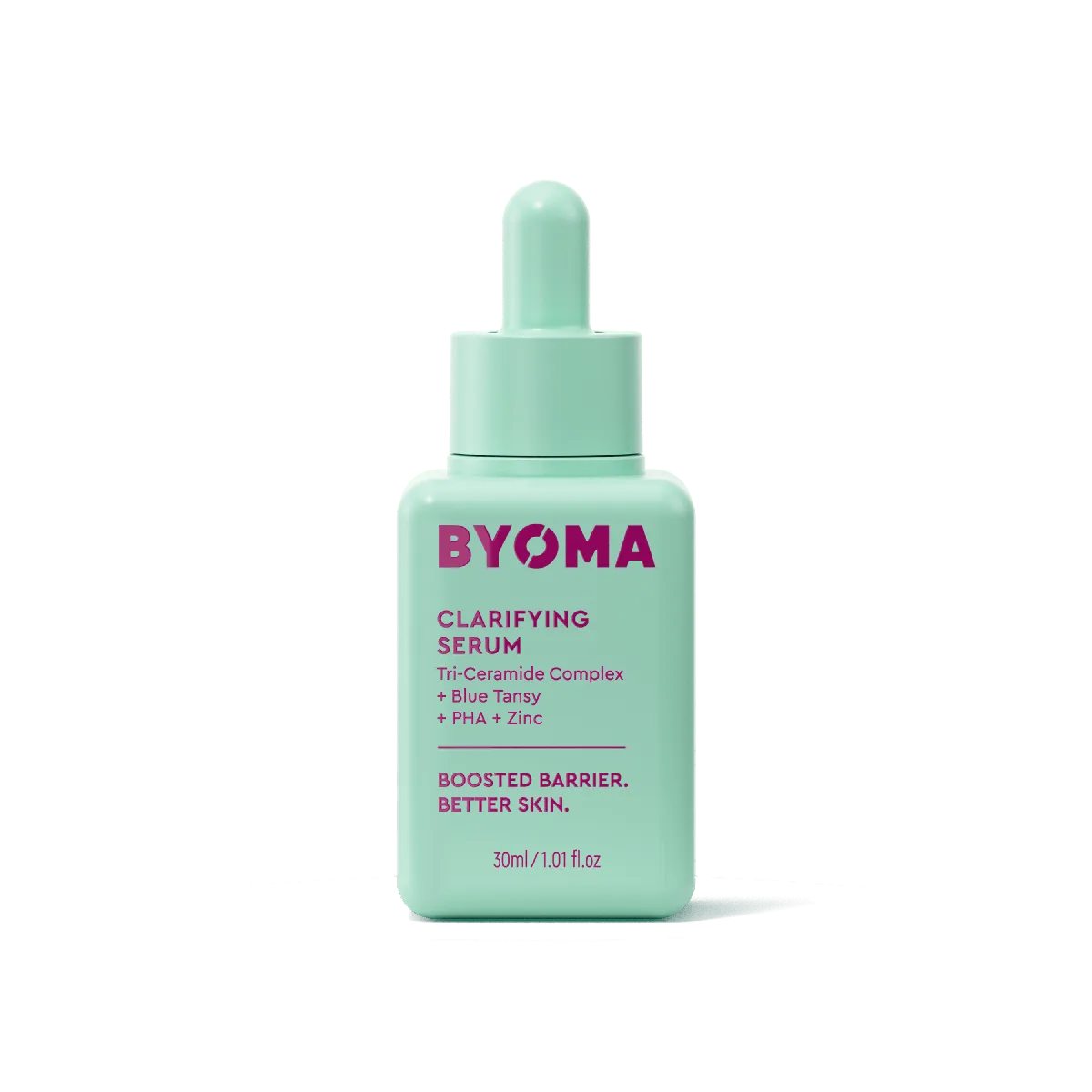
Clarifying Serum
Gentle Acne Fighter
 Verified reviewer
Pros & cons.
- +PHA exfoliation provides effective clarifying action without BHA's barrier disruption
- +Triple clarifying system — gluconolactone, niacinamide, zinc — targets acne from three angles
- +Blue tansy oil delivers anti-inflammatory benefits that reduce post-acne pigmentation
- +Tri-ceramide complex actively repairs the barrier while clarifying actives work
- +Completely fragrance-free, alcohol-free, and allergen-free formula
- +Excellent value at $16 with refill pouches available
- +Gentle enough to use alongside retinol without compounding irritation
- −Not potent enough for severe or cystic acne — requires prescription intervention
- −Blue tint from tansy oil may initially alarm users unfamiliar with the ingredient
- −Results are gradual — expect weeks, not days, for visible improvement
- −Frequently sold out due to high demand and supply constraints
- −Emerging brand with limited long-term market track record
The full review.
Most people treat acne poorly. They use high-percentage salicylic acid, bleaching benzoyl peroxide, or peeling prescription-strength retinoids to clear breakouts. These aggressive treatments damage the barrier, causing reactive inflammation and new breakouts. This cycle repeats. Byoma designed The Clarifying Serum to break it.
The Clarifying Serum uses a counterintuitive premise: clarifying skin without damage. It aims to unclog pores, regulate oil, and reduce inflammation without the redness, dryness, or peeling typical of acne management. The formula relies on restraint.
Gluconolactone, a polyhydroxy acid, replaces the salicylic acid found in most clarifying serums. This distinction matters. Salicylic acid is a small molecule that penetrates deep into the pore lining to dissolve sebum plugs, but it also strips lipids and irritates sensitive tissue. Gluconolactone is a larger molecule. It does not dive as deep, but it handles surface congestion, texture irregularities, and mild comedonal acne. It exfoliates the outer stratum corneum, promotes gentle cell turnover, and acts as a humectant to draw water into the skin while exfoliating. It hydrates and clarifies simultaneously.
Niacinamide at two and a half to four percent regulates oil. Dermatological research shows niacinamide reduces sebum production through mechanisms different from BHA. It modulates lipid production at the sebaceous gland level, providing physiological regulation rather than surface-level stripping that triggers compensatory oil production. At this concentration, the risk of niacinamide flush is negligible.
Zinc lactate adds a third mechanism: antimicrobial activity and sebum regulation via 5-alpha reductase inhibition. Clinical literature documents Zinc’s role in acne management, and the lactate form penetrates skin better than zinc oxide or zinc sulfate. The salt’s mild lactic acid component also provides gentle exfoliation.
Blue tansy oil gives the serum its blue-green tint and anti-inflammatory properties. Tanacetum annuum contains chamazulene, a sesquiterpene with anti-inflammatory properties that rival some pharmaceutical agents. This is strategic because acne is an inflammatory condition; reducing inflammation reduces active breakout severity and post-inflammatory hyperpigmentation. The tint disappears upon application and leaves no residue.
The tri-ceramide complex sits beneath these actives. Ceramide NP, cholesterol, and phytosphingosine repair and maintain the barrier while the clarifying ingredients work. This is not a token inclusion. For acne-prone skin, barrier health dictates acne severity: a compromised barrier allows bacteria to penetrate, triggers inflammatory cascades, and slows healing of post-breakout lesions. This serum addresses acne at both the symptom and structural levels.
The texture is lightweight and absorbs quickly without sticky residue, visible film, or interference with other products. The faint blue-green color from the tansy oil lasts only seconds during application. It is invisible under moisturizer and sunscreen.
Results follow a gentle philosophy: gradual but genuine. Reduced oiliness typically appears within three to five days. Breakout frequency decreases over two to four weeks. Texture improvement and pore refinement develop over six to eight weeks. This serum will not clear severe cystic acne in a week, as that requires prescription-grade intervention. For mild to moderate breakouts, persistent congestion, and uneven texture, it delivers improvement without collateral damage.
The formula lacks common irritants. There is no fragrance, no alcohol, no essential oils except blue tansy, and no common allergens. For sensitive, acne-prone skin, this is a rare clarifying option that provides clear skin without sacrificing comfort.
At sixteen dollars with refill pouches available, the value competes with products costing three to four times more. The PHA-niacinamide-zinc-ceramide combination is sophisticated formulation at a drugstore price. The main limitation is Byoma’s youth; the brand lacks a twenty-year track record or independent clinical studies on this specific product. However, the individual ingredients are validated, the formulation logic is sound, and dermatologist testing provides clinical backing.
The Byoma Clarifying Serum is for people tired of the acne treatment treadmill. It is for those who found that aggressive approaches clear skin briefly before making it worse. It suggests that fighting smarter is better than fighting harder.
Formula
### PM routineIngredient analysis.
Full INCI list
Aqua, Glycerin, Niacinamide, 1,2-Hexanediol, Polyglyceryl-10 Laurate, Gluconolactone, Glyceryl Caprylate, Ceramide NP, Cholesterol, Caprylic/Capric Triglyceride, Phytosphingosine, Stearic Acid, Oleic Acid, Zinc Lactate, Hydrogenated Lecithin, Ethylhexylglycerin, Sodium Hyaluronate, Tanacetum Annuum Flower Oil, Hydroxyethylcellulose, Ammonium Acryloyldimethyltaurate/VP Copolymer, Glyceryl Acrylate/Acrylic Acid Copolymer, Sodium Phytate, Tocopherol, Lactic Acid, Caprylyl Glycol, Caprylhydroxamic Acid
Skin match.
The science.
The Science
Gluconolactone is a polyhydroxy acid with a molecular weight of 178.14 g/mol—much larger than glycolic acid (76.05 g/mol) or salicylic acid (138.12 g/mol). Research in Dermatologic Surgery shows PHAs exfoliate as well as AHAs at the same concentrations but cause less stinging, burning, and irritation. The larger molecular size slows stratum corneum penetration, and the multiple hydroxyl groups on the gluconolactone molecule add humectant properties that AHAs and BHAs lack.
Clinical evidence supports zinc for acne management. A study in the British Journal of Dermatology shows zinc supplementation reduces inflammatory acne lesion counts compared to placebo. Topical zinc compounds inhibit 5-alpha reductase—the enzyme that converts testosterone to dihydrotestosterone, a key driver of sebum overproduction—to regulate oil without disrupting the barrier.
Pharmacological research documents the anti-inflammatory properties of chamazulene (from blue tansy). Chamazulene inhibits leukotriene B4 synthesis and 5-lipoxygenase activity, reducing the inflammatory cascade at a molecular level. Since acne is an inflammatory condition driven by Cutibacterium acnes and the resulting immune response, this anti-inflammatory action targets the root pathophysiology instead of just visible symptoms.
Dermatologist Perspective
Dermatologists increasingly favor barrier-sparing acne treatments, especially for patients with sensitive skin or irritation from standard BHA and benzoyl peroxide regimens. Board-certified dermatologists note the PHA-based approach in this serum matches evidence that maintaining barrier integrity during acne treatment improves long-term outcomes and reduces flare-ups. The zinc lactate inclusion aligns with dermatological evidence for zinc's role in sebum regulation and antimicrobial activity. Dermatologists recommend this serum as a first-line option for mild acne in sensitive skin, or as a supportive product alongside prescription treatments for moderate acne.
Where it fits in your routine.
Apply 2-3 drops to clean, damp skin after toner or face mist. Press it into the face, targeting congestion, breakouts, or enlarged pores. Wait 30-60 seconds for absorption before applying moisturizer. Use morning and evening. In the AM, follow with SPF 30+. In the PM, alternate with retinol—use this serum on non-retinol nights, or apply under retinol as a buffer on treatment nights.
At $15.99 for 1.01 fluid ounces, this serum offers high value. The multi-active formula — PHA, niacinamide, zinc, blue tansy, tri-ceramide complex, hyaluronic acid — uses ingredients usually found in $35-50 products. The refill option lowers costs further. Byoma is an emerging brand, but the formulation quality and dermatologist testing justify the price. Using it twice daily for two to three months makes the per-application cost negligible.
This works for oily, combination, or acne-prone skin needing clarifying treatment without the harshness of traditional BHA products. It suits sensitive skin types that cannot tolerate salicylic acid or benzoyl peroxide. It also works for managing mild acne and barrier repair goals.
Severe cystic or nodular acne requires prescription-grade treatments; this serum lacks the potency for those conditions. Very dry skin types may not benefit from the clarifying focus and should use the Byoma Brightening or Hydrating serums instead. Those seeking BHA's deep pore-penetrating action for stubborn blackheads may find PHA insufficient.
Product details.
All Year Certifications Dermatologist Tested and ApprovedNon-ComedogenicVeganCruelty-Free
The backstory.
Created as part of Byoma's barrier-first philosophy, this serum was designed for people stuck in the acne treatment cycle — using aggressive products that clear breakouts but damage the barrier, which then triggers more breakouts. Founder Marc Elrick chose PHA over salicylic acid specifically because it exfoliates without the barrier disruption that perpetuates acne in sensitive skin. The addition of blue tansy oil for anti-inflammatory support gives the serum its distinctive tint and its calming edge.
About Byoma
Emerging Brand (2–5 years)Byoma launched in 2022, focusing on barrier repair. Marc Elrick founded the brand, which is dermatologist-tested and sold at Target, Ulta, Boots, and Space NK. Every product uses the same tri-ceramide complex of ceramide NP, cholesterol, and phytosphingosine.
Common myths.
You need salicylic acid to treat acne effectively.
Gluconolactone (PHA) exfoliates acne-prone skin with less irritation than salicylic acid. Its larger molecular size ensures gentler, more controlled penetration. Salicylic acid works better for deep comedonal acne, but Gluconolactone (PHA) manages surface congestion, texture, and mild breakouts—especially for sensitive skin that cannot tolerate BHA.
Acne products should strip oil to prevent breakouts.
Over-stripping triggers reactive sebum production. The skin produces more oil to respond to barrier damage, creating a vicious cycle. This serum's zinc lactate regulates sebum at the enzymatic level. The ceramide complex maintains barrier integrity to prevent the compensatory oil overproduction caused by aggressive treatments.
FAQ.
Does Byoma Clarifying Serum contain salicylic acid?
No — this serum uses gluconolactone (a polyhydroxy acid) rather than salicylic acid to exfoliate. PHA exfoliates more gently and predictably while acting as a humectant. This works for sensitive skin types that cannot tolerate BHA, yet still treats congestion, texture, and mild breakouts.
Is Byoma Clarifying Serum good for cystic acne?
This serum targets mild to moderate acne, congestion, and texture issues. The PHA and zinc approach lacks potency for severe cystic acne; prescription treatments like adapalene, benzoyl peroxide, or oral medications are usually required. This serum works well alongside stronger prescriptions, as the ceramide complex maintains barrier health during aggressive treatment.
Why is Byoma Clarifying Serum blue?
Blue tansy oil (Tanacetum annuum) provides the subtle blue-green tint. This oil contains chamazulene, a naturally blue compound with potent anti-inflammatory properties. The color disappears on application and does not stain skin. Chamazulene calms the inflammation that accompanies and worsens acne breakouts.
Can I use Byoma Clarifying Serum with retinol?
Yes — the PHA exfoliation in this serum is gentle enough for use with retinol. Apply this serum first, let it absorb, then use retinol. The tri-ceramide complex supports retinol use by maintaining barrier integrity. Start with alternate evenings and increase frequency as tolerated.
Will Byoma Clarifying Serum cause purging?
This serum causes less purging than BHA or retinol products. gluconolactone (PHA) has a larger molecular size, so it exfoliates more gently and gradually. Some users experience a brief adjustment period, but the dramatic purging seen with potent actives is uncommon. If breakouts worsen significantly, stop use and consult a dermatologist.
What the community says.
"Absorbs quickly without sticky residue"
"Reduces breakouts without drying the skin"
"Gentle enough for sensitive, acne-prone skin"
"PHA exfoliation doesn't cause irritation or purging"
"Great affordable option for congested skin"
"Not strong enough for severe acne"
"Blue tansy oil gives a slight tint that some find unusual"
"Results are gradual rather than immediate"
"Sold out frequently at Target and online"
People also looked at.