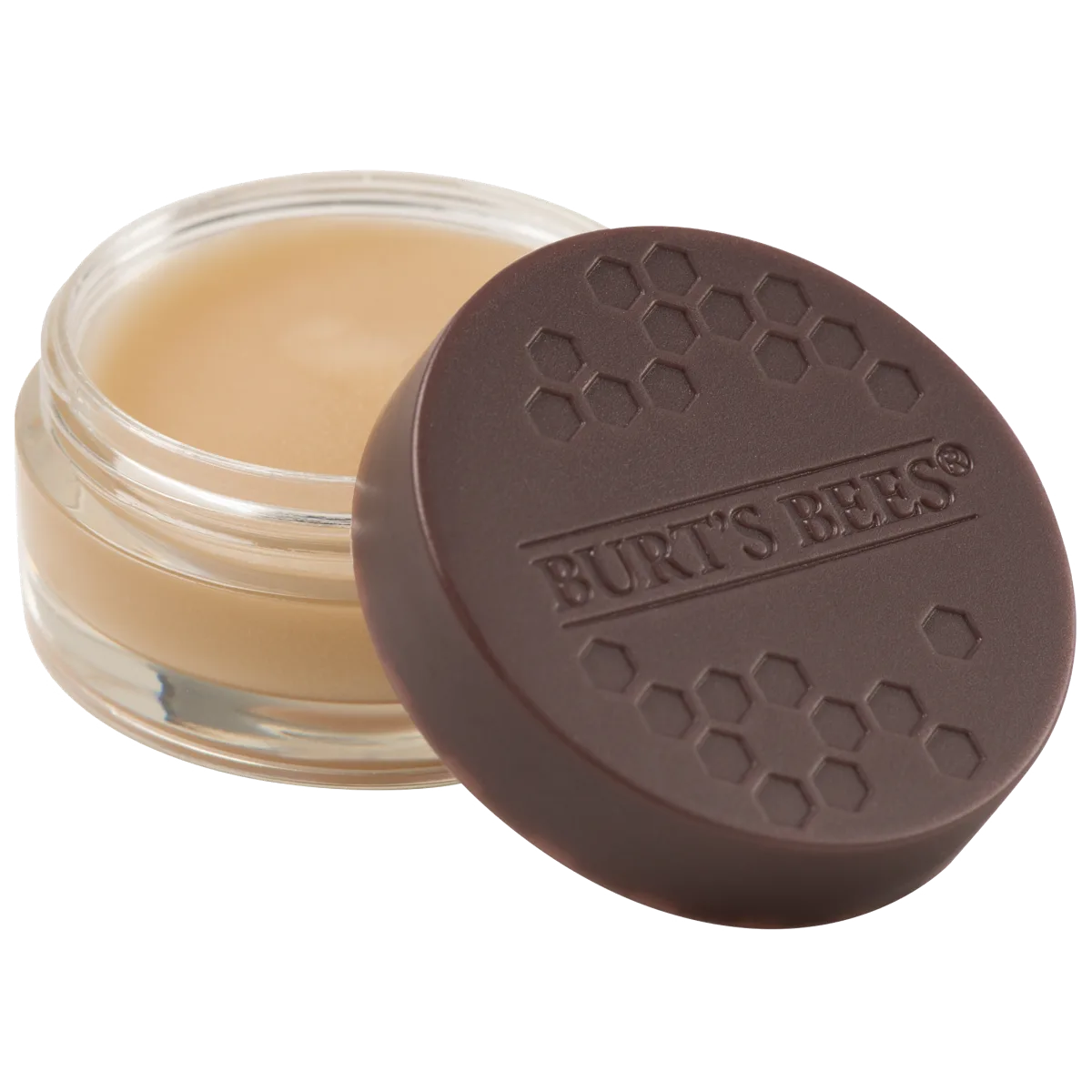
Overnight Intensive Lip Treatment
Lip Repair Specialist
 Verified reviewer
Pros & cons.
- +Ceramide NP provides genuine lip barrier repair, not just surface coating
- +Anhydrous lipid base optimizes ceramide bioavailability in the lip tissue
- +Multi-layer moisture system: glycerin humectant sealed under occlusive plant waxes
- +100% natural origin with no petroleum-based ingredients
- +Small amount provides full overnight coverage — jar lasts 2-3 months
- +Morning-after results are noticeably better than standard lip balms
- +Stays in place throughout the night without significant pillow transfer
- −Peppermint oil may sting on severely cracked or damaged lips
- −Jar packaging requires finger application, raising hygiene concerns
- −Small 0.25 oz size feels expensive at first glance despite lasting months
- −Too heavy and glossy for comfortable daytime wear
- −Contains limonene and linalool fragrance allergens
The full review.
Burt’s Bees has worked in the lip business since 1984, when Roxanne Quimby made candles from Burt Shavitz’s leftover beeswax in rural Maine. The original lip balm became one of America’s most recognizable personal care products—a yellow tube found in more pockets, purses, and glove compartments than almost any other beauty product. When the brand releases an Overnight Intensive Lip Treatment for ten dollars per quarter-ounce jar, the promise is clear: this is forty years of lip expertise applied directly.
The formula uses an ingredient most people do not expect in a lip product: Ceramide NP. Ceramides are lipids that form the mortar between skin barrier cells; CeraVe built an entire brand around their role in facial skincare. But lips differ from facial skin. They lack oil glands, have a thinner stratum corneum, and sit in a uniquely exposed position. The lip barrier is your weakest barrier, which is why lips crack and peel when the air dries.
Putting Ceramide NP in an anhydrous, oil-based formula is a smart choice. Ceramides are lipids that dissolve in fats, not water. In water-based creams, emulsifying ceramides can reduce bioavailability. In this triglyceride and wax base, the ceramide exists in its native fat-soluble environment, allowing better integration into the lip’s lipid matrix. It is like planting a tree in the right soil rather than a pot.
The base is a well-constructed lipid system. Caprylic/capric triglyceride—a lightweight, non-comedogenic oil from coconut—is the primary vehicle. Jojoba seed oil and jojoba esters add biomimetic wax esters that lip tissue recognizes. Glycerin pulls moisture into the lip tissue from below, while sunflower seed wax and acacia flower wax form a breathable barrier above to prevent moisture loss. The result is a sandwich: humectant moisture trapped beneath an emollient and occlusive seal, with the ceramide working on the structural level between layers.
The texture is thick—heavier than a standard lip balm. You scoop a small amount from the jar (a very small amount is sufficient) and press it onto your lips, where body heat melts it into a glossy film. It does not sink in like a light balm. It sits there, forming a protective shield for hours. This is intentional; overnight wear requires a formulation that stays put through eight hours of sleep and face-plant-into-pillow situations.
Peppermint oil is the formula’s divisive element. It provides a subtle cooling tingle that most users find pleasant. However, peppermint oil is a known irritant; it can sting lips that are already cracked, bleeding, or deeply chapped. This ingredient feels like a concession to the Burt’s Bees brand identity rather than a formulation necessity. A peppermint-free version would reach people whose lips are in the worst shape and need it most.
The morning-after results justify the price. Lips that were dry, flaky, and rough at bedtime feel transformed—softer, smoother, and subtly plump from overnight hydration. This is not temporary film-softness that vanishes after coffee; it is actual tissue hydration and early barrier repair that lasts through the morning. After three to five nights of consistent use, chronic lip dryness should improve, and the peeling cycle that causes lip-balm dependency starts to break.
The jar packaging is functional but imperfect. Finger application raises hygiene concerns for a product used on the mouth. A tube or squeeze applicator would be more sanitary and travel-friendly. The 0.25-ounce size looks small but lasts two to three months with nightly use because the thick formula requires very little per application.
At roughly ten dollars, this sits between drugstore lip balms and prestige lip masks. The Ceramide NP alone justifies the price; it is a clinically validated barrier-repair ingredient most lip products at this price point lack. The 100% natural-origin formula adds value for consumers prioritizing ingredient transparency. Given the jar’s longevity, the per-use cost is minimal.
This product addresses the common complaint that lip balms coat but do not fix anything through formulation science. The ceramide repairs. The triglycerides and waxes protect. The glycerin hydrates. The jojoba conditions. It is a simple, well-reasoned formula from a brand that has spent forty years studying lip needs.
Texture
The texture is thick—heavier than a standard lip balm. You scoop a small amount from the jar (a very small amount is sufficient) and press it onto your lips, where body heat melts it into a glossy film. It does not sink in like a light balm. It sits there, forming a protective shield for hours. This is intentional; overnight wear requires a formulation that stays put through eight hours of sleep and face-plant-into-pillow situations.
Scent
Peppermint oil is the formula’s divisive element. It provides a subtle cooling tingle that most users find pleasant. However, peppermint oil is a known irritant; it can sting lips that are already cracked, bleeding, or deeply chapped. This ingredient feels like a concession to the Burt’s Bees brand identity rather than a formulation necessity. A peppermint-free version would reach people whose lips are in the worst shape and need it most.
Best for
The morning-after results justify the price. Lips that were dry, flaky, and rough at bedtime feel transformed—softer, smoother, and subtly plump from overnight hydration. This is not temporary film-softness that vanishes after coffee; it is actual tissue hydration and early barrier repair that lasts through the morning. After three to five nights of consistent use, chronic lip dryness should improve, and the peeling cycle that causes lip-balm dependency starts to break.
Packaging
The jar packaging is functional but imperfect. Finger application raises hygiene concerns for a product used on the mouth. A tube or squeeze applicator would be more sanitary and travel-friendly. The 0.25-ounce size looks small but lasts two to three months with nightly use because the thick formula requires very little per application.
Who Should Buy
At roughly ten dollars, this sits between drugstore lip balms and prestige lip masks. The Ceramide NP alone justifies the price; it is a clinically validated barrier-repair ingredient most lip products at this price point lack. The 100% natural-origin formula adds value for consumers prioritizing ingredient transparency. Given the jar’s longevity, the per-use cost is minimal.
Works for
This product addresses the common complaint that lip balms coat but do not fix anything through formulation science. The ceramide repairs. The triglycerides and waxes protect. The glycerin hydrates. The jojoba conditions. It is a simple, well-reasoned formula from a brand that has spent forty years studying lip needs.
Ingredient analysis.
Full INCI list
Caprylic/Capric Triglyceride, Oleic/Linoleic/Linolenic Polyglycerides, C10-18 Triglycerides, Glycerin, Simmondsia Chinensis (Jojoba) Seed Oil, Glyceryl Behenate, Glyceryl Stearate, Hydrogenated Castor Oil, Jojoba Esters, Octyldodecanol, Helianthus Annuus (Sunflower) Seed Wax, Ceramide NP, Mentha Piperita (Peppermint) Oil, Caramel, Acacia Decurrens Flower Wax, Polyglycerin-3, Limonene, Linalool
Skin match.
The science.
The Science
Ceramide NP (N-palmitoyl sphinganine) is a major ceramide species in the stratum corneum, making up about 50% of the intercellular lipid matrix by weight. Research in the Journal of Investigative Dermatology shows that ceramide depletion correlates with impaired barrier function and that topical ceramide supplementation restores barrier integrity. Most ceramide research targets facial and body skin, but these principles apply even more to lip tissue, which has a thinner stratum corneum and lacks sebaceous glands for endogenous lipid support.
The anhydrous delivery system in this formula improves ceramide bioavailability. A 2016 study in the International Journal of Pharmaceutics shows that ceramides in lipid-based vehicles penetrate skin better than aqueous emulsions, because the lipid environment keeps ceramides in a form that incorporates easily into the stratum corneum lamellar structure.
Jojoba oil contains wax esters—mostly eicosenoic acid esterified with long-chain alcohols—that resemble human sebum more closely than any other plant oil. Research in the International Journal of Cosmetic Science documents this biomimetic property, which helps it integrate with the skin's native lipid architecture and improves the delivery of co-formulated lipids like the ceramide NP in this product.
Dermatologist Perspective
Dermatologists know the lip vermilion border has unique barrier challenges: a thinner stratum corneum, no sebaceous glands, and constant saliva exposure, which dehydrates skin through evaporative moisture loss. Board-certified dermatologists increasingly recommend ceramide-containing lip products for patients with chronic cheilitis or lip dryness, because ceramide supplementation fixes the structural lipid deficiency instead of just masking symptoms. The peppermint oil in this formula might concern most dermatologists for patients with active lip inflammation or eczematous cheilitis, though most users with intact lip tissue tolerate it well.
Where it fits in your routine.
Apply a thin, even layer to clean, dry lips with a fingertip or small lip brush before bed. A pea-sized amount covers both lips. Apply slightly past the lip line to treat the delicate border area. Wait 1-2 minutes before lying down so the formula sets. The treatment stays in place during normal sleep. In the morning, blot any residual product with a tissue or rinse with warm water before applying daytime lip products.
At $9.99 for 0.25 ounces, the upfront cost looks high. However, the concentrated formula lasts two to three months of nightly use, making the per-application cost under ten cents. The ceramide NP inclusion provides the main value: prestige lip masks at $20-25 often lack real barrier-repair ingredients. Burt's Bees' lip care expertise and the 100% natural-origin formula justify the price. This is a treatment rather than a commodity lip balm, and the per-use value shows that distinction.
This works for anyone with chronically dry, peeling, or uncomfortable lips, especially during fall and winter. It suits lip-balm users who want a treatment that repairs barrier damage overnight. It also fits those who prefer natural-origin ingredients and ceramide technology without petroleum-based formulas.
Avoid this product if your lips are severely cracked, bleeding, or inflamed until the damage heals, because peppermint oil causes stinging. This product is too heavy and glossy for people who prefer lightweight, invisible lip products. Patch-test first if you have known sensitivities to peppermint, limonene, or linalool.
Product details.
Thick, balm-like texture melts slightly on warm lips and forms a substantial protective layer
Mentha piperita oil provides subtle peppermint that feels cooling and fresh without being overwhelming.
Small 0.25 oz jar with screw-top lid
The balm feels thick on first application, heavier than a standard lip balm. The peppermint oil gives a mild cooling tingle that fades within minutes. By morning, lips feel softer, smoother, and lack the typical dry, peeling feeling. The product stays in place well overnight.
2-3 months with nightly use
12 months
fall winter
The backstory.
Burt's Bees built a billion-dollar brand on the back of a beeswax lip balm — so when they launched a premium overnight lip treatment in 2017, the expectations were high. This product represents the brand's evolution from basic lip protection to active lip repair, incorporating ceramide science typically associated with facial skincare into a format designed for the uniquely thin, barrier-deficient skin of the lips.
About Burt's Bees
Legacy Brand (20+ years)Burt's Bees launched in 1984 and built its reputation on lip care. The original beeswax lip balm is still one of America's best-selling lip products. Four decades of lip care expertise gives this treatment product credibility.
Common myths.
Lip balms and treatments cause addiction—they make lips dependent on moisture.
This treatment contains ceramide NP, which repairs the lip barrier without creating dependency. Lip tissue lacks oil glands and has a thinner stratum corneum than facial skin, so it needs external lipid support. Using a ceramide-containing treatment strengthens the barrier over time.
Peppermint oil in lip products is always irritating.
At this concentration — far below the primary actives — peppermint gives a mild cooling sensation without significant irritation for most users. However, people with severely cracked or bleeding lips must avoid any product containing essential oils until the acute damage heals.
FAQ.
Does Burt's Bees lip treatment contain ceramides?
Yes — it contains Ceramide NP, a lipid identical to those in the skin's barrier. This is unusual for a lip product and explains why the treatment repairs skin. The Ceramide NP rebuilds the lip's lipid barrier instead of just coating it, providing more lasting results than simple occlusive lip balms.
Is this lip treatment better than Laneige lip sleeping mask?
Their approaches differ. This Burt's Bees treatment uses ceramide NP in a 100% natural-origin, anhydrous formula to repair the barrier. Both work as overnight lip treatments, but this option suits users who prefer natural-origin ingredients and ceramide technology at a lower price point.
Can I use this lip treatment during the day?
The thick, glossy texture is not harmful during the day, but it feels heavier than most people want under lipstick or during daily activities. It is formulated for extended overnight wear. Burt's Bees offers lighter lip balms for daytime use that work better under makeup or for on-the-go application.
Will the peppermint oil irritate my lips?
For most users, the peppermint oil gives a mild, pleasant cooling sensation that fades in minutes. But if your lips are bleeding, severely cracked, or you have a known sensitivity to menthol or peppermint, the essential oil stings. Let acute damage heal before you use this treatment.
What the community says.
"Lips feel dramatically softer by morning"
"Stays on throughout the night without transferring to pillowcase"
"Ceramide formula provides genuine repair, not just coating"
"A little product goes a long way"
"100% natural origin ingredients"
"Small container for the price point"
"Peppermint oil may irritate very sensitive or cracked lips"
"Thick texture can feel heavy for some users"
"Jar packaging requires finger application"