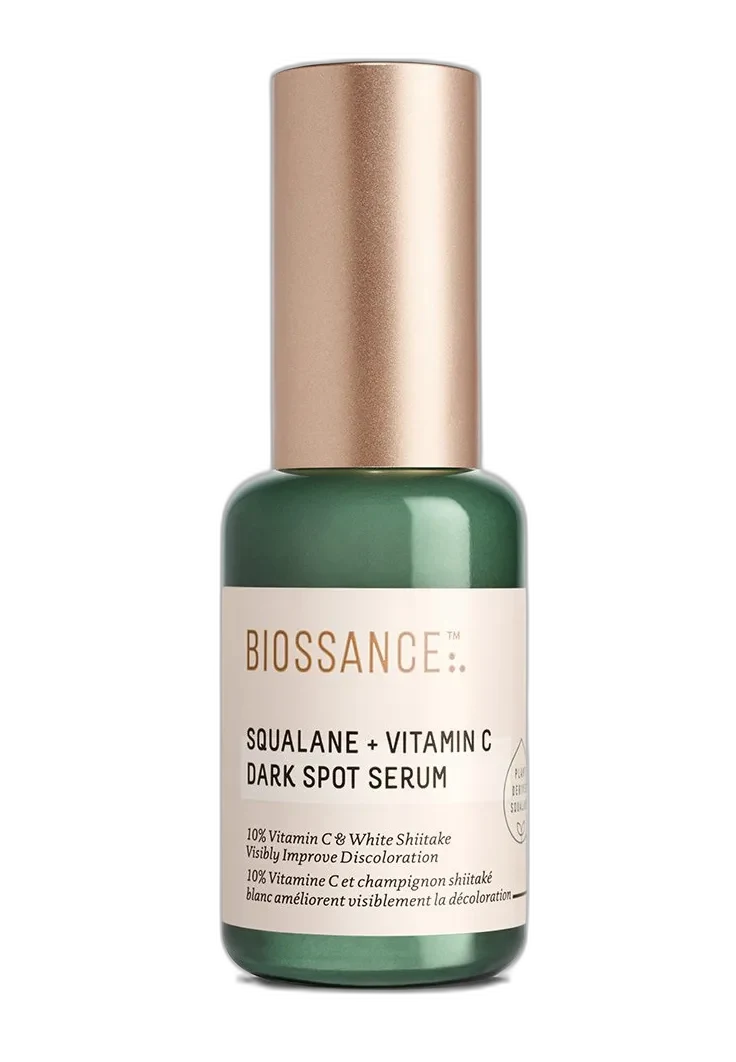
Squalane + Vitamin C Dark Spot Serum
Clean Beauty Brightener
 Verified reviewer
Pros & cons.
- +Exceptionally stable vitamin C derivative that resists oxidation throughout product life
- +Triple-pathway brightening approach targets melanin through complementary mechanisms
- +Fragrance-free, gentle formula suitable for sensitive skin types
- +Lightweight texture absorbs instantly and layers well under sunscreen and makeup
- +No stinging, tingling, or adjustment period — works from day one
- +Short, purposeful ingredient list with minimal filler
- +EWG Verified and Sephora Clean certified with Leaping Bunny cruelty-free status
- −At $68 for one ounce, the clean beauty premium is significant
- −Results are gradual — not ideal for those seeking rapid dramatic improvement
- −May not be potent enough for deep, established melasma or severe pigmentation
- −White shiitake mushroom extract has limited independent clinical validation
- −Only one size available at full price, limiting trial options
The full review.
Every skincare enthusiast has a vitamin C horror story. The serum that turned orange in two weeks. The one that stung so badly it brought tears. The expensive bottle that sat in the fridge like a condiment, slowly becoming useless. Biossance looked at this landscape of frustrated consumers and oxidized serums and made a deliberate choice: they would sacrifice some of the raw potency purists worship at the altar of L-ascorbic acid in exchange for a formula that actually works from the first pump to the last.
The Squalane + Vitamin C Dark Spot Serum uses 3-O-ethyl ascorbic acid at 10% — a stabilized vitamin C derivative that has quietly been gaining credibility in cosmetic chemistry circles. It is not the celebrity ingredient that L-ascorbic acid is. It does not have the decades of dermatological literature behind it. What it does have is exceptional resistance to oxidation, meaning this serum will not turn into an expensive brown liquid in your medicine cabinet. For a product designed to be used twice daily over months, that practical advantage matters more than theoretical potency charts suggest.
The ingredient list is refreshingly short — sixteen ingredients total, and nearly all of them are doing something. Glycerin and sodium hyaluronate provide hydration. Squalane delivers the biomimetic lipid support that Biossance built its brand on. And then the formula brings out its party trick: a triple-pathway brightening approach that layers three distinct melanin-inhibition mechanisms.
The ethyl ascorbic acid handles tyrosinase inhibition — the same mechanism that makes L-ascorbic acid effective, just delivered through a more shelf-stable molecule. White shiitake mushroom extract, Biossance’s proprietary botanical, comes in through a complementary pathway. Lentinus edodes mycelium contains compounds structurally related to kojic acid, a well-known depigmenting agent, though the specific extract’s clinical evidence is still emerging. And licorice root extract rounds out the trio with glabridin, one of the most researched botanical brighteners in cosmetic dermatology, which inhibits melanin transfer while also calming inflammation.
The logic is sound: if one pathway of melanin inhibition is good, three should be better, especially when they work through different mechanisms and are unlikely to cause the cumulative irritation that stacking multiple potent actives can trigger. It is a diplomatic approach to brightening — negotiation rather than force.
Texturally, this serum earns its keep. It applies as a lightweight, slightly milky fluid that absorbs in seconds without tackiness, stickiness, or the silicone slip that some vitamin C serums use to fake an elegant finish. Under sunscreen, it layers invisibly. Under makeup, it behaves. This is a serum designed for real-world daily use, not just for bathroom-counter vanity shots.
The fragrance-free formula is genuinely gentle. Where many vitamin C serums operate at a low pH that causes tingling or flushing — sometimes marketed as evidence that the product is working, which is a myth — this formula uses a derivative that functions at a skin-friendly pH. No adjustment period, no redness, no stinging. For people who have been told their skin is too sensitive for vitamin C, this is the product that proves that assumption wrong.
Results come in two waves. The immediate brightening glow is visible from the first application — partly hydration, partly the optical effect of a well-formulated vitamin C on light reflection. The deeper, corrective work — actual fading of dark spots, sun damage, and post-inflammatory hyperpigmentation — requires the patience that all meaningful skincare demands. Most users report visible spot improvement within one to two weeks, with more significant results building over four to eight weeks. These are realistic timelines, and Biossance deserves credit for not overpromising.
Where this serum shows its limits is on deep, established pigmentation. Melasma, years-old sun spots, and stubborn post-inflammatory marks may not respond as dramatically to this formula as they would to a prescription-strength treatment or a high-concentration L-ascorbic acid paired with aggressive exfoliation. This serum plays the long game with gentle consistency rather than shock-and-awe intensity. For mild to moderate pigmentation concerns, that approach works beautifully. For more serious cases, it may need to be part of a larger treatment plan rather than the sole solution.
The price point — sixty-eight dollars for one ounce — places this squarely in the premium clean beauty category. You are paying for Biossance’s biotech-sourced squalane, the Sephora Clean certification, and the EWG verification. The formula itself, while well-constructed, uses ingredients that are not inherently expensive. Whether the clean beauty premium is worth it depends on how much you value the sustainability story and the rigorous exclusion list that comes with these certifications.
For context, this serum has accumulated roughly 900 reviews with a 4.4-star average, which is strong but not overwhelming for a product that has been on market for several years. The reviews skew positive, with brightening and texture improvement consistently cited as highlights. The most common criticism — that results are too gradual — actually reflects appropriate expectations for a gentle vitamin C formula rather than a product flaw.
Biossance set out to make a vitamin C serum that ordinary people could actually use every day without drama. No oxidation anxiety, no stinging, no complicated storage requirements, no twelve-step layering conflicts. On those terms, they succeeded. This is not the most powerful vitamin C serum on the market. It is, however, one of the most usable — and for anyone who has abandoned vitamin C products out of frustration, that distinction makes all the difference.
Formula
### PM routineIngredient analysis.
Full INCI list
Water/Aqua/Eau, Glycerin, 3-O-Ethyl Ascorbic Acid, Squalane, Lentinus Edodes Mycelium Extract, Hydroxyethyl Acrylate/Sodium Acryloyldimethyl Taurate Copolymer, Glycyrrhiza Glabra (Licorice) Root Extract, Sodium Hyaluronate, Citric Acid, Polyacrylate Crosspolymer-6, Acacia Senegal Gum, Xanthan Gum, Sodium Gluconate, Sodium Citrate, Phenoxyethanol, Ethylhexylglycerin
Skin match.
The science.
The Science
The primary active, 3-O-ethyl ascorbic acid, is an ether derivative of L-ascorbic acid that is more stable. A 2021 study in Molecules found that a 10% 3-O-ethyl ascorbic acid serum reduced dark spots by 4.25% and increased skin brightness by 4.49% in clinical evaluation, while remaining stable under accelerated aging conditions. This derivative inhibits tyrosinase—the rate-limiting enzyme in melanin synthesis—using a pathway similar to L-ascorbic acid. However, the ethyl group at the 3-position protects the molecule from the rapid oxidative degradation that makes many vitamin C serums ineffective weeks after opening.
A 2019 study in Free Radical Biology and Medicine showed that 3-O-ethyl ascorbic acid inhibited melanogenesis in UVA-irradiated keratinocytes through Nrf2-mediated pathways and induced autophagy in melanocytes. This suggests the derivative works through mechanisms beyond simple tyrosinase inhibition. This dual action explains why clinical results with ethyl ascorbic acid sometimes exceed predictions based on tyrosinase inhibition alone.
Licorice root extract adds a brightening mechanism via glabridin, which inhibits tyrosinase activity at concentrations as low as 0.1 microgram/mL. A review in the Journal of Cosmetic Dermatology noted that Glycyrrhiza glabra extract disperses existing melanin and prevents new melanin formation. This dual action enhances its corrective capacity when paired with a tyrosinase inhibitor like the vitamin C derivative in this formula.
The squalane base does more than provide emollience. Research in the International Journal of Pharmaceutics (2019) found that solvent systems containing glycerol—also in this formula—enhanced the skin permeation of 3-O-ethyl ascorbic acid. This suggests the delivery vehicle optimizes the active's bioavailability.
References
- The Anti-Ageing and Whitening Potential of a Cosmetic Serum Containing 3-O-ethyl-l-ascorbic Acid — Molecules (2021)
- 3-O-ethyl-l-ascorbic acid: Characterisation and investigation of single solvent systems for delivery to the skin — International Journal of Pharmaceutics: X (2019)
Dermatologist Perspective
Dermatologists often recommend vitamin C serums for hyperpigmentation treatment. This formula's gentle approach works for patients who cannot tolerate traditional L-ascorbic acid products. Board-certified dermatologists note that while 3-O-ethyl ascorbic acid lacks the deep clinical literature of L-ascorbic acid, its stability is clinically meaningful—a vitamin C product that degrades on the shelf provides no benefit. The triple-brightening approach using vitamin C, mushroom extract, and licorice root follows the dermatological principle that multi-mechanism approaches to hyperpigmentation outperform single-agent strategies. Dermatologists typically recommend using this serum with daily broad-spectrum SPF 30 or higher for optimal results.
Where it fits in your routine.
Apply 1-2 pumps to clean, dry skin every morning and evening. Smooth over the face, neck, and décolletage. Wait 30-60 seconds for absorption before applying moisturizer and sunscreen. In the morning, always use SPF 30 or higher — vitamin C boosts sun protection but does not replace it. Layer under retinol in the evening if desired. Store at room temperature away from direct sunlight; this formula's stability makes it less sensitive to environmental conditions than pure L-ascorbic acid serums.
At $68 for one ounce, this serum costs more than many vitamin C options, which exist at every price point. The price covers Biossance's biotech squalane sourcing, clean beauty certifications, and the triple-brightening formula research. A travel size exists for those who want to trial the serum before committing. For consumers who prioritize clean beauty credentials, stability, and gentle efficacy, the price competes within the Sephora Clean vitamin C category. Budget-focused shoppers find comparable brightening results from simpler, cheaper formulas, though these have less stability and higher irritation risk.
This vitamin C serum works for mild to moderate dark spots, post-inflammatory hyperpigmentation, dullness, or early sun damage. It is a gentle, daily-use option. It suits sensitive skin types that react to traditional vitamin C formulations.
This is for people with deep, stubborn melasma or severe hyperpigmentation who need maximum-strength brightening agents. It does not suit shoppers on a tight budget who can find effective vitamin C serums at lower price points without the clean beauty premium.
Product details.
Lightweight, slightly milky serum with a smooth, silky texture. It absorbs fast without stickiness or residue.
Fragrance-free. Minimal inherent product scent — faintly neutral.
An opaque pump bottle limits light and air exposure. The white exterior features Biossance branding.
The serum feels lightweight and hydrating on first application, showing a subtle brightening effect immediately. Most users experience no tingling, stinging, or adjustment period. The texture works well under moisturizer and sunscreen. Users often notice early brightness improvements within the first few days.
2-3 months with twice-daily use on face and neck
12 months
All Year
The backstory.
Biossance developed this serum to solve the instability problem that plagues most vitamin C products. By choosing 3-O-ethyl ascorbic acid over the more common but notoriously unstable L-ascorbic acid, and pairing it with their proprietary white shiitake mushroom extract, they created a vitamin C serum that stays effective on the shelf without sacrificing brightening performance — a direct response to the common consumer complaint of vitamin C serums oxidizing before they are finished.
About Biossance
Established Brand (5–20 years)Biossance launched in 2016 as a skincare offshoot of Amyris, a biotechnology company that uses sugarcane fermentation to engineer plant-derived squalane. The brand has credibility through its patented biotech ingredient sourcing, but specific formulations have less independent clinical validation than legacy derm-developed brands.
Common myths.
Only L-ascorbic acid brightens skin; vitamin C derivatives do nothing.
Clinical studies show 3-O-ethyl ascorbic acid brightens skin and stays more stable than L-ascorbic acid. This formula uses a 10% concentration to inhibit tyrosinase without the oxidation issues that reduce the effectiveness of pure L-AA serums over time.
Vitamin C serums sting or tingle to show they work.
Stinging means irritation, not efficacy. This serum uses a gentle vitamin C derivative at a non-irritating pH to work without an inflammatory response. Inflammation worsens hyperpigmentation, so a non-irritating formula works better for dark spot treatment.
FAQ.
Does the Biossance Vitamin C Dark Spot Serum actually fade dark spots?
The serum uses a triple-brightening approach — 10% ethyl ascorbic acid, white shiitake mushroom extract, and licorice root — to target melanin production through three distinct pathways. Most users see dark spots fade within 1-2 weeks, with more significant fading after 4-8 weeks of consistent use alongside daily SPF.
Is 3-O-ethyl ascorbic acid as effective as L-ascorbic acid?
3-O-ethyl ascorbic acid is a stabilized vitamin C derivative. It inhibits tyrosinase and boosts collagen like L-ascorbic acid but has much better shelf stability. L-AA has a slight edge in raw potency, but this derivative resists oxidation. This keeps it effective throughout the product's life, a practical advantage that closes the gap.
Can I use this serum with retinol?
Yes. This serum's gentle formula works well with retinol products. Apply the vitamin C serum first, let it absorb, then use your retinoid. The squalane and hyaluronic acid in the formula act as a hydrating buffer. Many users use this serum in both AM and PM, adding retinol only at night.
Is this serum safe for sensitive skin?
This vitamin C serum works well for sensitive skin. It is fragrance-free, uses a non-irritating vitamin C derivative rather than acidic L-ascorbic acid, and contains soothing licorice root extract. The formula lacks common irritants and suits most sensitive skin types.
How long does it take to see results from this serum?
Most users see an immediate brightening glow after the first application. Existing dark spots show visible improvement within 1-2 weeks of twice-daily use. Fading and more even tone develop over 4-8 weeks. Consistent SPF use is essential because sun exposure creates new pigmentation that undermines the serum's work.
Should I use this serum in the morning or at night?
Both. In the morning, the vitamin C provides antioxidant protection against UV-induced pigmentation when layered under sunscreen. At night, it repairs and brightens while you sleep. The lightweight formula works twice daily without feeling heavy or greasy.
Does this vitamin C serum oxidize quickly?
No — that is a key advantage. 3-O-ethyl ascorbic acid is more stable than L-ascorbic acid. Studies show it keeps potency at high temperatures for long periods. The opaque pump packaging also protects against light degradation. This serum stays effective through its entire PAO period.
What the community says.
"Visibly brightens skin within the first week"
"Lightweight texture that layers well under makeup"
"Fragrance-free and non-irritating"
"Fades dark spots and sun damage effectively"
"Premium price for a 1 oz bottle"
"Results are gradual rather than dramatic"
"Some users find it not potent enough for deep pigmentation"
"Packaging could be more protective of vitamin C stability"
Featured in.
People also looked at.