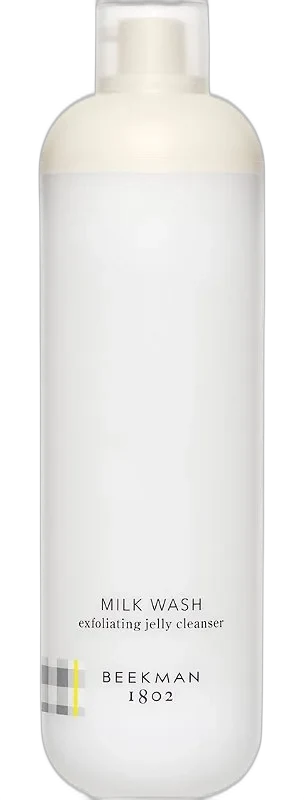
Milk Wash Exfoliating Jelly Cleanser
Multi-Acid Resurfacing Cleanser
 Verified reviewer
Pros & cons.
- +Multi-acid blend — lactic, glycolic, salicylic, tartaric, malic — delivers real exfoliation
- +Oil-to-milk transformation removes makeup AND chemically exfoliates in one step
- +Bifida ferment lysate buffers acids and adds barrier support — unusual in a cleanser
- +Fragrance-free formulation, rare for an acid cleanser at this complexity
- +Goat milk and microbiome supporting cast align with brand identity
- +Coherent soothing botanical roster supports the clinical actives
- +Strong cross-retailer review traction since 2022 launch
- −Daily use too aggressive — must be limited to 1-3 times per week
- −Salicylic acid content makes pregnancy use cautious
- −Not appropriate for sensitive skin, rosacea, or compromised barriers
- −Acid stacking with retinoids or vitamin C requires careful routine planning
- −$30 for 5 oz at 1-3x weekly use is reasonable but not bargain-tier
- −Goat milk content rules it out for vegan users
The full review.
Beekman 1802’s identity is built on gentleness. Goat milk soap, microbiome research, fragrance-free formulations, sensitive-skin positioning — the brand has spent two decades cultivating a reputation as the soft, farm-derived alternative to clinical skincare. So Milk Wash is genuinely surprising. It’s the rare Beekman product that leans clinical: a multi-acid exfoliating cleanser with lactic acid, glycolic acid, salicylic acid, tartaric acid, and malic acid all sitting in the top portion of the INCI list, supported by an oil-to-milk transformation chemistry borrowed from K-beauty. This is a real exfoliating product. It’s not hiding behind the goat milk story.
The format is interesting and worth understanding before you use it. The product comes out of the tube as a clear oil-based jelly — ethylhexyl palmitate, glycerin, and sucrose laurate are the top three ingredients. You apply it to dry skin, where it slides smoothly without foaming, dissolving makeup and surface oil through lipophilic interaction. Then you add water, and the sucrose esters emulsify the oil phase into a milky cleanser that rinses cleanly. This jelly-to-milk transformation lets the formula function as both a makeup remover and a daily-style cleanser in a single step, and it gives the salicylic acid a chance to penetrate pores more effectively than a water-only cleanser would, because the oil phase carries the BHA into the lipid environment of the pore.
The acid blend is doing real work. Lactic acid sits highest and provides the gentlest of the AHAs. Glycolic acid follows, contributing the smaller-molecule deeper-penetrating chemical exfoliation. Salicylic acid is the lone BHA, oil-soluble and pore-clearing. Tartaric acid and malic acid add fruit-derived AHA support and pH buffering. None of these is at a percentage that would qualify as a leave-on treatment level, but the contact time on the face during cleansing is enough to deliver meaningful surface resurfacing, especially with consistent use 1-3 times per week. This is exactly the use case Beekman recommends, and it’s the right cadence — daily use would be overkill for almost everyone and risks barrier disruption.
Where the formulation gets distinctively Beekman is in the supporting cast. Goat milk sits below the acids on the INCI list, contributing its own natural lactic acid alongside the dedicated AHA. Colostrum, Bifida ferment lysate, lactose, and milk protein extend the dairy-derived microbiome story that runs through the brand’s catalog. Bifida ferment lysate is particularly notable here — it’s the same probiotic-derived ingredient class behind several luxury barrier-repair serums, and its inclusion in a cleanser is unusual and helps buffer the surface effects of the acid blend. A roster of fruit extracts (bilberry, sugar maple, orange, lemon, sugarcane) adds antioxidant support and modest natural acid content. Honey, aloe, chamomile, blue thistle, comfrey, and cucumber soothe. The whole thing is fragrance-free, which is unusual and welcome for an acid cleanser.
Texture-wise, the experience is satisfying. The jelly slides over dry skin without dragging, transforms into a milky emulsion as soon as water hits it, and rinses cleanly without leaving residue. Mild tingling from the acid blend is normal on first use or after a hiatus and should subside within a minute or two; strong stinging is a sign to rinse immediately and reduce frequency. Skin looks brighter and feels smoother after a single use, with consistent improvement in dullness, congestion, and texture over 2-4 weeks of regular 1-3x weekly use.
The honest caveats are real and worth taking seriously. Pregnancy use is something we’d flag for caution — the salicylic acid content is technically a low rinse-off exposure, but most OBs prefer pregnant patients avoid BHA-containing products entirely. Sensitive skin, rosacea, and compromised barriers should choose a gentler cleanser. Daily use is too aggressive for almost everyone. Stacking with leave-on retinoids or vitamin C on the same night is asking for trouble. SPF 30+ the following day is non-negotiable, since chemical exfoliation increases sun sensitivity. And as always with Beekman, the milk-derived ingredients rule the product out for vegan users.
For someone asking whether to buy this, we’d say yes if you have congested, dull, or textured skin and you want chemical exfoliation delivered in a cleanser format that’s gentler than a typical AHA serum — and especially if you want a product that bridges Beekman’s microbiome positioning with real clinical actives. Skip it if you’re pregnant, if you have sensitive or barrier-compromised skin, if vegan certification matters, or if you’d rather have a leave-on AHA serum that delivers higher acid contact time. Milk Wash is one of Beekman’s smartest formulations, and it shows the brand can build clinically when the active calls for it.
Ingredient analysis.
Full INCI list
Ethylhexyl Palmitate, Glycerin, Water (Aqua), Sucrose Laurate, Lactic Acid, Glycolic Acid, Salicylic Acid, Tartaric Acid, Malic Acid, Caprae Lac (Goat Milk), Colostrum, Bifida Ferment Lysate, Lactose, Milk Protein, Vaccinium Myrtillus (Bilberry) Fruit Extract, Acer Saccharum (Sugar Maple) Extract, Citrus Aurantium Dulcis (Orange) Fruit Extract, Citrus Limon (Lemon) Fruit Extract, Saccharum Officinarum (Sugarcane) Extract, Honey, Aloe Barbadensis Leaf Juice, Chamomilla Recutita (Matricaria) Flower Extract, Eryngium Alpinum (Blue Thistle) Flower Extract, Symphytum Officinale Rhizome (Comfrey) Root Extract, Cucumis Sativus (Cucumber) Fruit Extract, Whey Protein, Sucrose Stearate, 1,2-Hexanediol, Caprylyl Glycol, Sucrose Palmitate, Citric Acid, C10-18 Triglycerides, Lecithin, Potassium Sorbate, Sodium Benzoate
Skin match.
The science.
The Science
Multi-acid cleansers sit in a middle ground for chemical exfoliation chemistry. Single-acid leave-on serums provide high contact time at controlled pH—the gold standard for AHA/BHA effects—but concentrate irritation risk on one mechanism. Multi-acid rinse-off cleansers like this one trade contact time for breadth: they offer shorter exposure but use multiple acid mechanisms together. Lactic acid is the gentlest AHA; in leave-on contexts, concentrations as low as 5% show documented effects on hydration and surface cell turnover. Glycolic acid is the smallest AHA molecule and penetrates deeper than lactic acid; published work shows regular use improves skin texture, fine lines, and pigmentation. Salicylic acid is the gold-standard BHA for pore decongestion, with decades of evidence for reducing acne and blackheads. Tartaric acid and malic acid provide pH buffering and modest AHA effects. The oil-to-milk transformation chemistry is also scientifically notable. The product base uses ethylhexyl palmitate (a lipid emollient), glycerin, and water, while sucrose laurate and sucrose stearate act as surfactants. When water is added during cleansing, the sucrose esters emulsify the oil phase into a milky cleansing suspension that rinses cleanly. This format lets the lipid-soluble salicylic acid work in the oil phase before the rinse, allowing more effective penetration into pore lipids than a pure water-based cleanser. Bifida ferment lysate has the strongest evidence base among the supporting microbiome ingredients, with published work on UV-induced DNA repair and barrier reinforcement. Goat milk, colostrum, and milk protein belong to an emerging category—Beekman has presented in-house research on goat milk and skin microbiome diversity, and skin microbiome literature has grown substantially over the last decade. The fruit extract antioxidant roster affects the product's character more than specific clinical outcomes. This formulation integrates clinical AHA/BHA chemistry with microbiome-supportive ingredients in a single rinse-off step.
Dermatologist Perspective
Dermatologists see multi-acid rinse-off cleansers as a useful intermediate between gentle daily cleansers and leave-on AHA/BHA serums. They suit patients who want chemical exfoliation but find leave-on acids too aggressive, or those who want to add exfoliation without changing their existing serum step. Board-certified dermatologists frequently recommend salicylic acid cleansers for patients with congestion, blackheads, and mild acne; the lactic acid and glycolic acid in this formulation also help patients with dullness and texture issues. The main caveats from dermatologists are frequency and sun protection: 1-3 times per week is the appropriate cadence, daily use is rarely advisable, and SPF 30+ the following day is essential because chemical exfoliation increases UV sensitivity. Pregnant patients are typically advised to avoid salicylic acid even in rinse-off products as a precaution.
Where it fits in your routine.
Use Milk Wash 1-3 evenings per week instead of your regular cleanser. Apply a small amount of the jelly to dry skin and massage gently for 30-60 seconds to dissolve makeup and oil. Wet your hands and massage again; the sucrose esters emulsify with water to turn the jelly into a milky cleanser. Massage for 15-30 seconds more, then rinse thoroughly with lukewarm water. Avoid the immediate eye area. On nights you use Milk Wash, skip leave-on retinoids and vitamin C serums to avoid stacking. Always wear SPF 30+ the following day. Follow with toner, hydrating serum, and moisturizer to support the barrier.
At $30 for 5 oz, Milk Wash costs about $7-$10 per month using it 1-3 times per week. This price is fair for a multi-acid cleanser with the microbiome support Beekman includes. The value beats luxury multi-acid cleansers from brands like Drunk Elephant or Sunday Riley, which cost $35-$50 for similar formulations. It costs more than The Ordinary's stripped-down acid products, which are cheaper but lack the supporting cast. A smaller travel size exists; it has worse per-ml value but works for testing. Beekman's three-year track record, the unusual ingredient combinations, and the fragrance-free formulation justify the price better than a typical brand-tier exfoliating cleanser.
Buyers with congested, dull, or textured skin want chemical exfoliation in a cleanser format gentler than a typical AHA serum. This also suits fans of Beekman's microbiome positioning who want a clinical product that connects the brand's gentle identity with effective resurfacing actives.
Skip this if you are pregnant or breastfeeding (caution with salicylic acid), have sensitive skin, rosacea, or a compromised barrier, or require vegan certification. Skip it if you prefer a leave-on AHA serum for higher acid contact time and easier control.
Product details.
Clear oil-based jelly turns into a milky emulsion when massaged with water
Naturally faint citrus-honey aroma from the fruit extracts; no added fragrance
Frosted plastic tube with flip cap
The jelly feels cushioned and silky on dry skin, then turns into a milky cleanser with water. The acid blend causes mild tingling on first use, but this usually stops within minutes. Skin looks brighter immediately.
3-4 months at 1-3 uses per week
12 months
All Year
The backstory.
Beekman 1802 launched Milk Wash as part of a 2022 expansion of the brand's face care lineup, designed to give microbiome-focused users access to chemical exfoliation in a sensitive-skin-friendly format. The oil-to-milk transformation borrowed from K-beauty cleansing chemistry, while the multi-acid blend reflected the brand's increasing willingness to incorporate clinical-grade actives alongside its farm-derived signature ingredients.
About Beekman 1802
Established Brand (5–20 years)Beekman 1802 launched in 2008 from a Sharon Springs, NY goat farm. The brand uses published in-house research to build its microbiome-focused skincare line. Milk Wash is part of the brand's award-winning cleanser lineup and has strong review traction across retailers.
Common myths.
Acid cleansers don't work because contact time is too short
Multi-acid cleansers like this one exfoliate effectively 1-3 times per week. This works because the formula uses fast-acting smaller acids (glycolic) and lipid-soluble acids (salicylic) that penetrate the cleanser's oil phase.
Use a chemical exfoliating cleanser daily for best results.
No — most people do not need a multi-acid cleanser daily, which risks barrier disruption. Use it 1-3 times per week, ideally on nights without a leave-on retinoid or vitamin C.
FAQ.
How often should I use this cleanser?
Use this 1-3 times per week in the evening, replacing your regular cleanser. Daily use is too aggressive for most and risks barrier disruption. On use nights, skip leave-on retinoids and vitamin C to avoid stacking acids.
Is it safe during pregnancy?
Use caution. The salicylic acid in this cleanser has low rinse-off exposure, but most OBs prefer pregnant patients avoid BHA-containing products. Beekman's Goat Milk Face Wash and Milk Froth are pregnancy-compatible alternatives.
Does it actually remove makeup?
Yes — the oil-based jelly format dissolves light and medium makeup. Waterproof or full-coverage makeup may still require a dedicated balm or oil cleanser first, but this works as a single-step PM cleanser for most users.
Will it irritate sensitive skin?
Sensitivity varies by person. Goat milk, Bifida ferment lysate, and soothing botanicals buffer the multi-acid blend, but the acids remain active. Patch test first, use once weekly to start, and check for redness or stinging. Users with rosacea or compromised barriers should use a gentler cleanser.
Can I use it with retinol?
Don't use them on the same night. Stacking chemical exfoliation with retinol's cell turnover effects risks significant irritation. Use Milk Wash on nights you skip retinol, or alternate products.
Why does it tingle on first use?
The AHA/BHA blend causes mild tingling, especially during first use or after a hiatus. This sensation subsides within one or two minutes. Strong stinging or burning means you must rinse immediately and reduce frequency or stop use.
How long does the bottle last?
Using the 5 oz tube 1-3 times per week lasts most users three to four months. This costs roughly $7-$10 per month, a reasonable price for a specialty exfoliating cleanser from an established brand.
Community
What the community says.
"Users consistently praise the immediate brightening effect"
"Smooths texture with minimal irritation"
"Doesn't strip skin like harsher acid cleansers"
"Removes makeup effectively in the oil phase"
"Can be too strong if used daily"
"Pricey for a rinse-off product"
"Acid load may irritate sensitive skin"
"Not suitable for compromised barriers"
Featured in.
People also looked at.