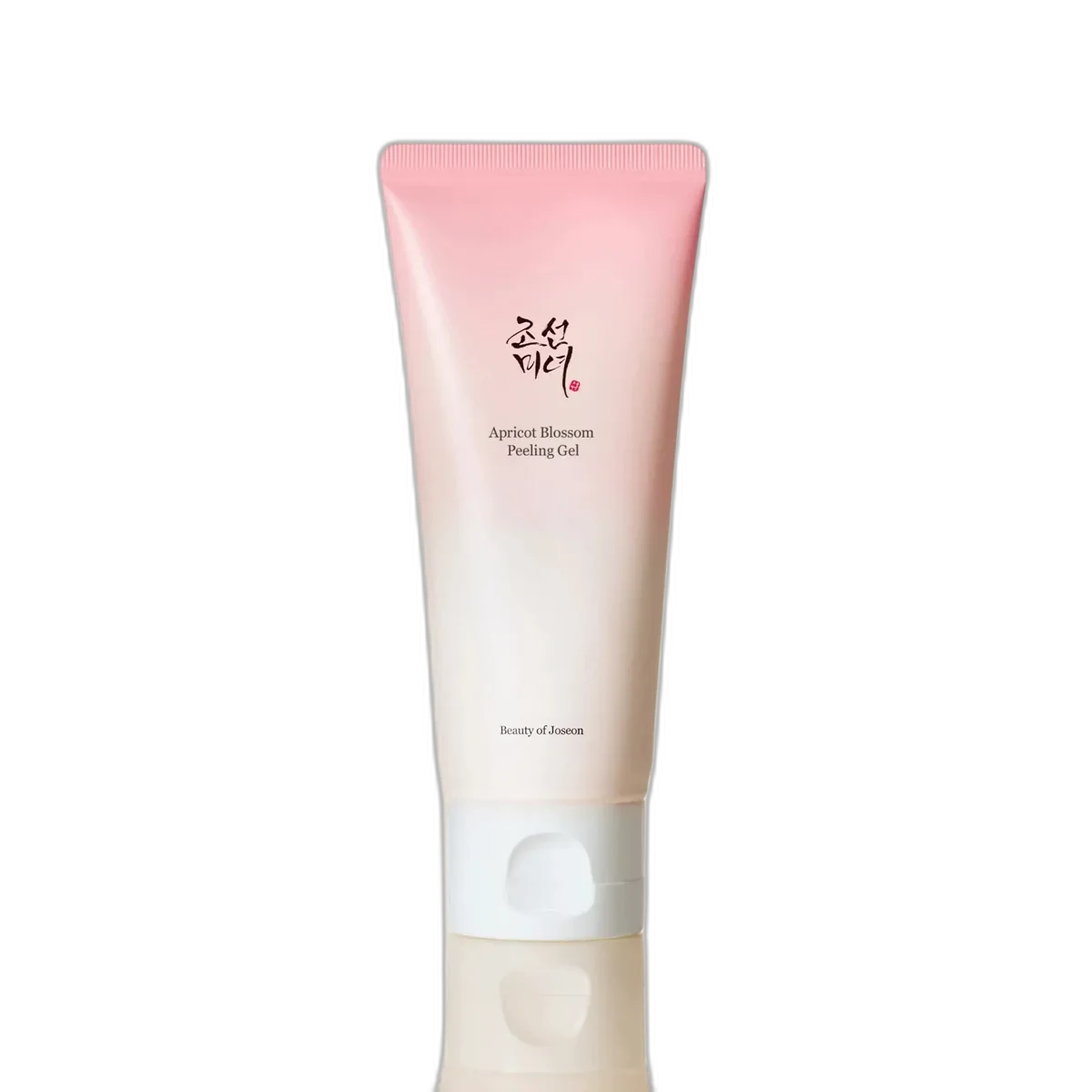
Apricot Blossom Peeling Gel
K-Beauty Gentle Exfoliation Favorite
 Verified reviewer
Pros & cons.
- +Plant-derived cellulose at 8% provides genuine physical exfoliation unlike polymer-only peeling gels
- +Extremely gentle — suitable for sensitive skin types who can't tolerate acid exfoliants
- +Immediate visible results with smoother, brighter skin after a single use
- +Clean formula free from PEGs, parabens, essential oils, artificial fragrance and colorants
- +Fungal acne safe ingredient profile — rare for the exfoliant category
- +Strong value at approximately $1 per use with weekly application
- +19% prunus mume flower water provides a genuine hanbang ingredient connection
- −Exfoliation is surface-level only — not a substitute for AHAs, BHAs, or retinoids for deeper concerns
- −The visible balling effect is partly the product's own ingredients, which can feel misleading
- −Some users report unexpected redness despite the gentle formulation
- −Small 100ml tube depletes quickly if used on body as the brand suggests
- −Prunus mume flower water has limited clinical evidence supporting specific skincare benefits
The full review.
There’s a particular satisfaction in watching what appears to be dead skin ball up under your fingertips. Peeling gels have made a cottage industry out of this visual payoff, and the dirty secret of the category is that much of what you’re seeing isn’t dead skin at all — it’s the product’s own polymers clumping together as you rub. The Beauty of Joseon Apricot Blossom Peeling Gel is honest enough to invite that scrutiny, and interesting enough to survive it.
What separates this from the gommage pack is the exfoliation mechanism. Where most peeling gels rely primarily on carbomer (a synthetic polymer) to create the balling effect, this formula leads with cellulose at 8% — actual plant-derived fiber that provides genuine mechanical exfoliation. The cellulose fibers are soft and round, nothing like the jagged micro-tear nightmare of ground walnut shells. When you massage this gel on dry skin, the cellulose balls up, creating friction that physically lifts dead cells, while also catching sebum and surface debris in its sticky little pearls. Yes, some of the visible balling is the product itself. But the end result — skin that’s measurably smoother and visibly brighter — is not a parlor trick.
The base is 19% prunus mume flower water, which is the Korean apricot blossom (technically a Japanese plum relative) that gives the product its name. In hanbang tradition, prunus mume is valued for its soothing and brightening properties. The evidence base for prunus mume in skincare is thin compared to powerhouse K-beauty ingredients like centella asiatica, but as a hydrating and aromatic base that replaces plain water in the formula, it’s a thoughtful choice that connects the product to Beauty of Joseon’s Joseon dynasty-inspired philosophy.
The supporting cast is modest but well-chosen. Allantoin provides post-exfoliation soothing, ensuring freshly buffed skin doesn’t feel raw or tight. Green tea extract contributes polyphenol antioxidants that are particularly useful on newly exfoliated skin — with the dead cell barrier temporarily thinned, the antioxidant protection matters. Rice extract adds a traditional brightening ingredient that’s been used in Korean beauty for centuries, and houttuynia cordata rounds things out as an anti-inflammatory botanical that’s become a quiet staple across K-beauty sensitive skin lines.
The texture experience is the product’s real selling point. The clear gel has a light, almost watery feel that transforms dramatically when you start massaging. Within ten seconds, soft balls begin forming under your fingertips — small, round, and satisfyingly abundant. The sensation is gentle enough that you could massage vigorously without discomfort, though a light touch is all that’s needed. After rinsing with lukewarm water, skin feels immediately different: smoother, slightly tighter in a freshly-polished way, and noticeably brighter.
What this product is not is a replacement for chemical exfoliation. If you have significant texture issues, stubborn closed comedones, or hyperpigmentation that needs addressing, you need glycolic acid, salicylic acid, or a retinoid doing the heavy lifting. This peeling gel works at the very surface level — it’s polishing, not resurfacing. Think of it as the difference between buffing a car’s finish and sanding down to bare metal.
The ingredient list is refreshingly clean. No PEGs, no essential oils, no parabens, no artificial fragrance or colorants. It’s fungal acne safe. It’s vegan and cruelty-free. For a category that’s often loaded with unnecessary additives, this minimalism is welcome. The subtle scent comes entirely from the prunus mume flower water itself — it’s delicate, slightly sweet, and dissipates within moments.
At around $13 for 100ml, the value proposition is strong. This isn’t a product you use daily — once or twice a week is ideal — so a single tube lasts two to three months for facial use. The brand suggests using it on the body as well, which would burn through the tube faster, but for a weekly facial treatment, the economics work out to roughly a dollar per use.
The honest limitation is that this product’s benefits are primarily cosmetic and immediate rather than transformative and cumulative. You’ll look better right after using it. Your skin will feel smoother. But it’s not treating the underlying causes of dullness or texture — it’s managing them at the surface. For many people, that’s exactly what they want from an exfoliant, and for those people, this is one of the gentlest, most pleasant ways to get there.
Formula
Ingredient analysis.
Full INCI list
Water, Prunus Mume Flower Water, Cellulose, Methylpropanediol, 1,2-Hexanediol, Carbomer, Arginine, Ethylhexylglycerin, Allantoin, Sorbitol, Pyrus Malus (Apple) Fruit Extract, Camellia Sinensis Leaf Extract, Houttuynia Cordata Extract, Nelumbo Nucifera Flower Extract, Oryza Sativa (Rice) Extract, Prunus Mume Fruit Extract, Vaccinium Angustifolium (Blueberry) Fruit Extract, Butylene Glycol, Disodium EDTA
Skin match.
The science.
The Science
Cellulose-based peeling gels use mechanical exfoliation, which differs from chemical exfoliants (AHAs/BHAs) and traditional scrubs. Plant cell wall cellulose forms the fibers in this formula and has a smooth, rounded structure. Massaging them onto dry skin creates controlled friction. This dislodges corneocytes (dead skin cells) from the stratum corneum without the micro-tear risk of angular abrasive particles.
In a 2009 study in Skin Research and Technology, Piérard-Franchimont and colleagues examined how gentle mechanical exfoliation affects skin barrier function. They found mild physical exfoliation improved desquamation without significantly increasing transepidermal water loss (TEWL) — a key indicator of barrier integrity. This shows cellulose-based gommage products smooth skin without the barrier disruption caused by aggressive scrubs.
East Asian dermatological research primarily studies the prunus mume (Japanese apricot) extract in this formula. A 2013 study in the Journal of Cosmetic Dermatology found prunus mume extracts contain antioxidant phenolic compounds, though the concentrations for significant in vivo effects exceed typical cosmetic levels. At 19% flower water (not concentrated extract), the prunus mume in this product acts as a gentle, soothing hydrating base rather than a targeted active.
Allantoin acts as a post-exfoliation soother and has documented wound-healing and anti-inflammatory properties. It promotes cell proliferation and helps maintain the skin barrier — which matters after physical exfoliation temporarily thins the stratum corneum. The green tea (Camellia sinensis) extract provides epigallocatechin gallate (EGCG), a highly researched topical antioxidant that protects newly exfoliated, more vulnerable skin from UV-induced oxidative damage.
Dermatologist Perspective
Dermatologists often recommend gentle physical exfoliation for patients with sensitivity, rosacea, or compromised skin barriers who cannot tolerate chemical exfoliants. Board-certified dermatologists note that cellulose-based peeling gels are among the mildest mechanical exfoliants available. They suit patients who need surface-level smoothing without the penetration and potential irritation of glycolic or salicylic acid. Dermatologists typically advise using them 1-2 times per week and emphasize following exfoliation with hydration and sun protection, as removing the stratum corneum temporarily increases photosensitivity. For patients with active inflammatory conditions like eczema or severe rosacea, dermatologists recommend patch testing even gentle formulas like this one.
Where it fits in your routine.
Apply a cherry-sized amount to clean, dry skin. Massage in circular motions across the face, avoiding the eye area. The gel balls up within 10-15 seconds; massage for 30-60 seconds, focusing on rougher areas like the nose, chin, and forehead. Rinse with lukewarm water and follow with a hydrating toner or essence. Use 1-2 times per week, ideally in the evening. Do not use on the same night as chemical exfoliants or retinoids.
At about $13 for 100ml, this peeling gel has strong value among K-beauty exfoliants. Cellulose-based peeling gels like Cure Natural Aqua Gel ($38 for 250ml) and Missha Super Aqua Peeling Gel ($12 for 100ml) place this product in the affordable middle ground. Since usage is 1-2 times per week, one tube lasts 2-3 months of facial exfoliation — about $1 per session. The lack of larger sizes limits value; a bigger format would improve per-unit economics for body use.
Choose this for gentle, weekly exfoliation that improves skin texture and brightness without acid-related irritation. It works well for sensitive skin, K-beauty routine enthusiasts, and exfoliation beginners seeking visible results with minimal risk.
This product works at the surface level. It won't deliver the transformative results that chemical exfoliants or professional treatments provide for acne scars, stubborn texture, or significant hyperpigmentation.
Product details.
Clear, lightweight gel turns into soft, rolled-up balls when massaged on skin. The cellulose creates visible balling for tactile feedback during use.
The prunus mume flower water gives a subtle, natural floral scent. It is delicate and pleasant, not perfume-like.
A recyclable plastic squeeze tube uses a clean, elegant design. It features the brand's signature Joseon dynasty-inspired aesthetic in soft peach and white tones.
Apply to dry skin on first use and massage in gentle circular motions. The gel balls up within seconds, rolling across the skin to pick up debris and dead cells. The sensation is gentle; it does not sting, burn, or scratch. Skin looks brighter and feels smoother after rinsing. Some users report slight tightness after rinsing, which a hydrating toner resolves immediately.
2-3 months with 1-2 uses per week on face only
12 months
All Year
The backstory.
Beauty of Joseon built its reputation on the Dynasty Cream and Relief Sun, but this peeling gel quietly became a cult favorite in K-beauty communities for offering the satisfying 'dead skin rolling' experience without the irritation risk of acid peels. The apricot blossom (prunus mume) is a nod to the Joseon dynasty's appreciation for plum blossoms as a symbol of resilience and renewal — a poetic touch that translates into a genuinely gentle exfoliation experience.
About Beauty of Joseon
Established Brand (5–20 years)Sumin Lee founded Beauty of Joseon in 2016 in South Korea. The brand uses Joseon dynasty beauty traditions and hanbang (Korean herbal medicine) ingredients. Beauty of Joseon has a loyal global following via K-beauty communities, but specific product formulations lack independent clinical validation beyond ingredient-level research.
Common myths.
All the rolled-up balls during peeling gel use are dead skin cells
Much of the visible balling comes from the cellulose and carbomer in the formula clumping during application. These balls catch dead skin cells and debris, which makes the exfoliation look more intense than it is. The product works and genuinely smooths skin, but the dramatic visual effect comes partly from the product's own ingredients.
Physical exfoliants are always too harsh for sensitive skin
This product shows physical exfoliation can be gentle. Cellulose fibers are soft and round, not jagged like ground nut shells or sugar crystals. The rolling action lifts dead cells without friction that causes micro-tears. For sensitive skin types that cannot tolerate AHAs or BHAs, a cellulose-based peeling gel is a safer exfoliation entry point.
FAQ.
How often should I use Beauty of Joseon Apricot Blossom Peeling Gel?
Use 1-2 times per week for best results. The gentle formula can cause over-exfoliation and damage your skin barrier if used daily. If you use chemical exfoliants (AHA, BHA) or retinoids, alternate days instead of layering them with this peeling gel in one session.
Is the Apricot Blossom Peeling Gel actually removing dead skin or just the product itself?
Both. The cellulose fibers and carbomer in the formula ball up when rubbed, creating the visible rolling effect. These balls catch and remove dead skin cells, sebum, and surface debris. The result—smoother, brighter skin—is real, even if the dramatic visual comes partly from the product's own ingredients.
Can I use this peeling gel with retinol or AHA/BHA products?
Yes, but not in one session. This peeling gel physically removes dead skin cells, while chemical exfoliants dissolve them. Using both at once risks over-exfoliation, barrier damage, and irritation. Use this gel on different nights than your acid or retinoid treatments. For example, use peeling gel on Monday, retinol on Wednesday, and AHA on Friday.
Is Beauty of Joseon Apricot Blossom Peeling Gel fungal acne safe?
Yes. The ingredient list lacks oils, fatty acids, esters, and fermented ingredients that feed Malassezia yeast. This makes it one of the few exfoliants that provides effective physical exfoliation while remaining safe for fungal acne-prone skin.
Should I apply this peeling gel to wet or dry skin?
Dry skin. The cellulose-based balling mechanism works best on dry skin. Water dilutes the formula and reduces the friction the rolling action needs. Apply to clean, dry skin and massage gently for 30-60 seconds until the balling effect appears, then rinse thoroughly with lukewarm water.
What the community says.
"Incredibly gentle exfoliation that doesn't irritate even sensitive skin"
"Satisfying visible balling up of dead skin cells during use"
"Leaves skin immediately smoother, softer, and more radiant"
"Pleasant subtle apricot blossom scent without added fragrance"
"Affordable price point for a quality K-beauty exfoliant"
"Exfoliation is very mild — those wanting deep resurfacing will need chemical exfoliants"
"Some users experienced unexpected redness or irritation despite gentle claims"
"The balling effect is partly the cellulose itself, not just dead skin removal"
"Small tube runs out quickly if used on both face and body as suggested"
Featured in.
People also looked at.