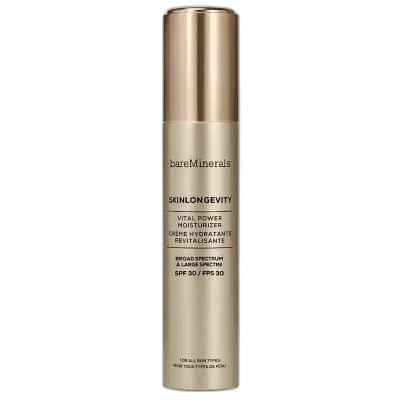
SkinLongevity Vital Power Moisturizer SPF 30
Mineral SPF Moisturizer
 Verified reviewer
Pros & cons.
- +True mineral filter system with 14% zinc oxide
- +Moisturizing base prevents the dusty finish common to mineral SPFs
- +Niacinamide and plant extracts add daytime anti-aging value
- +Pregnancy-compatible all-mineral option
- +Pleasant satin finish on light-to-medium skin
- +Works well under most liquid foundations with proper set time
- −Visible white cast on medium-to-deep complexions
- −Jar packaging is hygienically and formulation-wise suboptimal
- −Noticeable fragrance with limonene, linalool and geraniol
- −Can pill under silicone-heavy primers
- −Overpriced compared to basic mineral SPF plus a separate moisturizer
The full review.
Daily SPF moisturizer shopping reveals a trend: chemical-filter formulas dominate, while the mineral side is a wasteland. If you are pregnant, sensitive to avobenzone and octocrylene, or prefer physical filters, your mineral-SPF moisturizer options usually limit you to basic drugstore zinc creams or expensive pharmacy brands. bareMinerals built the Vital Power Moisturizer SPF 30 to fill this gap. On paper, it works: zinc oxide and titanium dioxide are the sole filters, the base fits clean-beauty standards, and the anti-aging ingredients exceed most all-mineral SPF moisturizers. The filter load is correct. Fourteen percent zinc oxide and three-and-a-half percent titanium dioxide provide broad-spectrum protection at SPF 30. Because both filters are well-micronized in a squalane-and-shea base, the finish is satin to natural, not the dusty, poster-paint texture of cheaper zinc creams. On light-to-fair skin, the formula settles into a soft focus in ninety seconds. On medium-to-deep skin, the math changes. A 14% zinc load creates many reflective particles for darker complexions to absorb, so you will see it. The supporting ingredients justify the price. Pimpinella anisum, branded as Long Life Herb, anchors the SkinLongevity line and has early-stage research regarding its antioxidant and senescence-modulating activity. Bidens pilosa acts as a retinoid-alternative like the rest of the Ageless range. Niacinamide supports barrier function and evens tone; it is the most practical ingredient after the filters. Squalane, shea butter, hyaluronic acid, panthenol and allantoin form a moisturization stack that prevents the ‘chalky-dry’ finish common in mineral SPF products. The jar is a problem. bareMinerals used a screw-lid jar despite the careful formulation, which risks the light-sensitive plant extracts and creates hygiene issues for daily finger-dipping. A pump or squeeze tube fits this product better. The second problem is fragrance. The ‘clean beauty’ label here allows scent, and the limonene, linalool and geraniol in the ingredient list are noticeable. This may disqualify the product for fragrance-averse or reactive users. Regarding wear, pilling occurs occasionally. Silicone-heavy primers often trigger it, but waiting one full minute to set before layering helps. It sits fine under most liquid foundations. Value is the main issue. At $42 for 50ml, the price is not outrageous for a multi-act mineral SPF moisturizer, but you pay a premium for the longevity branding and interesting actives. If you do not need pimpinella anisum and want a mineral SPF under a separate moisturizer, a Blue Lizard or La Roche-Posay Anthelios mineral product costs half as much. Buy this if you want a one-step morning routine, value longevity-positioned extras, and have a skin tone where the cast is manageable. For dry, normal or combination skin that meets these needs, it is a thoughtful pick—not a revelation, but a better all-mineral SPF moisturizer than most others on the shelf.
Ingredient analysis.
Full INCI list
Active: Zinc Oxide 14%, Titanium Dioxide 3.5%. Inactive: Water, Caprylic/Capric Triglyceride, Propanediol, Glycerin, Cetearyl Olivate, Sorbitan Olivate, Butyrospermum Parkii (Shea) Butter, Cetyl Alcohol, Squalane, Long Life Herb (Pimpinella Anisum) Extract, Bidens Pilosa Extract, Niacinamide, Panthenol, Sodium Hyaluronate, Tocopherol, Helianthus Annuus Seed Oil, Allantoin, Glyceryl Stearate, Stearic Acid, Polyhydroxystearic Acid, Isostearic Acid, Aluminum Hydroxide, Alumina, Silica, Triethoxycaprylylsilane, Xanthan Gum, Sodium Chloride, Phenoxyethanol, Ethylhexylglycerin, Disodium EDTA, Citric Acid, Fragrance, Limonene, Linalool, Geraniol
Skin match.
The science.
The Science
The filter system and niacinamide provide the strongest evidence in this formula. Zinc oxide and titanium dioxide are well-documented broad-spectrum mineral sunscreens. A load of 14% zinc plus 3.5% titanium dioxide meets SPF 30 labeling requirements when formulated well, as this base does. Zinc oxide covers the UVA1 range better than most chemical filters, which helps users concerned about pigmentary sun damage. Niacinamide has peer-reviewed support for barrier function, sebum regulation, and hyperpigmentation moderation. A 2005 study in the British Journal of Dermatology showed that 5% topical niacinamide reduced hyperpigmentation with good tolerability. The amount used here is at a cosmetic level, making it a meaningful addition rather than a check-the-box move. Claims for pimpinella anisum and bidens pilosa are more speculative. Pimpinella anisum essential oil shows in-vitro antioxidant activity, and early work suggests it modulates cellular senescence in keratinocyte models, but clinical trials on topical anti-aging effects are limited. The 'longevity' label exceeds the current peer-reviewed evidence. Bidens pilosa's activity in the retinoid-receptor-pathway is even earlier-stage. The supporting actives are plausible bonuses on a solid SPF 30 mineral sunscreen, not an independent anti-aging engine. The sun protection does the real work.
References
- Topical niacinamide reduces yellowing, wrinkling, red blotchiness, and hyperpigmented spots in aging facial skin — International Journal of Cosmetic Science (2005)
Dermatologist Perspective
Dermatologists often recommend all-mineral SPF moisturizers for patients who are pregnant, breastfeeding, rosacea-prone, or sensitive to chemical filters; this product fits that profile. Board-certified dermatologists stress that the most important factor in a daily SPF product is whether the patient uses enough of it. An SPF moisturizer can help adherence for people who skip separate sunscreen steps. They also note that higher zinc loads cause visible casting on darker skin tones, which can stop consistent use. Patients experiencing this should consider hybrid or tinted mineral options instead.
Where it fits in your routine.
Apply this as the final step of your morning routine after serums. Warm two finger-lengths of product in your palms and press it onto your face and neck, focusing on the forehead, nose, cheekbones and ears. Wait 60-90 seconds for it to set before applying primer or foundation to prevent pilling. Reapply every two hours during direct sun exposure; use a powder or stick SPF to reapply over makeup. Use enough product—under-application is the main reason users miss the labeled SPF. This is not a nighttime product; use it in the morning only.
At $42 for 50ml, this SPF moisturizer lasts most users two to three months using a two-finger application. This price puts it in the mid-premium tier. Comparable all-mineral options from La Roche-Posay, EltaMD and Blue Lizard usually cost $30-$40 for similar volumes, and most lack anti-aging supporting actives. The higher price pays for SkinLongevity branding and pimpinella anisum extract; its value depends on how you weigh early-stage research. The math works for users wanting a one-step mineral morning routine with anti-aging. For users who use a separate moisturizer under a basic mineral SPF, a cheaper single-purpose option provides most protection at a lower cost.
Dry, normal, or combination skin on light-to-medium complexions can use this one-step mineral SPF moisturizer for a soft satin finish and built-in anti-aging support. It works for pregnant users, rosacea-prone skin, or shoppers who avoid chemical filters and do not want to layer a separate SPF over a moisturizer.
Medium-to-deep skin tones that cannot tolerate a visible zinc cast, oily skin seeking a lighter finish, fragrance-averse users, and anyone layering a budget mineral SPF over a favorite moisturizer who gains little from a combination format.
Product details.
Medium-weight cream with a slight thickness from the high zinc load.
Soft floral — noticeably fragranced.
Opaque glass jar with screw lid. This jar format hurts ingredient stability and hygiene.
The first use feels cushiony and well-moisturized, with a faint mineral tint that settles in 60-90 seconds. Medium and deep skin tones show a visible cast that does not fully fade.
2-3 months with daily two-finger application.
12 months
All Year
The backstory.
bareMinerals introduced the SkinLongevity line to build a skincare story around 'cellular longevity,' anchoring it on pimpinella anisum — an ingredient marketed as supporting skin's natural regeneration pathways. The Vital Power Moisturizer SPF 30 brought that core story into a daytime product specifically to appeal to clean-beauty shoppers who wanted all-mineral sun protection without having to layer a separate treatment moisturizer underneath.
About bareMinerals
Established Brand (5–20 years)bareMinerals has operated in the US skincare and makeup market since 1995 and Shiseido Americas owns the brand. The SkinLongevity range uses Shiseido's formulation infrastructure, but bareMinerals is not dermatologist-developed.
Common myths.
All mineral SPFs leave a white cast.
Well-micronized zinc formulas reduce cast on light skin, but 14% zinc oxide in any base shows on medium-to-deep complexions — this product is no exception.
A moisturizer with SPF replaces a dedicated sunscreen.
Apply the recommended two-finger-lengths per face to get the stated SPF coverage. Most people use less than this amount. Using less means you get less SPF coverage than the label suggests.
FAQ.
Is this a true mineral sunscreen?
Yes. The active filters are 14% zinc oxide and 3.5% titanium dioxide, both mineral (physical) filters. The formula has no chemical UV filters.
Does it leave a white cast?
On light to fair skin, the cast is subtle and settles within a minute. On medium to deep tones, the 14% zinc load leaves a visible cast that most users say does not fully fade. Swatch before committing.
Can I use this as my only SPF?
Apply the full recommended dose—roughly two finger-lengths for face and neck. Most people apply less moisturizer than that, which reduces the actual SPF on skin.
Is this pregnancy-safe?
Mineral filters are the safest category during pregnancy. No ingredient in the supporting base is contraindicated. Consult your OB-GYN about new products if you have specific sensitivities.
Will it pill under makeup?
Most users layer it under liquid foundation without issue, but silicone-heavy primers and certain sunscreens applied on top can cause pilling. Allow 60-90 seconds for full absorption before layering.
How does this compare to the SkinLongevity non-SPF moisturizer?
The non-SPF version uses the same longevity-actives in a lighter base without sunscreen filters, making layering simpler. This SPF version works as a morning-only all-in-one for users who skip a separate sunscreen step.
Is this suitable for oily skin?
It works but isn't ideal — the shea butter and squalane make it feel more cushioned than oily-skin SPFs. Oily skin usually prefers a gel-based mineral SPF.
What the community says.
"true mineral formula"
"nice moisturizing finish"
"works under makeup for most users"
"pleasant to apply"
"white cast on medium-deep skin tones"
"fragrance noticeable"
"pilling under certain primers"
"pricey for SPF 30"
People also looked at.