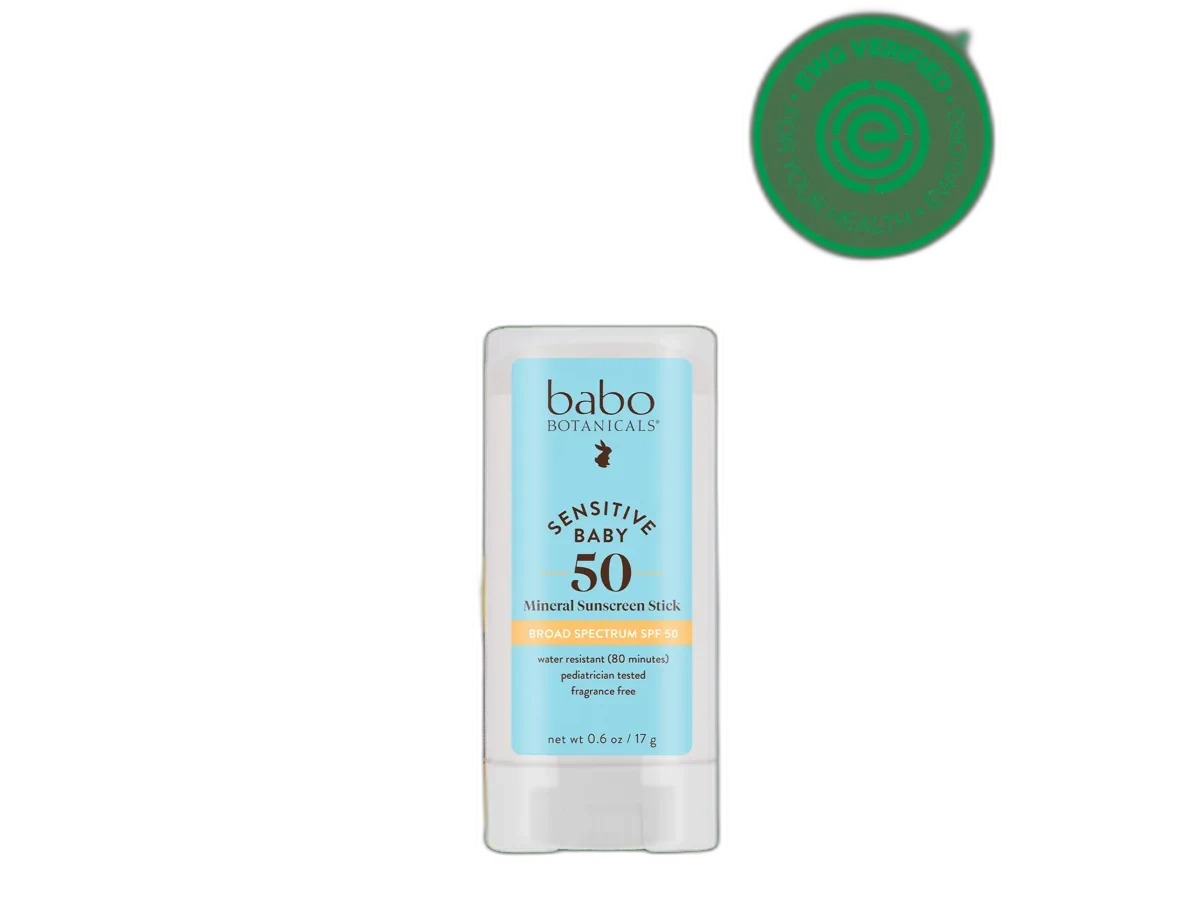
Baby Skin Mineral Sunscreen Stick SPF 50
Pediatric Sensitive-Skin Stick
 Verified reviewer
Pros & cons.
- +High 21.9% non-nano zinc provides strong broad-spectrum protection
- +Fragrance-free and minimal irritant profile suitable for pediatric skin
- +Carries National Eczema Association recognition
- +Stick format is practical for squirming kids and reapplication
- +Reef-safer formulation with no organic UV filters
- +Water-resistant for 80 minutes (max FDA claim)
- −Visible white cast on medium and deep skin tones
- −Waxy texture can drag on the face and feels firm in cool weather
- −Shea butter and beeswax may be comedogenic for acne-prone adults
- −Small 0.6oz size runs out quickly with full-family use
- −Can soften or melt in hot summer temperatures
The full review.
The sunscreen stick is the most practical tool for protecting children from the sun. Creams need a cooperative child, a flat surface, and two free hands. Sprays work but cause controversy near the face and are hard to apply evenly on moving targets. Sticks are the effective compromise: you can swipe one across a wriggling three-year-old’s cheeks and ears in under five seconds, reapply on a playground bench between slides, and put the stick in a diaper bag without leaks. The question for any sunscreen stick isn’t the format—it’s whether this specific stick belongs in your bag.
About Babo Botanicals
Babo Botanicals has made family-skincare products since 2004, making it one of the older brands in the pediatric ‘clean beauty’ category.
Reality
The Baby Skin Mineral Sunscreen Stick is a well-designed entry in that lineup. The star ingredient—and the entire active story—is 21.9% non-nano zinc oxide, a high concentration even for mineral sunscreens. Most zinc-forward sticks use 18-20%, so this higher amount helps it earn an SPF 50 rating with zinc as the sole active. The inactive list is minimalist: sunflower oil is the primary carrier, beeswax and carnauba wax provide structure, and jojoba, caprylic triglyceride, shea butter, and plant extracts soothe the skin. Vitamin E provides antioxidant support. It has no fragrance. It contains no oxybenzone, no octinoxate, and no avobenzone—the organic UV filters some parents avoid.
Texture
On the skin, it acts like a pure-zinc stick. The first swipe leaves a white film that settles into a matte mineral finish but never fully disappears, especially on medium and deep skin tones. For very young children and fair-skinned adults, the appearance is usually fine—many parents like seeing exactly where they applied the product. For darker skin tones, the visible white cast is a limitation; this stick works better for pediatric and fair-skin use than as a universal recommendation. The texture is waxy and firm at room temperature, so you need pressure and a warming swipe to transfer product on cool mornings. In hot weather, the wax softens and the stick can misshape if left in a hot car.
Packaging
The stick format is valuable for families. Kids hold still for sticks more than creams. The 0.6oz size travels easily but runs out fast if used on a full family during a beach week. Water resistance is rated at 80 minutes, the maximum FDA-allowed claim, and it performs consistently during water play—reapply often. The beeswax means it isn’t vegan, which matters to some buyers.
Not ideal for
This stick is not an automatic recommendation for adult facial use. The shea butter and beeswax are comedogenic for acne-prone skin, and the white cast is less forgiving on an adult face than a toddler cheek. If you have sensitive but non-reactive skin and want a mineral stick for your nose, ears, or targeted reapplication over a morning SPF, it works well. If you want a primary facial sunscreen, better options exist in cream or lotion formats from this brand or Korean alternatives.
Ingredient analysis.
Full INCI list
Active Ingredients: Non-Nano Zinc Oxide 21.9%. Inactive Ingredients: Helianthus Annuus (Sunflower) Seed Oil, Cera Alba (Beeswax), Copernicia Cerifera (Carnauba) Wax, Simmondsia Chinensis (Jojoba) Seed Oil, Caprylic/Capric Triglyceride, Butyrospermum Parkii (Shea) Butter, Tocopherol, Calendula Officinalis Flower Extract, Chamomilla Recutita (Matricaria) Flower Extract, Avena Sativa (Oat) Kernel Extract, Glycine Soja (Soybean) Oil
Skin match.
The science.
The Science
Non-nano zinc oxide is one of two true broad-spectrum mineral UV filters, alongside titanium dioxide. It protects against UVA and UVB through physical scattering and absorption. The non-nano designation means particles are typically above 100 nanometers. Research shows these particles do not penetrate intact skin, so brands use them for pediatric and sensitive-skin applications. Journals like Toxicological Sciences and the Journal of Investigative Dermatology have published studies on zinc oxide particle size and skin penetration, generally supporting the safety of non-nano topical formulations.
The 21.9% zinc concentration in this stick is high for consumer mineral sunscreens and meets an SPF 50 rating under FDA testing protocols. Research on zinc oxide concentration and UV protection shows higher zinc loads provide stronger UVA coverage, especially in the long-wave UVA range where organic filters like avobenzone face photostability challenges.
Colloidal oatmeal (used here as Avena sativa kernel extract) is an FDA-approved skin protectant in other formats and has a clear evidence base for soothing sensitive and eczema-prone skin. A 2015 review in the Journal of Drugs in Dermatology summarized how oat-derived compounds, including avenanthramides and beta-glucans, support the barrier and reduce inflammation. In this sunscreen stick, it acts as a gentle addition rather than a primary mechanism because of the short contact time and the protective zinc layer.
Calendula and chamomile extracts have long traditional uses for skin soothing but less modern clinical evidence. They reinforce the gentle pediatric positioning but do not change the protection profile.
Dermatologist Perspective
Pediatric dermatologists usually choose non-nano zinc oxide as the first-choice UV filter for infants and young children. They often recommend the stick format for targeted areas like the nose, ears, and tops of feet, or for reapplication. Board-certified dermatologists prefer fragrance-free formulations for eczema-prone and pediatric skin, making this Babo Botanicals stick a reasonable recommendation for sensitive families. The high 21.9% zinc concentration is a formulation positive that provides robust UV protection using one well-established active. The white cast is a real limitation for diverse skin tones; dermatologists often suggest tinted mineral alternatives for patients who want pediatric benefits without the visible appearance. This stick appears in pediatric and family dermatology lists of recommended mineral sunscreens alongside alternatives from Thinksport, Blue Lizard, and Earth Mama.
Where it fits in your routine.
Apply a thick layer with firm pressure to the face, ears, nose, shoulders, and other sun-exposed areas 15 minutes before sun exposure. For complete protection, apply a visible layer and reapply every two hours, or every 40-80 minutes if sweating or in water. On cool mornings, warm the stick between your palms to improve transfer. For adult facial use, apply over morning moisturizer and let the mineral layer settle before applying makeup. ### Value Assessment At approximately seventeen dollars for 0.6oz, this sunscreen stick costs more than most pediatric mineral options but matches other established family-skincare brands in this tier. The per-ounce price exceeds drugstore mineral sticks from Banana Boat or Coppertone, but it stays below luxury-tier prices. The value is highest for pediatric application, targeted reapplication, and sensitive skin, but lower as a primary full-family sunscreen. This established brand has a twenty years track record in family skincare; the well-supported formulation justifies the premium price. ### Who Should Buy Parents of infants and toddlers wanting a fragrance-free, high-zinc pediatric sunscreen stick. Families with eczema-prone or sensitive children needing a minimal-irritant formula. Adults with fair skin and sensitive complexions wanting a mineral reapplication option for ears, nose, and other targeted areas. Beach-goers wanting a reef-safer stick for travel to Hawaii and other destinations with organic-UV-filter restrictions. ### Who Should Skip Buyers with medium to deep skin tones wanting a visible-cast-free mineral option — a tinted alternative works better. Acne-prone adults seeking a facial sunscreen, because of the shea butter and beeswax content. Full families seeking the most economical per-ounce sunscreen option — larger cream formats offer better value for broad application.
Product details.
Fragrance-free
Twist-up stick in a plastic tube — convenient for pockets and diaper bags
Applying the stick requires slight pressure to transfer product, especially on cool mornings. The finish is white and matte initially; it settles but stays visible on deeper skin tones. The appearance works for children and fair-skinned adults, but others see a visible 'zinc look.'
4-8 weeks of daily face application to one person; faster with full-family use
12 months
spring summer
The backstory.
Babo Botanicals was founded in 2004 by a mother seeking gentle plant-based skincare for her own children, and grew into one of the established brands in the US pediatric and family-skincare category. The Baby Skin Mineral Sunscreen Stick launched as part of the brand's expanded sun protection lineup targeting parents who want the convenience of a stick format without the fragrance and irritant risks common in traditional drugstore sunscreen sticks.
About Babo Botanicals
Established Brand (5–20 years)Babo Botanicals launched in 2004 as a pediatric-focused clean beauty brand using plant-based ingredients and mineral-sunscreen. The brand has National Eczema Association seals and a strong position in family-skincare. Its marketing uses 'clean beauty' claims, so evaluate the formula instead of the language.
Common myths.
'Clean beauty' or 'botanical' sunscreens are not inherently safer or more effective than drugstore alternatives.
Sunscreen efficacy depends on UV filter selection, concentration, and photostability—not clean or botanical marketing. This stick is well-formulated because it uses a high concentration of non-nano zinc and minimal irritant inactives, not because of botanical marketing.
FAQ.
Is this sunscreen stick safe for babies under 6 months?
The FDA and AAP recommend keeping babies under 6 months out of direct sun instead of using sunscreen. For older infants and toddlers, this stick is a top pediatric option. Non-nano zinc oxide is appropriate for young skin, and the fragrance-free plant-based inactive list minimizes irritation risk. Discuss use with your pediatrician for very young infants.
Does it leave a white cast?
Yes, visibly. High-concentration zinc oxide sticks almost always leave a white cast, and this one shows it at 21.9% active. The appearance is subtle on fair skin, but medium and deep skin tones show more mineral residue. Adults with deeper skin tones wanting a mineral stick without visible cast usually find tinted alternatives fit better.
How is the water resistance?
Babo rates this as water-resistant for 80 minutes, the FDA's maximum allowed claim. It works well during outdoor play, but the stick format means rubbing, toweling, and sweating remove product faster than a thicker cream. Reapply every 40-80 minutes during water exposure.
Is it safe to use on the face?
Yes — this targets the face, ears, nose, and other sun-exposed areas. Adults with acne-prone skin should note the shea butter and beeswax content can be comedogenic, limiting its use on the face.
Will it melt in my bag or car?
Yes. The wax matrix holding the zinc together softens at high temperatures. On hot summer days, a stick left in a car or outdoor bag can become soft or misshapen. Store it at room temperature when possible and avoid direct sun.
Is it reef-safe?
Yes — non-nano zinc oxide is the safest reef-friendly UV filter available. The formula lacks oxybenzone, octinoxate, or other filters linked to coral bleaching. This makes it suitable for beach days and snorkeling. It is a common recommendation for Hawaii, where several organic UV filters are banned.
Is it cruelty-free and eco-friendly?
Babo Botanicals is cruelty-free. The formula uses beeswax and is not vegan. Non-nano zinc and a minimal botanical formulation back the brand's eco-conscious positioning, but specifics matter more than marketing.
What the community says.
"High 21.9% zinc provides strong mineral protection"
"Fragrance-free and gentle enough for sensitive skin"
"Easy to apply on squirmy kids with the stick format"
"Water-resistant performance during outdoor play"
"Visible white cast on medium and deep skin tones"
"Waxy texture can feel dragging on the face"
"Melts slightly in hot weather"
"Small 0.6oz size runs out quickly with daily full-family use"
People also looked at.