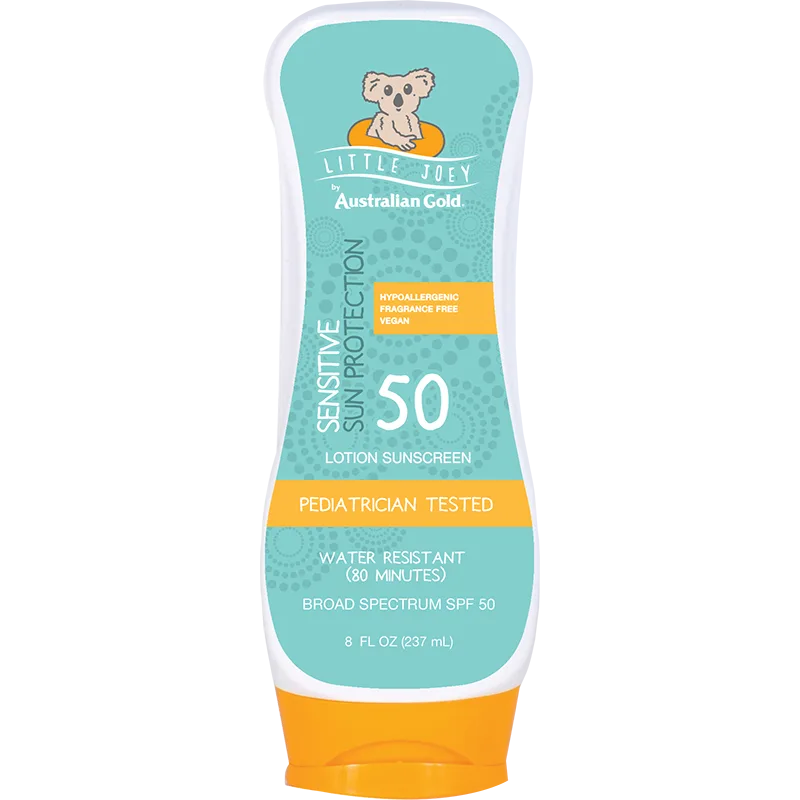
Little Joey SPF 50 Mineral Sunscreen Lotion
Family Sun Protection Staple
 Verified reviewer
Pros & cons.
- +Aloe vera as second ingredient creates a genuinely soothing, cooling application experience
- +Fragrance-free and pediatrician-tested for children's sensitive skin
- +Generous 8 fl oz size at $11.49 makes liberal application and frequent reapplication affordable
- +Thin, easy-spread texture applies quickly on uncooperative children
- +80-minute water resistance for pool and beach durability
- +Nourishing botanical oils and cocoa butter moisturize skin during sun exposure
- +Vegan and cruelty-free formulation
- −Uses chemical UV filters despite some listings implying mineral — parents should be aware
- −Homosalate at 10% is a concentration that some health-conscious parents may want to research
- −Contains polyethylene microbeads — an environmental concern for eco-conscious families
- −May feel slightly greasy on adults, though texture is fine on children's skin
- −Not reef-friendly due to chemical UV filter content
The full review.
Parents know the sunscreen struggle. Kids hate the sting, the smell, and the feel. They often prefer sunburn over thirty seconds of application. Australian Gold’s Little Joey addresses this reality. The formula choices reflect what matters when the user is a five-year-old who views skincare as a hostile act.
The first smart choice is the aloe vera. It is the second ingredient after water, not a marketing afterthought at the bottom of the list. This makes the product functionally an aloe vera gel with sunscreen actives. The base feels cool, soothing, and lightweight. For children with sensitive or eczema-prone skin, this matters: the aloe calms skin instead of causing the burning sensation some sunscreens provoke on reactive skin.
Nourishing agents—olive oil, sunflower seed oil, and cocoa butter—add emollience without heaviness. This sunscreen moisturizes, which helps kids who lack a separate moisturizer step. Green tea extract and Kakadu plum provide antioxidant support, while tea tree oil offers mild antimicrobial properties at a concentration that supports the formula without irritating young skin.
Four chemical filters provide UV protection: 3% avobenzone for UVA, 10% homosalate, 5% octisalate, and 5% octocrylene for UVB and filter stabilization. Parents should note this. Despite some online listings using the word “mineral,” this is entirely a chemical sunscreen. The formula contains no mineral UV filters like zinc oxide or titanium dioxide. Parents seeking mineral sunscreen to avoid chemical filter absorption should look elsewhere; Australian Gold’s Botanical Mineral line offers mineral options, but not in the Little Joey format.
The chemical filter system provides robust broad-spectrum protection with 80-minute water resistance. The four-filter combination offers genuine protection for the pool or beach. Pediatrician testing and the hypoallergenic designation show the formula was evaluated for safety on young skin.
The texture is almost foolproof to apply. It is thin enough to spread quickly without the heavy rubbing mineral sunscreens require. This is a practical advantage when a child’s patience lasts only ten seconds. It absorbs without a heavy residue, and the fragrance-free formula prevents complaints from picky noses.
At $11.49 for 8 fluid ounces, this is one of the most affordable SPF 50 options per ounce on the market. The large size fits how kids use sunscreen: you need a lot, you must reapply constantly, and you need to use generous amounts without guilt. At this price, parents can apply and reapply liberally without calculating the cost.
The formula contains polyethylene, a microplastic ingredient, which matters to environmentally conscious parents. It also contains propylene glycol, which is generally well-tolerated but can cause sensitivity in individuals prone to contact dermatitis.
The bottom line: this is a good, practical, affordable kids’ sunscreen that does what a family sunscreen needs to do. It applies easily, does not sting or smell, protects reliably, and costs little enough to use generously. The chemical UV filter system is the main consideration for parents preferring mineral protection, and occasional “mineral” mislabeling in retail listings is misleading. For families comfortable with chemical filters seeking ease of use at minimum cost, Little Joey earns its place in the beach bag.
Formula
Texture
The texture is almost foolproof to apply. It is thin enough to spread quickly over a child’s skin without the heavy rubbing mineral sunscreens require—a practical advantage when a child’s patience lasts about ten seconds. It absorbs without a heavy residue, and the absence of fragrance means no complaints about smell.
Best for
The bottom line: this is a good, practical, affordable kids’ sunscreen that does what a family sunscreen needs to do. It applies easily, does not sting or smell, protects reliably, and costs little enough to use generously. The chemical UV filter system is the main consideration for parents who prefer mineral protection, and occasional mislabeling as “mineral” in retail listings is misleading. For families comfortable with chemical filters seeking maximum ease of use at minimum cost, Little Joey earns its place in the beach bag.
Ingredient analysis.
Full INCI list
Active Ingredients: Avobenzone 3%, Homosalate 10%, Octisalate 5%, Octocrylene 5%. Inactive Ingredients: Water, Aloe Barbadensis Leaf Juice, Glycerin, Polyethylene, C12-15 Alkyl Benzoate, Phenoxyethanol, Polysorbate 20, Acrylates/C10-30 Alkyl Acrylate Crosspolymer, Carbomer, Sodium Hydroxide, Helianthus Annuus (Sunflower) Seed Oil, Olea Europaea (Olive) Fruit Oil, Sorbitan Oleate, Theobroma Cacao (Cocoa) Seed Butter, Tocopheryl Acetate, Hydroxypropyl Methylcellulose, Ethylhexylglycerin, Tetrasodium Glutamate Diacetate, Propylene Glycol, Camellia Sinensis (Green Tea) Leaf Extract, Melaleuca Alternifolia (Tea Tree) Leaf Oil, Terminalia Ferdinandiana (Kakadu Plum) Fruit Extract, Sodium Chloride
Skin match.
The science.
The Science
This sunscreen uses a four-chemical UV filter system for broad-spectrum protection. Avobenzone at 3% is the only UVA absorber, covering the 310-400nm range to prevent photoaging and melanoma risk. Octocrylene at 5% stabilizes Avobenzone, a documented synergy in sunscreen chemistry.
Homosalate at 10% (the FDA-permitted maximum) and octisalate at 5% absorb UVB in the 280-320nm range. These four filters create overlapping coverage across the UV spectrum. The SPF 50 rating shows the formulation blocks about 98% of UVB radiation at the tested 2mg/cm² thickness.
The aloe vera base does more than provide texture. Acemannan, the main bioactive polysaccharide in Aloe barbadensis, shows anti-inflammatory and wound-healing properties in dermatological research. A meta-analysis in the Burns journal found aloe vera-treated skin heals superficial burns faster, suggesting active soothing benefits during and before sun exposure.
Green tea extract (Camellia sinensis) contains epigallocatechin gallate (EGCG), a potent topical antioxidant. Research in the Journal of the American Academy of Dermatology shows topical green tea polyphenols reduce UV-induced oxidative stress and inflammation when applied before sun exposure. In a children's sunscreen, this antioxidant layer adds defense beyond UV filtering.
Dermatologist Perspective
Pediatric dermatologists usually recommend sunscreen for children over six months, preferring mineral sunscreens for very young children to lower absorption risk. Board-certified dermatologists note this product uses chemical rather than mineral UV filters, a key distinction for parents seeking mineral protection. The FDA considers the chemical filters in this formula safe for children over two years of age. The pediatrician testing and hypoallergenic designation validate the formula's gentleness. Dermatologists value the fragrance-free formulation and high aloe vera content for soothing sensitive skin, though parents of children with eczema or extreme sensitivity may prefer a zinc oxide-based alternative.
Where it fits in your routine.
Shake well before use. Apply liberally to all exposed skin at least 15 minutes before sun exposure. Adults must apply the product to children. Use generous amounts; underapplication is the main reason sunscreen fails. Cover often-missed areas: ears, back of neck, tops of feet, and under clothing edges. Reapply every 2 hours, and immediately after swimming, sweating, or towel drying, even though the product is water-resistant for 80 minutes. Do not apply directly around the eye area — apply to your fingers first, then carefully around the eyes. Consult a pediatrician before use for children under 6 months.
At $11.49 for 8 fl oz, this offers exceptional value for a family sunscreen. This costs about $1.44 per ounce — much less than most premium mineral sunscreens. The large size accounts for how fast children's sunscreen disappears: full-body application on a child uses about 0.5 oz, and a family can use 2-3 oz in one beach day if they reapply every two hours during outdoor activity. At this price, parents can apply generously and reapply frequently, the most important factor in sunscreen efficacy. A continuous spray version also exists for faster application on active children.
Families seeking affordable, gentle sunscreen for children and adults with sensitive skin. Parents needing large-volume sunscreen for frequent outdoor activities with kids. Anyone wanting a fragrance-free, easy-applying lotion format children tolerate well. Budget-conscious families needing frequent sunscreen reapplication during summer activities.
Parents wanting mineral-only UV protection for children—this uses chemical filters. Families seeking reef-safe sunscreen for ocean swimming. People with known sensitivities to avobenzone or homosalate. Parents who avoid polyethylene microbeads in their children's products.
Product details.
This lightweight, water-based lotion has a thin, easy-spread consistency; high aloe vera content gives it a slightly gel-like quality.
Fragrance-free — tea tree and plant oils leave a faint natural botanical scent
Large 8 fl oz squeeze bottle with flip cap; this size works for families who reapply often during outdoor activities
It applies like a lightweight, slightly watery lotion that spreads easily—designed for parents applying to squirming children. It absorbs quickly without heavy residue. It has no stinging and no strong scent. The aloe-forward base feels cooling on application, which kids tolerate well.
2-4 weeks of regular family use during summer; the 8 fl oz provides about 8 full-body applications for a child or 4 for an adult
12 months
spring summer
The backstory.
Australian Gold named this product after the colloquial Australian term for a young child — a 'little joey,' like a baby kangaroo. The brand applied their decades of sun care expertise to create a formula specifically for the most sensitive users: children. The generous 8 fl oz bottle reflects the practical reality that kids need frequent, liberal sunscreen reapplication.
About Australian Gold
Legacy Brand (20+ years)Australian Gold started in 1985 in Cocoa Beach, Florida, and has nearly four decades of sun care experience. The Little Joey line is their pediatrician-tested kids formula for sensitive skin. Note: Despite names in some listings, this product uses chemical UV filters, not mineral ones.
Common myths.
Kids' sunscreens are regular sunscreens in different packaging.
This formula uses aloe vera as the primary base. It is fragrance-free, pediatrician tested for sensitive skin, and has a thin texture for easier application on resistant children. The ingredients prioritize gentleness over cosmetic elegance.
Chemical sunscreens are unsafe for children.
The FDA considers the chemical UV filters in this product safe, and the formula is pediatrician-tested. Parents who prefer mineral-only UV filters for their children should note that this product uses chemical filters (avobenzone, homosalate, octisalate, octocrylene) and choose a zinc oxide/titanium dioxide alternative instead.
FAQ.
Is Australian Gold Little Joey a mineral sunscreen?
No — some retail listings call it 'mineral', but Little Joey uses chemical UV filters: avobenzone, homosalate, octisalate, and octocrylene. It lacks zinc oxide or titanium dioxide. For a mineral option from Australian Gold, use their Botanical Mineral line.
Is Little Joey safe for babies?
The FDA recommends consulting a pediatrician before using any sunscreen on children under 6 months old. For children over 6 months, this pediatrician-tested formula is designed for sensitive young skin. Many pediatric dermatologists prefer mineral sunscreens for very young children due to lower systemic absorption potential.
Does Little Joey sting eyes?
The fragrance-free, hypoallergenic formula minimizes stinging and irritation. As with all sunscreens, avoid direct application around the eyes. Use your fingertips around the eye area for more controlled placement.
How often should I reapply Little Joey on my child?
Reapply every 2 hours during outdoor activity, and immediately after swimming, sweating, or towel drying — regardless of the 80-minute water resistance claim. Water resistance tests use controlled conditions; real-world exposure with active children requires more frequent reapplication.
Is Australian Gold Little Joey reef safe?
No — the chemical UV filters in this formula (specifically octocrylene and homosalate, though it is oxybenzone-free) fail the strictest reef-safe environmental standards. For ocean swimming, use Australian Gold's mineral-based Botanical line instead.
Can adults use Little Joey sunscreen?
Yes — the gentle, fragrance-free formula works for adults with sensitive skin despite being made for children. The 8 fl oz size costs $11.49, making it an affordable option for the whole family. The texture is slightly dewy compared to matte-finish adult sunscreens for some adults.
What the community says.
"Gentle on kids' sensitive skin"
"No tears or stinging"
"Generous 8 fl oz size for family use"
"Affordable for frequent reapplication"
"Fragrance-free with no chemical smell"
"Uses chemical UV filters despite some listings implying mineral"
"Can feel slightly greasy on adult skin"
"Aloe-heavy formula may leave slight green tint on very fair skin"
"Contains polyethylene microbeads"
People also looked at.