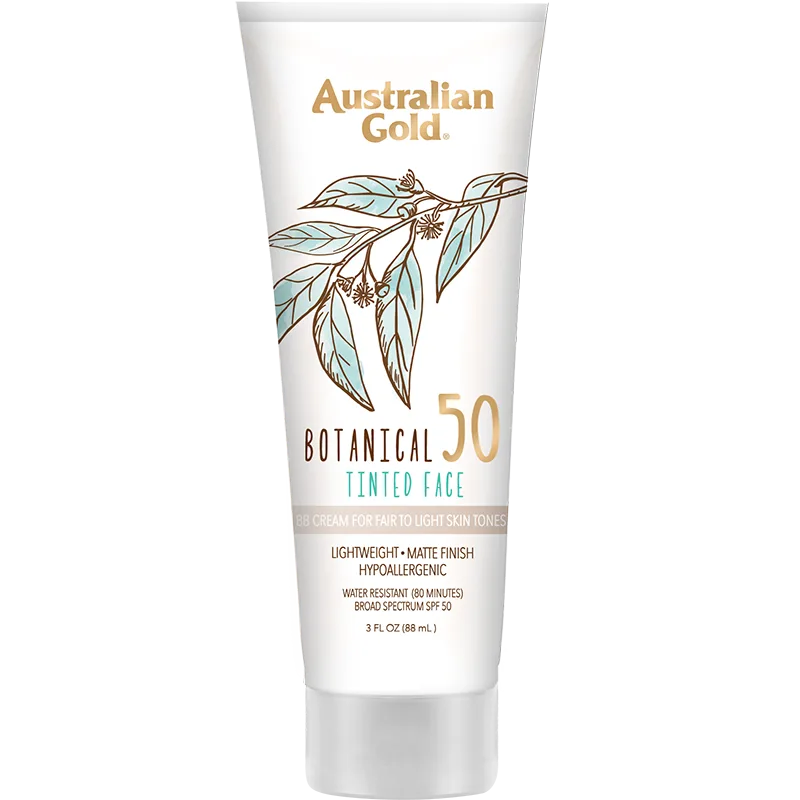
Botanical SPF 50 Mineral Sunscreen Face Lotion
Budget Mineral MVP
 Verified reviewer
Pros & cons.
- +Tinted formula eliminates white cast while providing visible light protection
- +Matte, powdery finish doubles as BB cream for oily and combination skin
- +Exceptional value at under $17 for 3 fl oz of mineral SPF 50
- +Iron oxides protect against visible light that worsens melasma and hyperpigmentation
- +Water-resistant up to 80 minutes for active outdoor use
- +Vegan, cruelty-free, and reef-friendly formulation
- +Kakadu plum extract provides potent antioxidant backup to UV filters
- −Very difficult to remove — oil cleanser or balm required for thorough cleansing
- −Matte finish can emphasize dryness and flaking on dry skin types
- −Dries down extremely fast, requiring quick and deliberate application
- −Limited shade range may not match all skin tones perfectly
- −Can look cakey when applied over heavy moisturizers or multiple serum layers
The full review.
Not long ago, recommending a mineral sunscreen for daily wear required an apology. Users expected a white cast, a thick feel, and a look like a 1990s movie lifeguard. The mineral sunscreen experience felt like eating vegetables: necessary but unpleasant.
Australian Gold’s Botanical SPF 50 Tinted Face Mineral Lotion made that old problem look ridiculous. This mineral sunscreen is tinted, dries matte, and costs less than a mid-range lunch. Most importantly, it does not look like wall spackle on the face. When it launched, Reddit’s Skincare Addiction community adopted it like a new retinoid. It became the drugstore mineral sunscreen people bought for mothers, partners, and skeptical friends who hated mineral sunscreens.
The formula uses a straightforward UV protection approach: 4% titanium dioxide and 4% zinc oxide. A silicone-based vehicle suspends these minerals to ensure even distribution and reduce the scattering that causes white cast. Iron oxides provide the tint, which eliminates remaining white cast and adds visible light protection. This matters. Visible light, specifically blue-violet wavelengths, can trigger melanin production and worsen melasma. Standard mineral sunscreens block UV but let visible light through. The iron oxide tint here blocks both.
Independent testing confirms this sunscreen’s effectiveness: it blocks approximately 95% of UV radiation, performing strongly across UVA and UVB ranges. This is exceptional for the price. The 80-minute water resistance adds durability for active use.
The texture shows the product’s personality and its limits. It is a thick, dense lotion that requires immediate, purposeful blending. This sunscreen does not wait while you check your phone. It sets fast and is difficult to move once set. The benefit is a smooth, matte, lightly tinted finish within sixty seconds, which works as a BB cream replacement for light-coverage days. Polymethylsilsesquioxane acts as a soft-focus powder to blur pores and minor imperfections.
The downside is clear: dry skin types will struggle. The matte finish that oily skin types like can make dry skin look flat, cakey, and highlighted. Anyone with dry patches must use a thorough moisturizing routine underneath. Even then, some dry-skin users report the sunscreen emphasizes dryness by mid-afternoon.
Removal requires honest discussion. This is one of the most tenacious sunscreens on the market. The silicone base creates the matte finish but also resists water-based cleansers. You effectively need an oil cleanser or cleansing balm as the first step of an evening routine. A gentle foam cleanser alone will leave a film. For some, this durability is a feature that stays put through sweat, humidity, and a workday. For others, the double-cleansing requirement is an unwelcome addition.
Botanical additions—eucalyptus leaf extract, red algae, and Kakadu plum—provide antioxidant support. Kakadu plum is one of nature’s highest sources of vitamin C, adding free-radical protection to the UV blocking. Squalane and shea butter provide enough emolliency to stop the mineral particles from feeling desiccating on normal skin types.
The shade range started small but now includes Fair to Light, Medium to Tan, and Rich to Deep options. The light coverage works across a reasonable range within each shade band; the subtle tint makes exact shade matching less critical than with foundation.
At $16.99 for 3 ounces, the value is hard to beat. This provides more product than most premium mineral sunscreens at two to three times the price. One tube lasts two to three months of daily face application, costing about twenty cents per day. For a mineral sunscreen with iron oxide protection, botanical antioxidants, and a finish that replaces primer or BB cream, the value is remarkable.
Australian Gold started in the tanning world, a brand built on helping people get more sun. The pivot to protection-first formulas shows a company that responded with a product that makes skin protection enjoyable. Nearly a decade after launch, this remains the first mineral sunscreen many skincare enthusiasts recommend.
Ingredient analysis.
Full INCI list
Active Ingredients: Titanium Dioxide 4%, Zinc Oxide 4%. Inactive Ingredients: Alumina, Butyrospermum Parkii (Shea) Butter, Caprylyl Glycol, Cetyl PEG/PPG-10/1 Dimethicone, Cyclopentasiloxane, Dimethicone Crosspolymer, Disodium EDTA, Disteardimonium Hectorite, Eucalyptus Globulus Leaf Extract, Glycerin, Hexyl Laurate, Iron Oxides, Panthenol, PEG-10 Dimethicone, Phenoxyethanol, Polyglyceryl-4 Isostearate, Polymethylsilsesquioxane, Porphyra Umbilicalis (Red Algae) Extract, Silica, Squalane, Stearic Acid, Terminalia Ferdinandiana (Kakadu Plum) Fruit Extract, Tocopherol, Tocopheryl Acetate, Triethoxycaprylylsilane, Water
Skin match.
The science.
The Science
This sunscreen uses a dual-mineral approach with 4% zinc oxide and 4% titanium dioxide to leverage their complementary UV absorption profiles. Titanium dioxide absorbs and scatters UVB wavelengths (290-320nm) well, while zinc oxide covers the UVA range (320-400nm) more deeply. Together, they provide SPF 50 broad-spectrum protection without the photostability issues found in some chemical UV filters.
Iron oxides in this formula add another layer of protection. A 2014 study in the Journal of Investigative Dermatology by Dumbuya et al. showed that tinted sunscreens with iron oxides protect better against visible light-induced pigmentation than non-tinted mineral sunscreens. This matters for melasma patients, as visible light (400-700nm) triggers melanogenesis regardless of UV exposure. The Pigmentary Disorders Society recommends tinted sunscreens with iron oxides for melasma management protocols.
Kakadu plum (Terminalia ferdinandiana) extract is a highly concentrated natural source of ascorbic acid, containing up to 100 times more vitamin C by weight than oranges. Topical antioxidants like vitamin C augment sunscreen protection by neutralizing reactive oxygen species (ROS) that UV radiation generates despite the filters. A 2019 review in the Journal of Clinical and Aesthetic Dermatology confirmed that combining antioxidants with sunscreen filters improves photoprotective outcomes.
The silicone-based vehicle (cyclopentasiloxane, dimethicone crosspolymer) does more than improve texture: it distributes mineral particles evenly across the skin, reducing the clumping that causes white cast and uneven protection. Research shows the vehicle impacts the actual SPF delivered; silicone-based vehicles are among the most effective at maintaining uniform mineral particle distribution.
Dermatologist Perspective
Board-certified dermatologists often recommend mineral sunscreens for patients with sensitive skin, rosacea, and melasma, and this product meets many dermatologist priorities. The mineral-only UV filter system avoids endocrine disruption concerns linked to some chemical filters. Dermatologists value the iron oxide tint for melasma patients because it blocks visible light that standard sunscreens — even mineral ones — do not. The fragrance-free, hypoallergenic formulation works for post-procedure skin. Dermatologists frequently recommend this as an affordable alternative to premium tinted mineral sunscreens, noting the SPF 50 rating and 80-minute water resistance meet their standards for daily sun protection.
Where it fits in your routine.
Apply a generous amount as the last step of your morning skincare routine, once moisturizer absorbs. Use a finger-length strip for the face. Blend quickly and evenly; the formula dries fast, so work in sections. Let it set for one minute before applying makeup. Reapply every two hours in direct sun, or after swimming, sweating, or towel drying. Use a mineral powder SPF to reapply over makeup. Remove in the evening with an oil cleanser or cleansing balm as the first step of double cleansing.
At $16.99 for 3 fl oz, this is a top-value mineral sunscreen. Premium tinted mineral sunscreens often cost $30-50 for the same amount. The iron oxide tint replaces a separate BB cream or tinted moisturizer, making this a two-in-one product that saves money. One tube lasts about two to three months with daily face application, costing roughly twenty cents per day. For a mineral SPF 50 with visible light protection, botanical antioxidants, and a matte finish, this value is nearly unmatched in the sunscreen market.
Oily and combination skin types want a matte mineral sunscreen that works as a BB cream. People with melasma or hyperpigmentation need iron oxides for visible light protection. Budget-conscious consumers get premium-quality mineral SPF protection without premium pricing. Sensitive skin types use this fragrance-free mineral formula.
Very dry skin types may find the matte finish highlights flaking and dehydration. Users who dislike double cleansing, because this sunscreen requires an oil-based first cleanse. People with very deep skin tones who cannot find a matching shade in the current range. Users who prefer a dewy or natural finish from their sunscreen.
Product details.
Thick, silicone-based lotion starts dense but dries fast to a powdery, matte finish with light tinted coverage
Fragrance-free — very faint mineral/botanical scent that dissipates quickly
Squeezable tube with screw cap; the 3 fl oz size works well for travel and daily face use
The texture is thicker than expected and sets fast, so blend it quickly. It dries to a matte, powdery finish within a minute. The tint gives light, even coverage that blurs imperfections without looking like makeup. Reapplication over existing layers feels heavy; use a mineral powder SPF for touch-ups.
2-3 months with daily face application using the recommended amount
12 months
All Year
The backstory.
Australian Gold built its reputation on tanning products for beach culture before pivoting toward sun protection. The Botanical Tinted Face SPF 50 became a breakout hit because it solved the two biggest complaints about affordable mineral sunscreens — white cast and greasy finish — at a price point that made it accessible to everyone. It became a Reddit Skincare Addiction staple and one of the most-recommended drugstore mineral sunscreens online.
About Australian Gold
Legacy Brand (20+ years)Australian Gold launched in 1985 in Cocoa Beach, Florida, with tanning lotions for surfers. The brand grew into a global sun care company over nearly four decades. Their Botanical mineral sunscreen line, released in 2017, is a cult favorite because of its tinted mineral formula and matte finish.
Common myths.
SPF 50 with only 4% zinc oxide and 4% titanium dioxide fails to provide real protection.
SPF testing uses the final formulation, not just filter percentages. The mineral particle size, coating, and dispersion in the silicone base determine UV absorption efficiency. Independent testing shows this product blocks over 95% of UV radiation.
Mineral sunscreens do not provide a matte finish — they all feel greasy.
The silicone and silica-based vehicle creates a matte, powdery finish. The polymethylsilsesquioxane works as a soft-focus mattifying powder, and the dimethicone crosspolymer gives a smooth, dry-touch feel similar to some chemical sunscreens.
FAQ.
Does Australian Gold Botanical SPF 50 leave a white cast?
No — the iron oxide tint removes white cast entirely. The product provides subtle tinted coverage that blends into skin. It comes in Fair to Light, Medium to Tan, and Rich to Deep shades for various skin tones.
Is this sunscreen good for oily skin?
Excellent — the matte, powdery finish is a signature strength of this product. The silicone and silica base absorbs excess oil and creates a smooth, non-greasy surface that oily skin types praise. It works as a mattifying primer under makeup.
How do you remove Australian Gold Botanical sunscreen?
This sunscreen is hard to remove with water-based cleansers alone. Use an oil cleanser, cleansing balm, or micellar oil first, then a regular water-based cleanser. You must double-cleanse to remove it thoroughly.
Is Australian Gold SPF 50 reef safe?
Yes — this mineral formula uses only titanium dioxide and zinc oxide as UV filters. It avoids chemical filters like oxybenzone and octinoxate, which link to coral reef damage. The brand markets this as a reef-friendly formulation.
Can you wear makeup over Australian Gold Botanical sunscreen?
Yes, but it works best under light to medium coverage foundations. The matte finish creates a smooth makeup base. Apply foundation after the sunscreen sets fully (about one minute). Heavy or dewy foundations layer less effectively, and some users report creasing when layering too many products.
Is this sunscreen good for melasma?
Yes — the iron oxide tint blocks visible light wavelengths (400-700nm) that trigger melasma pigmentation without UV exposure. Most non-tinted sunscreens, including mineral ones, do not block visible light. Dermatologists often recommend tinted mineral sunscreens with iron oxides to manage melasma.
Is Australian Gold Botanical sunscreen pregnancy safe?
Yes — mineral sunscreens with zinc oxide and titanium dioxide are safe during pregnancy because they sit on the skin surface instead of being absorbed. This formula lacks retinoids, chemical UV filters, and other pregnancy-concern ingredients.
What the community says.
"No white cast with the tinted formula"
"Matte finish works great under makeup"
"Affordable mineral sunscreen with broad-spectrum protection"
"Water-resistant up to 80 minutes"
"Very difficult to remove — requires oil cleanser"
"Can feel drying on dry skin types"
"Shade range limited for very deep skin tones"
"Can look cakey if applied over heavy skincare"
"Dries down very quickly, requiring fast application"
Featured in.
People also looked at.