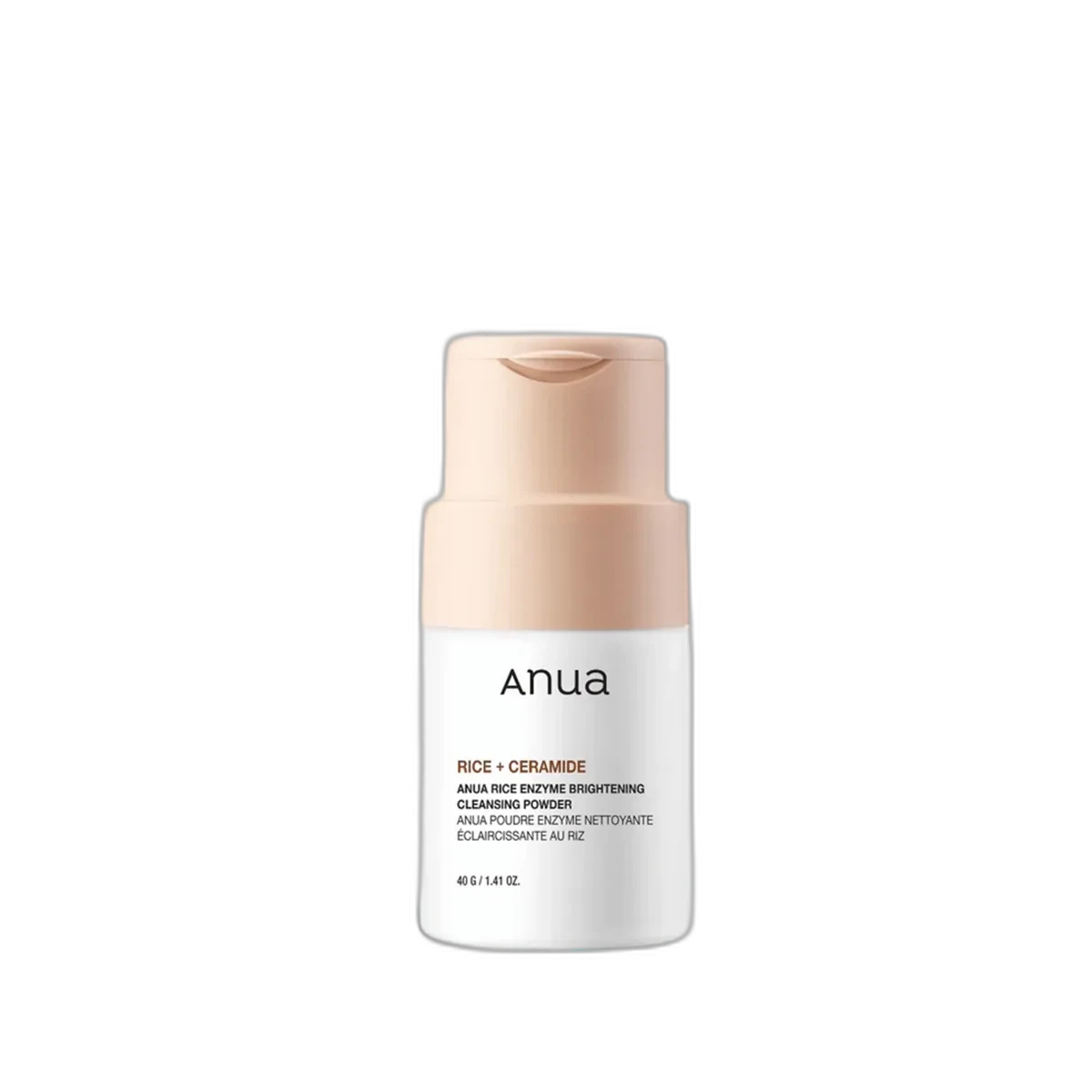
Rice Enzyme Brightening Cleansing Powder
K-Beauty Enzyme Exfoliant
 Verified reviewer
Pros & cons.
- +Dual enzyme system (papain + protease) provides the gentlest form of effective exfoliation
- +Four-pathway exfoliation combines enzymes, AHAs, physical rice powder, and active brighteners
- +Ceramide NP prevents barrier stripping — rare and welcome in an exfoliating cleanser
- +Fragrance-free with gentle, amino acid-based surfactants
- +Powder format ensures fresh enzyme activity at each use and excellent travel portability
- +Immediate visible brightness and smoother texture after first use
- −40g jar at $20 is a premium price per gram compared to liquid cleansers
- −Powder-to-foam conversion takes a few uses to master
- −Open jar dispensing can be messy — a shaker top would be preferable
- −Not suitable for daily use on most skin types — requires scheduling around other exfoliants
- −Limited contact time means brightening actives have brief exposure
The full review.
Some skincare categories exist because someone took a simple ritual and made it more complex and better. The enzyme cleansing powder fits this. People have washed their faces with rice water for a millennium. Using rice water enhanced by papain, protease, lactic acid, tartaric acid, alpha-arbutin, ascorbic acid, and ceramide NP is a 2024 version of that tradition.
Anua’s Rice Enzyme Brightening Cleansing Powder is the exfoliating anchor of the Rice line. While the Rice 70 Milky Toner provides daily conditioning and barrier repair, this powder handles cell turnover and pore clarity. It is the tough-love product in a line otherwise known for gentleness.
The dual enzyme system is the formula’s centerpiece. Papain—from papaya—and protease are proteolytic enzymes that dissolve the desmosomes and protein debris holding dead skin cells to the surface. They activate when they touch water, making the powder format smart: the enzymes stay dormant and stable while dry, activating only when you mix the powder in your palm. This ensures a longer shelf life and more potent activity at use than pre-dissolved enzyme cleansers.
Lactic acid and tartaric acid add a mild AHA boost during cleansing. In a wash-off context with thirty to sixty seconds of contact, these acids provide a brief keratolytic pulse—loosening the intercellular cement between corneocytes—to complement the enzymatic dissolution. This is a four-pathway exfoliation approach: two enzymes and two AHAs work simultaneously during one wash.
The rice complex adds five derivatives: rice powder for gentle physical texture (not a scrub, just a light tactile feedback), rice bran water for vitamins and ferulic acid, rice lees extract for fermented brightening metabolites (naturally rich in kojic acid from fermentation), rice extract for nutrients, and hydrolyzed rice protein for post-cleanse conditioning. The rice lees inclusion is the most interesting; it is the same fermented residue from sake brewing, and the link to the smooth hands of sake brewers is not marketing fiction. The fermentation process generates kojic acid, a documented tyrosinase inhibitor.
Alpha-arbutin and ascorbic acid act as brightening actives. Because contact time in a cleanser is limited, do not expect dramatic depigmenting effects. However, you can deliver brighteners to freshly exfoliated skin at the moment of maximum receptivity—when dead cells have dissolved and fresh skin is exposed. It is a small, thoughtful optimization.
Ceramide NP is a surprising inclusion. Exfoliating cleansers often compromise the skin barrier by removing dead cells and stripping protective lipids. By including ceramide NP alongside sodium cocoyl isethionate (a gentle surfactant) and sodium lauroyl glutamate (an amino acid-based cleanser), Anua designed this powder to exfoliate without punishment. The barrier gets refreshed instead of stripped.
The texture is enjoyable. The fine white powder turns into a soft, creamy foam with a few drops of water. There is no gritty, sandpaper quality; the rice powder provides a smooth, barely perceptible physical component within the enzymatic foam. Rinse it off for an unmistakable result: smoother skin that reflects light differently. The brightness is instant because you removed the dull, dead surface layer.
The fragrance-free formulation fits the Rice line’s sensitive-skin positioning, and unnecessary aromatics are pointless in a cleanser.
The 40g size is a potential sticking point. At twenty dollars, the price per gram is a premium compared to liquid cleansers. But the powder is concentrated—a small amount creates a generous lather—and at 2-3 uses per week, the jar lasts two to three months. The powder format offers specific value: no water means no preservative system challenges, a longer shelf life, travel-friendliness, and fresher enzyme activity at each use.
Dispensing takes practice. You must gauge the right amount of powder and water to reach the ideal foam. Too much water creates a thin lather; too little creates a paste. Most people find their rhythm after three or four uses. A shaker-top dispenser would improve this over the open jar.
Used two to three times per week, this cleanser delivers cumulative results beyond instant smoothness. Pores appear more refined and blackheads diminish. The complexion gains a glow similar to a professional facial. Combined with the Rice 70 Milky Toner and a good sunscreen, it forms a simple, effective, fragrance-free brightening routine.
If physical scrubs leave your skin red and irritated, this is the civilized alternative. The enzymes do the work, the rice provides the tradition, and the ceramide NP ensures you do not trade smoothness for sensitivity.
Ingredient analysis.
Full INCI list
Zea Mays (Corn) Starch, Kaolin (CI 77004), Sodium Bicarbonate, Sodium Cocoyl Isethionate, Sodium Lauroyl Glutamate, Citric Acid, Sodium Polyacrylate, Diglycerin, Allantoin, Water, Maltodextrin, Papain, Oryza Sativa (Rice) Powder, Oryza Sativa (Rice) Lees Extract, Oryza Sativa (Rice) Bran Water, Butylene Glycol, 1,2-Hexanediol, Ceramide NP, Ascorbic Acid, Alpha-Arbutin, Glucose, Oryza Sativa (Rice) Extract, Protease, Dipropylene Glycol, Glycerin, Tartaric Acid, Lactic Acid, Oryza Sativa (Rice) Seed Protein, Hydrolyzed Rice Protein, Caprylyl Glycol
Skin match.
The science.
The Science
Papain, a cysteine protease derived from Carica papaya, has been extensively studied for its proteolytic activity in dermatological applications. Research published in the Journal of Cosmetic Science demonstrates that papain selectively cleaves peptide bonds in the desquamating corneocytes of the stratum corneum without affecting viable epidermal cells, providing enzymatic exfoliation with a favorable safety profile compared to chemical peels. The combination with a second protease enzyme broadens the substrate specificity of the proteolytic activity.
Lactic acid — an alpha-hydroxy acid with both keratolytic and humectant properties — has been shown in the American Journal of Clinical Dermatology to improve skin texture, reduce hyperpigmentation, and increase ceramide levels in the stratum corneum at low concentrations. In a wash-off format, the brief contact time limits penetration depth while still providing surface-level exfoliation.
Rice bran derivatives contain documented active compounds including ferulic acid (a potent antioxidant), inositol, phytic acid, and oryzanol — a compound unique to rice that has demonstrated UV-absorbing and antioxidant properties. Rice lees extract, a byproduct of sake fermentation, naturally contains kojic acid — a well-established tyrosinase inhibitor used in dermatological practice for hyperpigmentation management.
The inclusion of ceramide NP in a wash-off product aligns with research by Imokawa et al. demonstrating that barrier lipid replenishment during the cleansing step can prevent the transepidermal water loss typically caused by surfactant-mediated lipid removal.
Dermatologist Perspective
Board-certified dermatologists increasingly favor enzymatic exfoliation over physical scrubs due to the selective, controlled nature of proteolytic enzyme activity. Dermatologists note that papain-based cleansers provide effective desquamation without the microtearing associated with physical exfoliants or the sustained irritation risk of leave-on chemical peels. The inclusion of ceramide NP in an exfoliating cleanser is a detail that dermatologists would appreciate — it demonstrates awareness of the barrier compromise that exfoliation can cause and proactively addresses it. For patients prone to post-inflammatory hyperpigmentation, dermatologists would likely recommend this as a gentle exfoliation method that simultaneously delivers brightening actives to freshly revealed skin.
Where it fits in your routine.
Put about a dime-sized amount of powder in your damp palm. Add 3-5 drops of water and rub your palms together to make a creamy foam. Massage the foam onto your wet face in gentle circles for 30-60 seconds, targeting areas with texture or congestion. Rinse well with lukewarm water. Use 2-3 times per week in the evening, alone or as the second step in a double-cleanse routine. Skip other exfoliating products on enzyme cleanser days.
At $20 for 40g, the per-use cost is $0.30-0.50 depending on your dosage. This price matches or slightly exceeds liquid enzyme cleansers. The cost accounts for the concentrated powder format (no water weight), the dual-enzyme system, and ceramide NP and brightening actives that most enzyme cleansers omit. Use it 2-3 times weekly for 2-3 months of product. The annual cost is $80-120, a reasonable price for a targeted exfoliating treatment that replaces physical scrubs and some chemical exfoliant use.
People with dull, textured skin seeking gentle, effective exfoliation. Those replacing physical scrubs with better, less irritating options. Oily and combination skin types with blackheads and congestion. Users wanting a travel-friendly, solid exfoliating cleanser.
People with very sensitive skin, active eczema, rosacea flares, or compromised barriers may find even gentle exfoliation too harsh. Users of strong retinoids or prescription exfoliants should consult their dermatologist before adding enzymatic exfoliation. Some people find powder cleansers less convenient than pump-dispensed foaming cleansers.
Product details.
A fine, white powder that turns into a gentle, creamy foam when mixed with water. The rice powder has a minimal physical texture — not a gritty scrub, but a soft, almost silky foam with slight tactile feedback.
Fragrance-free. Natural ingredients leave a faint, neutral, powdery scent.
Compact 40g jar with a twist-top lid. The powder format is travel-friendly and stable because it contains no water, so storage requires no preservatives. A shaker-top dispenser would make portioning easier.
The powder-to-foam transformation is satisfying on first use — a small amount creates a thick, gentle lather. Skin feels smoother and brighter immediately after rinsing. Gentle surfactants and ceramide NP prevent tightness or dryness. The enzymatic exfoliation is imperceptible during use, but the results are visible.
2-3 months with use 3-4 times per week
24 months
All Year
The backstory.
Part of Anua's Rice line expansion, this cleansing powder brings the traditional East Asian practice of washing with rice water into a modern enzyme format. The inclusion of rice lees extract — the fermented byproduct of sake production — nods to the Japanese toji (sake brewers) who were historically famous for their youthful-looking hands, attributed to constant contact with fermented rice.
About Anua
Emerging Brand (2–5 years)Anua launched in 2019 as a K-beauty brand centered on heartleaf (Houttuynia cordata) extract. It gained global traction via social media and Olive Young bestseller rankings. The brand uses well-studied botanical ingredients, but its specific formulations lack independent clinical validation and its track record is short.
Common myths.
Enzyme cleansers are harsh on the skin.
Papain and protease enzymes are some of the gentlest exfoliation methods. They selectively dissolve dead protein bonds at the skin surface but do not affect living cells. The short contact time of a wash-off cleanser limits exposure. This is much gentler than physical scrubs or high-concentration acid treatments.
You should use enzyme cleansers daily for best results.
Most skin types work best with 2-3 uses per week. Daily use can over-exfoliate, especially if you use other exfoliating products. The enzymes are gentle, but you must manage cumulative exfoliation.
FAQ.
How often should I use the Anua Rice Enzyme Cleansing Powder?
Most skin types get optimal exfoliation using this 2-3 times per week without over-stripping. Oily or thicker skin types can use it up to daily. Dry or sensitive skin types should start once or twice a week and adjust based on skin response.
How do I use a powder cleanser?
Put a dime-sized amount into a damp palm. Add a few drops of water and rub your palms to foam. Massage the foam onto a wet face for 30-60 seconds, then rinse with water. The enzymes activate when they touch water.
Can I use this with other exfoliants?
Yes, but do not use it on the same day as strong AHA/BHA treatments or retinoids to avoid over-exfoliation. Skip your chemical exfoliant on days you use this enzyme cleanser. It works well with hydrating, non-exfoliating products in the rest of your routine.
Is the Anua Rice Enzyme Cleanser travel-friendly?
The powder format avoids carry-on liquid restrictions, prevents leaks, and uses a compact 40g container. Because it lacks water, it is shelf-stable and has a longer shelf life than liquid cleansers.
Does this cleanser brighten skin or just exfoliate?
Both. The dual enzyme system and mild AHAs exfoliate, while alpha-arbutin, ascorbic acid, and rice lees extract (naturally rich in kojic acid) provide active brightening ingredients. Dead cell removal causes immediate brightness; the active depigmenting ingredients provide cumulative brightening.
Community
What the community says.
"Skin feels incredibly smooth after use"
"Brightening effect visible immediately"
"Gentle enough for regular use"
"No strong fragrance"
"Travel-friendly powder format"
"Powder can be messy to dispense"
"Takes practice to get the right water-to-powder ratio"
"40g container feels small for $20"
"Too drying if used daily for dry skin types"
People also looked at.