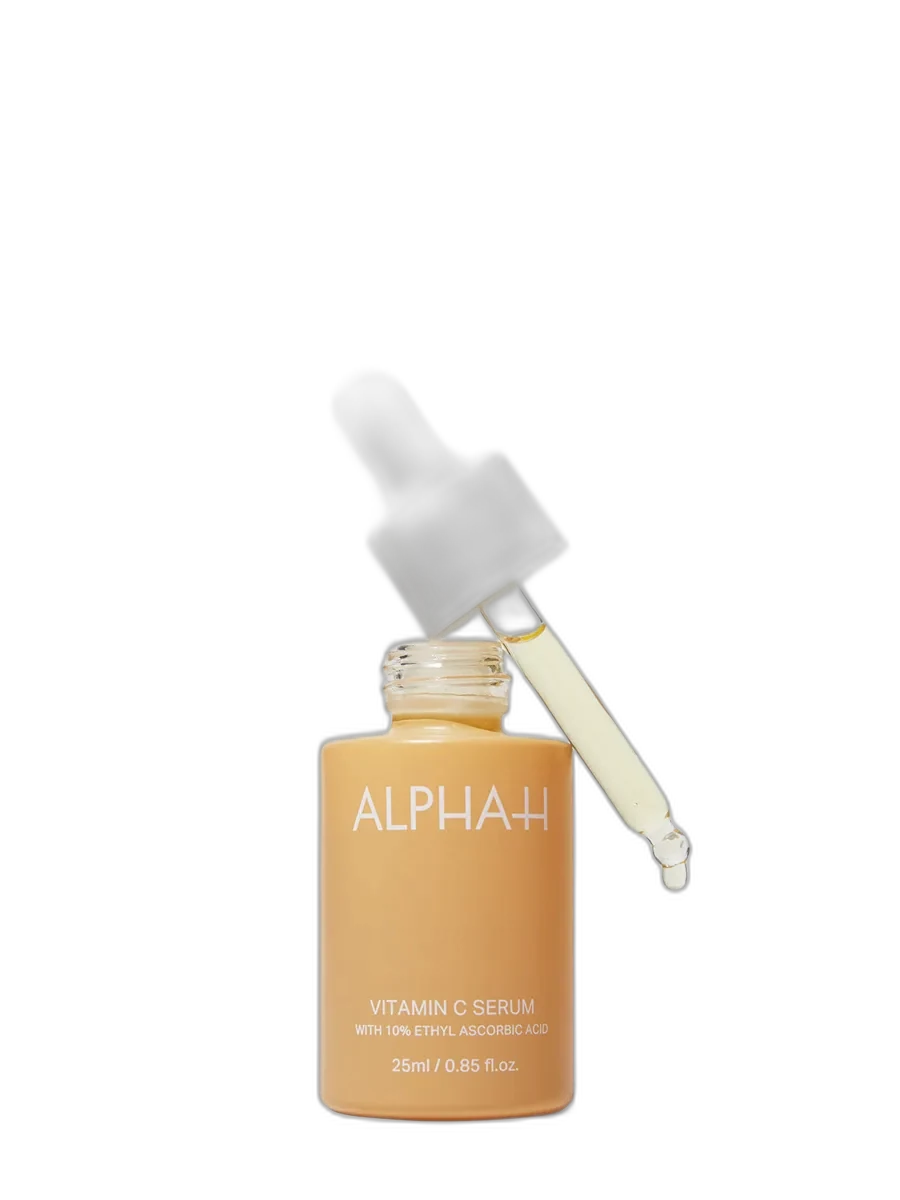
Vitamin C Serum with Hyaluronic Acid
Stable Vitamin C Without the Sting
 Verified reviewer
Pros & cons.
- +10% ethyl ascorbic acid is stable and gentle compared to L-ascorbic acid
- +Clear lightweight texture absorbs without residue
- +Licorice extract adds complementary brightening
- +Higher pH means no sting on application
- +Doesn't oxidize and turn brown like traditional vitamin C serums
- +Pregnancy-safe and compatible with retinoids and niacinamide
- −Premium price for a derivative-based vitamin C
- −Orange peel oil makes it unsuitable for fragrance-sensitive users
- −Less potent than a high-percentage L-ascorbic acid serum
- −Smaller 25ml size for the price tier
- −Limonene flagged as a potential allergen for reactive skin
The full review.
Every vitamin C serum involves a single trade-off for formulators and consumers. L-ascorbic acid—the vitamin C form studied most in dermatology since the 1990s—is unstable in water, oxidizes in light or air, and requires a low pH that causes many users to wince. However, it has the strongest published evidence base of any topical antioxidant. The alternative uses a vitamin C derivative that converts to ascorbic acid in the skin. These are more stable, gentler, and use a higher pH, but have less clinical evidence and lower potency. Most vitamin C serums fall on this spectrum; Alpha-H’s Vitamin C Serum uses the derivative approach. The active is 10% 3-O-ethyl ascorbic acid. This ethyl ascorbic acid derivative is unique because skin enzymes cleave the ether bond to release free ascorbic acid, turning the ingredient into L-ascorbic acid at the cellular level. Conversion is not 100% efficient and evidence is thinner than for direct L-ascorbic acid, but recent research shows real brightening and antioxidant effects, though smaller than a 15-20% L-ascorbic acid serum like Skinceuticals C E Ferulic. The supporting ingredients work well. Sodium hyaluronate adds a hydration layer that pure water-based vitamin C serums lack and helps the serum glide without the tackiness common in derivative serums. Licorice root extract provides glabridin, a tyrosinase inhibitor that brightens pigmentation like vitamin C; using both creates a complementary effect on hyperpigmentation. Tasmanian pepperberry extract is a signature Australian botanical that adds antioxidant activity, though independent evidence is limited. The texture is easy to use. This clear, lightweight liquid comes from a tinted dropper bottle, spreads easily, absorbs in 30-60 seconds, and leaves no residue. There is no oxidation; the formula stays clear throughout its shelf life instead of turning amber in weeks like a typical L-ascorbic acid serum, and sodium metabisulfite provides extra oxidation protection. The pH is high enough to prevent stinging on reactive skin, which is why most users choose derivative serums over traditional L-ascorbic acid. The main weakness is the orange peel oil. Alpha-H uses it for scent and Australian botanical branding, but it adds fragrance to a product that would otherwise suit fragrance-sensitive users. Limonene is on the INCI, and limonene is a common cosmetic allergen for reactive skin. Users needing a fragrance-free vitamin C serum should choose Naturium Vitamin C Complex 12% or Geek & Gorgeous C-Glow instead. Value is another factor. At sixty-five dollars for 25ml, Alpha-H is a luxury-tier price for a derivative serum, while Naturium, Geek & Gorgeous, The Inkey List, and The Ordinary offer similar ethyl ascorbic acid concentrations for under twenty dollars. The premium covers the brand’s reputation, the licorice, the pepperberry, and the polished texture, but not a different active. If budget alternatives underwhelmed you, this upgrade may work. If you are new to derivative-based vitamin C, start with a budget option to test your skin. Alpha-H has nearly three decades of clinical Australian skincare history. The Vitamin C Serum is a competent derivative-based formula and a good choice for users wanting a stable, gentle, well-rounded brightening serum who will pay the brand premium. It is not the strongest or cheapest vitamin C serum, but for users in the middle of the trade-off spectrum, it is an easy daily morning routine addition.
Ingredient analysis.
Full INCI list · pH 5.5
Aqua (Water), 3-O-Ethyl Ascorbic Acid, Methyl Gluceth-20, Propanediol, Sodium Citrate, Glycerin, Phenoxyethanol, Citric Acid, Sodium Hyaluronate, Caprylyl Glycol, Sodium Metabisulfite, Polysorbate 20, Vitis Vinifera (Grape) Seed Extract, Citrus Aurantium Dulcis (Orange) Peel Oil, Glycyrrhiza Glabra (Licorice) Root Extract, Tasmannia Lanceolata (Pepperberry) Fruit/Leaf Extract, Sodium Benzoate, Potassium Sorbate, Limonene, CI 75120 (Annatto)
Skin match.
The science.
The Science
The science of topical vitamin C is divided cleanly into two camps. L-ascorbic acid is the most-studied form and the only one whose clinical efficacy has been demonstrated repeatedly in randomized trials going back to the 1990s. A 1996 study by Pinnell and colleagues in the Journal of the American Academy of Dermatology established the 8-15% concentration range that has become the standard for clinical brightening serums, along with the requirement for low pH (under 3.5) for the molecule to penetrate the skin in unionized form. The trade-off is the well-documented instability — L-ascorbic acid oxidizes rapidly in water, especially in the presence of light and air, which is why traditional vitamin C serums turn from clear to amber within weeks of opening. Vitamin C derivatives were developed to address the stability problem. 3-O-ethyl ascorbic acid is one of the more recent additions to the family and is structurally distinct from earlier derivatives like ascorbyl glucoside and magnesium ascorbyl phosphate because the ether bond at the third carbon position blocks the oxidation pathway entirely. A 2017 study in the Journal of Investigative Dermatology examined the percutaneous absorption and intracellular conversion of ethyl ascorbic acid and demonstrated that the molecule both penetrates the stratum corneum effectively and is cleaved by skin enzymes to release free ascorbic acid. Subsequent in vitro and small clinical studies have shown brightening and antioxidant effects, though the body of evidence is significantly smaller than for L-ascorbic acid. The licorice root extract in this serum contributes a separate validated mechanism. Glabridin, the active flavonoid in licorice, is a documented tyrosinase inhibitor with multiple published studies demonstrating its effect on melanin synthesis. Combining glabridin with vitamin C in a single formula creates a complementary attack on the pigmentation pathway that's more comprehensive than either ingredient alone, which is the formulation logic behind including it.
Dermatologist Perspective
Dermatologists generally view vitamin C derivatives as a reasonable alternative to L-ascorbic acid for users who can't tolerate the irritation or instability of the traditional form. Board-certified dermatologists note that ethyl ascorbic acid in particular has the strongest derivative evidence base among the newer molecules and is a defensible choice for sensitive complexions. Clinicians typically recommend combining a morning vitamin C serum with broad-spectrum SPF, since the antioxidant works as a complement to sunscreen rather than a substitute, neutralizing the small percentage of UV-generated free radicals that get past sunscreen protection. Dermatologists also flag that derivative-based serums generally produce more subtle and slower-developing visible results than high-percentage L-ascorbic acid formulas, which is worth managing patient expectations around.
Where it fits in your routine.
Apply 3-4 drops to clean, dry skin every morning. Use it after toners or essences and before moisturizer and sunscreen. Press the liquid into your skin; do not rub. Always layer SPF on top. Vitamin C complements sun protection but does not substitute for it. You can safely combine it with niacinamide, peptides, and most other morning serums. Use retinoids in your PM routine instead. Store in a cool, dark place to maximize shelf life, though the ethyl ascorbic acid is stable enough for bathroom storage.
At sixty-five dollars for 25ml, this serum costs luxury prices even though it uses a vitamin C derivative found in cheaper alternatives. Naturium Vitamin C Complex, Geek & Gorgeous C-Glow, and The Inkey List Vitamin C Brightening Cream all use similar ethyl ascorbic acid concentrations for $20 or less. The Alpha-H premium price reflects the brand's Australian reputation, licorice and pepperberry extracts, and the more polished texture, but the vitamin C itself is not fundamentally different. The premium is defensible for users who trust the brand and want the polished experience. For users new to vitamin C derivatives, a budget option is the smarter financial move.
Sensitive skin types that cannot tolerate L-ascorbic acid serums. Users who stop using oxidized brown vitamin C serums halfway through the bottle. Pregnancy-safe brightening seekers. Anyone who prefers a polished, well-textured serum over the cheapest formulation.
Users seeking maximum-potency brightening will see faster, more visible results with a 15-20% L-ascorbic acid serum. The orange peel oil affects fragrance-sensitive complexions. Budget shoppers can find comparable derivative-based vitamin C from Naturium or Geek & Gorgeous for a third of the price.
Product details.
A clear, lightweight liquid serum that absorbs in seconds
Distinct orange citrus from the orange peel oil
25ml dropper bottle in tinted glass
Apply 3-4 drops to clean skin every morning. The serum spreads easily, absorbs in 30-60 seconds, and leaves no residue. The orange scent is noticeable at first but fades within minutes. It does not sting or tingle; the derivative form makes this one of the gentler vitamin C serums on the market.
About 2-3 months with daily morning use
12 months
All Year
The backstory.
Alpha-H was founded in Australia in 1995 by Michelle Doherty after years of working as a beauty therapist. The brand made its name with Liquid Gold, one of the first widely available at-home glycolic acid treatments, and built a clinical reputation around acid-based exfoliation. The Vitamin C Serum was added in 2018 to round out the brand's brightening lineup and intentionally chose a derivative form to deliver vitamin C activity without the irritation that put off many users on the brand's stronger Liquid Gold treatment.
About Alpha-H
Established Brand (5–20 years)Michelle Doherty founded Alpha-H in Australia in 1995. The brand is famous for its Liquid Gold glycolic acid treatment, one of the first AHA exfoliants available for home use. Alpha-H has nearly three decades of experience in clinical skincare using acid-based exfoliation and brightening.
Common myths.
Vitamin C derivatives don't work — only L-ascorbic acid is real vitamin C.
3-O-ethyl ascorbic acid converts to ascorbic acid in the skin. Studies show it delivers measurable brightening and antioxidant effects. It lacks the validation of L-ascorbic acid, but it is not inactive.
If your vitamin C serum doesn't sting, it's not working.
L-ascorbic acid serums sting because they require a low pH (pH 2.5-3.5) for stability, not because of the vitamin C. Derivative-based serums work at a higher pH and deliver the active ingredient to the skin without that surface irritation.
FAQ.
How does this compare to a 15% L-ascorbic acid serum?
L-ascorbic acid at 15-20% (like Skinceuticals C E Ferulic) is the clinical brightening gold standard, but it is unstable and irritating. Alpha-H's serum uses 10% ethyl ascorbic acid. This version is more stable and gentler, though slightly less potent. This trade-off works for sensitive skin or users who cannot manage the oxidation of L-ascorbic acid.
Is this serum safe to use during pregnancy?
Yes. Vitamin C derivatives, hyaluronic acid, and licorice extract are safe during pregnancy and breastfeeding. Only the orange peel oil requires caution; if pregnancy increases your fragrance sensitivity, test a small area first.
Will it oxidize and turn brown?
This costs much less than a traditional L-ascorbic acid serum. Ethyl ascorbic acid is more stable, so the formula stays clear for its full shelf life instead of turning amber within weeks. Sodium metabisulfite in the formula adds oxidation protection.
Can I use this with retinol?
Yes — use this in the morning and your retinol at night. These two ingredients use different mechanisms to complement a brightening and anti-aging routine. The vitamin C manages oxidative damage during the day while the retinol manages cell turnover overnight.
Why is there orange oil in a vitamin C serum?
The citrus oil ties to the brand's Australian botanical positioning and gives the formula its scent. It's not the source of the vitamin C activity — that comes from the ethyl ascorbic acid. Users with fragrance sensitivity may find a fragrance-free derivative serum like Naturium Vitamin C Complex a better fit.
How long until I see results?
Daily morning use shows subtle brightening and glow within 2-3 weeks. Pigmentation reduction takes 8-12 weeks. Antioxidant protection against UV damage starts immediately, though it is not visually obvious.
What the community says.
"Stable formula doesn't oxidize like ascorbic acid serums"
"Visible brightening within a few weeks"
"Doesn't sting reactive skin like L-ascorbic acid"
"Pleasant orange scent"
"Pricey for a derivative-based vitamin C"
"Orange oil triggers fragrance-sensitive users"
"Smaller 25ml size for the price"
"Less potent than 15-20% L-ascorbic acid"
Featured in.
People also looked at.