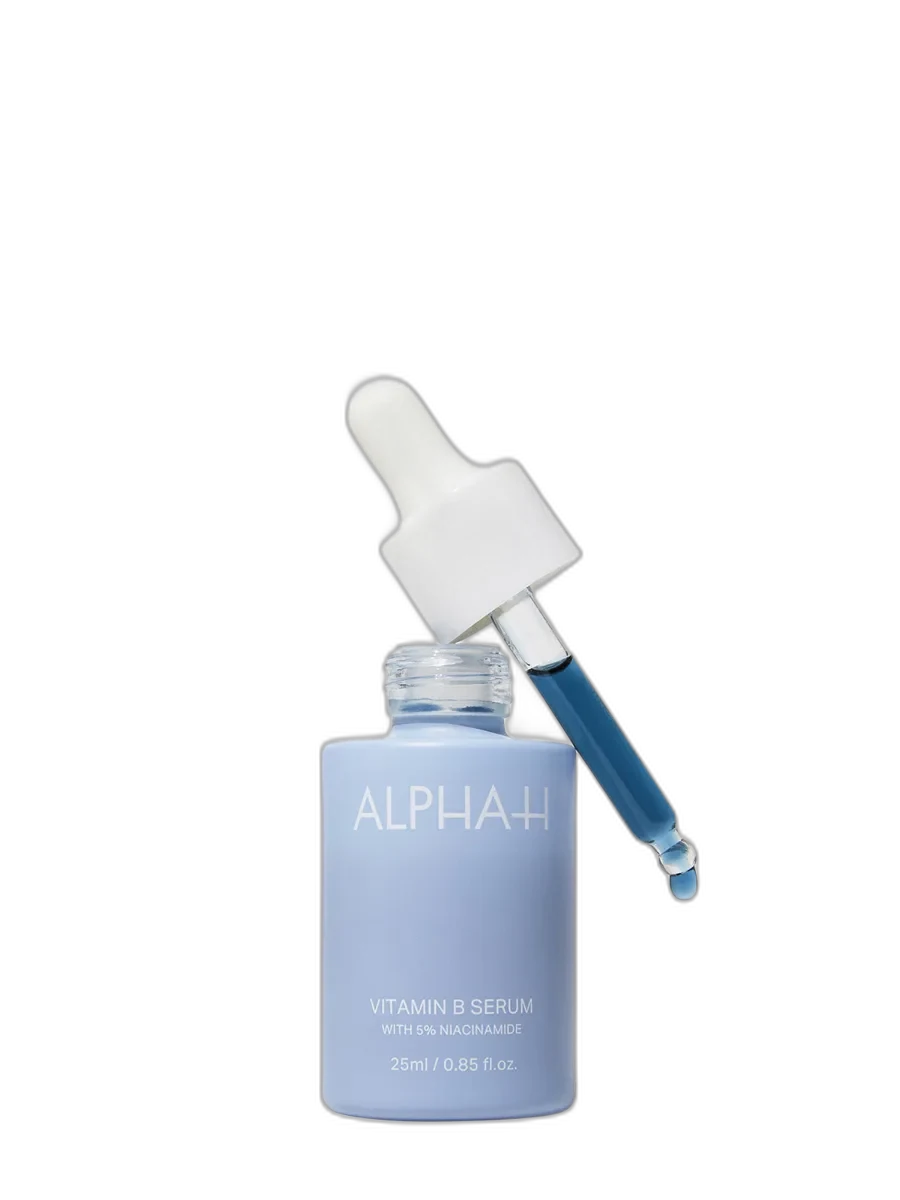
Vitamin B Serum with Niacinamide
Beginner-Friendly Niacinamide Pick
 Verified reviewer
Pros & cons.
- +Gentle 5% niacinamide dose that suits sensitive skin
- +Panthenol and sodium PCA support barrier and hydration
- +Minimalist formula with low irritation risk
- +Legacy brand with nearly three decades of clinical reputation
- +Excellent buffer layer for retinoids and acids
- +Safe for pregnancy and post-procedure use
- +Convenient pump bottle with good value per milliliter
- −Simple formula lacks supporting actives beyond niacinamide
- −Results are subtle rather than transformative
- −Contains hydrolyzed wheat protein (rare contact allergy concern)
- −More expensive than budget niacinamide alternatives
The full review.
Younger skincare fans often miss Alpha-H, but Australian derm-adjacent circles have used it as a staple for nearly three decades. Founder Michelle Doherty launched the line in 1995 in Queensland, when consumer glycolic acid was still a fringe idea. The brand’s Liquid Gold glycolic toner remains a long-running cult favorite. This heritage matters for a simple niacinamide serum; the brand made deliberate choices instead of competing with current multi-active bottles. Alpha-H chose not to compete. The Vitamin B Serum is almost stubbornly plain.
The INCI list has about fifteen ingredients. Water, 5% niacinamide, glycerin, butylene glycol, panthenol, sodium PCA, a thickener, allantoin, hydrolyzed wheat protein, sodium hyaluronate, aloe juice, and preservation. That’s it. No acids, peptides, retinoids, plant stem cells, growth factors, or microbiome ferments. In today’s market, this feels like a refusal. That refusal makes the serum useful for a specific user: someone who wants niacinamide’s documented benefits without the irritation risk of stacking five actives in one bottle.
The formulation uses a B-vitamin pairing. Niacinamide is vitamin B3, panthenol is pro-vitamin B5, and they work through complementary mechanisms. Niacinamide drives ceramide synthesis, regulates sebum, reduces tone unevenness, and supports antioxidant defenses. Panthenol binds water, calms inflammation, and accelerates barrier recovery. Together they create a more well-rounded barrier-support serum than either alone. The 5% niacinamide dose sits at the upper end of what clinical studies show for efficacy without the flushing some users report at 10%. Sodium PCA, aloe juice, and sodium hyaluronate provide the hydration base. Hydrolyzed wheat protein adds temporary smoothness, giving the serum a better immediate skin-feel than its short ingredient list suggests.
The texture matches the logic. It is a clear, water-light gel-serum that absorbs in under a minute. It has zero tack or residue, does not pill under sunscreen, and does not interact with foundation. The application is predictable—no tingling, no stinging, and no unusual scent. It is the skincare equivalent of a well-made plain t-shirt. Some users will find that boring. Others will find it appealing after using serums that turn their cheeks pink or leave a film.
Results follow the published niacinamide timeline. Immediate hydration and comfort occur at the first application. A softer, more uniform complexion and a subtle glow appear within one to two weeks. Measurable improvements in barrier strength, tone evenness, and redness reduction typically show up in three to six weeks. This serum will not dramatically firm skin, erase hyperpigmentation, or refine pores like a dedicated treatment. Instead, it reliably maintains and gently improves barrier health without affecting routine comfort or compatibility.
The value math is nuanced. At $54.95 for 50ml, this isn’t a budget pick, but it costs less per milliliter than prestige niacinamide serums and offers a more polished application than the cheapest options. The case for this version rests on three things: legacy brand credibility, sensitive-skin-optimized formulation, and the pump-bottle packaging. If you use a more expensive, more irritating niacinamide product, this is an upgrade. If a five-dollar budget niacinamide serum works for you, there is no urgent reason to switch.
The serum shines as a buffer layer for strong actives. Users using retinoids, prescription tretinoin, or acids at night often find that layering this serum between the treatment and moisturizer reduces next-morning tightness or flakiness. The niacinamide-panthenol combination is soothing, and the minimalist base won’t react with stronger actives. Pregnant users, sensitive rosacea-prone users, and users in post-procedure recovery will find this a safe, well-tolerated pick.
One minor caveat is the hydrolyzed wheat protein. This shouldn’t affect most gluten-sensitive users because topical wheat protein does not absorb systemically through intact skin, but users with wheat contact allergies should patch test first. Otherwise, the only criticism is that its simplicity is unglamorous. There is nothing to marvel at. It is a good 5% niacinamide serum in a pump bottle from a legacy brand, priced reasonably. Sometimes that is exactly what a routine needs.
Ingredient analysis.
Full INCI list · pH 5.5
Aqua (Water), Niacinamide, Glycerin, Butylene Glycol, Panthenol, Sodium PCA, Hydroxyethylcellulose, Allantoin, Hydrolyzed Wheat Protein, Sodium Hyaluronate, Aloe Barbadensis Leaf Juice, Phenoxyethanol, Ethylhexylglycerin, Disodium EDTA, Citric Acid
Skin match.
The science.
The Science
Niacinamide has one of the strongest evidence bases in cosmetic chemistry. Peer-reviewed studies show topical niacinamide at 2-5% improves skin barrier function by increasing ceramide and free fatty acid synthesis, reduces transepidermal water loss, and evens skin tone by blocking melanosome transfer from melanocytes to keratinocytes. A 2004 Matts et al study showed visible improvements in hyperpigmentation, red blotchiness, yellowing, and wrinkles after twelve weeks of 5% niacinamide use. The 5% dose in this serum hits the clinically studied sweet spot — higher concentrations (up to 10%) can reduce sebum and pores more but cause more transient flushing in sensitive users. Panthenol (pro-vitamin B5) is an established humectant and barrier-soothing agent; it converts to pantothenic acid in the skin and improves hydration and reduces inflammation in multiple studies, including wound-healing and post-procedure recovery. The B3 and B5 pairing is rational, using complementary mechanisms that fit this product's gentle, daily-use design. Sodium PCA, aloe juice, and sodium hyaluronate add supporting humectant layers without interfering with the primary actives. This formula lacks acids, retinoids, or strong actives that compete with the niacinamide. This restraint makes this serum well-suited for sensitive skin, following the clinical principle that simpler formulas have more predictable tolerance profiles.
Dermatologist Perspective
Dermatologists often recommend 5% niacinamide as a foundational serum for patients with sensitive skin, early barrier compromise, or mild tone unevenness. Board-certified dermatologists note that niacinamide is one of the easiest cosmetic actives to use without interaction concerns, and it pairs well with prescription retinoids to enhance tolerability. The B3-B5 combination in this formula is a rational, well-tolerated starting point for patients nervous about actives. For patients wanting more dramatic pore or sebum changes, higher-concentration niacinamide options are sometimes recommended, but the gentler profile here suits reactive and rosacea-prone patients better.
Where it fits in your routine.
Apply two to three pumps to clean, damp skin after cleansing and toning, morning and evening. Press it gently into the face and neck. Wait thirty seconds for absorption before applying serums or moisturizer. Use sunscreen in the AM. In the PM, layer this over or under a retinoid; applying it over a retinoid works well as a buffer if the retinoid dries your skin. Use it daily for at least three to four weeks to see results. The pump bottle keeps the formula clean and ensures precise dosing.
At $54.95 for 50ml, this serum isn't the cheapest niacinamide option, but the price fits the size, quality, and brand heritage. Budget niacinamide serums from brands like The Ordinary provide the core active for much less, so users wanting only niacinamide can save money. The Alpha-H price covers legacy brand credibility, a sensitive-skin-optimized formulation, pump bottle packaging, and panthenol support. Only the 50ml size exists, but the bottle lasts most users three to four months, keeping the per-use cost reasonable. It offers good value for a mid-tier niacinamide serum, especially for users seeking its gentle, beginner-friendly positioning.
This works for sensitive, rosacea-prone, or easily irritated skin seeking niacinamide benefits without high-concentration flushing. It also suits beginners starting an active routine, pregnant or breastfeeding users, and anyone needing a reliable buffer layer for retinoids or acids.
Users wanting strong pore-refining or sebum-control effects may prefer a 10% niacinamide formula with zinc. Budget-focused users who tolerate cheaper niacinamide serums don't need to upgrade. This formula is too minimalist for anyone seeking a multi-active anti-aging serum.
Product details.
Clear, lightweight gel-serum
Fragrance-free with no detectable odor
Frosted glass bottle with pump dispenser
This water-light gel absorbs in under a minute with no tack or residue. It causes no tingling or adjustment period. Most users feel subtle plumping within the first day and see a softer, more uniform complexion by the end of week one.
3-4 months with twice-daily face and neck use
12 months
All Year
The backstory.
Alpha-H built its reputation in the 1990s as one of the first consumer brands to popularize glycolic acid in Australia, and the Vitamin B Serum was added to round out the line with a gentler daily-use option. It has remained one of the brand's most consistent sellers for over a decade.
About Alpha-H
Legacy Brand (20+ years)Michelle Doherty founded Alpha-H in Queensland, Australia in 1995. It was one of the first glycolic acid skincare lines for consumers. Nearly three decades of market history, early AHA clinical positioning, and a strong reputation in Australian dermatology circles give the brand established legacy credibility.
Common myths.
You need 10% niacinamide to get real results.
Published research shows niacinamide affects barrier function, hydration, and tone at 2%. The well-studied benefits occur at 4-5%. Higher concentrations offer diminishing returns for many users and sometimes cause flushing.
A simple serum can't be as effective as a complex one.
Single-active formulas often work better for users with sensitive or reactive skin. These formulas deliver consistent results without unpredictable irritation compared to multi-active ones.
FAQ.
Is 5% niacinamide strong enough to work?
Yes. Published research shows niacinamide supports the barrier, evens tone, and regulates sebum at 2%. Benefits are well-established at 4-5%. Higher concentrations offer diminishing returns.
Can I use this with retinol?
Yes — this serum buffers retinoids well. Apply the retinoid first on dry skin, let it absorb, then press this serum on top to calm barrier stress.
Is this safe during pregnancy?
Yes. Niacinamide, panthenol, sodium PCA, and the other ingredients in this formula are generally pregnancy-safe. As always, confirm with your OB if you have specific concerns.
How does this compare to The Ordinary Niacinamide 10% + Zinc 1%?
The Ordinary offers more niacinamide and zinc at a lower price. This Alpha-H version uses a gentler 5% dose in a pump bottle with panthenol and sodium PCA, which suits sensitive skin or beginners better.
Is it fragrance-free?
Yes — the formula has no added fragrance or essential oils and fragrance-sensitive users generally tolerate it well.
Does the wheat protein cause issues for gluten-sensitive users?
Topical wheat protein is safe for gluten-sensitive users because intact skin does not absorb it systemically. Users with wheat contact allergies must patch test first.
What the community says.
"gentle enough for daily use"
"visible hydration and glow"
"great price for the size"
"simple formula without hero actives beyond niacinamide"
"subtle results compared to stronger serums"
Featured in.
People also looked at.