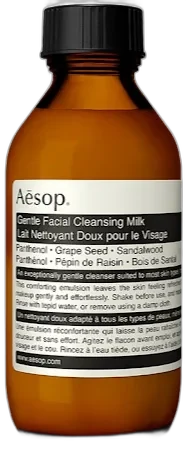
Gentle Facial Cleansing Milk
Classic Milk Cleanser
 Verified reviewer
Pros & cons.
- +Classical milk cleanser format that's genuinely gentle on dry skin
- +Surfactant-free lipid base dissolves makeup without stripping
- +Glycerin, panthenol, and allantoin support post-wash comfort
- +Lovely sensory experience and apothecary brand aesthetic
- +Works as a daily cleanser or as a second cleanse after an oil
- +Non-stripping enough for mature and sensitive skin (fragrance-dependent)
- +Vegan and Leaping Bunny certified
- −'Gentle' label at odds with the heavy essential oil content
- −$46 price significantly higher than functional milk cleanser alternatives
- −Not genuinely suitable for fragrance-sensitive or rosacea-prone users
- −Too rich for oily skin types
- −Flip-top cap less precise than a pump dispenser
The full review.
Milk cleansers are one of those skincare categories that used to be everywhere and now feel faintly nostalgic. Walk into a French pharmacy in the 1990s and every major brand had one — a thin white liquid in a tall bottle, designed to be poured onto cotton pads, swept across the face to dissolve makeup and sunscreen, and then either rinsed or tissued off. They were the standard of gentle cleansing before the gel wash took over the Western market and the double cleanse became a TikTok phenomenon. In certain parts of Europe they never really left, but in the American skincare conversation they mostly disappeared for a couple of decades, replaced by everything else.
Aesop’s Gentle Facial Cleansing Milk is essentially a luxury version of that classical format, updated for contemporary sensibilities. The texture pours as a proper milk — thinner than a cream cleanser, thicker than water — with the characteristic pale off-white color that gives the category its name. On dry or slightly damp skin, you massage it across the face, let the lipid base dissolve surface oils and light makeup, then rinse with lukewarm water or wipe off with a soft cloth. The experience is slow, deliberate, and entirely different from slapping on a foaming wash. Users who love the ritual of cleansing — the fraction of the population that considers their evening wash-off a form of self-care — tend to be the target audience for this format, and milk cleansers are in many ways the gentlest way to honor that ritual.
The formula is sensible. Caprylic/capric triglyceride sits high in the ingredient list as the primary cleansing lipid, doing the work of dissolving oil-based impurities through like-dissolves-like chemistry rather than surfactant stripping. Glycerin, panthenol, allantoin, sodium PCA, and hydrolyzed wheat protein all contribute humectant and conditioning support, which is exactly what you want in a cleanser aimed at dry skin. Aloe extract adds a small calming contribution. Collectively, this is a well-structured milk cleanser that delivers on the gentleness promise from a pure barrier-friendliness standpoint.
And then you get to the essential oils. Chamomile flower oil, sandalwood oil, lavender oil, bitter orange leaf oil, and geranium oil all appear in the ingredient list, plus the usual fragrance component with its disclosed allergens: linalool, limonene, geraniol, citronellol. This is where the ‘gentle’ label starts to feel like it’s carrying a very specific meaning — ‘gentle on the skin barrier if you are not reactive to any of these common botanical compounds.’ For most users, that’s fine. For users with established fragrance sensitivity, rosacea, eczema, or reactive skin, this cleanser is less appropriate than its name suggests, and someone seeking a truly hypoallergenic option would be better served by a fragrance-free milk cleanser from a brand like Avène or Bioderma, both of which have stronger credentials in actually-sensitive-skin territory.
That caveat aside, the performance on appropriate skin types is excellent. Dry skin users consistently describe it as the most comfortable cleanser they’ve ever used, mature skin benefits from the non-stripping action, and even combination skin in winter can find it a welcome break from more aggressive washes. The signature Aesop scent — herbaceous, slightly floral, distinctly European-apothecary — is either the best part of the experience or the reason you return it, depending on your fragrance preferences. For users who love it, the scent adds real pleasure to the routine. For users who find it overwhelming, it’s a quick return trip to Nordstrom.
Price-wise, the $46 cost for 100ml puts it firmly in the luxury cleanser category. Comparable milk cleansers from French pharmacy brands like Nuxe (Micellar Cleansing Milk with Rose Petals, around $22) or Bioderma (Sensibio Lait, around $18) offer similar lipid-based cleansing performance at about one-third to one-half the price, and Avène’s milk cleanser at under $20 is typically recommended by dermatologists over any fragranced alternative for truly sensitive skin. What Aesop offers is the brand experience, the amber glass bottle, and the specific botanical aromatic profile — worth the premium if those are your priorities, not worth it if you’re evaluating on pure cost-to-performance.
The honest answer on who should buy this comes down to two questions: do you love the Aesop experience, and is your skin non-reactive to essential oils? If yes to both, this is one of the more pleasant cleansers in the lineup and worth the splurge as a daily comfort product. If yes to one but not the other, there are better-suited options. And if you’re evaluating on pure skincare efficiency, a $20 drugstore milk cleanser from Bioderma or Nuxe will do the same functional job without the markup or the essential oil load. Both paths are legitimate — the question is what you’re actually buying.
Ingredient analysis.
Full INCI list
Water (Aqua), Caprylic/Capric Triglyceride, Glycerin, Cetearyl Alcohol, Glyceryl Stearate, Ceteareth-20, Panthenol, Allantoin, Sodium PCA, Hydrolyzed Wheat Protein, Aloe Barbadensis Leaf Juice, Anthemis Nobilis (Chamomile) Flower Oil, Santalum Album (Sandalwood) Oil, Lavandula Angustifolia (Lavender) Oil, Citrus Aurantium Amara (Bitter Orange) Leaf Oil, Pelargonium Graveolens (Geranium) Oil, Citric Acid, Sodium Hydroxide, Xanthan Gum, Fragrance (Parfum), Linalool, Limonene, Geraniol, Citronellol, Phenoxyethanol, Ethylhexylglycerin.
Skin match.
The science.
The Science
Milk cleansers operate on a fundamentally different chemistry from foaming surfactant cleansers. Instead of using detergents to emulsify and strip oils from the skin, they rely on lipid-lipid dissolution — the caprylic/capric triglyceride base is chemically similar enough to skin oils and makeup binders that it can dissolve them without needing a surfactant at all. This mechanism is documented in cosmetic chemistry literature and is the reason milk cleansers are consistently associated with lower irritation and better barrier preservation compared to foaming cleansers, particularly on dry or mature skin.
The humectant support in this formula — glycerin, panthenol, sodium PCA, hydrolyzed wheat protein — adds a secondary benefit that matters more in a brief-contact product like a cleanser than you might expect. Glycerin in particular has been shown to improve stratum corneum hydration even at low concentrations, and its presence in a cleanser rinse-off product means the skin retains more moisture than it would with a pure lipid dissolution formula. Panthenol has a well-documented calming and barrier-supporting effect, and allantoin contributes mild soothing benefits.
The essential oil inclusion is the most scientifically complicated part of the formula. Roman chamomile oil has some documented anti-inflammatory activity through its bisabolol content, though the effect is more modest than that of German chamomile's chamazulene. Lavender, sandalwood, geranium, and bitter orange leaf oils contribute primarily to the sensory profile rather than to skin performance, and all contain sensitizing components (linalool, limonene, geraniol, citronellol) that have documented potential for contact dermatitis in predisposed individuals. The formulation trade-off is transparent: Aesop has prioritized the botanical sensory experience, accepting that this makes the product less universally tolerable than a fragrance-free alternative would be.
Dermatologist Perspective
Dermatologists generally view milk cleansers as a useful format for patients with dry, mature, or sensitive skin, particularly when fragrance-free options are chosen. Board-certified dermatologists often recommend milk cleansers from pharmacy brands like Bioderma, Nuxe, or Avène rather than luxury alternatives, since the clinical performance is similar and the fragrance-free options are significantly better suited to reactive skin. This product is acceptable for non-reactive dry skin patients who prefer the Aesop experience, but it is not typically prescribed for patients with rosacea, eczema, or fragrance sensitivity. The essential oil load is the main reason clinicians would recommend alternatives.
Where it fits in your routine.
Apply a small amount to dry or slightly damp skin. Massage with fingertips for 30-60 seconds to dissolve makeup and surface impurities. Rinse with lukewarm water, or wipe off with a damp soft cloth if water is unavailable. Use a toner, serum, and moisturizer after. Use as a single morning cleanser, or as a second cleanse after an oil or balm cleanser at night. Patch test on the jawline first if you have a history of fragrance or essential oil sensitivity.
At $46 for 100ml, this sits in luxury cleanser pricing territory. Functional equivalents with comparable or superior clinical performance are widely available at $18-25 from French pharmacy brands — Bioderma Sensibio Lait, Avène Gentle Milk Cleanser, and Nuxe Micellar Cleansing Milk all deliver excellent milk cleanser performance without the fragrance load. What Aesop offers in exchange for the premium is the brand aesthetic, the amber glass packaging, and the specific botanical scent profile. For users who prioritize experience and brand coherence, the premium makes sense. For users focused on ingredient quality per dollar, the value comparison is not favorable.
Dry, normal, and mature skin types who want classical milk cleanser comfort and the Aesop experience. This works for users in colder climates, those who prefer slow cleansing rituals, and non-reactive customers building a luxury skincare routine.
Skip this if you have rosacea, eczema, fragrance sensitivity, or react to essential oils; the botanical load is too heavy for sensitive skin. Also skip if you have oily skin, want aggressive makeup removal, or prioritize cost-to-performance.
Product details.
Chamomile, lavender, sandalwood, and geranium create a layered, herbal-botanical scent. The aroma is medium-strong on application.
The iconic Aesop amber glass bottle uses a flip-top cap. It looks elegant but lacks the precision of a pump.
It pours as a thin milk instead of squeezing as a cream. It massages onto skin with a light, slippery feel, dissolves surface oils and light makeup, and rinses clean. Skin feels softened and conditioned, not stripped.
2-3 months with daily face use.
12 months
All Year
The backstory.
Milk cleansers have a long tradition in European skincare, particularly French and Italian, where they've been used for dissolving makeup and sunscreen without the harshness of foaming washes. Aesop's Gentle Facial Cleansing Milk brings that format into its botanical-apothecary brand world and positions it as the gentlest cleanser in the lineup.
About Aesop
Legacy Brand (20+ years)Aesop launched in 1987. The brand has nearly four decades of history based on botanical formulation and apothecary aesthetic. Design and a loyal customer base drive its credibility, not clinical validation.
Common myths.
Milk cleansers don't clean as thoroughly as foaming cleansers.
Milk cleansers use lipid-dissolution chemistry instead of surfactant stripping. They clean oil-based impurities effectively and work better for dry or sensitive skin because they do not disrupt the barrier.
Any product labeled 'gentle' is safe for sensitive skin.
'Gentle' is marketing, not a clinical guarantee. Check the ingredient list. Fragrance and essential oils trigger sensitive skin most often, and 'gentle' products can contain both.
FAQ.
Is it actually gentle despite the essential oils?
Results depend on your skin. The surfactant-free lipid base is mild and non-stripping, but the essential oil blend (chamomile, lavender, sandalwood, geranium) irritates reactive skin. This works if your sensitivity stems from barrier disruption. Choose a fragrance-free option if you react to fragrance.
Can I use it to remove makeup?
It works for light to medium makeup. The caprylic/capric triglyceride base dissolves most oil-based makeup. Use an oil or balm cleanser first for heavy foundation or waterproof eye makeup, then follow with this one.
Do I need to rinse it off?
Rinse with lukewarm water for best results. You can wipe with a damp soft cloth if you are in a rush, but rinsing removes dissolved impurities more effectively.
How does this compare to Aesop's Amazing or Fabulous Face Cleanser?
Gentle Facial Cleansing Milk is the mildest option, made for dry and sensitive skin. Amazing Face is a foaming gel for normal/combination skin; Fabulous is a creamy cleanser with mild acids. Choose Gentle Facial Cleansing Milk if you want comfort and minimal stripping.
Will it leave a film on my skin?
Most users find it rinses cleanly. Users who use too much product or skip thorough rinsing report a slight residue. Use less product and rinse more carefully to fix this.
Is it good for mature skin?
Yes — this is a top Aesop cleanser for mature skin because the formula is non-stripping and contains conditioning ingredients. Watch the fragrance content if your skin is more reactive with age.
What the community says.
"Incredibly gentle and non-stripping"
"Skin feels hydrated after rinsing"
"Great for dry mature skin"
"Spa-like sensory experience"
"Essential oils surprising in a 'gentle' product"
"Expensive"
"Doesn't remove heavy makeup alone"
"Too rich for oily skin"
Featured in.
People also looked at.