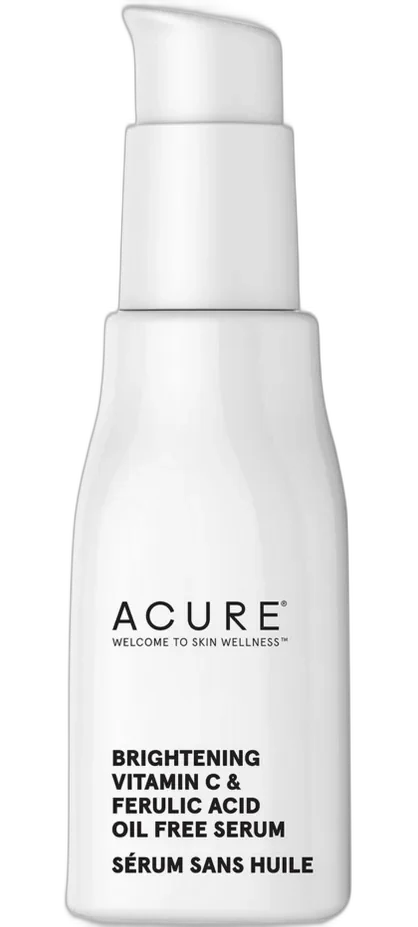
Brightening Vitamin C & Ferulic Acid Serum
Gentle Vitamin C Starter
 Verified reviewer
Pros & cons.
- +Uses THD ascorbate, a stable and lipid-soluble vitamin C derivative
- +Doesn't sting like L-ascorbic acid serums
- +Genuinely gentle for sensitive and reactive skin types
- +Ferulic acid pairing adds synergistic antioxidant action
- +Pregnancy-safe and fungal-acne-safe formulation
- +Affordable price compared to prestige THD ascorbate serums
- +EWG Verified, vegan, and cruelty-free
- −Less potent than 15-20% L-ascorbic acid for fast pigment fading
- −Dropper packaging exposes product to air with each use
- −No vitamin E to complete the classic C+E+ferulic antioxidant trio
- −Brightening is gradual rather than dramatic
The full review.
The vitamin C serum aisle is confusing because “vitamin C” covers a dozen molecules with different properties. L-ascorbic acid is the gold standard with the strongest clinical evidence, but it has the most stability problems and irritation. Sodium ascorbyl phosphate, magnesium ascorbyl phosphate, ascorbyl glucoside, ethyl ascorbic acid, and tetrahexyldecyl ascorbate are all derivatives—molecule variations designed to trade potency for stability or gentleness. Most budget vitamin C serums use the cheapest derivative and label it “vitamin C.”
Acure’s Brightening Vitamin C & Ferulic Acid Serum uses tetrahexyldecyl ascorbate, also known as THD ascorbate or BV-OSC. THD is a lipid-soluble vitamin C derivative that is more stable than L-ascorbic acid and more expensive than budget alternatives. It penetrates the skin’s lipid layer, converts to active vitamin C in the cells, and delivers brightening and antioxidant benefits without pH-related stinging. It uses the same vitamin C type found in prestige serums priced four to five times higher. Acure also pairs it with ferulic acid, the same antioxidant that stabilizes prestige C serums.
The science matches the experience. The serum is a lightweight clear gel that absorbs without tackiness, does not sting, does not oxidize visibly in the bottle, and fits under moisturizer and sunscreen. After one week of daily morning use, most people see slightly more luminous skin—a subtle radiance rather than a dramatic transformation. Over 8-12 weeks of consistent use, dullness improves and minor post-inflammatory pigmentation fades. The brightening curve is slower than a traditional 15% L-ascorbic acid serum, but it is a curve you can maintain without skin irritation.
Gentleness is the main selling point. High-percentage L-ascorbic acid serum often causes immediate stinging and redness on sensitive or rosacea-prone skin. THD ascorbate avoids this. There is no sting, no flushing, and no need to build tolerance. You can use this serum daily from day one on skin that cannot tolerate harsher options. For those who stopped using vitamin C due to irritation, this is a real alternative rather than a watered-down compromise.
The trade-off is potency. While more stable than L-ascorbic acid, THD ascorbate is generally less potent for fast brightening of stubborn pigmentation. This serum alone will not dramatically fade severe melasma or deep sun spots like a strong L-ascorbic acid formula or prescription tretinoin. It works best as a daily maintenance and antioxidant protection serum, not a heavyweight pigment treatment. Pair it with SPF and a retinoid at night for a complete brightening routine. Use it alone for modest results.
The formulation has limitations. The dropper packaging exposes the product to air each time you open the bottle; this is less problematic for stable THD than L-ascorbic acid, but still not ideal. The aloe base provides hydration but little else. The formula lacks vitamin E, which would complete the classic C+E+ferulic antioxidant trio used in prestige serums. These are not dealbreakers, but notes on where the formula could improve.
At around $20 for a one-ounce bottle, the math works. Comparable THD ascorbate serums from prestige brands typically cost $80-$150. You get the same active type at a fraction of the price in a reasonable formulation. This offers genuine value, especially for sensitive skin types priced out of gentler vitamin C options.
This serum is the strongest entry in the Acure lineup. The brand’s cleansing gel has fragrance, and the walnut shell scrub uses outdated abrasion. This serum shows what Acure achieves when it chooses thoughtful formulation over plant-based marketing. If you are skeptical of clean beauty but want to test the brand, start here.
Ingredient analysis.
Full INCI list
Water (Eau), Aloe Barbadensis Leaf Juice, Tetrahexyldecyl Ascorbate, Ferulic Acid, Ananas Sativus (Pineapple) Fruit Extract, Camellia Sinensis Leaf Extract, Carica Papaya (Papaya) Fruit Extract, Glycerin, Sclerotium Gum, Xanthan Gum, Hydroxyethylcellulose, Sodium Phytate, Ethylhexylglycerin, Potassium Sorbate, Sodium Benzoate, Citric Acid
Skin match.
The science.
The Science
Tetrahexyldecyl ascorbate (THD ascorbate) is one of the most studied stable vitamin C derivatives in cosmetic chemistry. Unlike L-ascorbic acid, which is water-soluble and unstable at higher pH, THD ascorbate is lipid-soluble and stable at neutral pH, allowing it to penetrate the stratum corneum more effectively and remain active in formulations longer. Research has documented its conversion to active ascorbic acid within skin cells and its ability to provide antioxidant and brightening benefits, though clinical comparisons with L-ascorbic acid generally favor the latter for sheer potency.
Ferulic acid is a plant-derived hydroxycinnamic acid with well-documented antioxidant activity. The classic 2005 study by Lin et al., published in the Journal of Investigative Dermatology, demonstrated that combining 15% L-ascorbic acid with 1% alpha-tocopherol and 0.5% ferulic acid provides synergistic photoprotection that significantly exceeds any individual ingredient alone. While the Acure formulation uses THD ascorbate rather than L-ascorbic acid and skips the vitamin E, the inclusion of ferulic acid still adds meaningful antioxidant capacity and stabilization to the active vitamin C component.
The enzymatic and botanical extracts in this formula (pineapple, papaya, aloe, green tea) provide secondary supporting benefits. Bromelain and papain are mild proteolytic enzymes that contribute to gentle surface refinement, while green tea polyphenols add additional antioxidant activity. None of these replace the vitamin C and ferulic acid as the primary actives, but they add a meaningful supporting layer to the formulation.
References
- Ferulic acid stabilizes a solution of vitamins C and E and doubles its photoprotection of skin — Journal of Investigative Dermatology (2005)
Dermatologist Perspective
Dermatologists routinely recommend vitamin C as part of a daytime antioxidant routine, particularly for patients seeking brightening, sun damage prevention, and overall radiance. Board-certified dermatologists generally consider L-ascorbic acid the gold standard for clinical efficacy, but acknowledge that stable derivatives like THD ascorbate are reasonable alternatives for patients with sensitive skin or those who can't tolerate the irritation of low-pH formulations. Many dermatologists note that a tolerable vitamin C used consistently outperforms a stronger formula that gets abandoned due to irritation. For brightening goals, dermatologists typically pair vitamin C with daily SPF and often add a retinoid at night for complementary mechanisms. Patients with severe melasma or deep hyperpigmentation are usually directed toward stronger options including prescription hydroquinone or in-office treatments.
Where it fits in your routine.
Apply 3-5 drops to clean, dry skin every morning after toning. Pat the serum into your face and neck, but avoid the immediate eye area. Wait 30-60 seconds for absorption before applying moisturizer. Always use broad-spectrum SPF 30 or higher; vitamin C and sunscreen work together for photoprotection. Store the bottle upright in a cool, dark place. Stop use if the serum turns dark brown or smells off.
At about $20 per ounce, this serum provides THD ascorbate and ferulic acid for roughly one-quarter to one-fifth the price of comparable prestige formulations. Daily morning use lasts the bottle about 2-3 months, making the daily cost pennies. This established budget brand has a decade of distribution, and the price reflects the formulation — you pay for the active selection, not just the brand name. This is a better choice than other budget vitamin C serums using cheaper derivatives at the same price point.
Users with sensitive, reactive, or rosacea-prone skin who cannot tolerate L-ascorbic acid. Beginners building a first brightening routine on a budget. Pregnant or nursing users wanting a vitamin C step. Anyone interested in THD ascorbate without prestige prices.
People with severe melasma, deep sun damage, or stubborn pigmentation seeking maximum-potency brightening. Users happy with a higher-strength L-ascorbic acid formula. Those wanting a fast-acting brightener instead of a gentle daily maintenance serum.
Product details.
Lightweight clear gel-serum with a slight slip from the aloe base
Faint herbal note from aloe and ferulic acid; no added fragrance
Glass bottle with dropper; opaque exterior helps protect from light
No tingling or burning occurs on application — unlike L-ascorbic acid serums. Skin feels lightly hydrated and slightly more luminous within the first week. Brightening is gradual, not dramatic.
About 2-3 months with daily morning use
12 months
All Year
The backstory.
Acure launched the Brightening Vitamin C & Ferulic Acid Serum in 2019 as a budget alternative to luxury vitamin C serums dominating the prestige market. The decision to use THD ascorbate rather than L-ascorbic acid was unusual for a drugstore-priced product — most budget brands use cheaper derivatives or stick with L-ascorbic acid despite its instability. The product became one of the brand's most-recommended budget picks for sensitive skin types who couldn't tolerate stronger vitamin C formulas.
About Acure
Established Brand (5–20 years)Acure launched in 2010 as a budget clean beauty brand. It has wide distribution at Target, Whole Foods, and Ulta. The products use plant-based formulations and are EWG Verified, but specific products have limited clinical validation.
Common myths.
Vitamin C derivatives do not work; only L-ascorbic acid is effective.
L-ascorbic acid has the most clinical evidence. However, derivatives like THD ascorbate, magnesium ascorbyl phosphate, and ascorbyl glucoside have published research for antioxidant and brightening activity. These derivatives are less potent but more stable and less irritating, offering a practical trade-off for many users.
If a vitamin C serum doesn't sting, it isn't strong enough.
Low pH and L-ascorbic acid cause stinging. Stable derivatives like THD ascorbate work at a higher pH and do not sting, but they still convert to active vitamin C in the skin. Sting does not measure effectiveness; it measures formula acidity.
FAQ.
How does this compare to SkinCeuticals C E Ferulic?
SkinCeuticals C E Ferulic uses 15% L-ascorbic acid, vitamin E, and ferulic acid. This C+ferulic combination has the strongest published evidence. Acure uses ferulic acid and tetrahexyldecyl ascorbate (a stable derivative) but lacks vitamin E. The Acure version is gentler, cheaper, and more shelf-stable, though less potent. It is a reasonable budget alternative for sensitive skin, not an equivalent.
Why doesn't this serum sting like other vitamin C serums?
This formula uses tetrahexyldecyl ascorbate, an oil-soluble vitamin C derivative that works at a neutral pH. L-ascorbic acid at low pH causes stinging in vitamin C serums, but this formula doesn't contain it. A lack of sting doesn't mean a lack of efficacy; the chemistry is just different.
Will this serum oxidize and turn brown?
THD ascorbate is more stable than L-ascorbic acid and resists oxidation differently. The serum stays clear or pale yellow during its shelf life. Stop use if it turns dark brown or smells off.
Can I use this with retinol?
Yes — vitamin C derivatives like THD ascorbate pair well with retinoids. Use this in the morning and your retinoid at night to brighten skin and improve texture. Both work better with daily SPF.
Is this safe during pregnancy?
Yes. Mainstream dermatology guidance considers Vitamin C derivatives, ferulic acid, and the rest of this formulation pregnancy-safe. This works as a morning serum for pregnant or nursing users who want a brightening step.
How long until I see results?
Subtle radiance appears within 1-2 weeks. Dullness and minor pigmentation brighten visibly over 8-12 weeks. Long-term photoprotection benefits accumulate over months when used with daily broad-spectrum SPF — vitamin C and sunscreen work better together than alone.
What the community says.
"Doesn't sting like L-ascorbic acid serums"
"Affordable entry point to vitamin C"
"Lightweight gel-serum texture"
"No oxidation issues with stable derivative"
"Brightening is slower than traditional vitamin C serums"
"Not as potent as 15-20% L-ascorbic acid"
"Bottle dropper packaging exposes product to air"
People also looked at.