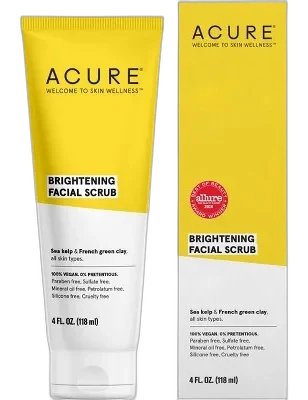
Brightening Facial Scrub
Old-School Drugstore Scrub
 Verified reviewer
Pros & cons.
- +Affordable price point at around $10 for 4 oz
- +Long shelf life — a tube lasts 4-6 months
- +EWG Verified, vegan, and cruelty-free
- +Refreshing lemon and spearmint scent from natural extracts
- +Immediate smoother skin feel after rinsing
- −Walnut shell flour can cause microtears in the skin barrier
- −Too abrasive for sensitive, dry, rosacea, or acne-prone skin
- −Lemon peel granules add additional abrasion and potential photosensitivity
- −Outdated approach compared to current dermatology consensus on exfoliation
- −Better-tolerated chemical exfoliants available at the same price point
The full review.
Finding a walnut shell scrub in the natural-beauty aisle in 2026 feels like finding a Walkman at Best Buy. A niche market still exists, but the category has moved on. The reason why serves as a compelling case study in modern skincare consensus.
In 2016, St. Ives — the most famous walnut shell scrub on the market — faced a class-action lawsuit alleging its Apricot Scrub caused microscopic skin tears and long-term damage. The court dismissed the lawsuit, but the publicity solidified a shift already occurring in dermatology. Crushed walnut shells have irregular edges, regardless of how finely they are milled. Under magnification, these particles look like broken glass rather than smooth pebbles. Using them with moderate pressure creates microtears in the stratum corneum that are invisible to the eye but visible under a microscope. The dermatology establishment stopped recommending walnut scrubs, and most major brands switched to rounder synthetic beads or chemical exfoliation.
Acure’s Brightening Facial Scrub ignored this shift. The formula has remained largely unchanged for years, and walnut shell flour remains prominent on the ingredient deck. Lemon peel granules add physical abrasion, kaolin clay absorbs some oil, and the brand’s berry antioxidant blend provides the brightening marketing story. The texture is a thick green-tinted cream with visible brown walnut specks and yellow lemon peel specks. It looks like a scrub from 2012.
Many people love it. Reviews are mostly positive, the brand has a loyal fifteen-year following, and the immediate post-rinse experience is satisfying — skin feels smoother, the face feels clean, and the lemon-spearmint scent is refreshing. If you have resilient skin, no active acne, no rosacea, no barrier compromise, and use it once a week with very light pressure, you can likely finish a tube without obvious damage. The acute experience is good. Evaluating the cumulative experience requires a microscope, which is the core problem.
The formulation has merits. Kaolin clay and gentle surfactants work well. Aloe and berry extracts are pleasant, even if their wash-off contribution is modest. The price — $10 for a 4-ounce tube that lasts months — is honest. If walnut shell were not the centerpiece, this would be a competent budget treatment.
Because walnut shell is the centerpiece, the product is hard to recommend in 2026. Acure makes other exfoliating products in their range with lower risk profiles. Dozens of chemical exfoliants — including budget options at this same price point — brighten and refine texture without abrading the skin. A derm would rarely tell a patient to choose this scrub over a $10 glycolic acid toner or a salicylic acid cleanser. The math does not work.
Who should consider it?
Very few people. Perhaps if you have very tough, oily skin that does not react to anything, have used physical scrubs your entire life without issue, and find chemical exfoliants drying. If you have used this product happily for years and your skin is fine, you do not need to throw it out. But if you are new to skincare and choosing your first exfoliant, do not start here. Gentler, more effective options exist at the same price point with much less downside risk.
People who love this scrub are not wrong to love it. The immediate sensory experience is satisfying, and criticizing a beloved product can feel like gatekeeping. The goal is not to mock buyers. The goal is to note that dermatology has gathered a decade of evidence on how the skin barrier responds to physical abrasion, and most evidence points away from walnut shell scrubs. A consumer who knows this and chooses the product is making an informed decision. A consumer who buys it because the brand says “clean” and “brightening” needs to understand the trade-offs.
Acure is a brand worth respecting — they have sold affordable plant-based products for fifteen years without fear-based marketing. However, this specific product has not aged well, and claiming otherwise would be a disservice to readers.
Ingredient analysis.
Full INCI list
Water/Eau, Aloe Barbadensis (Aloe Vera) Leaf Juice, Euterpe Oleracea (Acai) Fruit Extract, Rubus Fruticosus (Blackberry) Fruit Extract, Rosa Canina (Rosehips) Fruit Extract, Punica Granatum (Pomegranate) Fruit Extract, Calendula Officinalis (Calendula) Flower Extract, Matricaria Recutita (Chamomile) Flower Extract, Aspalathus Linearis (Rooibos) Leaf Extract, Vegetable Glycerin, Sodium Methyl Cocoyl Taurate, Juglans Regia (Walnut Shell) Flour, Kaolin (French Green) Clay, Sodium Lauroamphoacetate, Sodium PCA, Sodium Lauroyl Lactylate, Citrus Limon (Lemon) Peel Granules, Glyceryl Laurate, Sodium Cocoyl Isethionate, Cellulose Gum, Glucono Delta Lactone, Chlorophyll, Chondrus Crispus Extract, Potassium Sorbate, Olea Europaea (Olive) Fruit Oil, Argania Spinosa (Argan) Culture Extract, Chlorella Vulgaris Extract, Salvia Officinalis (Sage) Leaf Extract, Mentha Spicata (Spearmint) Leaf Extract, Laminaria Digitata (Kelp) Powder, Lilium Candidum Leaf (Madonna Leaf) Culture Extract
Skin match.
The science.
The Science
Dermatology consensus on physical exfoliation changed over the last decade, with walnut shell scrubs at the center of that shift. Mechanical grinding produces crushed walnut shell particles with irregular, jagged edges visible under microscopy. Pressing these particles into the skin creates microscopic tears in the stratum corneum and compromises barrier function. Many dermatology educational resources now recommend chemical exfoliants or scrubs with smoother, rounded particles like jojoba beads or sugar instead of walnut shell scrubs.
Peer-reviewed dermatology literature shows that chemical exfoliation with alpha hydroxy acids (glycolic, lactic) and beta hydroxy acids (salicylic) improves skin texture, tone, and pigmentation without the mechanical trauma of physical scrubs. Gluconolactone and other polyhydroxy acids offer gentler options for sensitive skin. The mechanism differs: instead of abrading dead cells from the surface, chemical exfoliants dissolve the corneodesmosomes that hold dead cells together so they slough naturally.
This scrub's brightening claim relies on the immediate physical removal of dead surface cells (creating a temporary smoother appearance) and the brand's signature berry antioxidant blend. Like the Acure Brightening Cleansing Gel, the contact time in a wash-off product is too short for the polyphenols in the berry extracts to provide meaningful antioxidant or brightening action. The visible brightness after use comes from mechanical exfoliation, not chemical or antioxidant activity.
Dermatologist Perspective
Dermatologists generally advise against walnut shell scrubs and similar coarse physical exfoliants. Board-certified dermatologists note that walnut shell particles cause microtears in the skin barrier, while chemical exfoliants offer more controlled, even, and less traumatic alternatives. Dermatologists almost universally recommend that patients with sensitive skin, rosacea, eczema, or active acne avoid physical scrubs entirely. For resilient skin types who prefer physical exfoliation, dermatologists may suggest finer-particle alternatives like jojoba beads or enzyme-based scrubs. The shift away from walnut shell scrubs reflects about a decade of consensus building in clinical dermatology; most dermatologists now consider them an outdated approach.
Where it fits in your routine.
Use it once a week. Apply a small amount to damp skin. Massage with light fingertip pressure for 30-60 seconds, then rinse with lukewarm water. Do not scrub or use a washcloth. Avoid the eye area, active breakouts, and irritated skin. Do not use on the same day as retinoids, AHAs, BHAs, or vitamin C serums. Follow with a hydrating routine and apply broad-spectrum SPF the next morning.
At $10 for a 4-ounce tube lasting 4-6 months, the per-use cost is low. Value depends on price relative to product performance and available alternatives. A $10 glycolic acid toner or salicylic acid cleanser provides comparable or better exfoliation without the barrier risk. The price is honest for an established budget brand, but the formulation choices reduce value for most users. You pay a fair price for a product most modern dermatologists avoid.
Normal-to-oily skin types that tolerate physical exfoliation, have no active acne or barrier compromise, and prefer the immediate feel of a scrub. Long-time users who have used this product without incident and want to stay. Budget shoppers who want a physical scrub format.
Sensitive, dry, rosacea-prone, or acne-prone skin. Users of retinoids, AHAs, BHAs, or vitamin C serums. People with active breakouts or signs of barrier compromise. Anyone seeking an effective brightening treatment — chemical alternatives at this price point deliver better results with less risk.
Product details.
Thick green-tinted cream contains visible brown walnut shell particles and fine lemon peel grit
Bright lemon and herbal spearmint notes from the essential oils and extracts
Squeeze tube with flip-top cap
Skin feels smoother immediately after rinsing and has a fresh, pleasant scent. However, some users report redness, stinging, or post-scrub sensitivity, which shows the abrasion is too aggressive for their skin type.
About 4-6 months at one to two uses per week
12 months
All Year
The backstory.
When Acure launched in 2010, walnut shell scrubs were standard across drugstore exfoliants — St. Ives Apricot Scrub being the most famous example. The Brightening Facial Scrub fit comfortably in that category and built a loyal following at Whole Foods and Target. As dermatology consensus shifted in the 2010s toward chemical exfoliation and away from harsh physical scrubs, this product remained on shelves largely unchanged, becoming one of the last walnut-shell holdouts in the natural-beauty aisle.
About Acure
Established Brand (5–20 years)Acure launched in 2010, expanding from Whole Foods to Target and Ulta. Its products are EWG Verified and use plant-based actives, but the brand focuses on affordability and natural sourcing rather than peer-reviewed clinical backing.
Common myths.
If a scrub feels gritty, it must be working.
Grittier textures increase the risk of microtears and barrier damage without improving effectiveness. Modern dermatology favors smoother, smaller-particle exfoliation or chemical alternatives that work without abrading the skin surface.
Walnut shell scrubs are fine because they're natural.
Crushing walnut shell particles creates irregular, sometimes jagged edges. Multiple dermatology sources note these particles cause invisible microtears in the stratum corneum. Natural origin does not change how these particles physically interact with skin.
Lemon peel granules brighten the skin.
Lemon peel in a wash-off scrub provides physical abrasion instead of photoactive brightening. Lemon brightening works via leave-on products with stable vitamin C, not granules in a face wash.
FAQ.
Is the Acure Brightening Facial Scrub safe to use?
Usage depends on your skin type and application method. It is safe if used gently once a week on resilient normal-to-oily skin without active acne or barrier compromise. The walnut shell flour and lemon peel granules are likely too aggressive for sensitive, dry, rosacea-prone, or acne-prone skin; use a chemical exfoliant instead.
Why are walnut shell scrubs controversial?
Crushed walnut shells have irregular, jagged edges that cause microscopic tears in the skin barrier. Dermatologists recommend gentler alternatives: chemical exfoliants like AHAs and BHAs or fine-particle physical scrubs with rounded beads. The St. Ives Apricot Scrub uses similar mechanics and faced a high-profile lawsuit over this issue.
How often should I use this scrub?
Use it once a week with light pressure. Do not scrub aggressively. Do not use it on the same day as retinoids, AHAs, BHAs, or vitamin C serums; these combinations compromise the barrier.
Is this scrub good for acne?
No — most dermatologists advise against physical scrubs for active acne. Abrasion ruptures inflamed pustules, spreads bacteria, and triggers more breakouts. A salicylic acid cleanser or chemical exfoliant works better for acne-prone skin.
What's the difference between this and the Acure Brightening Cleansing Gel?
The Cleansing Gel is a daily wash using mild surfactants, no physical exfoliation, and a small amount of PHA. This scrub is a once-weekly treatment with physical exfoliants from walnut shell and lemon peel. Both use the berry antioxidant blend but have different purposes.
What the community says.
"Affordable price"
"Skin feels smoother immediately"
"Lemon-mint scent is refreshing"
"Long-running cult following at drugstores"
"Walnut shell can feel scratchy and harsh"
"Caused breakouts or irritation for some users"
"Dermatologists generally advise against walnut scrubs"
"Too gritty for sensitive skin"
People also looked at.