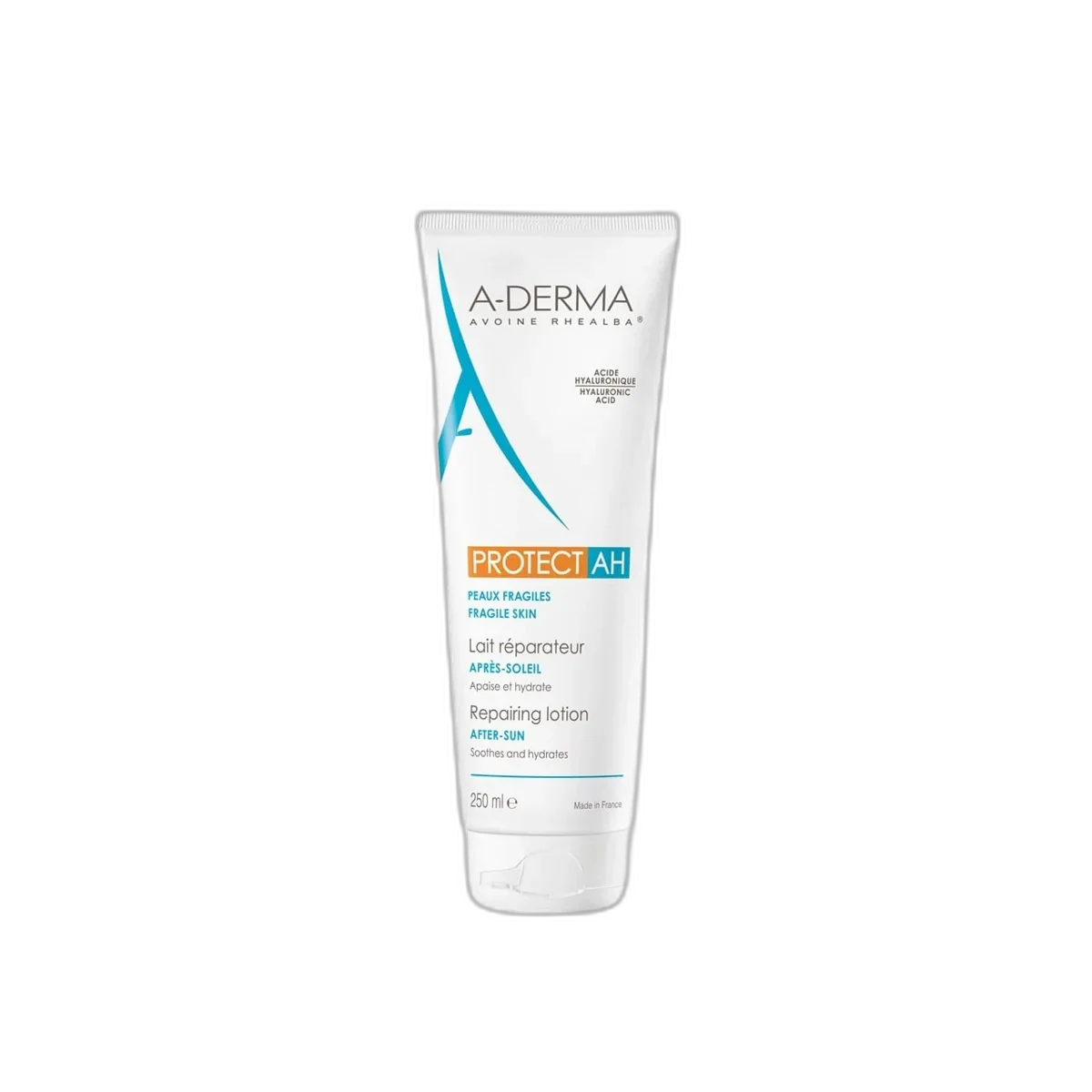
Protect AH After-Sun Repairing Lotion
Pharmacy After-Sun for Atopic Skin
 Verified reviewer
Pros & cons.
- +Fragrance-free and alcohol-free, safe on truly compromised skin
- +Rhealba oat extract delivers genuine anti-inflammatory action
- +Panthenol and shea butter accelerate post-UV barrier repair
- +Light enough to layer over a whole sun-stressed body
- +Generous 250ml size for family vacation use
- +Suitable for atopic and reactive skin where most after-suns sting
- −No dramatic menthol-style cooling effect
- −Shea butter content can feel rich on oily backs and shoulders
- −Cosmetically plain compared to lifestyle after-sun brands
- −Less effective than a thicker cream on areas with severe peeling
The full review.
About A-Derma Protect AH Lotion
After-sun is one of the laziest categories in skincare. Walk into any pharmacy in July and you’ll find a wall of green-tinted gels and white-tinted lotions promising to cool, calm, and rescue your sunburnt skin, most of them built around aloe juice, fragrance, and just enough alcohol to give that brisk, evaporative tingle that consumers have learned to interpret as ‘working.’ The actual barrier-repair content of the average after-sun is somewhere between modest and decorative. The category survives because people return from a beach day feeling toasted and want to apply something. A-Derma’s Protect AH lotion exists because somebody at Pierre Fabre’s labs in southwestern France decided that wasn’t good enough — particularly not for the parents of atopic children who buy A-Derma year-round and were getting handed sunburn relief that stung worse than the sunburn. So they did something that sounds obvious in retrospect but isn’t: they took the same Rhealba oat plantlet platform that the brand’s eczema-soothing range is built on, layered in panthenol and shea butter for barrier repair, and stripped out everything fragrance, alcohol, and menthol-related. What you end up with is essentially a light body lotion with after-sun positioning, and it’s the right answer to a problem most of the category is barely engaging with. The Rhealba oat is the part that distinguishes this from a generic post-sun moisturizer. A-Derma has been studying this specific oat variety — harvested at the young plantlet stage, before grain formation, which is also why it’s gluten-free — for over four decades. Its profile of flavonoids and saponins gives it real anti-inflammatory weight, which is exactly what skin needs in the hours after a UV insult, when the cytokine cascade is doing more damage than the original radiation. Layered over that, the panthenol does the steady barrier-repair work — it converts to pantothenic acid in the skin, supports keratinocyte proliferation, and accelerates the rebuild — and the shea butter and glycerin give the formula its emollient body and humectant pull. There’s no menthol, no camphor, no alcohol-based ‘cooling.’ The cooling sensation comes honestly, from a high water content and glycerin’s evaporative behavior, which is gentler on already-aggravated skin and doesn’t sting on a real burn. Texture-wise it sits in the right place: light enough to layer over a sun-tightened body without feeling smothering, rich enough that you don’t need to reapply every twenty minutes. It absorbs in about a minute and leaves skin feeling soft rather than slick. The 250ml bottle is generous for whole-family use on a vacation, which is exactly how A-Derma expects it to get used. The packaging is functional, not luxurious — this is a French pharmacy product, not a vacation aesthetic object — but the cap stays put in a beach bag, which is more than you can say for some prettier competitors. The honest limitations are short. If you came expecting a dramatic ice-cold tingle, you won’t find one here. If you have oily or breakout-prone skin and don’t tolerate shea butter on your back and shoulders, the emollient base may be more than you want. And if your idea of after-sun is something with botanical notes and a beach-vacation scent profile, this fragrance-free pharmacy bottle will feel boring to you. None of those are flaws, exactly. They’re just the consequences of A-Derma being in the medical-skincare lane rather than the lifestyle-skincare lane. For anyone with reactive skin who’s been burned (literally) by stinging after-suns, or for parents looking for a single bottle they can use on the whole family without worrying about an atopic kid reacting, this is one of the most quietly competent after-sun lotions on the pharmacy shelf. It doesn’t try to be exciting. It just does the job correctly.
Ingredient analysis.
Full INCI list
Aqua, Glycerin, Caprylic/Capric Triglyceride, Cetearyl Alcohol, Butyrospermum Parkii (Shea) Butter, Dicaprylyl Carbonate, Glyceryl Stearate, PEG-100 Stearate, Cetyl Alcohol, Dimethicone, Avena Sativa (Oat) Plantlet Extract, Tocopheryl Acetate, Allantoin, Bisabolol, Panthenol, Xanthan Gum, Disodium EDTA, Phenoxyethanol, Ethylhexylglycerin, Citric Acid
Skin match.
The science.
The Science
The formula's core science relies on the panthenol-Rhealba oat combination, both of which have credible evidence for use after UV exposure. Panthenol is the most studied barrier-repair humectant in dermatology. It converts to pantothenic acid in the skin, supports keratinocyte differentiation, and has decades of published evidence showing accelerated wound healing and reduced transepidermal water loss in compromised skin. The Rhealba oat component is more proprietary but well-documented in Pierre Fabre's research program: published work shows the extract reduces inflammatory cytokine release in skin models and improves clinical scores in atopic dermatitis when used as a topical adjunct. Because UV exposure triggers the same inflammatory pathways as atopic flare, an ingredient validated against eczema works for sun-stressed skin. Bisabolol adds a third anti-inflammatory layer. This chamomile-derived sesquiterpene down-regulates inflammation through a different pathway than the oat extract, making the combination more effective than its individual parts. What this formula excludes is just as important: it contains no fragrance compounds, no ethanol, and no menthol. It avoids the ingredients that create a cosmetic cooling sensation but irritate a stressed barrier. This subtractive choice makes the active ingredients usable for the population this lotion targets.
Dermatologist Perspective
Dermatologists agree that after-sun products work best when they restore moisture and support the barrier without irritating skin after UV exposure. Board-certified dermatologists frequently recommend panthenol- and oat-based formulas for this purpose. A-Derma's Rhealba oat range is a long-standing European pharmacy recommendation for atopic and reactive populations. Standard derm advice is simple: cool the skin with water or a cool compress, hydrate immediately, avoid fragrance or alcohol, and moisturize daily for several days while the barrier rebuilds. This lotion fits that protocol and is often cited as a safer alternative to gel-based after-suns for patients with chronic skin sensitivity.
Where it fits in your routine.
Wash off salt, sweat, and residual sunscreen with a cool shower after sun exposure, then pat the skin dry instead of rubbing. Apply a thick layer of the lotion to your face and body, especially on tight, hot, or red areas. If the skin feels parched, reapply once or twice in the evening. Use the lotion daily as your body moisturizer for 3-5 days after heavy UV exposure to support barrier recovery. Store the lotion in the fridge for a cooling sensation on a real burn.
At around twenty-two dollars for 250ml, Protect AH sits in the middle of the pharmacy after-sun price range, which is fair given the proprietary Rhealba oat backbone and the sensitive-skin formulation work. It's cheaper than premium spa-style after-suns and more substantial than drugstore aloe gels, and the bottle is large enough for whole-family use on a vacation. A-Derma's pharmacy heritage and decades of clinical use back the price tag — you're paying for real formulation work tested against difficult skin populations, not for a lifestyle brand markup.
People with sensitive, atopic, or reactive skin who find standard after-sun gels sting or dry the skin. Parents seeking one after-sun safe for the whole family, including atopic children, will find this a reliable pharmacy option.
If you have oily, fungal-acne-prone, or breakout-prone body skin, the shea butter base may be heavier than ideal. If you're shopping for a sensory experience with cooling tingle and a vacation scent, this fragrance-free pharmacy lotion will read as boring.
Product details.
Light, creamy lotion that spreads thin and absorbs quickly
Unscented with a faint emollient background
250ml soft squeeze tube or pump bottle, depending on regional release
High water and glycerin content cools hot, sun-stressed skin immediately. Then, the shea-panthenol layer softens and cushions the skin. The formula is fragrance-free so it does not sting compromised skin.
Use for 2-3 weeks on the whole body after a vacation, or 6-8 weeks if used only on the face and shoulders.
12 months
spring summer
The backstory.
A-Derma extended its core Rhealba oat formulation logic into sun care to give pharmacy customers — many of them parents of atopic children — a single brand they could trust before, during, and after sun exposure. The Protect AH lotion is the recovery half of that system.
About A-Derma
Legacy Brand (20+ years)A-Derma belongs to Pierre Fabre Dermo-Cosmetique. Since 1981, it has built a reputation in European pharmacies using patented Rhealba oat plantlet extract. Dermatologists routinely recommend its body and after-sun ranges for atopic and reactive skin.
Common myths.
After-sun products feel good but do nothing.
This formula uses panthenol and a soothing botanical extract to accelerate barrier repair after UV exposure. The cooling sensation is real, but the ingredients at the bottom of the list do the long-term work.
If your skin isn't visibly burnt, you don't need after-sun.
UV damages the barrier and triggers inflammation before visible redness shows. A panthenol-and-oat lotion helps subclinical damage from a normal beach day in the hours afterward.
FAQ.
Can I use this on a sunburn?
Yes — it is fragrance-free and alcohol-free. The panthenol and Rhealba oat combination works for compromised skin. For a moderate sunburn, apply a thick layer two or three times daily for several days to soften tightness and help barrier recovery. See a clinician for a severe burn with blistering.
Is it safe for kids?
A-Derma's Protect AH lotion belongs to a range designed for atopic-prone children. It is fragrance-free, alcohol-free, and dermatologically tested for sensitive skin. Patch test any topical if your child has an active flare where you plan to apply it.
Does it have any cooling agents like menthol?
This lotion uses neither menthol nor camphor to cool the skin. High water and glycerin content create the cooling sensation. This approach is gentler on irritated skin than menthol-based after-suns, which sting compromised barriers.
Can I use it daily as a regular body lotion?
You can. The formula is a soothing body lotion positioned for after-sun use. If you have atopic or reactive body skin, it works as a daily moisturizer all year, not just for vacations.
How is this different from regular A-Derma Exomega body milk?
Exomega targets chronic atopic skin maintenance using a higher omega-fatty-acid load. Protect AH focuses on acute sun-stress recovery and uses more panthenol. Both use the Rhealba oat backbone but solve different problems.
What the community says.
"Cooling and immediately soothing"
"No fragrance sting on burnt skin"
"Sinks in fast for an after-sun"
"Big enough bottle for whole-family use"
"Cap can be drippy"
"Not as luxe-feeling as some premium after-suns"
"No dramatic cooling sensation if you expected menthol"