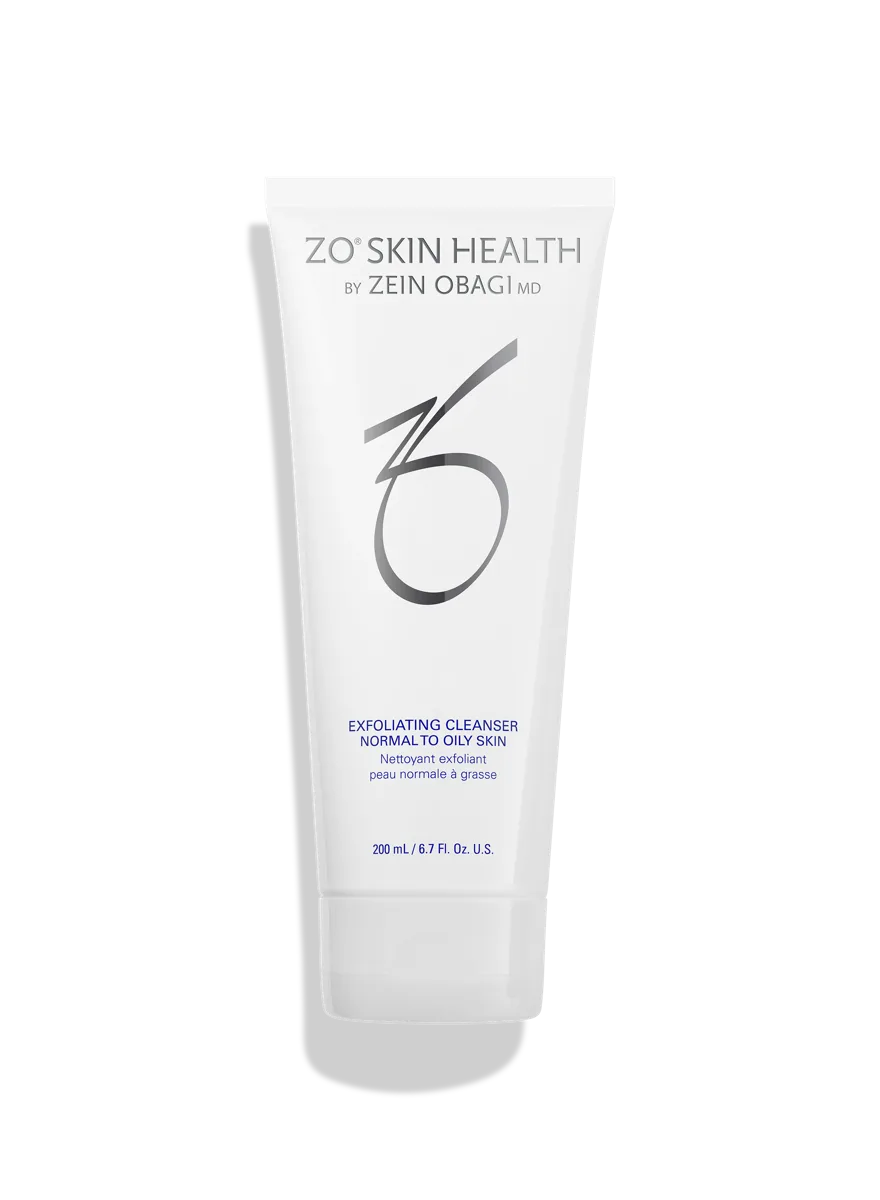
Exfoliating Cleanser
Derm Office Staple
 Verified reviewer
Pros & cons.
- +Genuine dual chemical and physical exfoliation in one daily wash
- +Smooth jojoba beads polish without tearing or micro-scoring
- +Salicylic acid concentration appropriate for daily rinse-off use
- +Niacinamide and tocopheryl acetate soften the mechanical action
- +Noticeable texture improvement after the first use
- +Fair price for a dermatology-developed exfoliating cleanser
- +Travel and full sizes available for flexible routine planning
- −Sodium laureth sulfate primary surfactant is too stripping for some
- −Contains fragrance and four common contact-allergen fragrance ingredients
- −Not suitable for rosacea, eczema, or compromised barriers
- −Can be drying in winter months without a richer moisturizer
- −Sold mostly through dermatology offices, harder to browse at retail
The full review.
ZO Skin Health does not really believe in the concept of a ‘gentle daily cleanser.’ Dr. Zein Obagi built his entire protocol on the idea that skin should be actively worked at every step, and the Exfoliating Cleanser is the clearest expression of that philosophy. Where most brands give you a wash that cleans the day off and calls it done, ZO engineered a product that polishes mechanically, exfoliates chemically, and soothes just enough to justify daily use. Whether that’s the right design depends almost entirely on what kind of skin you’re bringing to it.
The formula opens with water, sodium laureth sulfate, and acrylates copolymer — so this is a traditional foaming gel at its core, not one of the softer amino-acid surfactant systems that have become fashionable. That matters. SLS is an effective surfactant but it’s also the one that causes the most barrier disruption in clinical testing, and anyone with a history of eczema, rosacea, or cleanser-related tightness should read that line and quietly back away. For resilient oily and combination skin, though, the surfactant system does exactly what it’s supposed to: it strips oil efficiently, lathers well, and rinses clean without residue.
The exfoliating part of the name comes from a stack of mechanisms working together. Jojoba esters — spherical, biodegradable beads that roll across the skin instead of tearing it — provide the tactile polish you feel on the first use. Mannitol and cellulose add a second layer of gentler mechanical action. Underneath that, ammonium lactate and salicylic acid handle the chemical side, decongesting pores and smoothing surface roughness. The SA is low on the INCI, which is appropriate for a cleanser — you want follicular penetration, not a leave-on treatment, and rinse-off BHA has enough data behind it to justify the inclusion.
Niacinamide sits further down the ingredient list but earns its keep. In any cleanser that’s mechanically polishing the skin, you want something anti-inflammatory in the mix to soften the edges of that mechanical action. Tocopheryl acetate adds a mild antioxidant note. Spiraea ulmaria extract is there for minor soothing. None of these ingredients are dramatic, but together they’re the reason most users can tolerate this on a daily basis where a more aggressive scrub would wreck them inside a week.
The sensory experience is where ZO earns its dermatology-office reputation. The translucent blue gel, the visible beads, the way it lathers into a noticeable foam without leaving skin squeaky — this is the polished spa experience, and it feels expensive even if the $50 price is actually reasonable for its category. Skin genuinely feels smoother after one use. The question is whether that sensory payoff justifies daily use for your particular skin.
Here’s where the honesty has to show up. This cleanser is fragranced, and not subtly. The fragrance panel includes limonene, linalool, citronellol, and hexyl cinnamal — four of the more common contact-dermatitis triggers in the cosmetic allergen catalog. In 2026, this is an unforced error. Rosacea patients should not be using this. Eczema patients should not be using this. Anyone with reactive skin, compromised barrier, or known fragrance sensitivity should look at the ZO Gentle Cleanser instead or go outside the line entirely. ZO has had years to reformulate and has chosen not to, presumably because their core patient demographic — resilient combination skin being managed by a dermatologist — isn’t reporting problems. That’s a defensible business decision, not a universally tolerable product.
What about performance over time? Consistent use does visibly change things. Pores look clearer, skin texture smooths, and the baseline level of daily polish makes the rest of a routine land better. Serums absorb more evenly. Makeup sits flatter. Treatment products seem to work faster. This is the ‘Getting Skin Ready’ thesis in action — Obagi’s insistence that treatment only pays off on skin that’s been actively prepared. For the right user, this cleanser earns its spot in the routine because it makes every subsequent step slightly more effective.
The per-ounce math is fair. Fifty dollars for 6.7 ounces, used once daily, stretches roughly three to four months. That’s in line with mid-tier clinical brands and cheaper than many luxury cleansers that do less work. The value proposition only falls apart if you’re paying dermatology-office markup for something your skin can’t actually tolerate. For everyone else, this is one of the more honest products in the ZO catalog — it tells you exactly what it is on the label, and it does exactly that.
Ingredient analysis.
Full INCI list
Aqua/Water/Eau, Sodium Laureth Sulfate, Acrylates Copolymer, Jojoba Esters, Glycerin, Cocamidopropyl Betaine, Mannitol, Cellulose, Spiraea Ulmaria Extract, Disodium Cocoamphodiacetate, Cocamidopropyl Hydroxysultaine, Tocopheryl Acetate, Niacin, Niacinamide, Caprylyl Glycol, Laureth-2, Hexylene Glycol, Sodium Sulfate, Disodium EDTA, Ammonium Lactate, Salicylic Acid, Hydroxypropyl Methylcellulose, Sodium PCA, Biosaccharide Gum-1, Butylene Glycol, Sodium Chloride, Sodium Hydroxide, Phenoxyethanol, Ethylhexylglycerin, Benzoic Acid, Fragrance/Parfum, Chromium Hydroxide Green (CI 77289), Citronellol, Hexyl Cinnamal, Limonene, Linalool.
Skin match.
The science.
The Science
Three pillars support this cleanser's design. First, rinse-off salicylic acid shows comedolytic activity even during short contact times because it is lipophilic and targets sebum-rich follicular openings. Dermatology journal studies show BHA cleansers reduce non-inflammatory lesions over 6-8 weeks of consistent use, especially when used with leave-on products. Second, using spherical jojoba esters as physical exfoliants follows a trend from the early 2000s. This shift occurred after research linked walnut-shell and apricot-kernel particles to microtears and mechanical injury. Jojoba esters and hydrogenated jojoba wax beads use rounded geometry and softness to reduce those injuries while keeping the expected polishing sensation. Third, adding niacinamide to a cleanser uses the anti-inflammatory and barrier-supporting effects seen in leave-on niacinamide studies. Topical niacinamide reduces TEWL and modulates inflammatory cytokines in multiple published trials; while rinse-off delivery is less efficient, short exposure during cleansing aids tolerability. Combining ammonium lactate and salicylic acid is a standard medical dermatology strategy for hyperkeratotic and rough skin. Ammonium lactate appears in FDA-recognized OTC keratolytic products at higher concentrations. ZO's formulation uses this tradition in a gentler rinse-off format instead of a leave-on.
Dermatologist Perspective
Dermatologists often recommend this cleanser for patients with oily, congested, or thickened skin who need daily exfoliation alongside leave-on treatments. Medical practices use it for pre-procedure prep because daily polishing creates a predictable surface for peels, microneedling, and laser treatments. In pigmentation protocols, the BHA, ammonium lactate, and mechanical polish combination helps lightening agents penetrate evenly afterward. However, dermatologists usually direct rosacea patients, eczema patients, and those with fragrance sensitivity to gentler options in or outside the ZO line. Clinicians handle pregnancy case by case; many accept the low rinse-off salicylic acid exposure but may suggest a non-exfoliating cleanser for reassurance.
Where it fits in your routine.
Wet the face and neck with lukewarm water. Put a pea-sized amount onto fingertips and massage in circles for 30-60 seconds; the jojoba beads polish the skin. Avoid the immediate eye area. Rinse well and pat dry. Most users use it once daily, usually in the evening. Use gentler alternatives on mornings or days when skin feels reactive. Always follow with moisturizer and apply broad-spectrum sunscreen in the AM. Stop use for 5-7 days before in-office resurfacing procedures and do not combine with strong leave-on acids in the same session.
At $50 for 6.7 oz, this cleanser is priced fairly for its category and exfoliates daily — you don't pay for a brand name. A 2 oz travel size costs the same retail tier. Compared to pharmacy options like CeraVe SA or La Roche-Posay Effaclar at a third of the price, the ZO cleanser has a better sensory experience and a more complete polishing system, but the ingredient-by-ingredient case matches on paper. The premium buys formulation sophistication and the ZO distribution model, not unique actives. If you like the texture, the price is worth it; if you want pure value, pharmacy options work well.
Resilient oily, combination, or normal skin types want daily exfoliation during cleansing and prefer a lathering, fragranced, polished wash. This works for patients on a ZO protocol or anyone with blackheads, dullness, or congestion that gentler cleansers miss.
Skip this if you have sensitive skin, rosacea, eczema, or known fragrance allergies — the SLS-plus-fragrance combination is too harsh. Dry skin in winter conditions also struggles with it. Pregnant users who want to minimize salicylic acid exposure should choose a non-exfoliating cleanser.
Product details.
The first wash leaves skin feeling polished. Some users feel a slight tingle from the salicylic acid. There is no adjustment period, but users adding it to a routine with other actives should alternate mornings at first to avoid overdoing it.
Roughly 3-4 months with once- or twice-daily facial use from the 6.7 oz tube.
12 months
All Year
The backstory.
Part of Dr. Zein Obagi's 'Getting Skin Ready' protocol — the three-step daily foundation that ZO insists must be completed before any treatment product can work. The cleanser was designed to exfoliate mechanically and chemically at the same time so patients didn't need a separate scrub day in the week.
About ZO Skin Health
Established Brand (5–20 years)Dr. Zein Obagi, a board-certified dermatologist, founded ZO Skin Health in 2007. His protocols are common in U.S. dermatology and plastic surgery practices. The brand sells mainly through medical offices and publishes its own clinical data.
Common myths.
Physical exfoliation is always damaging to skin.
Irregular, jagged particles like walnut shell or apricot tear skin. The jojoba esters in this cleanser are spherical, biodegradable, and slide across the skin instead of scoring it. This allows ZO to recommend this as a daily-use product instead of a once-weekly treatment.
Salicylic acid in a cleanser does nothing because it rinses off.
Lab data shows rinse-off BHA penetrates follicles even with short contact time, especially when used with mechanical polish to dislodge surface debris. It does not replace a leave-on BHA, but it improves pore clarity over weeks.
FAQ.
Is the ZO Exfoliating Cleanser safe to use every day?
This is a daily cleanser for normal to oily skin. The jojoba beads are smooth and biodegradable, and the salicylic acid concentration is low enough for daily use. Sensitive or dry skin types should start 3-4 times per week to assess tolerance.
Will this help with acne and blackheads?
Yes, with caveats. The salicylic acid, ammonium lactate, and mechanical polish work well on blackheads and clogged pores. This cleanser helps active inflammatory acne as part of a broader routine, but it is not a standalone treatment.
Can I use it on my neck and chest?
Yes, and ZO's protocol usually encourages it. The neck and chest accumulate sun damage and texture changes that the polishing and BHA action address. Use less pressure on the thin skin of the neck than on the face.
Does it contain sulfates?
Yes — sodium laureth sulfate is the primary surfactant. If you avoid sulfates to protect your barrier or prevent hair-line contact, do not use this product.
Is ZO Exfoliating Cleanser good for sensitive skin?
Not usually. The SLS, added fragrance, fragrance allergens, and mechanical polish mean this cleanser targets resilient skin. Sensitive skin needs ZO's Gentle Cleanser or a similar non-exfoliating option.
Can I use this in the morning and night?
You can, but most users don't need to. Use it once daily in the evening to exfoliate and keep your AM cleanse gentle. Always pair with SPF during the day.
Is this product pregnancy-safe?
Most dermatology sources consider the salicylic acid concentration in a rinse-off cleanser low risk during pregnancy, but confirm this with your OB or dermatologist. Some patients switch to a non-exfoliating cleanser during pregnancy to be safe.
Community
What the community says.
"Skin feels polished after one use"
"Pores look clearer over time"
"Lathers well without over-drying most users"
"Bead texture feels luxurious"
"Contains fragrance and SLS"
"Too stripping for sensitive skin"
"Not ideal for winter dry skin"
"Pricier than comparable drugstore scrubs"
People also looked at.