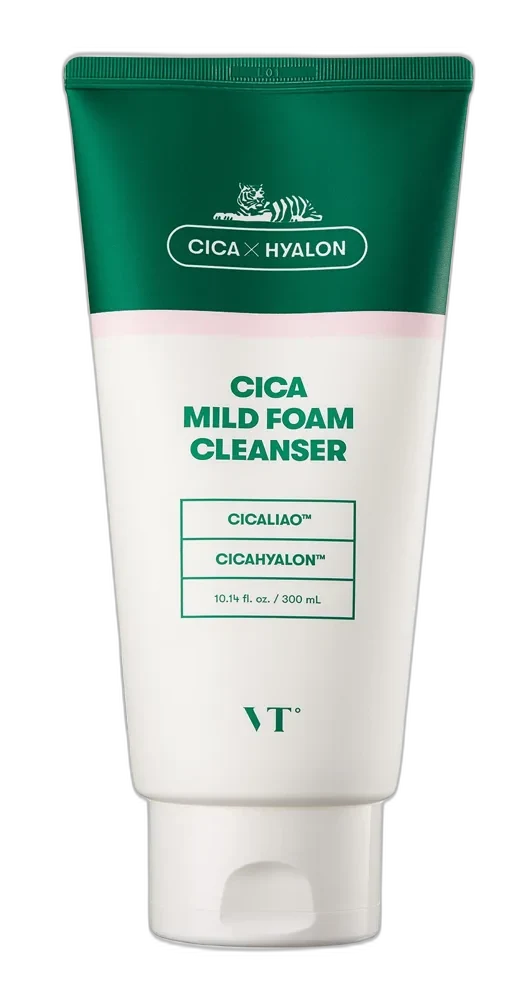
Cica Mild Foam Cleanser
K-Beauty Soap-Foam with Cica Extra
 Verified reviewer
Pros & cons.
- +Dense, creamy lather typical of Korean soap-based cleansers
- +Cica, niacinamide, and glycerin buffer the stripping effect
- +Generous 300ml size at a reasonable price
- +Fragrance-free and alcohol-free formula
- +Effective at removing excess oil and sunscreen residue
- +Pairs well as a second cleanse in an evening double routine
- +Long-lasting — 4-6 months of twice-daily use per tube
- −Higher pH than modern low-pH syndet cleansers
- −Can feel drying on dry or compromised skin
- −Cica actives have limited impact in a rinse-off format
- −Not effective as a single-step makeup remover
- −Tube packaging is functional but visually dated
The full review.
For ten years, Korean skincare has moved from traditional soap-based foam cleansers toward low-pH syndet formulations, led by brands like COSRX and La Roche-Posay. Proponents argue a cleanser matching skin’s natural pH is gentler, more barrier-compatible, and better for routine use. This is a sound argument. It is therefore surprising that VT Cica Mild Foam Cleanser, a traditional soap-based foam, has sold well since its 2018 launch. The answer lies in the details. This cleanser does not pretend to be a low-pH product. It uses potassium myristate and potassium laurate, the standard soap-based Korean cleanser surfactants, to create the thick, creamy foam Korean consumers have loved for decades. The supporting cast makes the difference. Glycerin sits high in the ingredient list as a humectant buffer. The Cica complex — using the same whole-plant-plus-isolated-triterpenoids approach as VT’s hero creams — is present in a form that matters during cleansing. Niacinamide, panthenol, and allantoin occupy soothing positions. Skin feels clean in the Korean tradition—soft and refreshed—but without the tightness and squeak typical of soap-based cleansers. Is this a better cleanser than a modern low-pH syndet? For very sensitive, dry, or compromised skin, no; pH matters, and soap-based surfactants can shift the skin’s natural acidity. But for normal-to-oily skin wanting a rich foam and a clean finish, this cleanser works well. The 300ml size is generous for the price, and one tube lasts four to six months with twice-daily use. Whether Cica actives work in a rinse-off product is a fair question. Contact time is short—usually under a minute—and very little active penetrates the skin in that window. The Cica complex here does not work like it does in leave-on creams. Instead, it makes the cleanser itself gentler during the wash, a meaningful benefit even if it is less dramatic than marketing suggests. Do not buy this cleanser for the same dramatic calming effect as the Cica Cream. Buy it as a nicely buffered foam cleanser that won’t undo the calm your leave-on products create. This product lacks versatility. Dry skin will find it too stripping, especially in winter. Compromised or barrier-impaired skin should use a cream cleanser instead. Those committed to the low-pH cleanser philosophy will see this as a step backwards. It knows its audience—normal, combination, and oily skin wanting a traditional Korean foam experience—and serves them well without trying to be everything to everyone. One practical note: this works well as the second step of an evening double cleanse. The Cica and glycerin buffers soften the dryness that often follows an oil cleanser, leaving skin feeling clean rather than overcleansed. This is likely where it performs best when building a Korean-style routine.
Ingredient analysis.
Full INCI list · pH 7.5
Water, Myristic Acid, Glycerin, Stearic Acid, Potassium Hydroxide, Lauric Acid, Butylene Glycol, Glyceryl Stearate, PEG-100 Stearate, Centella Asiatica Extract, Madecassoside, Asiaticoside, Asiatic Acid, Madecassic Acid, Niacinamide, Panthenol, Allantoin, Sodium Hyaluronate, Glycol Distearate, Cocamidopropyl Betaine, Disodium EDTA, Ethylhexylglycerin, Phenoxyethanol
Skin match.
The science.
The Science
Soap-based foam cleansers use potassium salts of fatty acids — usually myristic, lauric, and stearic — to create lather. These surfactants remove sebum and sunscreen but raise cleanser pH to the 7-8 range, exceeding the skin's natural acid mantle of roughly 4.5-6. Dermatology literature from the early 2000s, including work by Korting and colleagues, shows how high-pH cleansers temporarily disrupt skin barrier function and microbiome balance. Modern dermatology debates whether brief high-pH exposure causes long-term barrier effects for normal skin or only affects compromised or sensitive populations. Current consensus suggests the effect is small for healthy skin but real for dry, sensitive, or barrier-impaired skin. This formula uses supporting ingredients to mitigate soap-based cleansing downsides. Glycerin provides humectant replenishment during wash. Niacinamide has well-documented barrier-supportive effects even with short contact times. The Centella triterpenoid complex adds mild anti-inflammatory activity. These additions do not change the fundamental pH or surfactant chemistry, but they soften the practical impact. This buffered soap-based approach works for normal-to-oily skin; for reactive or dry skin, a syndet-based low-pH cleanser is the more evidence-aligned choice.
Dermatologist Perspective
Dermatologists note that cleanser selection must match skin type; soap-based foam cleansers are appropriate for oily and normal skin if well-buffered. Board-certified dermatologists flag higher-pH cleansers as suboptimal for patients with eczema, rosacea, or compromised skin barriers, where syndet-based low-pH options perform better. For patients with oily or acne-prone skin, a well-formulated soap-based cleanser works well, especially when used with pH-restoring toners or serums that return the skin surface to its natural acidity after wash.
Where it fits in your routine.
Put a nickel-sized amount into damp palms and lather before applying to wet skin. Massage gently for 30-60 seconds, focusing on oily areas. Rinse well with lukewarm water. Apply toner immediately to restore surface pH, then use the rest of your routine. For evening double cleansing, use after an oil cleanser or balm. Do not use hot water; it increases the drying effect of soap-based cleansers.
At $18 for 300ml, this cleanser has high per-milliliter value, especially against standard 150ml Western drugstore brands. The ingredient list fits the price; the Cica complex adds value, though the rinse-off format limits its impact. Large tube sizes suit heavy users, and the low price-per-wash makes it a reasonable daily cleanser for years-long routine use. Its value depends on matchability: it only works if your skin type suits a soap-based foam.
Normal, combination, or oily skin types that want a gentler, buffered Korean foam cleansing experience. It also works as the second step in a K-beauty double cleanse routine for most skin types.
Use this for dry, sensitive, or barrier-compromised skin, where a low-pH syndet cleanser is gentler. Skip this if you prefer single-step cleansers that remove makeup in one pass.
Product details.
Thick cream that whips into dense, creamy lather
Fragrance-free with a faint botanical note
Opaque plastic tube with flip cap
Lathers quickly into a thick foam. Leaves skin soft and clean without the squeaky, stripped sensation most soap-based cleansers produce. Follow immediately with toner and serum.
4-6 months with twice-daily full-face use
12 months
All Year
The backstory.
As VT's Cica line took off internationally in the late 2010s, the brand expanded the franchise into cleansing to complete the routine. This foam cleanser launched in 2018 and became a reliable Cica-line bundle product, even if it never quite matched the standalone popularity of the creams.
About VT Cosmetics
Established Brand (5–20 years)VT Cosmetics launched in 2013 and expanded its Cica franchise into cleansing with this foam cleanser. It uses the same Centella-forward approach that builds the brand's reputation.
Common myths.
All soap-based cleansers are bad for your skin.
Modern soap-based cleansers, buffered with humectants and calming actives like this one, work well for normal and oily skin. If your skin feels clean but not tight after cleansing, the cleanser works with you, not against you.
A foam cleanser with cica works the same as a cica moisturizer.
Cleansers typically stay on the skin for under a minute, limiting how much any active affects the skin. The Cica complex makes this formula gentler during washing; it does not replace a leave-on soothing product.
FAQ.
Is VT Cica Mild Foam Cleanser low pH?
No — this is a traditional soap-based cleanser with a pH of 7-8. This is higher than the 5-6 range modern low-pH cleansers target. This works for normal to oily skin, but sensitive or dry skin may prefer a lower-pH alternative.
Can I use this cleanser for a double cleanse?
Yes — this works well as the water-based second step after an oil cleanser during an evening double cleanse. The Cica and niacinamide reduce typical dryness from soap-based second cleansing.
Will this cleanser help with acne?
It lacks acne-specific actives like salicylic acid or benzoyl peroxide, but it removes excess sebum and keeps the surface clean to support any acne-focused routine you use on top. It is fragrance-free and gentle enough for use with active treatments.
Is this cleanser suitable for dry skin?
It works for normal-to-slightly-dry skin, but very dry or compromised skin will find it too stripping. A cream cleanser or a low-pH syndet foam works better for those skin types.
Does the cleanser remove makeup?
This removes light makeup alone. For full face makeup or waterproof products, use an oil cleanser or balm first, then use this as the second cleanse.
What the community says.
"Generous 300ml size"
"Rich, creamy lather"
"Non-stripping feel for oily skin"
"Pleasant clean-skin finish"
"pH higher than modern low-pH standards"
"Can feel drying on dry skin"
"Soap-based surfactants"
People also looked at.