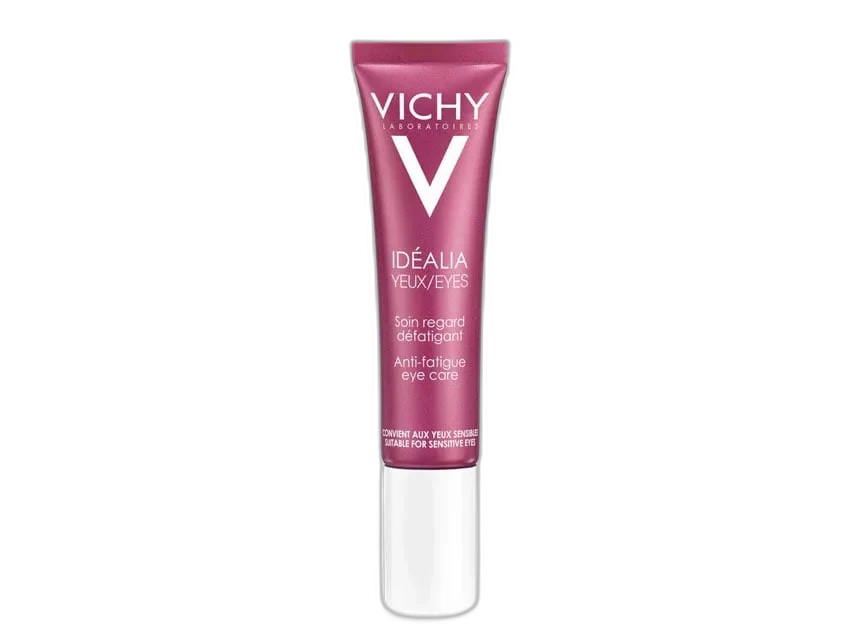
Idéalia Eyes
Instant Eye Illuminator
 Verified reviewer
Pros & cons.
- +Dual treatment-and-illuminator approach delivers both instant and long-term brightening
- +Niacinamide plus licorice root plus vitamin C creates a triple-brightening complex for dark circles
- +Caffeine effectively reduces puffiness and improves under-eye microcirculation
- +Innovative built-in silicone applicator provides hygienic mess-free application
- +Fragrance-free formula appropriate for the sensitive periorbital area
- +Mineral light-diffusing pigments create an excellent primer base under concealer
- +LHA provides gentle exfoliation safe for delicate eye area skin
- −Alcohol denat. fifth in the ingredient list can sting or irritate thin under-eye skin
- −Bismuth oxychloride is a known irritant for some sensitive individuals
- −Vitamin C derivative concentration likely below therapeutic levels for meaningful brightening
- −Product is discontinued with only remaining secondary market stock available
- −Light-diffusing shimmer effect may be visible and unwanted by those preferring matte finishes
- −Formula can migrate into eyes causing temporary discomfort during application
The full review.
There was a brief, ambitious era in skincare when brands tried to collapse multiple product categories into single formulas. Not the cynical ‘all-in-one’ claims that usually just mean mediocre performance across several promises, but genuinely thoughtful hybrids that understood how products actually get used in sequence. Vichy’s Idéalia Eyes, launched in 2014, was one of those products — an eye cream that functioned simultaneously as a brightening treatment, a de-puffing agent, and a cosmetic illuminating primer.
The dual identity runs through the formula. On the treatment side, niacinamide sits at roughly 2%, joined by caffeine, ascorbyl glucoside (a stable vitamin C derivative), licorice root extract, and L’Oréal’s proprietary LHA (Capryloyl Salicylic Acid) — a lipophilic exfoliant designed to penetrate slowly enough for sensitive areas like the eye contour. On the cosmetic side, mica, bismuth oxychloride, titanium dioxide, and iron oxides create a mineral light-diffusing complex that quite literally bounces light away from dark circles. The result is an eye cream that does something useful the moment you apply it, then continues doing different useful things over the following weeks.
The instant effect is noticeable. Within seconds of blending the cream into the orbital bone area, the light-diffusing pigments create a subtle luminosity that makes the under-eye area look less shadowed. This isn’t dramatic — nobody will think you’ve slept twelve hours — but the difference between ‘tired’ and ‘fine’ is often just a small shift in how light reflects off the skin, and these mineral pigments accomplish that shift convincingly. Under concealer, the effect compounds; this turns out to be an excellent primer for the eye area, giving concealer a smoother, more even canvas.
The long-term treatment story is more nuanced. Niacinamide at 2% is within the range shown to affect melanin production, and its combination with licorice root extract (which also inhibits tyrosinase) and vitamin C creates a triple-brightening approach that should, over four to eight weeks, measurably reduce hyperpigmentation around the eyes. Caffeine addresses the vascular component of dark circles by improving microcirculation and reducing fluid retention — the puffiness that makes shadows look deeper. LHA promotes gentle cell turnover without the irritation that traditional BHAs would cause around the delicate periorbital skin.
The silicone applicator tip was genuinely innovative for 2014. Built directly into the tube, it dispenses product through a small hole while the soft silicone nub provides gentle massage pressure. Store the tube in the fridge, and the applicator delivers a cooling touch that enhances the de-puffing effect. It’s a thoughtful design detail that reflects actual consideration of how people use eye cream — standing in front of a mirror in the morning, wanting something quick, hygienic, and pleasant.
But the formula has compromises that keep it from being unreservedly recommendable. Alcohol denat. appears fifth in the ingredient list, which places a potentially irritating solvent disturbingly close to the most delicate skin on the face. For an ophthalmologist-tested, fragrance-free product designed for the eye area, this is a puzzling formulation choice. Most users won’t react, but those with sensitive, thin, or barrier-compromised under-eye skin may experience stinging that defeats the purpose of a soothing eye treatment.
Bismuth oxychloride, one of the light-diffusing minerals, has a documented history of causing irritation and itching in sensitive individuals. It’s used here for its optical properties — it creates that soft-focus luminosity — but at the cost of excluding a segment of the population that would otherwise benefit from the treatment actives.
The ascorbyl glucoside concentration also warrants honest assessment. Research on this vitamin C derivative suggests that concentrations below 2% may not deliver meaningful brightening — and available analyses suggest this formula falls in the 0.4-0.95% range. The niacinamide and licorice root are doing the heavy lifting on the brightening front; the vitamin C is present but may be contributing more to marketing claims than to measurable outcomes.
At $32 for 15 mL, the per-ounce cost is premium. Two to three months of twice-daily use is a reasonable lifespan for the tube, but the product’s discontinued status means that once remaining stock sells through, there’s no replenishing. For a product you’d want to use consistently for cumulative results, discontinuation is a practical problem.
Vichy’s Idéalia line represented a particular moment in the brand’s evolution — a more lifestyle-oriented, ‘skin idealizing’ approach alongside the clinical rigor of their core ranges. The line didn’t survive, but Idéalia Eyes embodied a formula philosophy that many brands have since adopted: the idea that an eye cream should visibly improve how your eyes look right now, today, in the bathroom mirror, not just promise invisible cellular-level improvements weeks down the line. That philosophy was sound. The execution was almost there — just a little too much alcohol and a little too little vitamin C away from being something to genuinely miss.
Ingredient analysis.
Full INCI list
Aqua/Water, Dimethicone, Glycerin, Isononyl Isononanoate, Alcohol Denat., Niacinamide, Butyrospermum Parkii Butter/Shea Butter, Cetyl Alcohol, PEG-100 Stearate, Glyceryl Stearate, Ascorbyl Glucoside, CI 77163/Bismuth Oxychloride, CI 77891/Titanium Dioxide, CI 77491, CI 77492, CI 77499/Iron Oxides, Stearic Acid, Mica, Carbomer, Glycyrrhiza Glabra Extract/Licorice Root Extract, Triethanolamine, Dimethicone/Vinyl Dimethicone Crosspolymer, Caffeine, Silica, Sodium Citrate, Palmitic Acid, Phenoxyethanol, Ammonium Polyacryloyldimethyl Taurate, Tocopheryl Acetate, Disodium EDTA, Paeonia Suffruticosa Root Extract, Citric Acid, Capryloyl Salicylic Acid, Hydroxypalmitoyl Sphinganine, Eperua Falcata Bark Extract, Xanthan Gum, Dextrin, Oxothiazolidinecarboxylic Acid, Ethylhexyl Hydroxystearate
Skin match.
The science.
The Science
This formula targets multiple dark circle mechanisms at once. Niacinamide reduces periorbital hyperpigmentation by blocking melanosome transfer from melanocytes to keratinocytes, as shown in a British Journal of Dermatology study (Bissett et al., 2005). Licorice root extract contains glabridin, a tyrosinase inhibitor that reduces melanin production at the enzymatic level. This complements niacinamide's transport-blocking action.
Caffeine de-puffs the periorbital area through vasoconstriction and improved lymphatic drainage. Research in the International Journal of Cosmetic Science shows topical caffeine reduces under-eye puffiness by constricting dilated blood vessels and draining accumulated fluid. Effects appear within 15-30 minutes of application, matching the product's promise of instant visible improvement.
L'Oréal developed Capryloyl Salicylic Acid (LHA), a lipophilic salicylic acid derivative for controlled, gradual penetration. L'Oréal Research studies show LHA penetrates the stratum corneum more slowly and uniformly than salicylic acid, which maintains exfoliant efficacy while reducing irritation. This controlled release is clinically relevant for thin, delicate eye contour skin; it promotes cell turnover without the redness or peeling traditional BHAs cause here.
Mineral light-diffusing pigments (mica, bismuth oxychloride, titanium dioxide, iron oxides) use optical physics instead of biology. They scatter and diffuse light hitting the under-eye area to reduce visible contrast between the dark periorbital zone and surrounding skin. This is a cosmetic effect, not a therapeutic one, showing a pragmatic approach: optics for instant results and actives for cumulative improvement.
References
- Niacinamide: A B vitamin that improves aging facial skin appearance — Dermatologic Surgery (2005)
Dermatologist Perspective
Dermatologists view caffeine and niacinamide as well-supported actives for periorbital concerns. This formula's combination addresses both pigmentary and vascular dark circle contributors. Board-certified dermatologists note the light-diffusing approach provides optical improvement, not biological change. The LHA inclusion shows dermatological intent for gentle, controlled exfoliation in sensitive areas. However, dermatologists specializing in periorbital dermatology would flag the alcohol denat. as unnecessary in an eye cream and the bismuth oxychloride as a potential contact sensitizer. This formula offers a reasonable multi-active approach for patients with robust, non-reactive periorbital skin. For those with thin, sensitive, or eczema-prone eye area skin, the irritant load warrants caution.
Where it fits in your routine.
Apply to the orbital bone area around both eyes every morning and evening. Squeeze the tube gently to dispense a small amount through the silicone applicator tip. Dot the product along the under-eye area and outer corner using the applicator, then gently pat with the applicator or fingertip instead of rubbing. Store the tube in the refrigerator for a cooling effect from the silicone applicator to help de-puff. Let the product absorb for 30-60 seconds before you apply concealer or eye makeup in the morning.
At $32 for 15 mL, this eye cream costs as much as premium brands. One tube lasts two to three months if used twice daily, making the monthly cost roughly $11-16. The multi-active formula treats several eye area concerns in one product, adding practical value. However, because it is discontinued, remaining stock may have discounted or inflated prices depending on the seller, and long-term availability is not guaranteed. It offers reasonable value if you find remaining stock at a discount. At full price from secondary sellers, the value drops because you cannot repurchase it consistently.
People with dark circles and puffiness want an eye cream that offers instant cosmetic improvement and gradual treatment results. Makeup wearers need an eye area primer that improves concealer performance. This product suits anyone who likes innovative applicator design and fragrance-free eye care formulations.
People with very sensitive or eczema-prone eye area skin who react to alcohol denat. or bismuth oxychloride. Users who want a completely matte, non-shimmery eye cream. Consumers needing a reliable long-term repurchase, as this is discontinued. Anyone preferring higher-concentration active ingredient formulations.
Product details.
Light, creamy texture blends easily into the under-eye area. It absorbs quickly without feeling heavy or greasy. The Dimethicone base feels smooth and silky, preparing the area for concealer application.
Fragrance-free. No noticeable scent on application.
Light pink squeeze tube (15 mL) has a built-in soft silicone applicator tip. The tip uses a small dispensing hole to mimic fingertip pressure. This allows direct application and massage without using fingers. The hygienic tube format prevents jar contamination.
Light-diffusing pigments brighten the under-eye area within seconds of the first use. The silicone applicator feels cool on the skin. The alcohol denat content causes mild stinging for some users with sensitive eyes, especially if the skin barrier is compromised.
2-3 months with twice-daily application around both eyes
12 months
All Year
The backstory.
The Idéalia line was Vichy's play in the 'idealizing' skincare category — products designed to make skin look like its best possible version through both treatment and optical illusion. Idéalia Eyes embodied this philosophy by combining real brightening actives with light-diffusing pigments, essentially bridging the gap between skincare and cosmetics in the eye area. The line was eventually discontinued as Vichy consolidated around its stronger-performing ranges.
About Vichy
Legacy Brand (20+ years)Vichy was founded by dermatologist Dr. Prosper Haller in 1931 and operates within L'Oréal's Dermatological Beauty division. The Idéalia line has been discontinued, but the brand continues to be recommended by over 70,000 dermatologists worldwide, with formulations backed by L'Oréal's ingredient research including the proprietary LHA exfoliant technology featured in this product.
Common myths.
Eye creams with light-diffusing pigments act as concealers, not treatment products.
This formula uses niacinamide, caffeine, ascorbyl glucoside, licorice root extract, and LHA as treatment actives alongside cosmetic pigments. The instant brightening is optical. Real actives drive long-term improvements in dark circles and puffiness by affecting melanin production and microcirculation.
The delicate eye area lacks tolerance for active ingredients like acids.
Capryloyl Salicylic Acid (LHA) in this formula targets sensitive areas. It penetrates more slowly and predictably than salicylic acid, so the concentration used here works for thin periorbital skin.
FAQ.
Is Vichy Idéalia Eyes discontinued?
Yes — Vichy Idéalia is discontinued, likely between 2020-2022. Secondary sellers and online beauty retailers may have remaining stock, but Vichy no longer manufactures or sells the Vichy Idéalia line directly.
Does Vichy Idéalia Eyes actually reduce dark circles?
The formula works in two stages: mineral light-diffusing pigments provide instant optical brightening, while niacinamide, caffeine, and licorice root extract reduce pigment after 4-8 weeks of consistent use. Long-term improvement is real but subtle; it softens deep genetic dark circles instead of eliminating them.
Can I use Vichy Idéalia Eyes under concealer?
Yes — people praise it for this use. The light cream texture and light-diffusing pigments create an ideal concealer base. This helps concealer apply smoothly and increases the brightening effect under the eye area.
Is this eye cream safe for sensitive eyes?
The formula is fragrance-free and ophthalmologist-tested, but alcohol denat. and bismuth oxychloride can irritate sensitive skin. Some users report mild stinging upon application. If you have reactive eyes or skin allergies, patch test on the orbital bone before applying to the full under-eye area.
What is the silicone applicator tip on Vichy Idéalia Eyes?
The tube has a built-in soft silicone tip with a small dispensing hole. This lets you apply the product directly to the under-eye area without using your fingers. It mimics gentle fingertip pressure and feels cooling, especially if you store the tube in the refrigerator.
What the community says.
"Instant brightening effect makes eyes look more awake and refreshed"
"Lightweight cream texture absorbs quickly without heaviness"
"Innovative silicone applicator tip provides hygienic, mess-free application"
"Noticeable puffiness reduction from caffeine content"
"Works well as a makeup base under concealer"
"Fragrance-free formula suitable for the sensitive eye area"
"Dark circle improvement is subtle and requires weeks of consistent use"
"Alcohol denat. can sting or irritate the delicate under-eye area"
"Light-diffusing pigments leave a subtle shimmer that not everyone appreciates"
"Formula can migrate into eyes causing temporary discomfort"
"Vitamin C derivative concentration may be below therapeutic levels"
"Product is discontinued — remaining stock only through secondary sellers"
People also looked at.