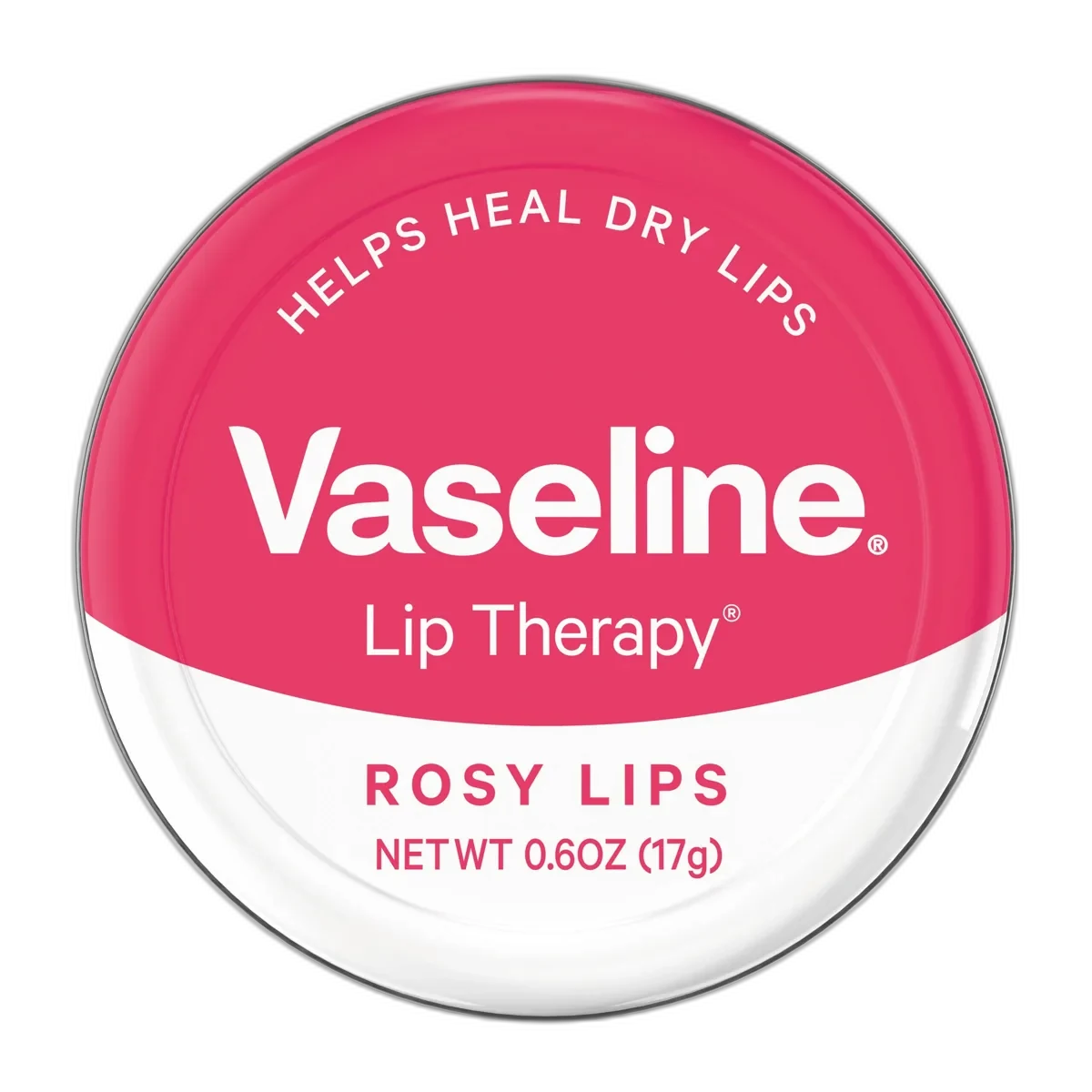
Lip Therapy Rosy Lips
Tinted Lip Balm Icon
 Verified reviewer
Pros & cons.
- +Seven-ingredient minimalist formula led by pure petrolatum — maximum efficacy, minimum risk
- +Universally flattering sheer rosy-pink tint that works across all skin tones
- +Under $4 for a tin that lasts 3-6 months — exceptional value
- +Paraben-free and silicone-free with a vegan-friendly tin formula
- +Effective overnight lip repair when applied generously before bed
- +Authentic rose fragrance adds sensory pleasure to a functional product
- −Tin requires finger application — hygiene concerns for some users
- −Rose fragrance may be too strong for fragrance-sensitive individuals
- −Contains linalool, an EU-listed fragrance allergen
- −Dense petrolatum texture feels heavy and greasy on initial application
- −Sheer tint transfers to cups, pillowcases, and kissed cheeks
- −Not cruelty-free under Unilever's testing policies
The full review.
There is a certain audacity to selling what is essentially tinted petroleum jelly in a tiny tin and calling it a lip therapy product. There is even more audacity in the fact that it works better than most products with ten times the ingredient count and five times the price tag.
Vaseline Lip Therapy Rosy Lips arrived in the UK in 2008 and the US a few years later, and it has since become one of those products that transcends demographics. Teenagers buy it because it is cute and affordable. Makeup artists keep it in their kits because the sheer tint is universally flattering. Dermatologists have no complaints because the formula is essentially petrolatum with some conditioning oils — about as low-risk as a lip product can get.
About
The tin formula is strikingly minimalist: petrolatum, sweet almond oil, rose oil, fragrance, linalool, and two colorants. That is it. Seven ingredients. In an era when even lip balms routinely contain twenty or thirty ingredients, this stripped-back approach feels almost radical. But it also makes perfect sense. Lips lack the oil glands that the rest of your face has, which means they cannot naturally produce the sebum that keeps skin moisturized. They need external occlusion, and no ingredient does occlusion better than petrolatum.
Texture
The texture is pure petroleum jelly — dense, smooth, and undeniably rich. You scoop a small amount from the tin with your fingertip and press it onto your lips. It melts on contact, spreading into a glossy, dewy layer with a sheer rosy-pink tint. The color payoff is subtle but visible — enough to look like you have naturally healthy, flushed lips without looking like you are wearing a product. It is the lip equivalent of a no-makeup makeup look.
Scent
The rose fragrance is this product’s signature and its most divisive element. It is floral, warm, and authentically rosy — not the synthetic rose that plagues cheaper products. Some people find it delightful, a small sensory pleasure in a mundane routine. Others find it overpowering for a lip product. The scent fades within a few minutes on the lips, so even if you are not a rose enthusiast, the window of intensity is brief.
Best for
As a lip moisturizer, it performs exactly as petrolatum should — it creates an effective barrier that prevents moisture loss and allows chapped, cracked lips to heal underneath. The sweet almond oil adds a layer of fatty acid conditioning that pure petrolatum alone lacks, providing a slightly more nourishing feel. For everyday dryness, a single application lasts several hours. For severely chapped lips, layering generously before bed transforms overnight healing.
Packaging
The tin packaging is both charming and mildly inconvenient. It looks premium for a sub-$4 product, fits easily in any pocket or bag, and the screw-top lid seals securely. But opening it requires two hands and clean fingers — a limitation that the stick format addresses at the cost of a more complex formula. The tin experience is intimate and tactile in a way that twist-up sticks cannot replicate, which is likely why it has maintained its cult following despite the availability of the more convenient stick version.
Common Complaints
The hygiene question is fair: dipping a finger into a shared tin is not ideal from a germ perspective. This is a personal product — do not share it, and try to apply with clean hands. For those who cannot get past the finger-application method, the stick and tube formats exist.
Who Should Buy
At $3.99 for 0.6 ounces, the economics are almost laughably favorable. The dense petrolatum formula means a tiny amount goes a long way, and a single tin typically lasts three to six months of daily use. That works out to roughly a dollar a month for lip care that performs as well as or better than products costing ten times as much.
About
Vaseline Rosy Lips does not try to be a lip treatment, a plumping gloss, or a clinical intervention. It is a beautifully simple tinted lip balm that leverages the most proven occlusive ingredient in skincare history, adds a pretty tint and a pleasant scent, and charges you less than a latte for the privilege. Sometimes the smartest formulation is the one that knows when to stop adding ingredients.
Ingredient analysis.
Full INCI list
Petrolatum, Prunus Amygdalus Dulcis Oil, Rosa Damascena Oil, Aroma, Linalool, CI 73360, CI 77891
Skin match.
The science.
The Science
Rosy Lips uses the science of petrolatum, which has an extensive evidence base. Petrolatum is the gold standard occlusive in dermatology; a widely cited estimate shows it reduces transepidermal water loss (TEWL) by up to 98%. This occlusive property is critical for lips because they lack sebaceous glands entirely. Without external protection, lip skin loses moisture faster than normal facial skin.
The landmark 1992 study by Ghadially et al. in the Journal of the American Academy of Dermatology shows petrolatum does not just sit on the skin surface. It permeates the stratum corneum and integrates into the intercellular lipid bilayer structure. This means petrolatum helps barrier repair instead of just blocking moisture loss from above.
Sweet almond oil (Prunus amygdalus dulcis) provides oleic acid and linoleic acid, which are fatty acids that form the skin's lipid barrier. A 2010 study in the Journal of Cosmetic Dermatology found that almond oil application improved skin barrier function and provided emollient and anti-inflammatory effects, supporting its use in lip and skin care formulations.
The formula is simple—mostly petrolatum with conditioning oils—so few ingredients can cause irritation or negative interactions. This minimalist approach follows dermatological recommendations for chapped and sensitive lip care, as a lower ingredient count reduces contact sensitization risk.
References
- Effects of petrolatum on stratum corneum structure and function — Journal of the American Academy of Dermatology (1992)
Dermatologist Perspective
Dermatologists consistently recommend petrolatum-based lip products as the most effective option for chapped and dry lips, and this formula follows that guidance. Board-certified dermatologists note that the absence of common irritants—no camphor, no menthol, no phenol, and no excessive fragrance compounds—makes this a safer choice than popular lip balms containing stimulant ingredients. The minimal formula reduces the risk of allergic contact cheilitis, a condition dermatologists frequently see from overloaded lip product formulas. For patients with persistently chapped lips, dermatologists commonly recommend applying a petrolatum-based product like this before bed and after meals.
Where it fits in your routine.
Press a small amount from the tin onto lips using a clean fingertip. One thin layer provides everyday moisture and a rosy tint. Apply a thicker layer before bed for intensive overnight repair. Apply over lip liner for a glossy tinted effect. Reapply throughout the day, especially after eating or drinking. To maintain hygiene, do not share the tin and use clean fingers.
Rosy Lips offers great value at $3.99 for 0.6 ounces. The thick petrolatum formula lasts 3-6 months with regular use. This makes the monthly cost roughly $0.65-$1.33 — cheaper than any lip subscription and competitive with the cheapest lip balms based on duration. The 0.25 oz mini tin has a lower entry price for testing. Rosy Lips works as both lip care and sheer lip color at an unbeatable price-to-performance ratio.
This works for anyone wanting a reliable, affordable lip balm that also acts as a sheer tinted lip color. It suits minimalists who want a simple lip look and real moisturizing benefits. It is great for people with chapped lips in winter or dry climates who want lip care they enjoy reapplying.
The rose scent is strong for those with fragrance sensitivity. Sweet almond oil is a concern for anyone with tree nut allergies. Users who prefer stick or tube formats for hygiene should use the Lip Therapy stick, though its formula is different and more complex.
Product details.
Floral rose fragrance with vanilla and berry notes. Moderate strength — it is noticeable upon application but fades within minutes. The rose note smells authentic, not synthetic.
0. A 6 oz round steel tin uses a screw-top lid and pink Vaseline branding. It also comes in a 0.25 oz mini tin, twist-up stick, and squeeze tube. The tin format is the most iconic and widely recognized.
The first scoop from the tin shows a thick, pink-tinted balm with an immediate rose fragrance. The balm melts into the lips for smooth application, leaving a sheer rosy tint and glossy sheen. The heavy occlusive feel softens after a few minutes as the petrolatum settles. Some users report a brief adjustment period where lips feel dependent on reapplication; this is normal for occlusive lip products. ***
3-6 months with regular daily use (2-4 applications per day) for the 0.6 oz tin ***
12 months ***
All Year ***
The backstory.
Rosy Lips launched in the UK in 2008 as Vaseline's first foray into tinted lip care, proving that the brand's 138-year-old signature ingredient could do more than just protect — it could make lips look pretty too. The product became a viral favorite across beauty communities for its sheer, universally flattering pink tint and its under-$4 price point, earning a permanent spot in handbags worldwide.
About Vaseline
Legacy Brand (20+ years)Vaseline launched in 1870, and its petroleum jelly has provided lip care since the brand's early decades. The Lip Therapy line brought the brand's occlusive moisturizing expertise to a dedicated lip care range, with Rosy Lips launching in 2008 as one of the first tinted variants.
Common myths.
Petroleum jelly makes lips dependent; they get drier when you stop use.
Petrolatum does not suppress the lips' natural moisture mechanisms. Lips lack oil glands entirely and always prone to drying. When you stop using an occlusive, the existing dryness becomes visible. The solution is not to avoid lip balm — it is to keep using it, because lips need external occlusion.
Tinted lip balms with dyes are bad for your lips.
The colorants used here (CI 73360 and CI 77891) are FDA-approved for lips and have long safety records. CI 77891 is titanium dioxide, one of the most inert pigments available. These colorants are among the most widely used and studied in cosmetics, though some individuals react to specific dyes.
FAQ.
Does Vaseline Rosy Lips actually add color to your lips?
Yes — Red 30 (CI 73360) and titanium dioxide (CI 77891) provide a sheer, universally flattering pink-rosy tint. The color looks natural yet visible, giving lips a healthy, just-bitten flush. It works for all skin tones as a minimal lip color option.
Is Vaseline Lip Therapy Rosy Lips good for very chapped lips?
Works well for chapped lips. The formula uses mostly petrolatum, which creates the strongest occlusive moisture barrier in OTC lip care. Sweet almond oil adds emollient conditioning. Apply a thick layer so the petrolatum seals in moisture. Severely cracked lips improve within 2-3 days of consistent use.
Is there a difference between the tin and stick versions?
Yes — the formulas differ. The tin formula contains 7 ingredients total, mostly petrolatum with sweet almond oil and rose oil. The stick formula is more complex and uses waxes, shea butter, beeswax, and multiple oils. The tin is thicker and more occlusive; the stick is more convenient for on-the-go application.
Does Vaseline Rosy Lips contain any allergens?
The tin formula contains linalool (an EU-listed fragrance allergen) and sweet almond oil (a tree nut derivative). Scientists debate the topical allergy risk from almond oil, but people with severe tree nut allergies should use caution. The rose fragrance also affects those with fragrance sensitivity.
Can I use Vaseline Rosy Lips overnight?
Absolutely — applying a generous layer before bed is one of the most effective ways to use this product. The heavy petrolatum formula creates a sustained moisture barrier that works throughout the night, and you'll typically wake up with noticeably softer, more hydrated lips. The rosy tint will transfer to pillowcases, so keep that in mind.
Community
What the community says.
"Excellent moisturization for very dry and chapped lips"
"Universally flattering sheer pink tint that works on all skin tones"
"Compact tin packaging is portable and pocket-friendly"
"Pleasant rose scent adds a sensory delight to application"
"Extremely affordable at under $4"
"Long-lasting hydration that carries through the day"
"Tin can be difficult to open, especially with cold or wet hands"
"Requires finger application which raises hygiene concerns"
"Rose fragrance can be too strong for some users"
"Contains Red 30 dye which some prefer to avoid"
"Initial application feels heavy and greasy before settling"
"Some users experience a temporary adjustment period where lips feel drier"