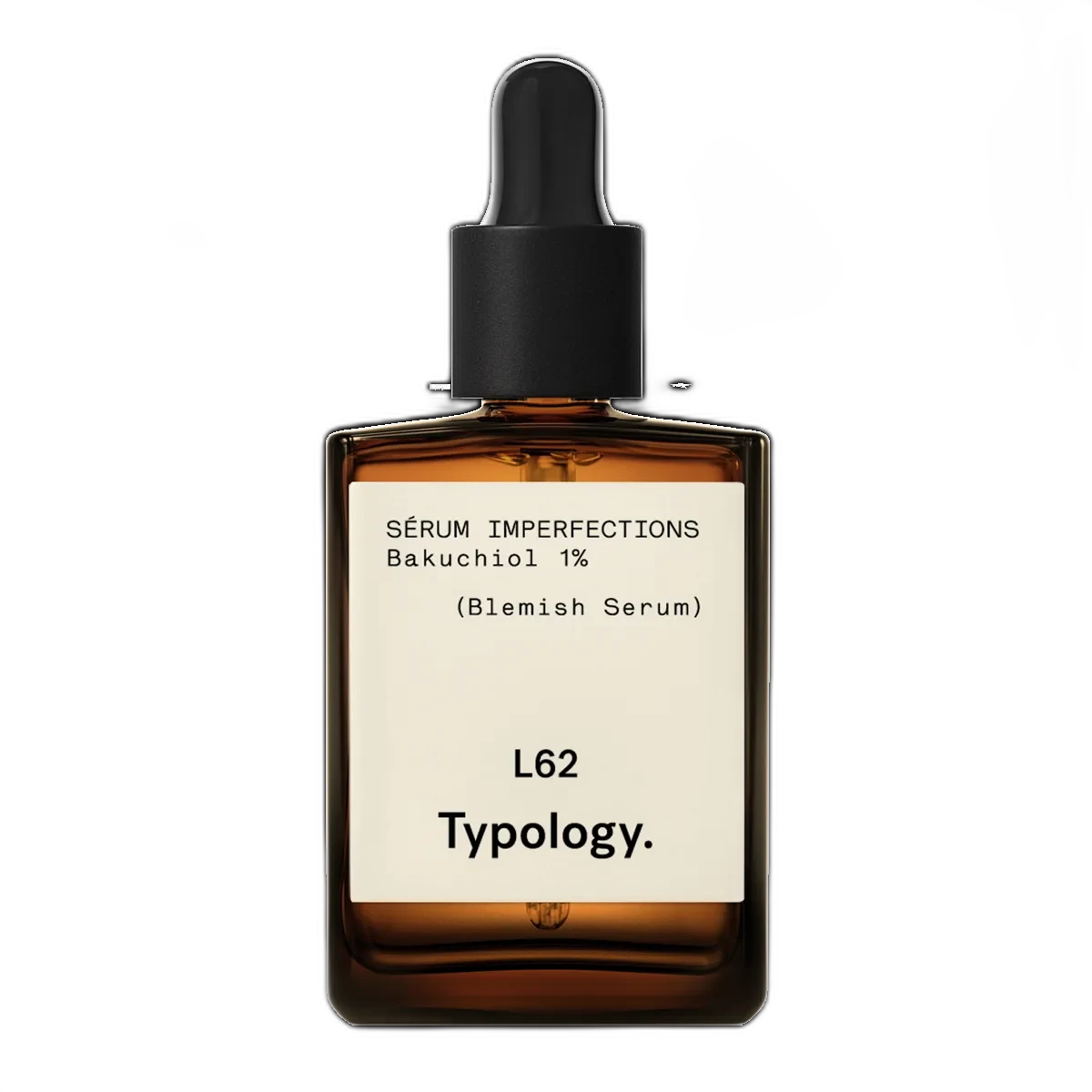
Bakuchiol Retinol-Like Serum
Pregnancy-Safe Retinol Alternative
 Verified reviewer
Pros & cons.
- +Uses the well-studied 1% bakuchiol concentration
- +Three-ingredient formula with no fragrance or fillers
- +Pregnancy and breastfeeding safe
- +No adjustment period, purging, or flaking
- +Hazelnut oil base suits oily and combination skin
- +Direct-to-consumer price beats most luxury bakuchiol serums
- +Vegan, cruelty-free, recyclable amber glass packaging
- −Contains hazelnut oil — unsuitable for nut allergies
- −Not fungal-acne safe due to hazelnut fatty acids
- −Slower visible results than retinol
- −Oil format prevents layering water-based serums on top
- −30ml period-after-opening is short at six months
The full review.
A 2018 split-face study in the British Journal of Dermatology compared 0.5% bakuchiol to 0.5% retinol over twelve weeks. Both ingredients reduced wrinkles and hyperpigmentation similarly, but the bakuchiol group had less stinging, scaling, and irritation. This study moved bakuchiol from an obscure Indian Ayurvedic plant compound to a credible, gentle retinol alternative. Within years, nearly every clean-leaning skincare brand stocked a bakuchiol serum. Most of those serums use humectants, fragrances, and silicones to create a thick texture. Typology uses a different approach. The brand uses only three ingredients — caprylic/capric triglyceride, hazelnut seed oil, and 1% bakuchiol — to let the active work without competition.
Ning Li founded Typology after starting the French furniture site Made.com and pivoting to skincare in 2019. The brand follows the Aesop model: short ingredient lists, amber glass, single-active formulas, and direct sales to avoid retail markups. The bakuchiol serum was an early product and has over 1,000 verified reviews on the brand site. It has a 4.1/5 average, reflecting how bakuchiol works: it is effective but not miraculous.
About Typology
Bakuchiol is a meroterpene from the seeds of the babchi plant, Psoralea corylifolia. It works differently than retinol; it does not bind to retinoic acid receptors directly. Instead, it modulates similar downstream gene expression patterns, such as increasing Type I, III, and IV collagen synthesis and reducing matrix metalloproteinase activity. It tells the skin to behave like younger skin without the receptor pathway that causes retinol irritation. This gentleness is a structural feature, not a marketing claim.
Texture
Typology uses hazelnut seed oil as the carrier. Most minimalist serums use squalane because it is inert and Malassezia-safe. Hazelnut oil is different. It is high in linoleic acid and tannins, making it lighter and slightly more drying than squalane. This suits combination and oily skin that finds squalane too occlusive. However, hazelnut oil contains fatty acids that can feed Malassezia, the yeast behind fungal acne, so this serum is not for that condition. Hazelnut also poses a risk for tree-nut sensitive users; Typology should make this more visible on the bottle.
Scent
This is a pleasant oil serum. Three drops cover the full face without dragging, sink in within ninety seconds, and leave a faint satin finish instead of the sheen of pure squalane. It has a soft nutty note upon application that disappears quickly. There is no added fragrance, no essential oils, and no carriers to mask the active ingredients. It is an honest formula.
How to Use
The results timeline explains why bakuchiol suits some and fails others. There is no purge, no adjustment, and no flaking. In the first two weeks, you may only notice a slightly softer, calmer texture. Around week four, fine lines and crepiness in high-movement areas look smoother. By week eight to twelve, post-acne marks fade and skin tone evens out. It does not provide the visible jolt that 1% retinol delivers in six weeks. If you cannot tolerate any retinol, this is the right trade.
Best for
The serum works well for demographics that cannot use retinol. Pregnancy and breastfeeding rule out true retinoids, and bakuchiol has actual published data. Sensitive and rosacea-prone skin, which often cannot tolerate buffered retinol, generally handles bakuchiol without flares. Teen acne sufferers seeking something gentler than benzoyl peroxide or adapalene can use this without compromising the skin barrier.
Not ideal for
The limitations are clear. The hazelnut oil base is not for fungal-acne sufferers or those with tree-nut allergies. Because it is an oil, you cannot layer water-based serums over it. Bakuchiol works slower than retinol, so impatient users may stop using it too soon. At $30 for 30ml, it is good value but not cheap; The Ordinary’s Bakuchiol costs less, though it has a longer ingredient list.
Who Should Buy
This is a thoughtful bakuchiol serum for pregnant, sensitive, or retinol-intolerant users, or anyone wanting a single-active product. It is exactly what it claims to be.
Formula
Ingredient analysis.
Full INCI list
Caprylic/Capric Triglyceride, Corylus Avellana (Hazelnut) Seed Oil, Bakuchiol
Skin match.
The science.
The Science
Bakuchiol works as a credible retinol alternative based on a 2018 randomized split-face trial by Dhaliwal et al. in the British Journal of Dermatology. This study compared 0.5% bakuchiol cream to 0.5% retinol cream over twelve weeks. Both groups showed statistically comparable improvements in wrinkle surface area and hyperpigmentation, but the bakuchiol arm had significantly higher tolerability. Earlier in vitro work by Chaudhuri and Bojanowski in the International Journal of Cosmetic Science (2014) shows bakuchiol upregulates collagen Types I, III, and IV in human dermal fibroblasts and modulates retinol-related gene expression patterns. Bakuchiol does not bind retinoic acid receptors directly. This receptor independence prevents the inflammatory cascade typical of retinoid use. Typology's formulation lacks penetration enhancers, fragrances, and emulsifiers, which reduces variables that often confound bakuchiol research; most commercial bakuchiol products hide the active among dozens of co-ingredients that mask or amplify effects. The hazelnut seed oil base is notable: hazelnut oil has high oleic acid, linoleic acid, and tocopherol content, providing native antioxidant protection that stabilizes the bakuchiol against oxidation in the bottle. Using caprylic/capric triglyceride as a co-vehicle improves the spread and bioavailability of the bakuchiol across the stratum corneum without adding comedogenic concerns.
References
- Prospective, randomized, double-blind assessment of topical bakuchiol and retinol for facial photoageing — British Journal of Dermatology (2019)
- Bakuchiol: a retinol-like functional compound revealed by gene expression profiling and clinically proven to have anti-aging effects — International Journal of Cosmetic Science (2014)
Dermatologist Perspective
Dermatologists view bakuchiol as the most evidence-supported plant-derived retinol alternative, especially for patients who cannot tolerate retinoids or are pregnant. Board-certified dermatologists often recommend it for sensitive skin, rosacea-prone patients, and those with barrier compromise where conventional retinoid use fails. The 1% concentration in this serum matches doses used in published trials. Dermatologists caution patients with tree-nut allergies to avoid this specific formulation because of the hazelnut oil base; these patients should use a squalane-based bakuchiol alternative instead. This is not a replacement for prescription retinoids in patients who tolerate them and want maximum efficacy, but it is a legitimate option when retinoid use is contraindicated.
Guidance
Where it fits in your routine.
Apply to clean, dry skin in the morning, at night, or both. Three to four drops covers the full face — warm the oil between fingertips and press it in. Follow with moisturizer; do not layer water-based serums on top because the oil base repels them. This serum does not require a gradual ramp-up like retinol; most skin types can use it daily from day one. Pair with SPF in the morning. It works with vitamin C, niacinamide, and most other actives.
At $30 for 30ml, this serum sits mid-market for bakuchiol — more expensive than The Ordinary's bakuchiol but cheaper than most luxury department-store options. Using three to four drops twice daily lasts roughly three to four months. This costs less than $10 per month for a 1% bakuchiol concentration. Typology is an emerging brand without decades of clinical research, but the transparent formulation leaves no room to inflate price for marketing fluff. Compared to luxury brands charging $80-120 for the same active in a heavier base, this is honest value. No larger sizes are available.
This 1% bakuchiol serum works for pregnant or breastfeeding users, sensitive skin, rosacea-prone individuals, and retinol-intolerant users. It suits anyone wanting a minimalist single-active formula. The formula works well for combination and oily skin that finds squalane bases too occlusive.
This works for tree-nut allergy sufferers, fungal-acne sufferers, and people needing the faster, stronger results of prescription retinoids. Skip this if you dislike facial oil textures or stack water-based serums on top of your treatment step.
Product details.
Light, dry-touch oil spreads easily and absorbs faster than a squalane base.
Fragrance-free with a faint nutty undertone from the hazelnut oil.
30ml amber glass dropper bottle in Typology's minimalist apothecary style.
No stinging or flaking — bakuchiol's main benefit is the lack of an adjustment period. Most users report only softer, slightly calmer skin during the first two weeks. Real changes show up between weeks four and eight.
About 3-4 months with twice-daily use of 3-4 drops.
6 months
All Year
The backstory.
When Typology built out its retinol alternatives line in 2020, the brand chose bakuchiol over the more common retinyl palmitate route because of the 2018 Dhaliwal study that put bakuchiol on the dermatology map. The hazelnut-oil base was selected specifically to differentiate the serum from the brand's squalane line and target a slightly oilier skin demographic.
About Typology
Emerging Brand (2–5 years)Typology launched in 2019. Made.com founder Ning Li built the brand on a French-pharmacy minimalist ethos. Its bakuchiol serum has over 1,000 verified reviews on the brand site, but Typology's formulation lacks independent clinical validation.
Common myths.
Bakuchiol is just as strong as prescription retinoids.
Studies show bakuchiol matches a low-dose 0.5% retinol on certain markers over 12 weeks, but it is gentler and slower than tretinoin. Comparable is not identical.
Bakuchiol is plant-based, so it is safe for everyone.
This formula contains hazelnut oil, a common nut allergen. People with tree-nut allergies must patch test or skip it.
What the community says.
"Gentle alternative to retinol"
"Pregnancy-safe"
"No fragrance or fillers"
"Helps with hormonal breakouts"
"Slow visible results compared to retinol"
"Oily finish"
"Hazelnut allergen risk"
Featured in.
People also looked at.