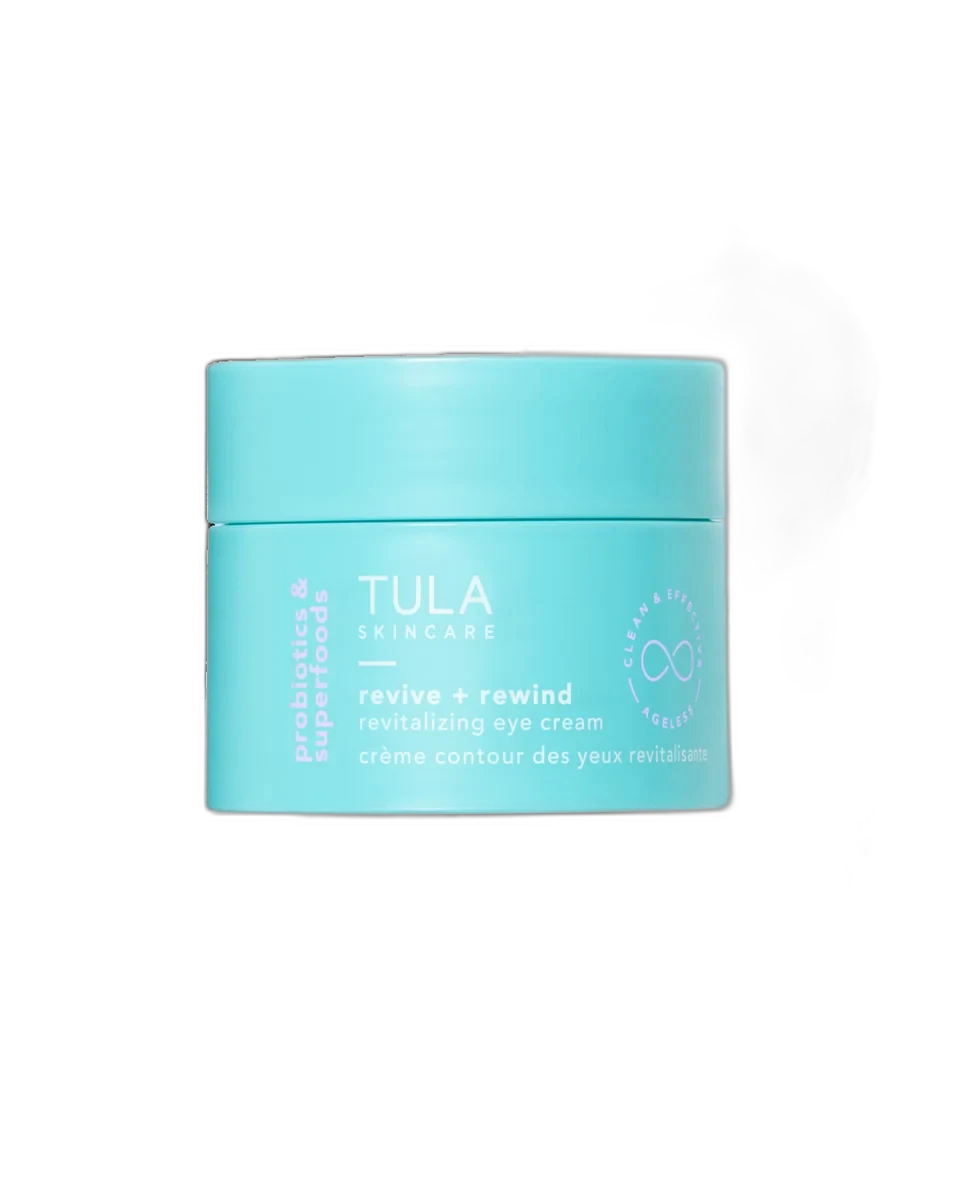
Revive + Rewind Revitalizing Eye Cream
QVC Cult Favorite
 Verified reviewer
Pros & cons.
- +Comfortable, cushiony emollient texture soothes dry under-eye skin
- +Squalane, ceramide NG, and shea butter provide a meaningful emollient blend
- +Palmitoyl hexapeptide-12 offers modest peptide support
- +Sits well under makeup once absorbed
- +Pleasant scent drives compliance for fragrance-tolerant users
- +Long-lasting — a 0.5 oz jar holds 4-6 months of use
- −Contains no retinol or retinoid despite the 'retinol' framing in some listings
- −Added fragrance and essential oils disqualify it for sensitive and reactive skin
- −Active concentrations are modest relative to the $52 price
- −Jar packaging exposes peptides and antioxidants to air on each use
- −Rich base can cause milia in prone users
The full review.
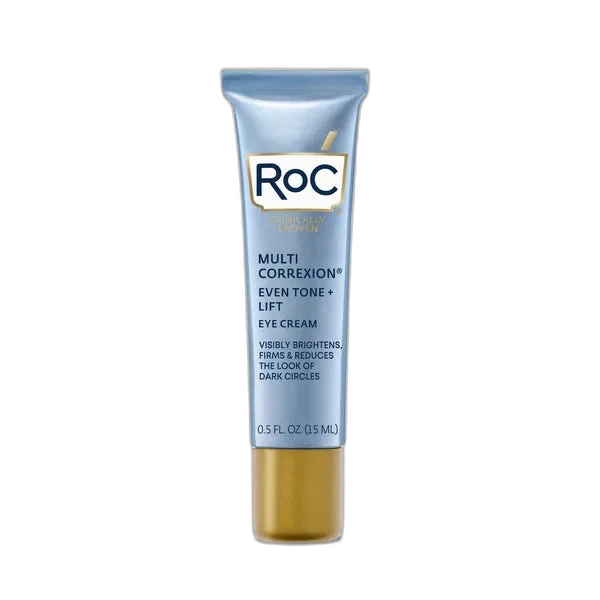
Let’s start with the thing the internet keeps getting wrong about this product. Tula Revive + Rewind is frequently described, tagged, and even listed by third-party retailers as a ‘retinol’ eye cream. It is not one. Pull up the INCI and you will find no retinol, no retinal, no retinyl palmitate, and no retinyl propionate. What you will find is bifida ferment lysate (a probiotic ferment), palmitoyl hexapeptide-12 (a signal peptide), ceramide NG, squalane, shea butter, a blend of plant oils, blueberry and green tea extracts, and a generous dose of fragrance. If you came here looking for a gentle introduction to retinoids for the eye area, this isn’t it — you’d want Tula’s Eye Recharge + Replenish Pro-Ferm Overnight Eye Cream, which does contain retinal, or a non-Tula option like RoC Retinol Correxion.
Once that clarification is out of the way, the cream is easier to judge on what it actually is: a rich, comforting eye cream built around Tula’s probiotic-and-superfood brand story. Dr. Roshini Raj founded Tula in 2014 around the insight that gut health and skin health share more in common than topical skincare typically acknowledges, and probiotic ferments became the brand’s signature. Revive + Rewind was one of the earliest products to popularize that narrative outside of K-beauty, and it’s been on market long enough to accumulate a genuinely loyal following through QVC and Sephora.
Texture
The texture is where most first impressions form. This is a rich cream — substantially more emollient than the watery eye gels that dominated the category for years. Squalane sits second on the INCI, with shea butter, jojoba oil, grape seed oil, camelina seed oil, and safflower seed oil layered in, plus a cetyl alcohol and dimethicone framework that gives the cream its cushioned feel. For dry and normal skin, this feels genuinely good on the thin under-eye skin. For oily or combination skin, it may feel heavy, particularly under morning makeup. The scent is distinctive — citrus and floral notes from the essential oil blend plus added parfum — and it’s polarizing. Users either love it or can’t get past it.
Scent
The active story is honest if unimpressive. Palmitoyl hexapeptide-12 is a signal peptide marketed for firming and fine line support, and there’s reasonable evidence that palmitoylated peptides penetrate better than their non-lipidated counterparts. But it sits deep in the INCI, well below the emollients and emulsifiers, which tells you the concentration is modest. Bifida ferment lysate has some research behind it for barrier support and reduction of UV-induced stress, but its mid-INCI position here means it’s a supporting player rather than the hero it’s marketed as. Ceramide NG, inulin (a prebiotic), and ascorbyl palmitate round out the supporting cast. None of this is bad — it’s just not the depth of active formulation you’d want at a $52 price point.
Common Complaints
The fragrance situation is the formula’s real liability. Added parfum plus lemon, orange, juniper, ylang ylang, and bulnesia wood oils is a combination the dermatology community has moved away from for eye-area products, specifically because the eyelid skin is among the thinnest and most reactive on the body. For users with no fragrance sensitivity, this is a feature — the scent is part of what makes the cream feel luxurious. For anyone with eczema, rosacea, or a history of contact dermatitis around the eyes, it’s a dealbreaker. Dermatologists treating periorbital dermatitis often identify fragranced eye creams as the culprit, and this formula is on the list of common offenders.
Price-to-Value
The price-to-value math is the next honest question. Fifty-two dollars for a 0.5-ounce jar puts this in upper-mid-tier eye cream territory, priced against La Mer The Eye Concentrate, Drunk Elephant C-Tango, and Dr. Jart Ceramidin Eye Butter. What you’re paying for with Tula is the brand experience and the probiotic marketing story more than the active density. If you compared the INCI alone to a $20 drugstore option with a similar emollient base, you’d find yourself paying a significant premium for the Tula branding, the QVC origin story, and the distinctive fragrance. None of those are bad reasons to buy a product — skincare is an experience as much as a chemistry exercise — but it’s worth being honest that this is not a formulation that out-performs its price tier.
Who Should Buy
The users who love Revive + Rewind love it for real reasons. It hydrates well, softens the look of crepiness and fine lines under the eye immediately upon application, sits comfortably under concealer once absorbed, and delivers a sensory experience that feels special. For normal-to-dry, fragrance-tolerant skin that appreciates a rich eye cream and wants to support Tula’s broader clean-beauty story, it’s a perfectly reasonable buy. For anyone hoping to find a retinoid, treat significant signs of aging, or avoid fragrance, this is the wrong product and there are better options in every price tier.
Ingredient analysis.
Full INCI list
Aqua/Water/Eau, Squalane, Butylene Glycol, Cetyl Alcohol, Hydrogenated Vegetable Oil, PEG-8, Dimethicone, Vitis Vinifera (Grape) Seed Oil, Butyrospermum Parkii (Shea) Butter, Glyceryl Stearate, PEG-100 Stearate, C12-15 Alkyl Benzoate, Glycerin, Simmondsia Chinensis (Jojoba) Seed Oil, Lactose, Bifida Ferment Lysate, Yogurt Powder, Hydrolyzed Rice Protein, Cichorium Intybus (Chicory) Root Extract, Vaccinium Angustifolium (Blueberry) Fruit Extract, Olus Oil/Vegetable Oil/Huile Végétale, Camelina Sativa Seed Oil, Camellia Sinensis Leaf Extract, Tocopheryl Acetate, Ascorbyl Palmitate, Lactic Acid, Carthamus Tinctorius (Safflower) Seed Oil, Bulnesia Sarmientoi Wood Oil, Citrus Limon (Lemon) Fruit Oil, Citrus Aurantium Dulcis (Orange) Oil, Juniperus Mexicana Oil, Cananga Odorata Flower Oil, Carbomer, Tribehenin, Ceramide NG, PEG-10 Phytosterol, Palmitoyl Hexapeptide-12, Ethylhexylglycerin, Inulin, Sodium Chloride, Sodium Hydroxide, Citric Acid, Trisodium Dicarboxymethyl Alaninate, Sodium Glycolate, Caprylyl Glycol, Sorbic Acid, Stearyl Alcohol, Phenethyl Alcohol, Pentylene Glycol, Phenoxyethanol, Fragrance (Parfum)
Skin match.
The science.
The Science
The formula's main ingredient is bifida ferment lysate, a probiotic ferment from lysed Bifidobacterium cultures. Dermatology journals show bifida ferment lysate reduces UV-induced skin damage, supports barrier recovery, and improves skin sensitivity thresholds. It works by soothing skin and stimulating the skin's microbiome balance. Because bifida ferment lysate is mid-list in this INCI, concentrations are likely modest but stay within clinical study ranges.
Palmitoyl hexapeptide-12 is a signal peptide that targets skin aging by stimulating collagen and elastin. The palmitoyl moiety on the hexapeptide backbone increases lipophilicity and skin penetration over non-lipidated peptides. Clinical evidence for signal peptides is emerging; they modulate fibroblast activity in vitro, and some trial data supports cosmetic benefits at sufficient concentrations. The position of palmitoyl hexapeptide-12 deep in the Revive + Rewind INCI suggests a supportive role instead of a clinically impactful concentration.
Ceramide NG is a single synthetic ceramide used for barrier support. Topical ceramide research shows consistent benefits for barrier repair, but most well-studied formulations use multiple ceramide blends at higher concentrations than a single ceramide at a low INCI position. Tula's use of ceramide NG acts as a supportive barrier element rather than a primary treatment.
The antioxidant elements — ascorbyl palmitate, tocopheryl acetate, camellia sinensis leaf extract, and blueberry fruit extract — provide a photoprotective and anti-inflammatory backdrop. Ascorbyl palmitate is a lipid-soluble vitamin C derivative with weaker evidence than L-ascorbic acid, and tocopheryl acetate is the standard vitamin E found in many moisturizers. The botanical extracts show antioxidant activity in laboratory assays, but clinical significance at topical concentrations is uncertain. These ingredients form a supportive cast rather than a primary treatment layer.
Dermatologist Perspective
Dermatologists view Revive + Rewind as a comfortable emollient eye cream instead of a serious anti-aging treatment. Board-certified dermatologists note the probiotic ferment and peptide inclusions are supportive rather than clinically transformative, and the added fragrance and essential oils concern the delicate eye area. For patients seeking meaningful fine line reduction around the eyes, dermatologists more commonly recommend retinoid-based eye treatments or cautious prescription tretinoin in the orbital area. For patients wanting a well-moisturizing, soothing eye cream for dry under-eye skin, this formula is a reasonable option if they tolerate fragrance well.
Where it fits in your routine.
Use your ring finger to apply a pea-sized amount per eye, as it applies the lightest pressure. Pat the product along the orbital bone and outer corners. Avoid the lash line to reduce milia risk. Use twice daily — morning and evening — after serum and before facial moisturizer. Wait 2-3 minutes for full absorption before applying concealer or other makeup. A small amount works well; overuse wastes product and increases transfer onto makeup.
At $52 for 0.5 ounces, Revive + Rewind sits in the upper-mid tier of eye creams. You pay a premium over drugstore options with similar emollient bases but no extra active chemistry. The probiotic story and the Tula brand experience drive the value — the price feels fair if you value that narrative. If you compare ingredient density per dollar, other options win: CeraVe or La Roche-Posay for budget, Dr. Jart Ceramidin for comparable emollients with stronger ceramide formulation, or a dedicated retinoid eye cream for anti-aging.
Normal-to-dry skin types who tolerate fragrance and want a thick, emollient eye cream for hydration and soothing. A good match for Tula fans who use the brand's probiotics. Works for mild visual crepiness and dryness around the eyes.
Avoid this formula if you have sensitive, rosacea-prone, or eczema-prone skin; the fragrance and essential oil load is high. Choose a retinol or retinal eye cream for actual retinoid benefits. Budget-conscious shoppers can find comparable emollient eye creams for much less.
Product details.
Rich, cushiony cream with a slight yellow tint from the plant oils.
Has a distinct fragrance from a citrus and floral essential oil blend and added parfum.
A small glass jar with a screw lid is less hygienic. Each use exposes the plant oils and peptides to air.
The first application feels cool, thick, and slippery—more substantial than the watery eye gels that dominate this category. The fragrance is immediate and strong; if you dislike it now, you will not like it after a hundred uses. Fine lines feel softer and smoother right away, but this comes from emollients rather than long-term active effects.
Approximately 4-6 months with twice-daily use at a pea-sized dose per eye.
12 months
All Year
The backstory.
Tula Skincare was founded in 2014 by Dr. Roshini Raj, a gastroenterologist who became interested in the gut-skin axis and probiotic applications to topical skincare. The Revive + Rewind eye cream (originally named 'Revitalizing Eye Cream' at launch) was one of the brand's earliest products and helped drive Tula's growth through QVC — one of the brand's defining retail partnerships in its first years.
About Tula Skincare
Established Brand (5–20 years)Gastroenterologist Dr. Roshini Raj founded Tula Skincare in 2014, focusing on probiotic and superfood ingredients. The brand grew through QVC, Ulta, and Sephora. The Revive + Rewind eye cream has been a bestseller since its 2015 launch.
Common myths.
This is a retinol eye cream.
Revive + Rewind lacks retinol, retinal, or retinyl esters. Probiotic ferments, a signal peptide, ceramide NG, and emollients form the formula. For a retinoid-based Tula eye treatment, use the Eye Recharge + Replenish Pro-Ferm Overnight Eye Cream, which contains retinal.
Probiotic ferments replace retinoids for anti-aging.
Probiotic ferment lysates show evidence for barrier support and soothing. However, they do not replace retinoids for collagen stimulation and fine line reduction. Different mechanisms yield different results.
FAQ.
Does this Tula eye cream contain retinol?
No — Revive + Rewind contains no retinol, retinal, or retinyl esters. Despite what some product listings may suggest, the anti-aging story here is built around probiotic ferments, a palmitoyl hexapeptide, ceramide NG, and emollient plant oils. For a retinoid-based Tula eye product, look at their Eye Recharge + Replenish Pro-Ferm Overnight Eye Cream instead.
Is this eye cream good for dark circles?
Modestly. The hydration and light-reflecting emollient base soften the look of shadows and crepiness under the eyes. Probiotic and antioxidant extracts provide anti-inflammatory effects. This cream alone won't change pigmented or vascular dark circles; use a dedicated treatment with tranexamic acid, vitamin C, or caffeine instead.
Can sensitive skin use this eye cream?
Generally, no. The formula contains added fragrance plus lemon, orange, ylang ylang, and juniper essential oils — a combination that is a common sensitizer for the delicate eye area. Sensitive, rosacea-prone, or reactive skin should look at fragrance-free eye creams instead.
How long does a jar last?
A 0.5 oz jar lasts 4-6 months if you use a pea-sized amount twice daily. The thick emollient base requires very little product; overuse causes milia, product transfer onto concealer, and puffiness.
Is this safe during pregnancy?
The formula lacks retinoids, salicylic acid, or high-risk actives, making it generally pregnancy-safe. The added fragrance and essential oils may affect pregnant users who want to minimize fragrance exposure, but no established pregnancy contraindication exists.
Does this cream cause milia?
Some users report milia after long-term use. This likely stems from the thick emollient base—shea butter, hydrogenated vegetable oil, and plant oils at the top of the INCI. Use a small amount and avoid the lash line to reduce risk.
Can I use this under makeup?
Yes, but with one caveat: apply a small amount and let it absorb for 2-3 minutes before concealer. Using too much or applying too fast causes concealer to pill or slide.
What the community says.
"Rich, soothing texture"
"Noticeable hydration and softening of fine lines"
"Pleasant scent loved by fragrance fans"
"Comfortable under makeup"
"Lasts a long time with small application"
"Added fragrance disqualifies it for sensitive skin"
"Expensive for the ingredient quality"
"No meaningful retinol or retinal despite marketing claims elsewhere"
"Some users develop milia from rich emollients"
"0.5 oz jar is small for the price"
People also looked at.