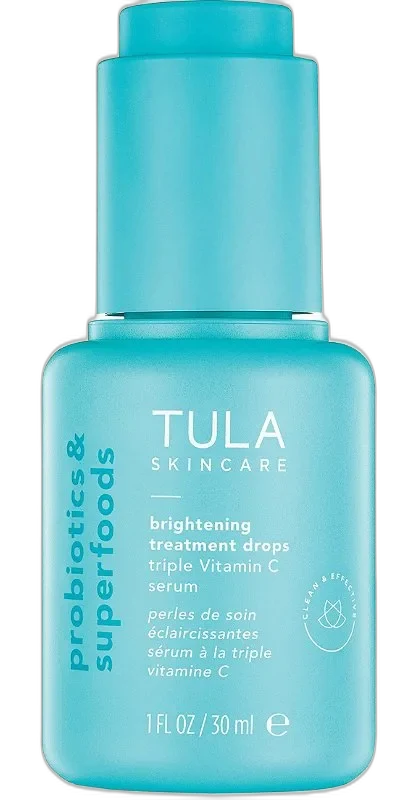
Brightening Treatment Drops Triple Vitamin C Serum
Stable Triple-C Serum
 Verified reviewer
Pros & cons.
- +Three vitamin C derivatives provide layered brightening at different rates
- +Substantially more stable than pure L-ascorbic acid
- +Glutathione recycles oxidized vitamin C back to active form
- +No stinging or tingling — suitable for sensitive skin
- +Lightweight texture absorbs fast and layers cleanly
- +Amber glass packaging protects against light degradation
- +Compatible with niacinamide and most other actives
- +Pregnancy-safe ingredient profile
- −$52 is premium for a derivative-based vitamin C formula
- −Slower-acting than pure L-ascorbic acid
- −30ml is small for the price
- −Long botanical extract list may be unnecessary noise
- −Not the strongest option for severe dark spots
The full review.
The Tula Triple Vitamin C serum is built for everyone else: the sensitive skin types, the people who’ve watched a $90 SkinCeuticals bottle go brown in their bathroom, the users who want vitamin C benefits without the wearability problems.
The formulation strategy is a layered derivative approach. The first form is 3-O-ethyl ascorbic acid, sitting prominently in the second INCI position. This is one of the more researched stable vitamin C derivatives — it’s amphiphilic, meaning it dissolves in both water and oil, which helps it penetrate the skin barrier without needing the low pH that L-ascorbic acid demands. It’s converted to active vitamin C in the skin and delivers comparable brightening and antioxidant benefits over a longer timeline. The second form is ascorbyl glucoside, a glucose-conjugated derivative that’s slowly metabolized by enzymes on the skin surface, providing a time-released brightening effect. The third form is a small dose of pure ascorbic acid toward the end of the INCI, for a touch of immediate potency without making the formula unstable. Together they create a layered vitamin C action across different absorption rates and skin layers.
The supporting cast is where Tula leans into its brand positioning. Glutathione is a master antioxidant that has the unique property of recycling oxidized vitamin C back to its active form — which directly extends the brightening action of the three vitamin C derivatives in the formula. Acetyl cysteine contributes a similar antioxidant pathway. Turmeric extract adds curcumin, a polyphenol with anti-inflammatory and brightening activity that gives the serum its warm gold-yellow tone. The probiotic ferment ingredients are Tula’s signature, theoretically supporting the skin microbiome alongside the brightening work. There’s even literal gold in the formula, which is more cosmetic theater than functional skincare, but it’s a small inclusion and doesn’t compromise the active load.
Texture
The texture is a lightweight golden-yellow watery serum that absorbs almost instantly, with no stinging or tingling on application. This is the primary user experience differentiator — anyone who has used a traditional L-ascorbic acid serum knows the slight burn that comes with the low pH, and the absence of that sensation here makes the serum genuinely wearable for sensitive skin types who couldn’t tolerate the original. It layers cleanly under moisturizer and sunscreen with no pilling or residue. The amber glass dropper bottle is the right packaging choice — it protects the vitamin C derivatives from light degradation, which is a big part of why this formula stays stable longer than the typical clear-bottle competitor.
Results
Results are gradual and require patience. Most users describe a subtle radiance or glow within the first one to two weeks, with more visible tone improvement at four to six weeks. Dark spots and post-inflammatory pigmentation respond more slowly — eight to twelve weeks of consistent daily use is the realistic timeline for visible fading. This is the trade-off for the gentler derivative approach. Pure L-ascorbic acid users sometimes report dramatic glow within days; this serum trades that initial wow factor for stability, tolerability, and longer-term consistency. For users committed to a daily routine, the slower curve is honest and the results are real.
Common Complaints
The legitimate critique is the price. Fifty-two dollars for thirty milliliters puts this in upper-mid premium vitamin C territory, and there are stable derivative-based alternatives from brands like The Ordinary, Naturium, and Geek & Gorgeous that deliver similar performance for substantially less. What you’re paying for is the layered three-form approach (which is unusual in the price range), the supporting glutathione and antioxidant cast, the brand polish, and the packaging that actually protects the actives. For users who want a single comprehensive vitamin C serum and don’t want to think hard about the alternatives, the price is justified. For users focused purely on cost-per-percent-active, cheaper options exist.
Who Should Buy
This is the vitamin C serum to recommend to the person who tried L-ascorbic acid and quit because of the stinging, the oxidation, or the routine compatibility problems. It’s not the most powerful option in the category, but it’s one of the most wearable, and wearable is what determines whether a vitamin C routine actually delivers results over the long term.
Ingredient analysis.
Full INCI list
Aqua/Water/Eau, 3-O-Ethyl Ascorbic Acid, Lactococcus Ferment Lysate, Propanediol, 1,2-Hexanediol, Ascorbyl Glucoside, Sodium Citrate, Pentylene Glycol, Cichorium Intybus (Chicory) Root Extract, Melia Azadirachta Leaf Extract, Melia Azadirachta Flower Extract, Corallina Officinalis Extract, Curcuma Longa (Turmeric) Root Extract, Ocimum Basilicum (Basil) Flower/Leaf Extract, Lactic Acid, Ocimum Sanctum Leaf Extract, Vaccinium Vitis-Idaea Fruit Extract, Citrus Unshiu Peel Extract, Hippophae Rhamnoides Fruit Extract, Litchi Chinensis Seed Extract, Mangifera Indica (Mango) Leaf Extract, Gold, Glutathione, Hydroxyacetophenone, Acetyl Cysteine, Sodium Sulfite, Sorbitol, Citric Acid, Sclerotium Gum, Xanthan Gum, Caprylyl Glycol, Ascorbic Acid, Sodium Phytate, Lecithin, Pullulan, Silica, Sodium Chloride, Sodium Benzoate
Skin match.
The science.
The Science
Topical vitamin C is one of the most researched ingredients in skincare, with published efficacy on antioxidant protection, collagen synthesis support, and melanin synthesis inhibition. The challenge with formulating vitamin C is that the most-studied form — L-ascorbic acid — is also the most unstable, requiring low pH (typically 2.5-3.5), specialized packaging, and rapid use after opening. Research published in dermatology literature has explored stable derivative forms as alternatives that maintain vitamin C's clinical benefits with better stability and tolerability profiles.
3-O-ethyl ascorbic acid is one of the better-studied derivatives, with published research demonstrating its conversion to active ascorbic acid in skin, its stability across a wider pH range, and its efficacy on skin brightening and antioxidant endpoints. A study in the Journal of Cosmetic Dermatology examined its performance compared to pure L-ascorbic acid and found comparable brightening outcomes over longer treatment durations. Ascorbyl glucoside has a longer history of use in cosmetic formulations and is recognized for its slow enzymatic conversion to active vitamin C on the skin surface.
The glutathione component is interesting because of its unique role as a vitamin C recycling agent. Research on glutathione has documented its ability to regenerate oxidized ascorbic acid back to its active reduced form, which in a co-formulation context can extend the effective lifespan and potency of the vitamin C actives. Glutathione also has independent skin-brightening activity, with research from dermatological literature exploring its role in melanin synthesis inhibition.
The formulation strategy here — combining three vitamin C forms with different stability and absorption profiles, supported by glutathione and additional antioxidants — reflects current evidence-based thinking about how to deliver vitamin C benefits in a more wearable and stable format than traditional L-ascorbic acid serums.
Dermatologist Perspective
Dermatologists frequently recommend topical vitamin C for antioxidant protection, brightening, and collagen synthesis support, and the choice between L-ascorbic acid and stable derivative forms typically depends on the patient's tolerance and routine compatibility. Board-certified dermatologists note that derivative forms like 3-O-ethyl ascorbic acid and ascorbyl glucoside are good alternatives for patients who experience irritation from pure L-ascorbic acid or who struggle with the stability issues of traditional vitamin C serums. This product's combination of three vitamin C forms with glutathione reflects a thoughtful approach to delivering vitamin C benefits in a more tolerable and stable format. The probiotic and botanical supporting cast is the brand's signature positioning, though dermatologists generally consider the vitamin C derivatives to be doing the bulk of the clinical work.
Where it fits in your routine.
Apply 3-5 drops to clean dry skin every morning after toner and before moisturizer. Press it into your face, neck, and décolletage. Wait 60 seconds for absorption before you apply moisturizer and sunscreen. Always use daily broad-spectrum SPF. Vitamin C and sunscreen work together, and sun exposure undoes most brightening progress. Store the bottle in a cool place away from direct sunlight. Use within 6 months of opening. Do not layer with high-strength exfoliating acids in the same routine. Instead, alternate days or use them in the morning vs evening.
At $52 for 30ml, this vitamin C serum sits in the upper-mid premium price range. Stable derivative-based alternatives from The Ordinary, Naturium, and Geek & Gorgeous offer similar core performance for much less. You pay for the unusual three-form vitamin C combination, the glutathione and antioxidant supporting cast, the amber glass packaging that protects the actives, and the brand polish. Only one size is offered. The price is defensible for users wanting a single comprehensive vitamin C serum instead of assembling a routine from cheaper components. For users focused on cost-per-percent-active, lower-priced derivative serums deliver most of the benefit.
This works for anyone who quit pure L-ascorbic acid serums due to stinging, oxidation, or routine compatibility problems. It suits sensitive skin types, users wanting daily brightening without the wow-and-burn experience, and customers who trust the Tula brand and want a vitamin C addition to their routine.
Users with severe pigmentation needing maximum potency will find pure L-ascorbic acid or targeted hyperpigmentation treatments more effective. Skip this if you prioritize cost-per-percent-active, want immediate dramatic results, or have known sensitivity to citrus extracts.
Product details.
Lightweight golden-yellow watery serum with low viscosity
Fragrance-free with a faint herbal-citrus note from the botanical extracts
Amber glass dropper bottle, 30ml — protects vitamin C derivatives from light degradation
The first application feels slightly cool and absorbs fast without tingling or stinging — unlike potent L-ascorbic acid serums. Skin looks subtly brighter within 1-2 weeks of consistent morning use, and tone improves more visibly at 4-6 weeks.
2-3 months with daily morning application
6 months
All Year
The backstory.
Released in 2022 as part of Tula's expansion into more clinical brightening products. The triple vitamin C positioning was developed in response to common consumer complaints about pure L-ascorbic acid serums oxidizing quickly, stinging on application, and being incompatible with sensitive skin — using three derivative forms together to deliver brightening without the wearability problems.
About Tula Skincare
Gastroenterologist Dr. Roshini Raj founded Tula Skincare in 2014, positioning the brand around probiotics. The formulations use prebiotic and probiotic ferments with conventional actives and have a moderate base of independent clinical evidence.
Common myths.
Vitamin C derivatives work less effectively than pure L-ascorbic acid.
L-ascorbic acid has higher potency per molecule, but it is less stable, more irritating, and needs a low pH many users cannot tolerate. Stable derivatives like 3-O-ethyl ascorbic acid have published efficacy data and convert to active vitamin C in the skin. This trade-off means gentler action over longer timelines, not no action.
FAQ.
Is the Tula Triple Vitamin C serum as effective as a pure L-ascorbic acid serum?
This serum is gentler and works slower, but delivers similar brightening over time. Three vitamin C forms convert to active vitamin C in the skin. This provides antioxidant and brightening effects without the irritation or stability issues of pure L-ascorbic acid. Most users see a visible glow at 2-4 weeks and full results at 8-12 weeks.
Why does it use three forms of vitamin C instead of one?
Each form has different stability, absorption, and conversion rates. 3-O-ethyl ascorbic acid is the most active and stable, ascorbyl glucoside provides slow time-released brightening, and pure ascorbic acid adds a small dose of immediate potency. This combination delivers layered brightening across different timeframes and skin layers.
Will this serum oxidize and turn brown like other vitamin C serums?
Derivative forms are more stable than pure L-ascorbic acid serums because they oxidize less easily. The amber glass packaging protects against light degradation. Some color shift is normal; discard the serum if it turns deep brown or smells strong.
Can I use this with niacinamide?
Yes — modern research debunks the myth that vitamin C and niacinamide cancel each other out. They work well together. Niacinamide complements the vitamin C brightening effect via a separate melanosome-transfer-blocking mechanism.
Is it pregnancy-safe?
Yes — vitamin C derivatives are not contraindicated during pregnancy. The botanical extract supporting cast is also generally safe. Ask your OB if you have specific concerns.
How does it compare to SkinCeuticals CE Ferulic?
SkinCeuticals CE Ferulic uses 15% pure L-ascorbic acid with vitamin E and ferulic acid for stability. This formula has higher potency per dose but causes more irritation and loses stability faster. The Tula serum uses gentler derivative forms in a more wearable format. SkinCeuticals CE Ferulic works best for resilient skin seeking maximum potency; the Tula serum works best for sensitive skin or daily wearability.
Does it work on dark spots?
Yes — the triple vitamin C combination inhibits melanin synthesis and blocks tyrosinase pathways. Most users see mild post-inflammatory dark spots fade over 8-12 weeks. For severe pigmentation, a stronger treatment with tranexamic acid or hydroquinone works better.
What the community says.
"Stable formula doesn't oxidize like pure L-ascorbic acid"
"Visible glow within first 2 weeks"
"Doesn't sting or tingle like potent C serums"
"Lightweight texture absorbs fast"
"Layers cleanly under sunscreen"
"$52 is premium for derivative-based vitamin C"
"Brightening is gentler than pure L-ascorbic"
"Some users see no change"
"30ml is small for the price"
People also looked at.