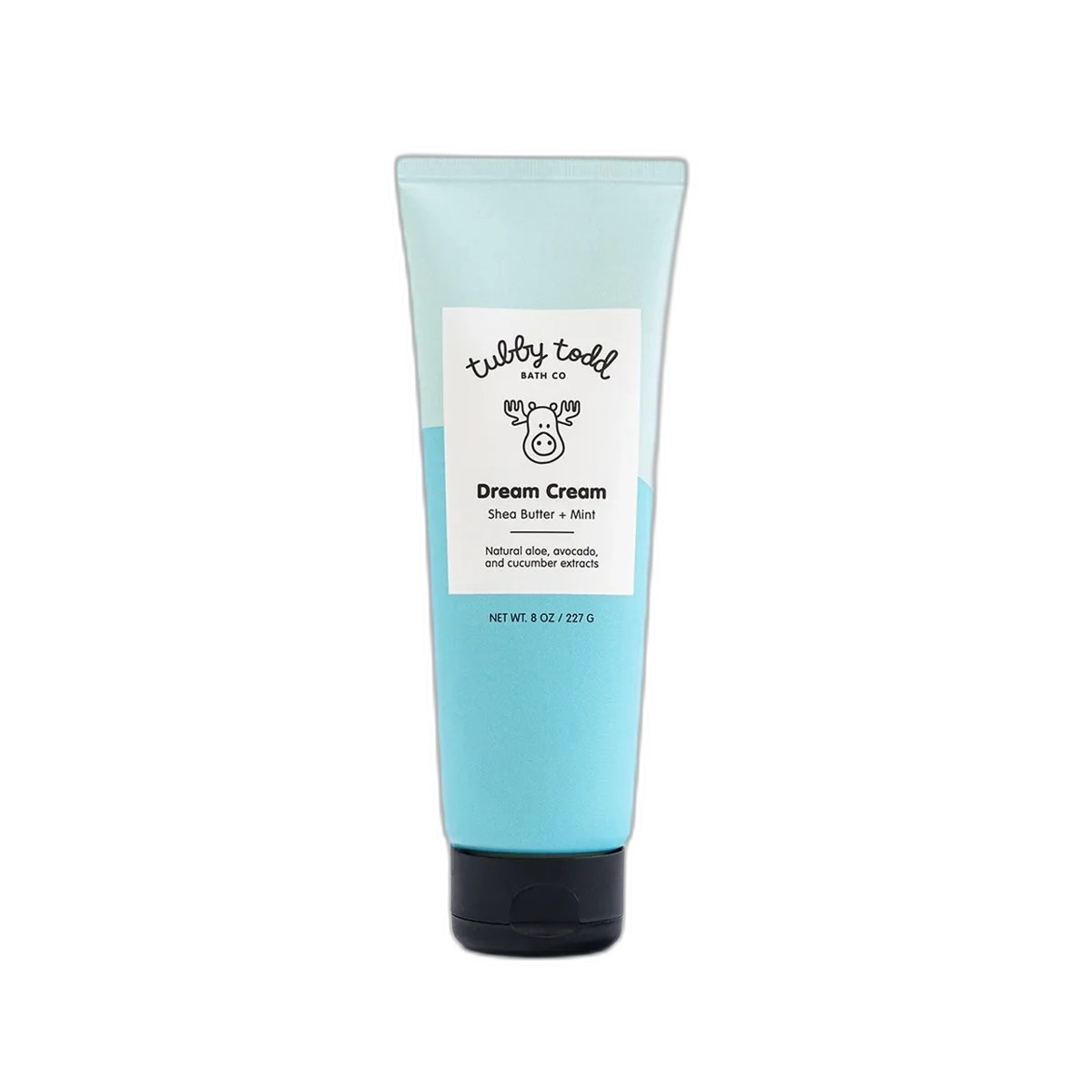
Dream Cream Moisturizing Body Cream
Baby Eczema Workhorse
 Verified reviewer
Pros & cons.
- +Colloidal oatmeal dosed high enough to meaningfully calm itch
- +Rich cocoa-and-sunflower base absorbs faster than you'd expect
- +Fragrance-free version is genuinely unscented for reactive newborns
- +Panthenol and allantoin reinforce barrier support alongside the oatmeal
- +Sunflower oil's linoleic acid is ideal for atopic-type skin
- +Pairs seamlessly with the brand's All Over Ointment for layered eczema routines
- +Eight-ounce pump lasts most families well over a month
- −Cocoa butter and cetearyl alcohol are comedogenic on acne-prone adult torsos
- −Per-ounce price is higher than drugstore colloidal oatmeal creams
- −Not rich enough to replace prescription treatment in severe eczema
- −Original scented version is too sweet for some sensitive noses
- −No listed concentration for the colloidal oatmeal active
The full review.
Dream Cream solves a problem created by its own brand. Tubby Todd has a devoted following for the All Over Ointment, but that ointment is a thick beeswax balm. It works for diaper rash, cradle cap, or eczema patches on a thigh, but you cannot slather it head-to-toe on a toddler without using a tin every two weeks. Parents wanted those same calming botanicals in an everyday after-bath cream. Dream Cream meets that brief: thick enough for eczema, light enough for everywhere, and gentle enough for a newborn.
The formulation uses three ingredients that work on reactive skin. First, colloidal oatmeal is the only plant-based anti-itch ingredient with an FDA monograph. It appears high enough on the list to act as a functional active, not a marketing sprinkle. Colloidal oatmeal is extensively studied in atopic dermatitis and calms the inflammatory signaling behind eczema’s itch. Second, the emollient phase uses cocoa butter and sunflower seed oil instead of the heavy petrolatum-and-beeswax combo found in most balms. Cocoa butter gives the cream a dense, whipped-dessert texture. Sunflower oil is rich in linoleic acid, which benefits atopic-type skin. Atopic skin is often linoleic-deficient, and sunflower oil tops it up topically. Third, panthenol and allantoin—two well-tolerated barrier-support ingredients—reinforce the oatmeal’s calming effect.
Texture
The texture separates Dream Cream from the ‘natural baby cream’ category. A pump looks like thick, opaque buttercream frosting, but it thins and spreads easily once it hits warm skin. It leaves no tacky film or greasy afterfeel. On dry shins and knuckles, it absorbs within sixty to ninety seconds, leaving a soft, velvety finish instead of a slick petrolatum shine. For a cream this thick, the emulsion engineering is impressive.
Scent
The scent matters because it affects product selection. The original Dream Cream has a light cocoa-vanilla scent from the cocoa butter. It smells like a bakery, and many families love it. However, if you buy this for a newborn with reactive skin or a baby with eczema flares, buy the fragrance-free version. This version is genuinely fragrance-free: no masking fragrance, no essential oils, and no ‘natural scent.’ It uses the same active system without the sensory upgrade, making it the right default for reactive skin.
Works for
Dream Cream performs as a daily eczema maintenance cream. Applied twice daily to damp skin after a lukewarm bath, it softens dry patches in a few days and calms low-grade redness over a couple of weeks. It does not replace a prescribed topical steroid or a heavy barrier cream like the All Over Ointment—and Tubby Todd is honest about this—but it works well as a daily maintenance step. Many families use an oatmeal bath, pat dry, apply Dream Cream everywhere, and then use All Over Ointment on the worst patches. This pairing works well together.
For adults, these properties work for dry legs, arms, hands, and post-shower care. One caveat: if you are acne-prone on your chest or back, the cocoa butter and cetearyl alcohol can aggravate skin. Do not use it above the waist in that case. On the face, the cream is tolerable for dry cheeks in winter, but purpose-built facial creams work without the comedogenic trade-offs.
Value
The value is expected. At roughly twenty-six dollars for an eight-ounce pump, Dream Cream costs more than a drugstore colloidal oatmeal cream, but less than boutique ‘clean’ baby creams with similar ingredients. You pay for the cleaner, shorter formula, the thick texture, the fragrance-free option, and a brand with more than a decade of word-of-mouth support. For families managing eczema, this is a defensible upgrade. For households needing a general baby lotion without reactivity, a cheaper drugstore oatmeal cream works fine.
The takeaway: this is a well-considered baby body cream. The formulation makes sense, the texture is good, the fragrance-free version is the right choice for reactive skin, and the price matches the quality. For families using the All Over Ointment, Dream Cream is the logical daily partner.
Ingredient analysis.
Full INCI list
Water (Aqua), Glycerin, Helianthus Annuus (Sunflower) Seed Oil, Theobroma Cacao (Cocoa) Seed Butter, Cetearyl Alcohol, Glyceryl Stearate, Cetyl Alcohol, Butyrospermum Parkii (Shea) Butter, Simmondsia Chinensis (Jojoba) Seed Oil, Panthenol, Tocopherol, Allantoin, Colloidal Oatmeal, Calendula Officinalis Flower Extract, Chamomilla Recutita (Matricaria) Flower Extract, Xanthan Gum, Sodium Stearoyl Lactylate, Phenoxyethanol, Ethylhexylglycerin, Citric Acid
Skin match.
The science.
The Science
Colloidal oatmeal is the strongest ingredient in this cream. It is one of the few botanical ingredients with an FDA over-the-counter monograph as a skin protectant, and peer-reviewed dermatology research supports its use for atopic dermatitis. A study in the Journal of Drugs in Dermatology showed that a colloidal oatmeal-based cream improved skin dryness, scaling, roughness, and itch intensity in adults with mild-to-moderate atopic dermatitis over two weeks. The mechanism uses avenanthramides—oat-derived polyphenols that inhibit NF-κB signaling and reduce inflammatory cytokine release in the upper skin layers.
The sunflower oil base also has supporting literature. Pediatric dermatology journals show that topical sunflower seed oil supports barrier function and reduces transepidermal water loss in atopic and preterm skin, likely via linoleic-acid-driven ceramide synthesis in the stratum corneum. Panthenol, the provitamin B5 in this formula, improves stratum corneum hydration and reduces transepidermal water loss according to Skin Pharmacology and Physiology, while allantoin has documented keratolytic and soothing activity at typical cosmetic concentrations.
Dream Cream works through synergy: a linoleic-rich absorbing oil phase combines with a validated anti-itch active and two barrier-support cofactors. The thick, occlusive-enough texture stays on a moving toddler's skin. None of these ingredients are novel, and Tubby Todd does not claim they are—the value lies in the combination, the dosing, and the clean base.
References
- Colloidal oatmeal formulations as adjunct treatments in atopic dermatitis — Journal of Drugs in Dermatology (2015)
- Effect of topical treatment with skin barrier-enhancing emollients on nosocomial infections in preterm infants in Bangladesh: a randomised controlled trial — The Lancet (2005)
Dermatologist Perspective
Dermatologists view Tubby Todd Dream Cream as a well-formulated daily maintenance cream for mild-to-moderate baby eczema and adults with dry, atopic-prone body skin. Board-certified pediatric dermatologists note that colloidal oatmeal has clinical support as an adjunct treatment in atopic dermatitis. Combining it with panthenol, allantoin, and a linoleic-rich oil phase matches current barrier-repair moisturizer standards. Clinically, this cream should sit within a broader eczema plan rather than replace prescribed treatment. It works best as a daily step on damp skin after bathing, with an occlusive like petrolatum or Tubby Todd's own All Over Ointment layered on severe patches, and a prescription topical used during active flares. Dermatologists also recommend the fragrance-free version for infants under a year or children with documented skin reactivity.
Where it fits in your routine.
Apply Dream Cream to clean, damp skin right after a bath or shower. Trapped water increases absorption and helps emollients seal hydration into the stratum corneum. Dispense one to two pumps into your palm, warm it briefly between your hands, and massage it into legs, arms, torso, and any dry or eczema-prone areas. Do not apply to broken or infected skin without a pediatrician's guidance. For active eczema flares, use twice daily and layer a thin coat of a dedicated occlusive balm like Tubby Todd's All Over Ointment over the worst patches to seal it. Store away from direct sunlight and heat.
At about twenty-six dollars for an eight-ounce pump, Dream Cream sits in the middle of the baby body-cream market — above drugstore colloidal oatmeal creams but below expensive clean-beauty baby brands. The eighteen-ounce pump has better per-ounce value and suits families with active eczema. Compared to drugstore alternatives, you pay for a shorter, cleaner formula, a thick texture for daily use, and a fragrance-free option that is fragrance-free. The price is defensible given the brand's decade-plus track record and coherent formulation. For families without eczema concerns, a drugstore oatmeal cream still does the structural work.
Parents of babies, toddlers, and older kids with mild-to-moderate eczema, dry skin, or winter-reactive body skin can use this as a daily maintenance cream. It is thicker than a drugstore lotion but applies fast head-to-toe. It also works for adults with dry, atopic-prone arms and legs who want a fragrance-free thick body cream.
Families with severe or infected eczema requiring prescription treatment, acne-prone adults moisturizing the chest or back — where cocoa butter and cetearyl alcohol can clog pores — and households wanting a basic general-purpose baby lotion without eczema-targeted actives and the higher price tag.
Product details.
Thick, whipped body cream that softens quickly on skin contact.
The fragrance-free version is unscented; the original version has a light cocoa-vanilla scent from the cocoa butter.
8 oz pump bottle; also available in an 18 oz pump and travel-size tubes.
The first application feels like a thick, buttery cream that spreads further than its density suggests. It absorbs in one to two minutes and makes skin feel softer immediately. Families using it on eczema-prone kids typically see calmer, less-red patches within the first few nights.
An 8 oz pump lasts 6-10 weeks if applied daily to a baby or toddler's full body; it lasts 4-6 weeks for an adult using it as a dedicated eczema cream.
12 months
All Year
The backstory.
Dream Cream launched around 2020 as the brand's response to families who loved the All Over Ointment but wanted something they could apply head-to-toe without the balm's beeswax drag. The fragrance-free version came shortly after, driven directly by feedback from parents of highly reactive newborns who wanted the Dream Cream formula without the original cocoa-vanilla scent.
About Tubby Todd
Established Brand (5–20 years)Tubby Todd launched in 2013 as a family-run baby skincare brand in Southern California. It released Dream Cream around 2020, a thick, cocoa-butter-based companion to its flagship All Over Ointment. Parent word-of-mouth, not clinical trials, builds the brand's credibility. Its formulations use simple botanical emollients instead of patented actives.
Common myths.
Thick cocoa butter creams cause acne in acne-prone skin.
Cocoa butter causes acne on many adult chests and backs. This cream targets dry legs, arms, and baby bodies, where cocoa butter works as an excellent emollient. Acne concerns depend on where you apply it, not if the ingredient is "bad."
Fragrance-free products are always weaker than their scented counterparts.
The fragrance-free Dream Cream uses the same active system as the original — colloidal oatmeal, panthenol, allantoin, cocoa butter, sunflower oil. Removing the cocoa-vanilla scent is the only meaningful difference; performance stays the same.
What the community says.
"Calms baby eczema without being greasy"
"Rich but absorbs quickly"
"Fragrance-free version is genuinely scent-free"
"A pump bottle lasts months"
"Original scented version is too strong for some sensitive noses"
"Pricier per ounce than drugstore oatmeal creams"
"Not thick enough for severe eczema on its own"
"Cocoa butter may be comedogenic on adult chests and backs"