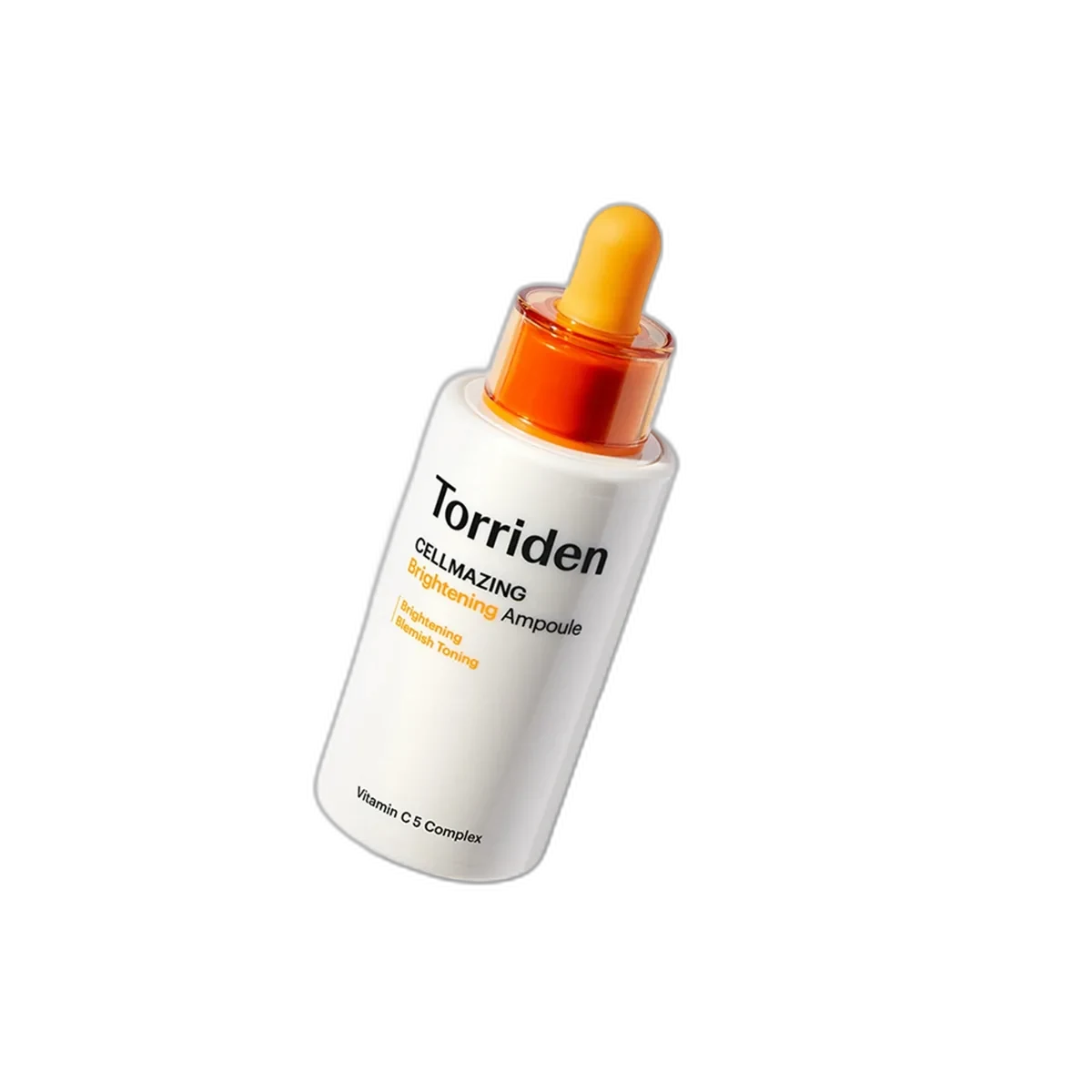
CELLMAZING Brightening Ampoule
K-Beauty Glow Starter
 Verified reviewer
Pros & cons.
- +2% 3-O-ethyl ascorbic acid is a meaningful functional dose
- +Five vitamin C forms deliver multi-mechanism brightening
- +Niacinamide at approximately 3% compounds the tone-evening effect
- +Ferulic acid and tocopherol complete a genuine C-E-Ferulic-style antioxidant stack
- +Lightweight, fast-absorbing texture layers cleanly under sunscreen
- +Frosted glass bottle protects vitamin C from photo-oxidation
- +Reasonable price for a formulation this layered
- −Contains bergamot fruit oil — not fragrance-free like the rest of Torriden's lines
- −Isopropyl myristate may concern acne-prone users
- −Not fungal-acne safe due to fatty ester content
- −30ml size is smaller than competitors at similar price points
- −Sensitive and rosacea-prone skin may experience stinging
The full review.
Torriden built its reputation on restraint. DIVE IN was a simple hyaluronic acid serum. BALANCEFUL was a fragrance-free Cica line suitable for post-laser use. Both lines earned loyalty by using only functional ingredients. When the brand launched CELLMAZING in 2024 as a brightening-focused third line, users expected the same minimalist, fragrance-free philosophy. Instead, the brand delivered something more complex. The ampoule is more technically ambitious than BALANCEFUL products, but it includes bergamot fruit oil as a sensory accent. This is the first essential oil in a Torriden hero product, and it shifts the ampoule’s entire positioning.
The formulation has many strengths. The hero vitamin C is 3-O-ethyl ascorbic acid at 2% (19,950 ppm). This stable derivative converts to L-ascorbic acid in skin, delivers brightening effects similar to modest-concentration L-AA formulations, and works across a wider pH range. At 2%, the dose is functional, not just marketing, and produces meaningful tone-evening over four to six weeks.
The ampoule uses more than one derivative. Four other vitamin C forms appear later in the INCI: L-ascorbic acid, sodium ascorbyl phosphate, ascorbyl glucoside, and ascorbyl palmitate. Each has different solubility, stability, and target depths. Stacking multiple vitamin C forms spreads activity across different mechanisms rather than relying on one ingredient. This usually results in more consistent results and a gentler feel than a single high-dose L-AA serum.
The supporting ingredients follow the C-E-Ferulic model. Niacinamide is fourth on the INCI; at approximately 2.6-3.8%, it performs real work. Niacinamide addresses uneven tone differently than vitamin C by interfering with melanin transfer to keratinocytes instead of inhibiting melanin synthesis. Ferulic acid acts as a classic vitamin C stabilizer and provides its own antioxidant activity. Tocopherol (vitamin E) completes the antioxidant tripod popularized by SkinCeuticals, adding lipophilic antioxidant coverage that water-soluble C cannot provide.
The marine algae complex—five species including Ecklonia cava, Corallina, Codium, Gelidium, and Hizikia—is the CELLMAZING differentiator, adding antioxidant polyphenols and minerals. The evidence for these marine extracts is less robust than for vitamin C or niacinamide, so they act as supporting players. The core formulation does not depend on them.
However, there are complications. Bergamot fruit oil appears near the bottom of the INCI, above the preservative system, as a fragrance accent. Bergamot oil contains bergapten, a furanocoumarin that can be phototoxic at high concentrations. The risk is minimal at these cosmetic levels, but adding a citrus essential oil to a daily AM serum (used under sunscreen) is an odd choice for a brand with a strictly fragrance-free BALANCEFUL line. Users with sensitive or rosacea-prone skin should not assume CELLMAZING is as tolerable as BALANCEFUL.
The second complication is isopropyl myristate, which is seventh on the INCI. IPM spreads well and enhances penetration, but it is a comedogenic cosmetic ester. Its concentration here is likely moderate, and most users won’t breakout, but acne-prone skin should patch test on the jawline first. Due to the fatty acid content and fragrance, the ampoule is not strictly fungal-acne safe.
The serum is lightweight, feeling more like an essence than an oil-based antioxidant serum. It is a light, slightly slippery fluid that sinks in within about a minute. The bergamot note is subtle but noticeable on first use. Sensitive skin may feel a brief tingle from the ethyl ascorbic acid; this usually fades within ninety seconds and does not indicate damage, though it signals a need to patch test.
The realistic performance timeline is: week one shows a subtle glow and brighter skin in the morning. Week three to four shows more even tone and softened post-inflammatory marks from old acne. Week six to eight shows deeper fading of sun-damage spots and consistent brightness. These outcomes match the ingredient load, and first-generation reviews support them. This is an antioxidant-plus-gradual-brightening serum in the C-E-Ferulic tradition, not a spot-fading laser replacement.
The math on value is complex. Twenty-eight dollars for 30ml is high for K-beauty; it costs roughly the same as the 50ml BALANCEFUL Serum. You get less product per dollar because the formulation density is higher, which is a fair trade for a brightening ampoule. Compared to SkinCeuticals CE Ferulic at $180 for 30ml, this is a bargain for the concept. Compared to The Ordinary’s ethyl ascorbic acid at $10, it is more expensive but more complete, as The Ordinary’s is a single ingredient while this is a multi-form stack.
Who is this for?
Normal, combination, or oily skin interested in a multi-form vitamin C ampoule that is less aggressive than high-concentration L-ascorbic acid. Users who tolerate mild essential oils. People who want the C-E-Ferulic concept without paying SkinCeuticals or French-pharmacy prices.
Who should skip?
Sensitive, rosacea-prone, or reactive skin—BALANCEFUL is the safer Torriden option. Acne-prone users concerned about isopropyl myristate. Anyone seeking a fragrance-free brightening serum.
Formula
Ingredient analysis.
Full INCI list
Water, Propanediol, Glycerin, Niacinamide, 3-O-Ethyl Ascorbic Acid (19,950ppm), 1,2-Hexanediol, Isopropyl Myristate, Betaine, Erythritol, Adenosine, Allantoin, Tocopherol, Panthenol, Ascorbic Acid, Sodium Ascorbyl Phosphate, Ascorbyl Glucoside, Ascorbyl Palmitate, Ethylhexylglycerin, Caprylyl Glycol, Xanthan Gum, Corallina Officinalis Extract, Ecklonia Cava Extract, Codium Tomentosum Extract, Gelidium Cartilagineum Extract, Hizikia Fusiforme Extract, Octyldodecanol, Acrylates/C10-30 Alkyl Acrylate Crosspolymer, Tromethamine, Disodium EDTA, Methylpropanediol, Ferulic Acid, Ocimum Sanctum Leaf Extract, Butylene Glycol, Hydrogenated Lecithin, Citrus Aurantium Bergamia (Bergamot) Fruit Oil, Melia Azadirachta Leaf Extract, Melia Azadirachta Flower Extract, Curcuma Longa (Turmeric) Root Extract
Skin match.
The science.
The Science
3-O-ethyl ascorbic acid is a highly studied stable vitamin C derivative. Cosmetic dermatology research shows it converts to L-ascorbic acid in skin. It provides similar brightening to pure L-AA but has better stability and pH tolerance. The 2% concentration in this ampoule is at the low end of the range studies suggest for evening skin tone; comparative studies show 5-10% concentrations work better on deep pigmentation. Research supports niacinamide for hyperpigmentation. It inhibits melanosome transfer from melanocytes to keratinocytes, a different mechanism than vitamin C's inhibition of tyrosinase. This makes niacinamide and vitamin C more effective together than alone on mixed pigmentation. Ferulic acid stabilizes vitamin C and acts as a photoprotective antioxidant. Duke University research shows vitamin C, vitamin E, and ferulic acid work together to stabilize actives and enhance UV defense. Tocopherol (vitamin E) completes this antioxidant tripod. Less research exists for the marine algae complex, though species like Ecklonia cava show antioxidant activity through polyphenol content. This formulation strategy—multi-form stable vitamin C, niacinamide, ferulic, and vitamin E—adapts the principles that made SkinCeuticals C-E-Ferulic the Western antioxidant gold standard to K-beauty.
Dermatologist Perspective
Dermatologists view stable vitamin C derivatives like 3-O-ethyl ascorbic acid as useful for patients who cannot tolerate functional concentrations of L-ascorbic acid. Board-certified dermatologists often recommend pairing vitamin C with niacinamide for mixed hyperpigmentation because they target different steps in the melanin pathway. Dermatologists also advise using vitamin C serums in the morning with broad-spectrum sunscreen, as vitamin C enhances photoprotection when paired with SPF. For patients with rosacea or reactive skin, most dermatologists suggest a fragrance-free alternative instead of a serum containing bergamot essential oil, regardless of concentration.
Where it fits in your routine.
Apply three to four drops to clean, toned skin in the morning. Pat gently until absorbed, then follow with moisturizer and broad-spectrum sunscreen. Daily AM use delivers optimal results since vitamin C enhances photoprotection when paired with SPF. If you experience stinging, reduce to every other day for the first week. Avoid layering with benzoyl peroxide (which can deactivate vitamin C), and space apart from high-strength retinoids — retinol at night, vitamin C in the morning. Patch test on the jawline first if you have reactive skin or a history of sensitivity to citrus essential oils.
At $28 for 30ml, CELLMAZING Brightening Ampoule costs more per milliliter than other Torriden products because the formulation is denser. It costs much less than SkinCeuticals CE Ferulic ($180 for 30ml) for a similar concept, even if the vitamin C form differs. It is more expensive than single-ingredient derivatives like The Ordinary's 3% ethyl ascorbic acid, but it is more complete. Only one size is available. The price is reasonable for users seeking a multi-form brightening ampoule. Single-ingredient options provide better raw value for users wanting a simple brightening serum at the lowest price.
Normal, combination, or oily skin types can use this multi-form brightening ampoule to target hyperpigmentation and dullness using a gentler vitamin C derivative. It is a sensible choice for users seeking a C-E-Ferulic-style antioxidant tripod without SkinCeuticals prices.
Bergamot fruit oil makes this a poor fit for sensitive, rosacea-prone, or fragrance-reactive skin. Acne-prone users should note the isopropyl myristate. For a strict fragrance-free brightening serum, the BALANCEFUL Control Serum or another brand's L-AA option works better.
Product details.
Light, slightly viscous ampoule with a watery, almost-gel consistency
Subtle bergamot citrus note from bergamot fruit oil — not fragrance-free
30ml frosted glass bottle with dropper — protects vitamin C from light oxidation
The first application feels lightweight and slightly slippery, absorbing in about a minute. Ethyl ascorbic acid causes a brief tingle on sensitive skin during first use. A subtle glow appears within the first week, and tone evenness shows over three to four weeks.
Approximately 6-8 weeks with daily morning use
6 months
All Year
The backstory.
CELLMAZING launched in 2024 as Torriden's brightening-focused third line, after BALANCEFUL established the Cica category. The Brightening Ampoule was the flagship launch product, designed to compete with both Western CE-Ferulic-style serums and the Japanese multi-form C market. Its inclusion of bergamot oil as a fragrance was an unusual choice for the brand, as the BALANCEFUL line is strictly fragrance-free.
About Torriden
Emerging Brand (2–5 years)Torriden launched in 2018 and added CELLMAZING as its third brightening-focused line in 2024. CELLMAZING products use marine extracts and multi-form vitamin C stacks. The brand has steady K-beauty retail credibility, but CELLMAZING lacks the multi-year real-world validation of older Torriden ranges.
Common myths.
All vitamin C serums need L-ascorbic acid to work.
Stable derivatives like 3-O-ethyl ascorbic acid convert to L-ascorbic acid in skin. They provide comparable brightening with better tolerability. This ampoule uses derivative forms to reduce irritation risk.
Stop using vitamin C if your serum changes color.
Pure L-ascorbic acid serums turn yellow or brown when they oxidize, but derivative-based formulations like this one are more stable. The product stays active if the color remains consistent.
FAQ.
What form of vitamin C is in the CELLMAZING Brightening Ampoule?
The formula uses 3-O-ethyl ascorbic acid as the main vitamin C at roughly 2% (19,950 ppm). Four other forms (ascorbic acid, sodium ascorbyl phosphate, ascorbyl glucoside, and ascorbyl palmitate) exist at lower concentrations. This multi-derivative approach avoids relying on a single form.
Is this serum safe for sensitive skin?
Most people tolerate this well, but the formula uses bergamot fruit oil for light fragrance. Avoid this vitamin C serum if you react to essential oils or have rosacea. Torriden's BALANCEFUL line is a safer choice for sensitive skin.
Can I use this with retinol?
Do not use these in the same routine. Use the ampoule in the morning and your retinol at night. Using a vitamin C derivative serum and a retinoid together increases irritation risk, especially if your skin is still building tolerance to either product.
How does it compare to SkinCeuticals CE Ferulic?
CE Ferulic is an L-ascorbic acid 15% serum. It works faster on deeply pigmented skin but causes more irritation and costs significantly more. CELLMAZING uses a gentler, derivative-based approach for roughly a third the price. CE Ferulic is more potent if you tolerate L-ascorbic acid. If you don't, CELLMAZING is a sensible alternative.
Does it need to be refrigerated?
You don't need refrigeration, but a cool, dark place extends its functional life. The frosted glass bottle blocks most light. Replace within six months of opening.
Why is bergamot oil in a brightening serum?
Torriden uses it as a fragrance accent for a fresh citrus character. Bergamot oil is phototoxic at high concentrations, but the cosmetic levels used here carry minimal risk — though note this if you react to citrus oils.
Can I use this morning and night?
Use this in the morning to pair the antioxidant effect with sunscreen. You can use it twice daily, but once daily in the AM delivers most benefits.
Community
What the community says.
"Several reviewers note a visible glow after two weeks"
"Many early adopters mention the lightweight texture"
"Common comments highlight the meaningful 2% ethyl ascorbic acid concentration"
"Some users dislike the bergamot scent"
"A few sensitive-skin reviewers experienced mild stinging"
"The 30ml size feels small for the price"
People also looked at.