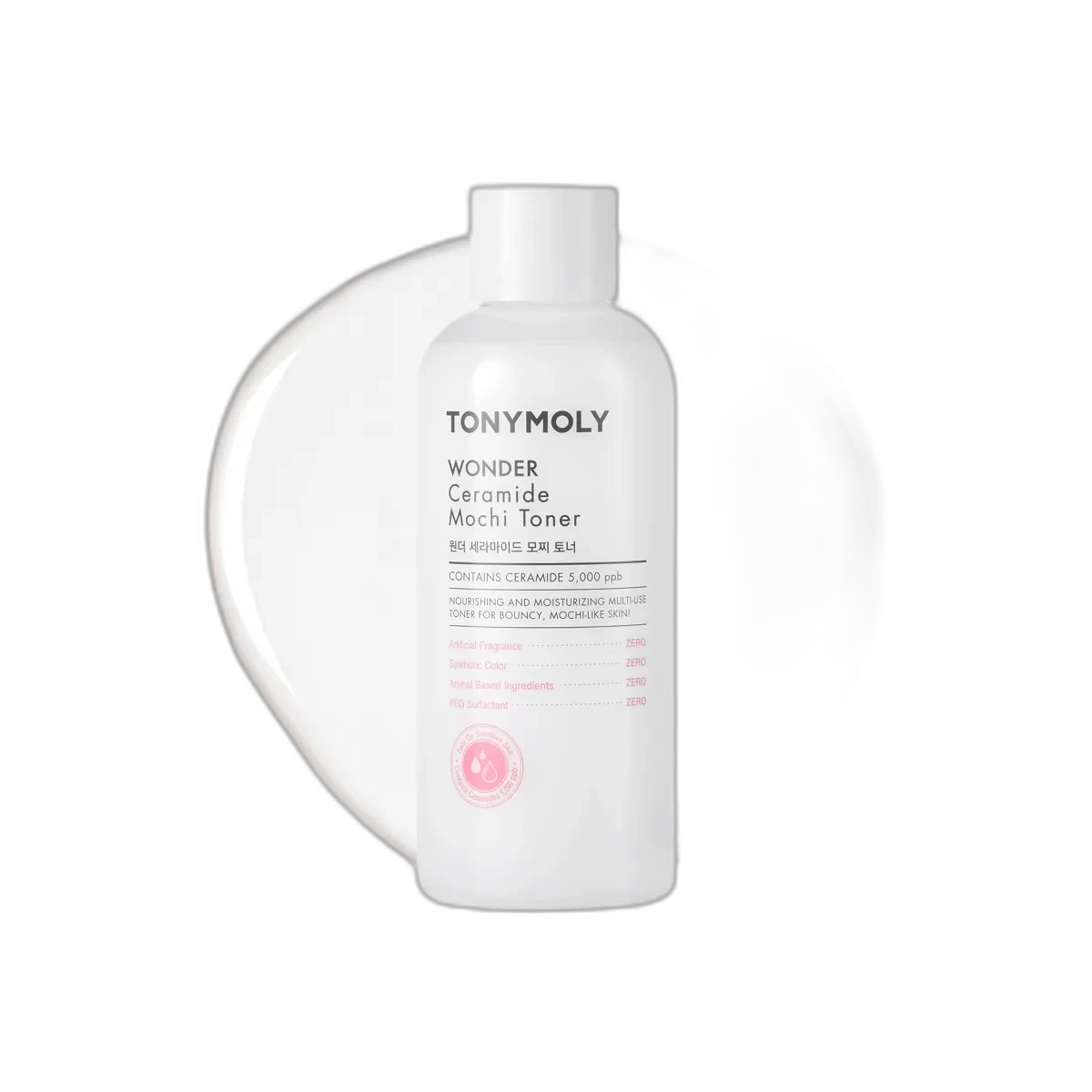
Wonder Ceramide Mochi Toner
K-Beauty Barrier Workhorse
 Verified reviewer
Pros & cons.
- +Three ceramide types plus cholesterol mirror natural skin barrier ratio
- +Hydrogenated lecithin liposomes actually deliver lipids into skin
- +Generous 500ml bottle at a sub-$25 price point
- +Fragrance-free and alcohol-free, suitable for reactive skin
- +Niacinamide and madecassoside reduce stacking-related irritation
- +Mochi-bouncy texture layers cleanly without pilling
- +Works as both a hydrating prep step and a soothing recovery toner
- +Pregnancy-safe ingredient profile
- −Bottle ships with flip cap rather than a pump
- −500ml size is bulky and not travel-friendly
- −Contains lecithin and ceramides — not fungal-acne safe
- −Faint cosmetic neutral scent may bother fragrance-averse users
- −Slightly tacky window before full absorption
The full review.
About TONYMOLY
For nearly ten years, TONYMOLY was the K-beauty brand known for panda-shaped bottles. In 2021, the brand released the Wonder Ceramide line, and the formulation team shifted focus to performance. The Mochi Toner is the standout in the lineup — a half-liter bottle of barrier-repair fluid that matches toners costing twice as much, ingredient for ingredient.
Reality
The lipid roster makes this work. It contains ceramide NP, AP, and EOP — three of the most studied ceramide subtypes, each with a different role in the stratum corneum. Cholesterol, phytosphingosine, and hydrogenated lecithin act as a delivery liposome. This formula mirrors the actual lipid ratio in a healthy skin barrier instead of just adding one ceramide for marketing. This distinguishes a ceramide product that works from one that just uses the name.
Texture
The texture justifies the mochi name. It pours as a slightly viscous, jelly-bouncy essence — heavier than a standard Korean watery toner but lighter than a true essence. Pat on one thin layer as a hydrating prep step, or apply two or three layers if winter air, retinol, or acid sessions have damaged your skin. It stays tacky for thirty seconds, then sinks in, leaving skin feeling cushioned rather than wet.
Packaging
The packaging deserves critique. The 500ml plastic bottle uses a basic flip cap instead of a pump, which is annoying for a toner used twice daily. Most users transfer the contents to a pump bottle or pour it into their palm — the K-beauty pat-application method, which is likely the better way to use it. The bottle is also large, making it less travel-friendly than a 150ml competitor.
Best for
Niacinamide sits in the upper-mid INCI position, suggesting a meaningful concentration that avoids the flushing some sensitive users get above 5%. It works with madecassoside and centella extract, two soothing actives common in K-beauty. The toner does more than hydrate — it actively reduces irritation. If you use too many actives and your face shows warning signs, this step restores comfort.
Not ideal for
One caution: this is not fungal-acne safe. The hydrogenated lecithin and the ceramides can feed Malassezia. If you have confirmed pityrosporum folliculitis on your face or chest, avoid this. For everyone else — especially those with dry, dehydrated, sensitive, or compromised skin — it is an easy recommendation. It is an unfussy, well-built daily product that works quietly in the background.
Ingredient analysis.
Full INCI list · pH 5.5
Water, Glycerin, Dipropylene Glycol, Methylpropanediol, 1,2-Hexanediol, Niacinamide, Betaine, Glyceryl Glucoside, Hydrogenated Lecithin, Ceramide NP, Ceramide AP, Ceramide EOP, Phytosphingosine, Cholesterol, Sodium Hyaluronate, Panthenol, Allantoin, Madecassoside, Centella Asiatica Extract, Camellia Sinensis Leaf Extract, Carbomer, Arginine, Ethylhexylglycerin, Disodium EDTA, Adenosine
Skin match.
The science.
The Science
Healthy stratum corneum lipids follow a roughly 1:1:1 molar ratio of ceramides, cholesterol, and free fatty acids. Disrupting this ratio causes barrier dysfunction in eczema, sensitive skin, and post-procedure recovery. A 1995 Archives of Dermatology study by Man and colleagues shows that applying all three lipid classes in physiological ratios speeds barrier recovery faster than any single class alone. This principle drives ceramide-cholesterol-fatty-acid skincare; it separates serious barrier products from those that just list ceramides for credit.
This toner lacks prominent free fatty acids, but it contains three ceramide subtypes (NP, AP, EOP), cholesterol, and phytosphingosine—the sphingoid base used to biosynthesize several ceramides in skin. The hydrogenated lecithin forms liposomal carriers, which improves dermal delivery of lipid-soluble actives in aqueous vehicles.
Research in the Journal of Ethnopharmacology and dermatology trials supports centella asiatica and madecassoside for modulating inflammatory cytokines and supporting wound healing. Niacinamide adds one of skincare's most evidence-rich profiles. Work in the British Journal of Dermatology documents its effects on barrier function, sebum modulation, and pigmentation pathways at concentrations starting around 2%.
References
- Optimization of physiological lipid mixtures for barrier repair — Journal of Investigative Dermatology (1996)
Dermatologist Perspective
Dermatologists often recommend ceramide-based products for compromised barriers. Toners delivering multiple ceramide subtypes and cholesterol work well as a prep step for routines using retinoids or exfoliating acids. Board-certified dermatologists note the physiological lipid ratio (ceramides, cholesterol, fatty acids) is more clinically meaningful than any single ceramide ingredient. This product's mix of three ceramide types, cholesterol, and a centella-niacinamide soothing layer matches the barrier-supportive formulations suggested for low-grade reactive skin or post-procedure recovery. The fragrance-free, alcohol-free profile suits sensitive skin, and the lack of essential oils or strong botanicals minimizes common K-beauty irritation triggers.
Where it fits in your routine.
Apply to clean, slightly damp skin after cleansing. Pat the jelly texture instead of swiping. Use one thin layer for routine hydration. For compromised or post-actives skin, apply two to three layers, letting each absorb fully (about 30 seconds) before the next. Follow with serum and moisturizer as normal. Use AM and PM. The flip-cap dispenses a lot, so pour less than you expect. This layers under any sunscreen, retinoid, or exfoliating acid product. Do not use on broken skin or open wounds.
At $22 for 500ml, this ceramide toner is one of the most cost-effective options available. The per-milliliter price beats nearly every Western competitor and most Korean luxury brands. The formulation quality competes with toners costing two to three times more, especially because it includes three ceramide types, cholesterol, and a liposomal delivery system. Only one size exists, but the 500ml format is the value-optimized option. As a daily-use barrier toner, it has an excellent price-to-quality ratio and earns its score without brand-heritage credit.
Dry, dehydrated, sensitive, or barrier-compromised skin types can use this daily K-beauty hydrating step to reinforce lipid balance. It works well for retinoid users, winter skin, and faces with active overload.
Lecithin and ceramides can feed the yeast in anyone with confirmed fungal acne or Malassezia folliculitis. Skip this if you want a watery splash-toner texture or a chemically exfoliating toner instead of a hydrating one.
Product details.
This jelly-like essence-toner has a slight viscosity and soft bounce. It sits between a traditional toner and a light essence.
Fragrance-free with a faint cosmetic neutrality
Tall white plastic bottle with flip cap, 500ml, no pump included
The first application feels cushioned and plumps skin immediately. It causes no tingling or adjustment period. Skin feels softer by day three, and the squeaky-clean post-cleanse tightness disappears.
5-7 months with daily AM/PM use as a standard hydrating toner step
12 months
All Year
The backstory.
Released in 2021 as part of TONYMOLY's Wonder Ceramide line, the brand's pivot toward more clinical positioning after years of being known primarily for cute character packaging. The mochi name references the Korean trend of describing bouncy, plump skin texture.
About the brand
Established Brand (5–20 years)TONYMOLY launched in 2006. It is a recognizable mid-tier K-beauty brand with playful packaging and accessible prices. Its formulations use standard K-beauty staples instead of proprietary innovation.
FAQ.
Can I use this toner with retinol?
Yes — the ceramide-and-cholesterol lipid blend in this toner works well as a barrier buffer under a retinol product. Apply this to damp skin first, wait one minute for absorption, then use your retinol.
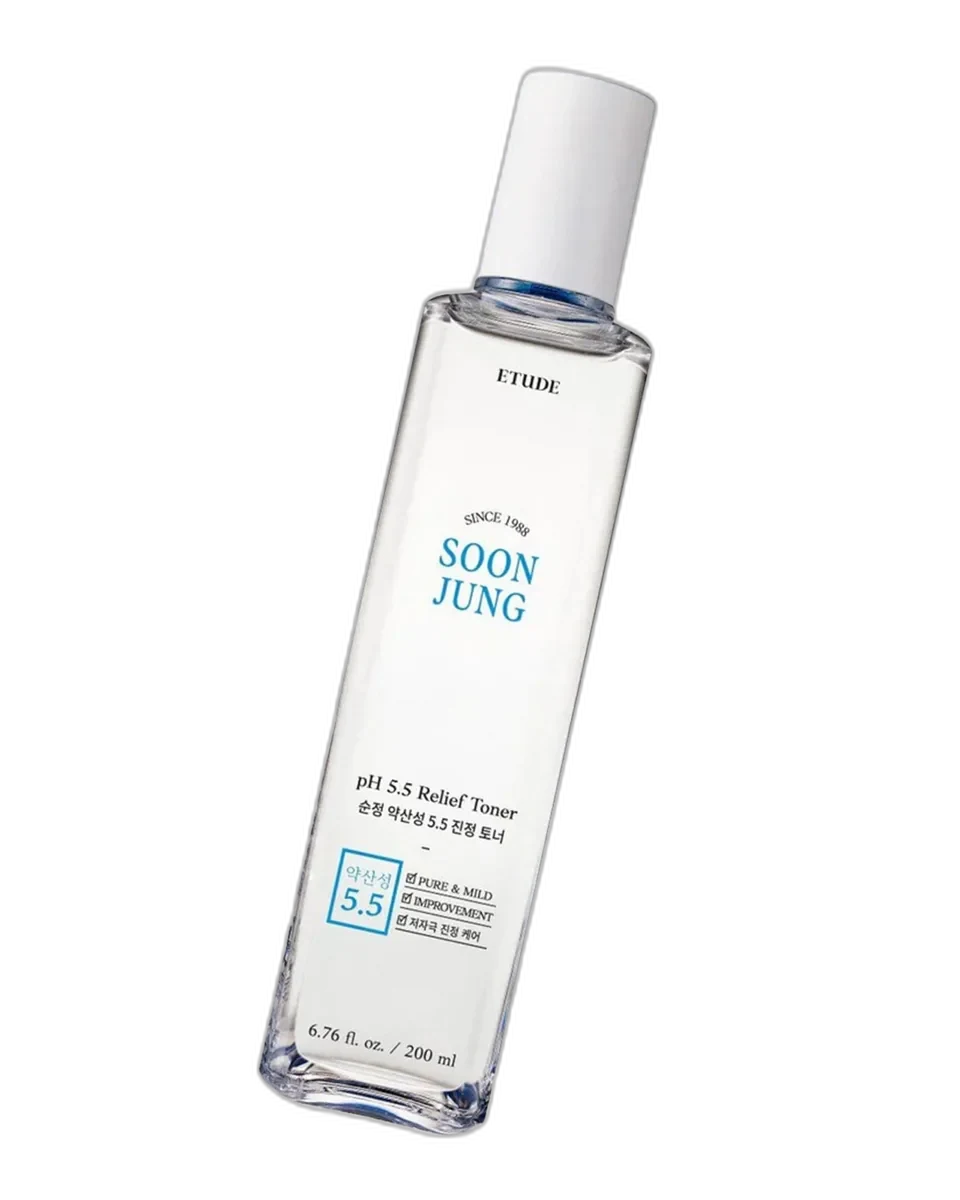
How does this differ from the Etude House SoonJung pH 6.5 Whip Toner?
Both are gentle K-beauty barrier toners. This one uses three ceramide types and cholesterol to replenish lipids, while SoonJung focuses on panthenol and madecassoside to soothe. This is the more reparative choice for an actively compromised barrier.
Is the mochi texture going to pill under sunscreen?
Wait for each layer to absorb fully before the next step. The slight tackiness goes away in 30-60 seconds. Standard chemical or hybrid sunscreens layer cleanly on top after that.
Does the 500ml bottle include a pump?
No — it has a basic flip-cap. Many users move it to a separate pump bottle or pour it into their palm, which is how most K-beauty products are applied.
Is this good for fungal acne?
No — the formula has hydrogenated lecithin and ceramides, which feed Malassezia. Use a fungal-acne-safe ceramide toner if that is a concern.
Can I use this on my body?
Yes — at 500ml, the price allows use on dry patches, post-shower forearms, or eczema-prone elbows. The barrier ingredients work just as well on body skin.
What the community says.
"Plumping mochi texture"
"Fragrance-free formula"
"Generous 500ml bottle"
"Soothes reactive skin"
"Layers well under everything"
"Bottle is bulky"
"Pump not included"
"Slightly tacky if over-applied"
"Not as occlusive as a cream"