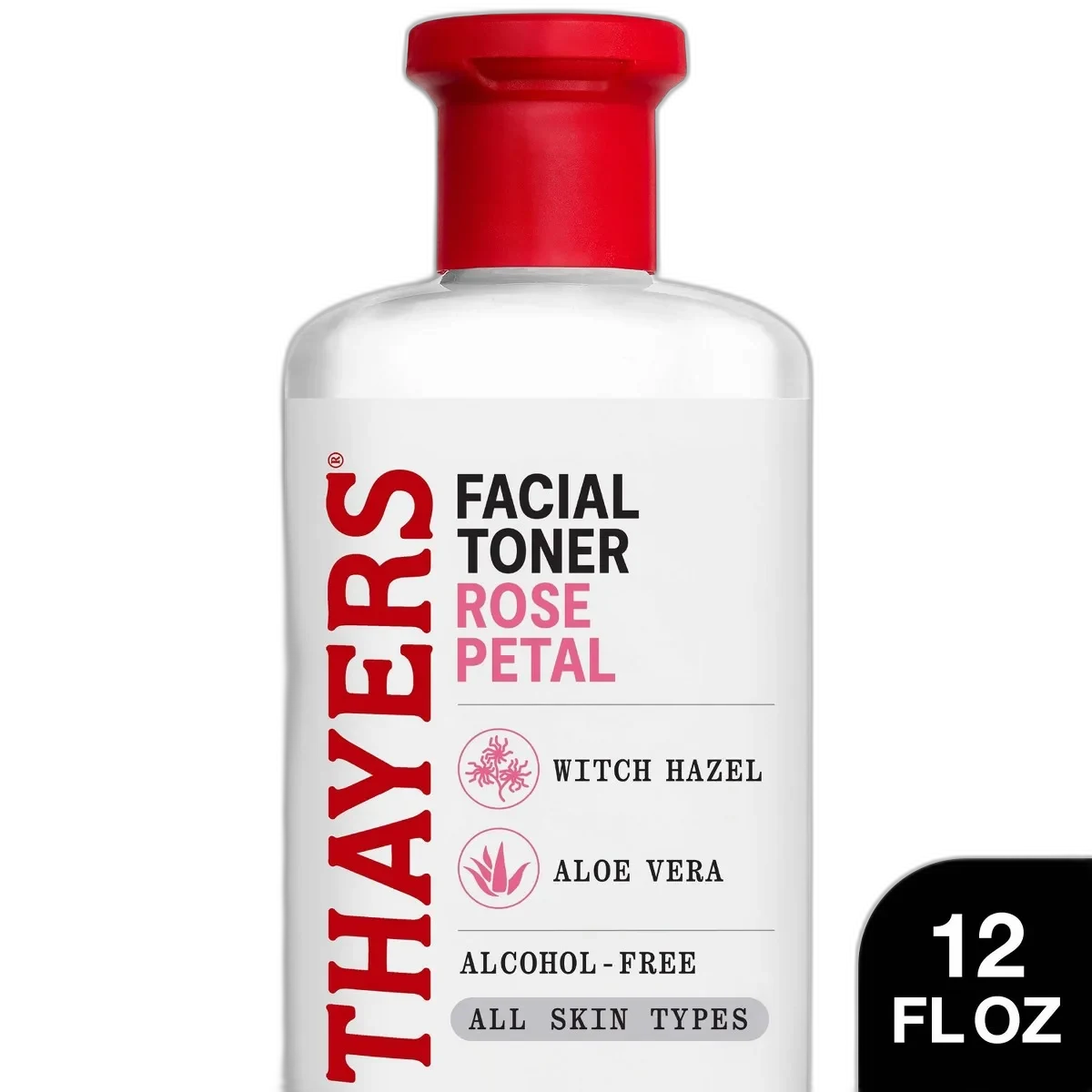
Rose Petal Facial Toner
Drugstore Cult Classic
 Verified reviewer
Pros & cons.
- +Beloved soft Damask rose scent makes routine compliance easier
- +Same gentle alcohol-free witch hazel base as the rest of the line
- +Excellent value at roughly $1 per ounce
- +Vegan, cruelty-free, and dermatologist-recommended
- +Versatile application — hands, cotton round, or layered K-beauty style
- +Generous 12 oz size lasts months
- +Pregnancy-safe with no retinoids, acids, or essential oils
- +175-year heritage formula essentially unchanged for decades
- −Natural fragrance allergens (geraniol, linalool, citronellol) limit use for sensitive skin
- −Plastic bottle replaced the original apothecary glass packaging
- −No active ingredients to address pigmentation, acne, or aging
- −Functionally identical to other Thayers variants in everything except scent
- −Rose scent is brief and may disappoint users wanting a lingering perfume
The full review.
You have likely seen this bottle on TikTok or Reddit over the last decade. Thayers Rose Petal Witch Hazel Toner is the brand’s bestselling SKU, the entry point for new users switching to alcohol-free witch hazel, and a staple on college student shelves alongside a CeraVe cleanser and a tube of vanicream. The cult following has grown since the 1990s; the formula survives skincare trends because it does exactly what it promises.
The base formula matches the Cucumber variant: water, glycerin, water-extracted witch hazel, aloe vera, and preservatives. The Rose Petal version adds Rosa centifolia flower water (Damask rose) and a natural fragrance complex containing geraniol, citronellol, and linalool. These volatile compounds create the rose scent at low cosmetic concentrations to provide a sensory experience without heavy fragrance loading. The scent is soft, fresh, and dissipates within one or two minutes of application. It registers as “this product is using something nice” rather than “this product is wearing perfume.”
This creates a specific tradeoff. Geraniol, citronellol, and linalool are on the EU’s list of natural fragrance allergens; brands must declare them because a small percentage of users develop contact sensitization. For most people, including those with normal-to-combination skin, these compounds are fine and improve the sensory experience. For users with rosacea, fragrance-induced dermatitis, or compromised barriers, they are a reason to choose the unscented or cucumber version instead. This is not a “this product is bad” note, but a “know your skin and pick accordingly” note.
For those who are not fragrance-reactive, the Rose Petal is the most enjoyable Thayers variant. The rose scent turns a utilitarian hydration step into a moment of sensory intention, which helps with routine compliance. Users stick with products they enjoy, and the rose scent makes many people use this bottle every morning instead of skipping toner. The functional formula works like the cucumber and unscented versions: it provides light hydration and mild post-cleanse comfort without active treatment work, making it gentle enough for daily use. The difference is purely sensory, but sensory matters.
The per-ounce value matches the rest of the line. A $12, 12 oz bottle costs about a dollar an ounce, and one bottle lasts most users four to six months using cotton rounds twice daily. Compared to a $35 prestige rose toner from Fresh or Mario Badescu—which often has less functional rose water and costs twice as much—the value is clear. No actives here justify a more expensive version; rose water is rose water, and the Thayers’ aloe vera plus glycerin base does more for your skin than most premium formulations. If you want a daily-use toner with rose fragrance that does not claim to be a treatment, pick this one.
Brand context matters. L’Oréal acquired Thayers in 2023, which caused some concern in the indie skincare community regarding formula changes. So far, the formula is unchanged; the rose petal version on shelves is functionally identical to the original. The packaging moved from the original apothecary glass bottle to plastic over the last decade. This is an aesthetic loss, as the glass bottle felt more special to the ritual, but the plastic bottle is fine and the contents remain the same.
The product earns its cult status through consistency. Few drugstore products stay essentially unchanged for thirty-plus years while earning over a hundred thousand positive reviews. Thayers has not chased trends by adding peptides, vitamin C, or hyaluronic acid technology. It is a witch hazel toner with rose. It does what it does. The simplicity is the pitch.
Who this is for
Who this is for: normal, combination, and oily skin types who enjoy fragrance in skincare and want a daily hydrating toner with a beloved sensory profile at a budget-friendly price.
Who it isn’t for
Who it isn’t for: sensitive or rosacea-prone skin (choose the unscented version), shoppers needing actives like vitamin C or BHAs, and anyone who wants their toner to do treatment work rather than just hydrate.
Ingredient analysis.
Full INCI list · pH 5.5
Aqua/Water/Eau, Glycerin, Hamamelis Virginiana (Witch Hazel) Bark/Leaf/Twig Extract, Aloe Barbadensis Leaf Extract, Rosa Centifolia Flower Water, Phenoxyethanol, Caprylyl Glycol, Ethylhexylglycerin, Citric Acid, Potassium Hydroxide, Fragrance, Geraniol, Citronellol, Linalool
Skin match.
The science.
The Science
This is a formula built around mild hydration and ingredient simplicity rather than active treatment, so the science section is necessarily about the supporting cast rather than any hero active. Witch hazel (Hamamelis virginiana) extracted via water-only distillation has demonstrated mild astringent and anti-inflammatory effects in topical research, and the absence of ethanol in this preparation avoids the barrier-disrupting effects associated with traditional alcohol-extracted witch hazel formulas. Peer-reviewed dermatology literature has documented witch hazel's role in soothing minor skin irritation, particularly when paired with humectants — exactly the formulation strategy Thayers has used since the brand's founding.
Glycerin and aloe vera are doing the hydration work in this formula. Glycerin is one of the best-studied humectants in skincare, with extensive evidence for drawing water into the stratum corneum and improving short-term skin hydration. Aloe vera has more variable evidence depending on extraction method and concentration, but a long history of use as a soothing humectant and a modest body of research supporting its mild anti-inflammatory and skin-softening effects.
Rose flower water (Rosa centifolia flower water) contains polyphenolic compounds with documented antioxidant activity in laboratory testing, but topical clinical evidence in cosmetic concentrations is limited. Its functional role in this toner is more as a botanical sensory ingredient than as a meaningful active — at the cosmetic concentration suggested by its INCI position, it's contributing the characteristic scent and a small amount of additional hydration without delivering measurable treatment outcomes.
The natural fragrance compounds (geraniol, citronellol, linalool) deserve specific scientific context. These are the volatile aromatic compounds that give roses, geraniums, and lavender their characteristic scents, and they're listed separately on the EU cosmetic labeling standard because they're known sensitizers in a small percentage of users. Research on contact dermatitis has documented that approximately 1-3% of the general population shows sensitivity to these compounds in patch testing, with higher rates among users with already-reactive skin. For the majority of users they cause no issues; for the minority with fragrance sensitivities, they're a meaningful consideration.
The pH of approximately 5.5 aligns with the skin's natural acid mantle and supports barrier function rather than disrupting it.
Dermatologist Perspective
Dermatologists generally view alcohol-free witch hazel formulations like this one as safe daily toners for patients who want a gentle hydrating step. Board-certified dermatologists frequently recommend the Thayers line in general for users seeking budget-friendly clean ingredient lists. The specific consideration with the Rose Petal variant is fragrance: dermatologists managing patients with rosacea, contact dermatitis, or sensitive skin typically steer them toward fragrance-free alternatives, including the Cucumber and Unscented Thayers variants. For patients without fragrance reactivity, dermatologists generally consider this a reasonable daily toner option, with the standard caveat that toners are optional in modern routines and shouldn't be expected to deliver the active treatment benefits of dedicated serums. The pH-balanced formulation is appropriate for daily use without disrupting acid mantle integrity.
Where it fits in your routine.
Apply twice daily after cleansing and before serums. Pour onto a cotton round and sweep across the face, neck, and decolletage, or pour into clean palms and pat onto damp skin. Use 2-3 passes for extra hydration. Follow immediately with serum and moisturizer while skin stays damp. The rose scent fades within a minute or two — do not apply more than usual to find the fragrance.
At roughly $12 for 12 fl oz, this costs about $1 per ounce. One bottle lasts most users 4-6 months using cotton rounds twice daily, making the monthly cost under $3. Prestige rose toners from Fresh, Mario Badescu, or Caudalie cost $25-45 for similar volumes, but Thayers offers comparable functional performance and a similar (and arguably more transparent) ingredient list. The 12 oz size has the best per-ounce math; the 8.5 oz and 3 oz sizes work for travel and trial. Within the drugstore tier, this has one of the best value-to-quality ratios in the toner category — if you want rose fragrance.
Normal, combination, and oily skin types who want a budget-friendly, gentle hydrating toner with a soft rose fragrance. This works well for users who find unscented products joyless and use sensory pleasure to maintain routine compliance.
Choose the unscented or cucumber variant if you have sensitive, rosacea-prone, or fragrance-reactive skin. Skip this if you want actives, anti-aging benefits, or pigmentation treatment from your toner step.
Product details.
Watery clear liquid with faint rose scent
Soft, fresh Damask rose with a clean witch hazel undertone
12 oz plastic bottle with screw cap
It feels cool on application with a brief rose scent that fades within a minute. Skin feels comfortable and prepped immediately—no tingling or astringent burn. The rose fragrance is the variant's signature and the main difference from the unscented version.
4-6 months with twice-daily face application
12 months
All Year
The backstory.
Henry Thayer started selling witch hazel preparations in 1847. The Rose Petal variant emerged in the 1990s as part of the modern facial toner line and became the brand's flagship SKU as social media skincare communities embraced it as an entry-level natural toner. It survived the L'Oréal acquisition in 2023 with the formula intact.
About Thayers
Legacy Brand (20+ years)Thayers is one of the oldest personal care brands in the United States, founded in 1847 by Connecticut physician Henry Thayer. The Rose Petal variant is the brand's most iconic and best-selling toner format.
What the community says.
"beautiful rose scent"
"actually hydrating"
"clean ingredients"
"budget-friendly"
"gentle daily option"
"fragrance bothers sensitive skin"
"plastic bottle replaced glass"
"no actives for treatment"
"scent fades quickly"