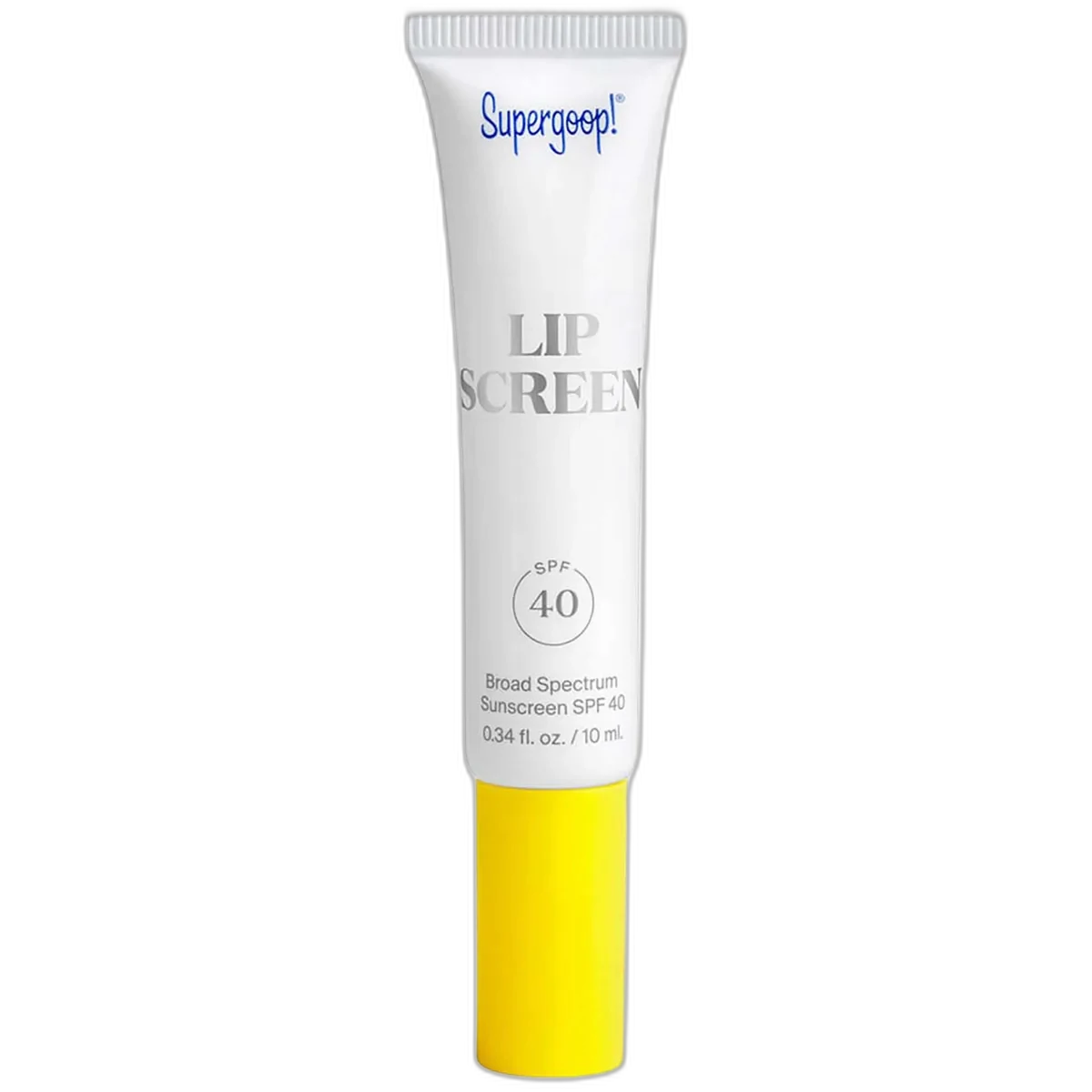
Lipscreen Lip Gloss SPF 40
High-Shine Lip SPF
 Verified reviewer
Pros & cons.
- +Genuine high-shine gloss finish makes SPF lip protection desirable rather than dutiful
- +Four UV filters with double-stabilized avobenzone provide robust SPF 40 PA+++ protection
- +80-minute water resistance is significantly longer than most lip SPF products
- +Botanical oil blend (shea butter, coconut, sesame, sunflower) provides real lip nourishment
- +Clear, universal formula layers over any lip color without altering the shade
- +Grape seed extract adds antioxidant defense for melanin-deficient lip skin
- +Vegan and cruelty-free with FSA/HSA eligibility
- −Wears off within 2-3 hours of normal eating and drinking, requiring frequent reapplication
- −Slightly stickier than the non-sticky marketing suggests, though less tacky than traditional glosses
- −At $22 for 0.34 oz, the cost per ounce is premium even by prestige lip gloss standards
- −Contains sesame, coconut, and soy — common allergens applied directly to mucous membranes
- −Flavor components may not fully mask the chemical UV filter taste for sensitive palates
- −Lips can feel dry once the product wears off completely, requiring reapplication for comfort
The full review.
There is a quiet absurdity in how seriously we protect our facial skin while completely ignoring our lips. We apply SPF 50 to our cheeks, layer antioxidant serums, wear hats — and then walk outside with our lips bare, exposed to the same UV radiation that we just spent fifteen minutes defending against on the skin two centimeters away. Lip skin is thinner, lacks melanin, has no sebaceous glands, and possesses a stratum corneum so minimal it barely qualifies as a barrier. If any part of the face deserved obsessive sun protection, it would be the lips. Instead, lip SPF has been the domain of waxy, chalky balms that taste like pharmacy and look like nothing.
Supergoop’s Lipscreen Lip Gloss SPF 40, launched in 2020, rejects this entire paradigm. It looks like a premium lip gloss because it is a premium lip gloss — high-shine, clear, cushiony, with a doe-foot applicator and a subtle sweet flavor. The fact that it also contains four chemical UV filters providing SPF 40 with PA+++ UVA protection and 80-minute water resistance is the kind of detail you learn afterward, which is exactly how it should work. Protection that people don’t notice wearing is protection that people actually maintain.
The UV filter combination is the same robust system Supergoop uses across its face products. Avobenzone at 3% covers the UVA range. Homosalate at 5% and octisalate at 5% handle UVB. Octocrylene at 10% provides UVB absorption while stabilizing the notoriously photolabile avobenzone. And diethylhexyl syringylidenemalonate — a dedicated photostabilizer listed among the inactive ingredients — adds a second layer of avobenzone stabilization. This double-stabilization is particularly important for a lip product: lips are constantly moistened, pressed together, exposed to friction, and wiped — all conditions that challenge UV filter persistence. The 80-minute water resistance rating (longer than most of Supergoop’s face products) reflects a formula designed to maintain its protective film under these demanding conditions.
The emollient base is where Lipscreen transcends the typical SPF lip product. Shea butter provides occlusive richness that compensates for the lips’ inability to self-moisturize through sebaceous glands. Coconut oil contributes lauric acid and rapid penetration. Sesame seed oil adds vitamin E and linoleic acid. Sunflower seed oil rounds out the botanical oil blend with additional antioxidant fatty acids. These aren’t token conditioning agents — they’re the functional equivalent of a nourishing lip treatment that happens to contain sunscreen, rather than a sunscreen with a touch of moisture.
Grape seed extract and kelp extract (Laminaria ochroleuca) provide antioxidant support. Research has shown that grape seed proanthocyanidins can inhibit UV-induced oxidative stress and NF-kappaB signaling in keratinocytes — a secondary defense mechanism that catches the free radicals that slip past the chemical UV filters. For lip skin that lacks melanin’s built-in antioxidant protection, this additional antioxidant layer is more meaningful than it would be in a facial product.
The texture delivers on the gloss promise. Hydrogenated polyisobutene creates the high-shine, cushiony base that makes this feel like a legitimate cosmetic product. The doe-foot applicator deposits an even, generous layer. The finish is undeniably glossy — lips look hydrated, plumped, and catch light attractively. Supergoop calls it non-sticky, which is technically accurate relative to many traditional glosses but slightly generous compared to lip oils or balms. There is a mild tack that most users will recognize as standard gloss texture rather than objectionable stickiness.
The subtle flavor deserves mention. Vanillin, benzaldehyde (almond-like), stevioside (a natural sweetener from stevia), and gamma-undecalactone (peach/coconut) create a mild, pleasant sweetness that makes reapplication enjoyable rather than medicinal. Most users find it agreeable. Those very sensitive to chemical sunscreen tastes may detect an undertone beneath the sweetness, but it’s considerably more pleasant than the unmasked chemical flavor of most SPF lip products.
The product’s primary limitation is wear time. Like all lip products, it is removed by eating, drinking, talking, and the unconscious habit of licking lips. The 80-minute water resistance helps, but practical wear time before reapplication is typically two to three hours under normal conditions. This is not a flaw of the formula — it’s a physical reality of the lip environment. The silver lining is that lip gloss is already a product most people reapply throughout the day. Lipscreen simply means that each reapplication refreshes both the shine and the UV protection.
Value is where Lipscreen faces scrutiny. At $22 for 0.34 ounces, the cost per ounce is premium. A tube lasts approximately four to six weeks with multiple daily applications, putting the monthly cost at roughly $4-5. This is expensive for a lip product by drugstore standards but competitive within the prestige lip gloss category — and most prestige glosses offer zero UV protection. Whether you view $22 as the price of a lip gloss with bonus SPF or the price of a lip sunscreen with bonus gloss determines how you feel about the value.
The allergen profile deserves attention. Sesame seed oil, coconut oil, and soybean oil are common allergens, and their presence in a lip product means direct contact with mucous membranes. Anyone with known allergies to these ingredients should choose an alternative lip SPF. The flavor components may also irritate individuals with fragrance sensitivities.
Ultimately, Lipscreen succeeds because it makes lip sun protection desirable rather than obligatory. It sits in a purse next to lip liner and compact mirror, not in a medicine cabinet next to hydrocortisone cream. It gets reapplied because the wearer wants shiny lips, and the UV protection hitchhikes on that vanity. For a product category that has struggled with compliance for decades, disguising the medicine as the cosmetic is the smartest formulation strategy there is.
Ingredient analysis.
Full INCI list
Active Ingredients: Avobenzone 3%, Homosalate 5%, Octisalate 5%, Octocrylene 10%. Inactive Ingredients: Hydrogenated Polyisobutene, Diisostearyl Malate, Caprylic/Capric Triglyceride, Butyloctyl Salicylate, C12-15 Alkyl Benzoate, Polyurethane-79, Polyester-7, Butyrospermum Parkii (Shea) Butter, Cocos Nucifera (Coconut) Oil, Isopropyl Palmitate, Sesamum Indicum (Sesame) Seed Oil, Neopentyl Glycol Diheptanoate, Diethylhexyl Syringylidenemalonate, Caprylyl Glycol, Glycine Soja (Soybean) Oil, Tocopherol, 2-Methylbutyric Acid, Barosma Betulina Leaf Oil, Benzaldehyde, Dimethylhydroxy Furanone, Trans-2-Hexenal, Helianthus Annuus (Sunflower) Seed Oil, Ethyl Acetate, Stevioside, Gamma-Undecalactone, Vanillin, Vitis Vinifera (Grape) Seed Extract, Laminaria Ochroleuca Extract, Citric Acid
Skin match.
The science.
The Science
Lip skin has unique UV protection challenges. The vermilion border lacks enough melanocytes to produce protective melanin, has a thin stratum corneum (3-5 cell layers versus 15-20 on facial skin), and lacks sebaceous glands. This means it cannot self-moisturize or create a natural lipid barrier against UV penetration. These traits make lip skin more susceptible to UV-induced damage, such as actinic cheilitis and squamous cell carcinoma, especially on the lower lip.
The four-filter system offers broad-spectrum coverage: avobenzone absorbs UVA (340-400nm), while homosalate, octisalate, and octocrylene cover UVB (280-320nm). Octocrylene also stabilizes avobenzone by quenching its photoreactive triplet state, a mechanism confirmed in multiple studies (Gaspar & Maia Campos, Int J Pharm, 2006). Diethylhexyl syringylidenemalonate adds redundant stabilization.
Grape seed extract (Vitis vinifera) adds photoprotection beyond the UV filters. A 2006 study by Sharma and Katiyar in Free Radical Biology and Medicine showed that grape seed proanthocyanidins inhibit UV-radiation-induced oxidative stress and activation of MAPK and NF-kappaB signaling in human epidermal keratinocytes — pathways for UV-induced inflammation and DNA damage. A 2020 study in the Journal of Cosmetic Dermatology found that grape seed extract enhanced broad-spectrum coverage and stabilized UV filters in sunscreen formulations (Matias et al., 2020).
The 80-minute water resistance rating shows the UV-protective film stays intact on the lip surface during moisture exposure. A hydrophobic base of hydrogenated polyisobutene and film-forming polymers (polyurethane-79, polyester-7) resists wash-off from saliva and drinking.
References
- Grape seed proanthocyanidins inhibit UV-radiation-induced oxidative stress and activation of MAPK and NF-kappaB signaling in human epidermal keratinocytes — Free Radical Biology and Medicine (2006)
- Effect of grape seed extract on skin fibroblasts exposed to UVA light and its photostability in sunscreen formulation — Journal of Cosmetic Dermatology (2020)
- Evaluation of the photostability of different UV filter combinations in a sunscreen — International Journal of Pharmaceutics (2006)
Dermatologist Perspective
Dermatologists note that lip skin is among the face's most UV-vulnerable areas, yet lip sun protection is often neglected. Board-certified dermatologists say the lower lip receives high direct UV exposure and is a common site for actinic keratoses and squamous cell carcinoma. Dermatologists recommend daily lip SPF for comprehensive sun protection. Any product that improves lip SPF compliance — including cosmetically appealing formats like this gloss — helps prevent damage. The SPF 40 with water resistance provides adequate protection if applied generously and reapplied frequently.
Where it fits in your routine.
Use the doe-foot applicator to apply an even, thick coat to clean lips. Wear it alone for a clear, glossy finish or layer it over lipstick, lip liner, or tinted lip balm. Reapply after eating, drinking, or wiping lips. Reapply every 2 hours during direct sun exposure. Store in a cool place — the oil-rich formula becomes fluid in high heat.
At $22 for 0.34 oz, Lipscreen costs more than most lip products, but matches prestige lip glosses that lack UV protection. Daily sun protection costs about $4-5 per month if you reapply multiple times. The brand started in 2007 and knows how to make SPF products people use. This price reflects the difficulty of making an SPF 40 gloss with 80-minute water resistance that feels good. Lipscreen has no refill or larger size option.
Lipscreen works for lip gloss users adding UV protection, outdoor enthusiasts needing water-resistant lip SPF that looks good, and anyone targeting lip sun damage, actinic cheilitis, or lip cancer prevention.
Skip this if you have sesame, coconut, or soy allergies. Users who dislike lip product tackiness may find this stickier than the non-sticky marketing suggests. Budget-conscious consumers may prefer a drugstore SPF lip balm, but the cosmetic finish is less appealing.
Product details.
Vanillin, benzaldehyde (almond-like), stevioside (natural sweetener), and gamma-undecalactone (peach/coconut note) create a subtle sweet scent and flavor. This mild sweetness makes the SPF lip gloss feel like a cosmetic product instead of a sunscreen. The flavor components are light and not overwhelming.
A slim, cylindrical tube uses a doe-foot applicator—standard lip gloss packaging. The tube fits in a pocket or small bag. The clear product shows through the tube. A standard screw-cap closes it.
The first application gives a high-shine finish and softens lips immediately using shea butter and coconut oil. The gloss feels thick and cushiony, not thin or dry. It has a subtle sweetness. It leaves no white cast or visible product buildup. Wear time is moderate; reapply after eating or drinking.
4-6 weeks with multiple daily applications
12 months
All Year
The backstory.
Lips are uniquely vulnerable to UV damage — they lack melanin, have minimal stratum corneum, and are constantly exposed. Yet most people skip lip SPF entirely because lip balms with sunscreen feel waxy and look flat. Supergoop launched the Lipscreen in 2020 to close this protection gap by disguising SPF 40 as a desirable cosmetic product. The clear, glossy formula was designed to appeal to anyone who already wears lip gloss — the sun protection is almost secondary to the cosmetic function, which is precisely what makes it effective as a compliance tool.
About Supergoop!
Established Brand (5–20 years)Holly Thaggard founded Supergoop! in 2007 to make sunscreen a daily necessity. The brand is Leaping Bunny and PETA certified cruelty-free. Supergoop! launched the Lipscreen in 2020 to expand into lip-specific SPF products. The Lipscreen fills a market gap for a high-SPF lip gloss that maintains shine.
Common myths.
Lip skin is too thin for sunscreen to work, so you don't need SPF on your lips.
Lip skin is thin and lacks the melanin and barrier thickness that protect facial skin from UV damage. This makes lip skin more susceptible to actinic cheilitis (sun-damaged lips) and lip cancer, especially on the lower lip from direct sun exposure. SPF lip products form a film that absorbs UV radiation before it reaches the vulnerable tissue.
Lip gloss with SPF lacks real protection because users eat and wipe it off.
Lip products wear off faster than facial sunscreens, but any SPF on the lips reduces UV exposure compared to unprotected lips. This formula has 80-minute water resistance, so UV filters stay on the lip surface during some moisture exposure. Frequent reapplication — a habit people already have with lip gloss — keeps protection active all day.
FAQ.
Does Supergoop Lipscreen taste like sunscreen?
The formula uses vanillin, stevioside (a natural sweetener), and benzaldehyde (almond-like) to mask the chemical UV filter taste. Most users find the subtle sweetness pleasant. However, users sensitive to chemical sunscreen flavors may notice a slight chemical undertone during initial application.
How often should I reapply Supergoop Lipscreen?
Reapply after eating, drinking, or wiping your lips. Reapply every 2 hours during direct sun exposure. The 80-minute water resistance works through moderate moisture, but eating, drinking, and licking lips usually shortens the practical wear time.
Can I wear Supergoop Lipscreen over lipstick?
Yes — the clear formula layers over any lip color without changing the shade. Apply your lipstick or lip liner first, then layer the Lipscreen on top for SPF protection and shine. The gloss does not dilute or disrupt the pigment underneath.
Is Supergoop Lipscreen sticky?
Supergoop markets it as non-sticky, but user experience varies. The texture is slicker and less tacky than traditional lip glosses, but it has more tack than a lip oil or balm. Users sensitive to sticky textures may find it slightly tacky, while most users find it less sticky than average glosses.
Why is lip SPF important?
Lip skin is uniquely vulnerable to UV damage — it lacks melanin, has a very thin stratum corneum, and has no sebaceous glands for natural protection. The lower lip in particular receives significant direct sun exposure. Chronic UV exposure to the lips can lead to actinic cheilitis and increases the risk of lip cancer. Regular SPF lip protection is recommended by dermatologists.
Does Supergoop Lipscreen contain allergens?
The formula contains sesame seed oil, coconut oil, and soybean oil, which are common allergens. People with sesame, coconut, or soy allergies must avoid this product. The flavor components (vanillin, benzaldehyde) may also trigger reactions in people with fragrance sensitivities. ---
What the community says.
"High-shine gloss finish with genuine SPF 40 broad-spectrum protection"
"Clear formula layers beautifully over any lip color without disrupting pigment"
"Moisturizing blend of shea butter, coconut oil, and sesame oil nourishes dry lips"
"Pleasant subtle sweet flavor from vanillin and natural sweetener"
"Water-resistant for 80 minutes — significantly longer than most lip SPF products"
"Universal clear shade works for everyone regardless of lip color preference"
"Wears off quickly requiring frequent reapplication throughout the day"
"Some users find it stickier than the non-sticky marketing suggests"
"Chemical UV filter taste can be noticeable for those sensitive to it"
"Lips can feel dry after the product wears off completely"
"At $22 for 0.34 oz, the price per ounce is quite high"
"Contains potential allergens (sesame, coconut, soy) that may limit use"