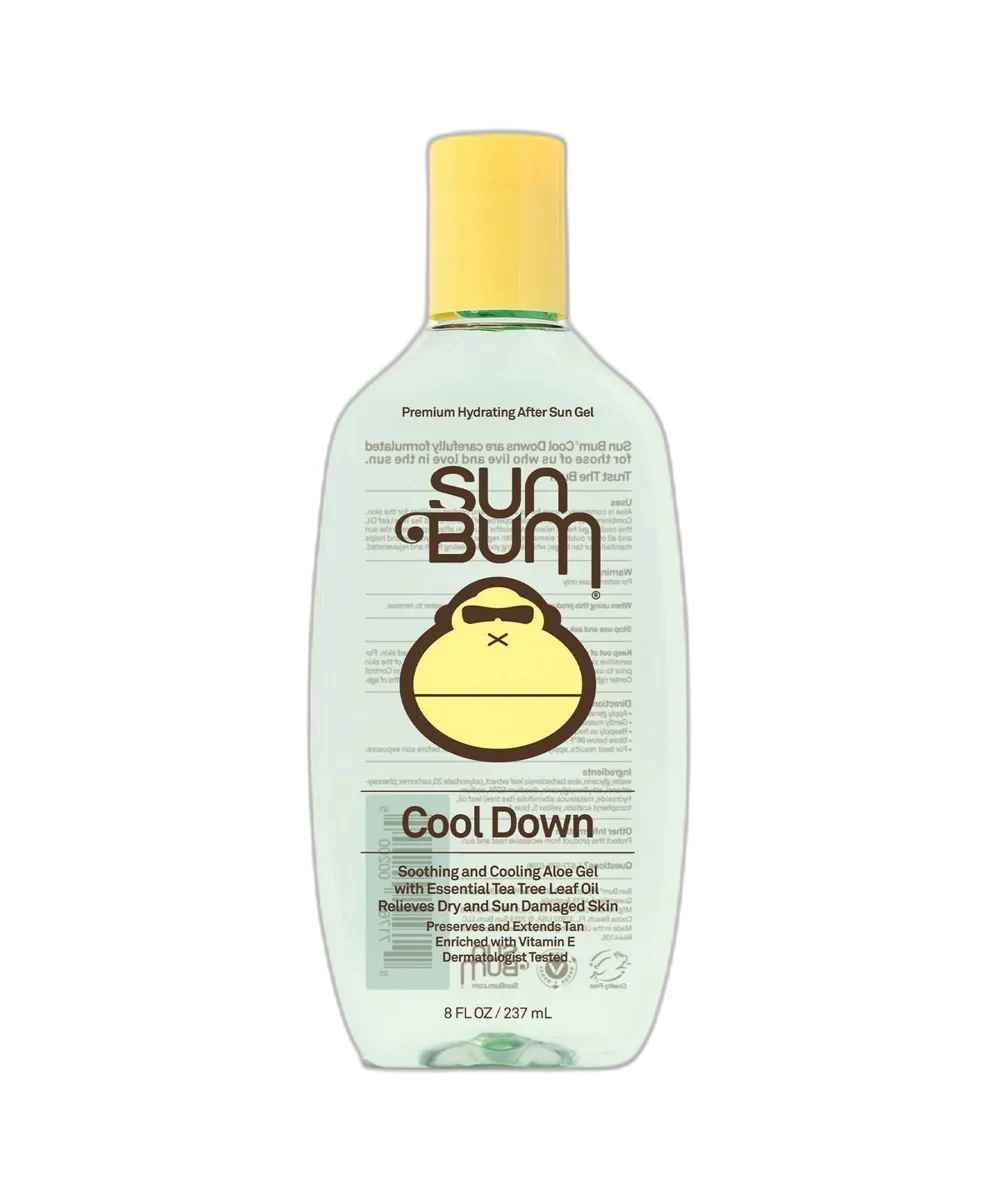
Cool Down Aloe Vera Gel
Beach Day Essential
 Verified reviewer
Pros & cons.
- +Alcohol-free preservative system avoids the stinging and dehydration of standard drugstore aloe gels
- +Tea tree oil provides antimicrobial protection for UV-compromised skin
- +Glycerin base provides robust humectant hydration beyond what aloe alone delivers
- +Vitamin E adds antioxidant support for post-UV free radical damage
- +Pleasant minimal scent with no added fragrance
- +Affordable at $11.49 for 8 oz with PETA and Leaping Bunny cruelty-free certification
- −Leaves a sticky tacky film for 30-60 minutes before fully absorbing
- −Green color comes from synthetic dyes rather than indicating high aloe concentration
- −Aloe is third on the ingredient list behind water and glycerin
- −Tea tree oil may irritate individuals with known sensitivity to essential oils
- −Provides comfort and hydration but does not reverse or treat actual sun damage
The full review.
Tom Rinks worked in advertising before founding Sun Bum in 2010. This background shows in the brand, from the grinning ape mascot to the way a basic aloe vera gel feels like a surf shop find rather than a pharmacy product. The Cool Down Aloe Vera Gel is simple. It contains aloe, glycerin, tea tree oil, vitamin E, and water in a squeeze bottle. The formulation details and what it excludes make it better than most standard green gels.
The main difference between Sun Bum’s gel and standard drugstore aloe is the absence of certain ingredients. Most cheap aloe gels use alcohol (ethanol or isopropyl alcohol) as a primary preservative and quick-drying agent. Alcohol evaporation cools intact skin, but on sunburned skin, it stings and dehydrates tissue struggling to retain moisture. Sun Bum uses phenoxyethanol and ethylhexylglycerin instead. This preservative system works without drying or stinging.
Water and glycerin form the base, with aloe barbadensis leaf extract as the third ingredient. Aloe is not the primary ingredient by volume. Water and the humectant glycerin make up the bulk of the formula; aloe provides targeted soothing and anti-inflammatory activity. This is standard for commercial aloe gels—even products labeled “100% pure aloe” usually refer to the source, not the concentration. You are using a glycerin-based hydrating gel with aloe as the active soother.
The tea tree oil is a small addition. Sunburned skin has a compromised barrier because UV radiation damages the stratum corneum and disrupts antimicrobial defenses. Tea tree oil (Melaleuca alternifolia) provides broad-spectrum antimicrobial activity to protect vulnerable skin from bacteria. It is present in trace amounts (low on the INCI list), providing protection without the irritation of concentrated tea tree oil.
Vitamin E (tocopheryl acetate) adds antioxidant support. UV exposure increases free radicals in the skin. Applying an antioxidant after sun exposure helps mitigate oxidative damage. The benefit from one ingredient in a topical gel is modest, but it is a sensible addition for an after-sun product.
Texturally, this is a lightweight, translucent green gel. It spreads easily over large areas like the back, shoulders, or legs. It absorbs moderately quickly but leaves a tacky film for thirty to sixty minutes. This is the main texture complaint. If you apply this and immediately put on a shirt, you will feel it. The tackiness eventually dissipates, but the transition is noticeable.
Synthetic dyes (Yellow 5 and Blue 1) create the green color, not aloe concentration. Pure processed aloe vera extract is nearly colorless. The dyes create the visual association consumers expect; the color is marketing, not a quality signal.
Sun Bum recommends refrigerating the bottle for better cooling. Applying cold gel to hot, sunburned skin provides immediate thermal relief that room-temperature product cannot match. If you use this regularly in summer, keep it in the fridge to maximize effectiveness.
The product performs reliably on sunburn. On mild to moderate sunburn, the gel reduces heat and redness within the first hour. Consistent application over two to three days significantly reduces peeling compared to untreated sunburn. It will not reverse sun damage or prevent all peeling from a significant burn, but it shortens the recovery period and keeps skin hydrated.
The scent is minimal, featuring a faint herbal note from the tea tree oil that dissipates quickly. No added fragrance means it does not compete with your sunscreen or moisturizer scent.
At $11.49 for 8 ounces, the price is fair. It costs more than the cheapest drugstore aloe gels ($3-5 for comparable sizes), but the alcohol-free formulation, tea tree oil, and vitamin E provide value. For a product you might use a bottle or two of during a beach vacation, the price is a non-issue.
The Sun Bum Cool Down Gel is a simple after-sun gel that works well. It avoids the mistakes of cheap aloe gels and uses cheerful packaging that fits in a beach bag. For a simple product done right, that is enough.
Formula
PM routine
Ingredient analysis.
Full INCI list
Water, Glycerin, Aloe Barbadensis Leaf Extract, Polysorbate 20, Carbomer, Phenoxyethanol, Ethylhexylglycerin, Disodium EDTA, Sodium Hydroxide, Melaleuca Alternifolia (Tea Tree) Leaf Oil, Tocopheryl Acetate, Yellow 5 (CI 19140), Blue 1 (CI 42090)
Skin match.
The science.
The Science
The Cool Down Gel uses aloe vera's anti-inflammatory properties for after-sun care. Aloe barbadensis leaf extract contains acemannan and other polysaccharides that modulate inflammatory pathways. Research in the Journal of Ethnopharmacology shows aloe-treated skin has less UV-induced erythema and prostaglandin production. The mechanism inhibits cyclooxygenase and thromboxane synthase, the enzymes that drive the UV-triggered inflammatory cascade.
Glycerin is the second ingredient and the primary humectant. It draws water to the skin surface and forms a moisture-retaining film. This matters for sunburned skin because UV damage disrupts the stratum corneum's barrier function and increases transepidermal water loss (TEWL). Research in the British Journal of Dermatology shows TEWL can increase 300-400% in sunburned skin, so humectant application is critical for recovery.
Tea tree oil (Melaleuca alternifolia) provides broad-spectrum antimicrobial activity via its main bioactive component, terpinen-4-ol. A systematic review in Clinical Microbiology Reviews confirmed its efficacy against various bacteria and fungi. This protects sunburned skin when barrier compromise increases vulnerability to microbial colonization.
The skin converts Tocopheryl acetate (vitamin E) to free tocopherol, which acts as a chain-breaking antioxidant to neutralize lipid peroxyl radicals. UV exposure depletes endogenous vitamin E stores. Topical replenishment reduces UV-induced oxidative damage markers in animal models, though clinical evidence for post-exposure application in humans is more limited.
Dermatologist Perspective
Dermatologists recommend aloe-based after-sun products for mild to moderate sunburn management, though aloe provides symptomatic relief rather than reversing UV damage. Board-certified dermatologists note the alcohol-free formulation in Sun Bum's gel is an advantage; alcohol-based aloe products can worsen the dehydration and barrier disruption caused by UV exposure. The tea tree oil provides antimicrobial properties for compromised skin, but dermatologists advise patch-testing for people with essential oil sensitivities. For severe sunburns with blistering or systemic symptoms (fever, nausea), dermatologists emphasize that after-sun gels do not substitute for medical treatment—oral NSAIDs and prescription-strength topical steroids may be necessary.
Where it fits in your routine.
Apply a thick layer to sun-exposed skin after cleansing or showering. Refrigerate the bottle for 1-2 hours before use to increase the cooling effect. Spread evenly over affected areas — face, shoulders, back, legs — and wait 30-60 minutes to absorb before dressing. Reapply as needed during the day, especially during the first 24-48 hours after sun exposure. Use a moisturizer for more hydration if skin feels tight. Do not apply to blistering sunburns or open wounds — seek medical attention for severe burns.
At $11.49 for 8 ounces, the Cool Down Gel offers good value for after-sun care. Basic drugstore aloe gels cost $3-5 for similar sizes but use alcohol-based preservatives that sting and dehydrate. The higher price buys an alcohol-free formulation, tea tree antimicrobial support, and vitamin E antioxidant protection. During peak summer use (daily application on sunburn-prone areas), one bottle lasts 1-2 months. The price-to-performance ratio is strong, making the Cool Down Gel a practical staple instead of a luxury purchase.
People who spend time in the sun and want a reliable after-sun product that soothes without stinging. It works well for beach vacationers, outdoor athletes, and families seeking a gentle, vegan, cruelty-free after-sun gel that beats basic drugstore aloe options.
People with known tea tree oil allergies should use a tea-tree-free aloe alternative. Those seeking intensive post-sun treatment with clinical actives like niacinamide or centella asiatica may prefer a more sophisticated after-sun product. If you rarely get sunburned and apply sunscreen consistently, you may never need this product.
Product details.
Lightweight, translucent green gel. It is thicker than water but thinner than a cream. It spreads easily over large body areas and absorbs moderately quickly, though it leaves a temporary tacky film.
The tea tree oil gives a mild, clean, slightly herbal scent. It has no added fragrance. The scent is subtle and dissipates quickly after application.
8 oz translucent squeeze bottle with a flip-top cap. It uses Sun Bum's signature yellow branding and 'Sonny' ape mascot. The aesthetic is casual beach-lifestyle. Sun Bum recommends refrigerating for a cooling effect.
The first application feels immediately cool, especially if refrigerated beforehand. The gel spreads easily and covers large sun-exposed areas well. It does not sting sunburned skin. A slight tackiness lasts 30-60 minutes before the gel fully absorbs. Redness and heat from mild sunburn decrease within the first hour.
1-2 months of regular summer after-sun use; longer with occasional use
12 months
spring summer
The backstory.
Sun Bum was founded in 2010 in Cocoa Beach, Florida by branding veteran Tom Rinks, who built the brand around surf culture with guerrilla marketing and the now-iconic 'Sonny' ape mascot. The Cool Down line was developed as the natural after-sun companion to their sunscreens, completing a before-during-after sun ecosystem. What started as a niche surf brand grew into a sun-care powerhouse, acquired by SC Johnson in 2019 for approximately $400 million.
About Sun Bum
Established Brand (5–20 years)Tom Rinks founded Sun Bum in 2010 in Cocoa Beach, Florida. The brand grew from a niche surf-culture sunscreen brand into a mainstream sun-care leader. SC Johnson acquired Sun Bum in 2019 for approximately $400 million. The brand is PETA and Leaping Bunny certified cruelty-free and has dermatologist-tested claims across its product line.
Common myths.
This gel's green color shows a high concentration of pure aloe vera.
Synthetic dyes — Yellow 5 (CI 19140) and Blue 1 (CI 42090) — create the green tint, not aloe concentration. Processed aloe vera extract is naturally almost colorless. Aloe vera extract is third on the INCI list, following water and glycerin, which is standard for commercial aloe gels.
Aloe vera gel treats severe sunburns and replaces medical treatment.
Aloe vera soothes and hydrates mild to moderate sunburns, reducing inflammation and preventing peeling. Blistering sunburns, sun poisoning, or burns covering large body areas require medical attention. Aloe gel provides comfort but is not a medical treatment for severe UV damage.
FAQ.
Is Sun Bum Cool Down Gel better than regular aloe vera gel?
It improves on basic drugstore aloe gels: the preservative system lacks drying alcohols, tea tree oil provides antimicrobial protection for UV-compromised skin, and vitamin E adds antioxidant support. The formula is hypoallergenic and dermatologist-tested. The modest price premium depends on how your skin reacts to alcohol-based aloe formulas.
Should I refrigerate Sun Bum Cool Down Gel?
Refrigeration is optional, but the brand recommends it for a cooling effect. Chilled gel provides faster relief from heat and inflammation on sunburned skin. The formula stays stable at room temperature for its normal shelf life.
Can I use Sun Bum Cool Down Gel on my face?
Yes — the formula is hypoallergenic, dermatologist-tested, and suitable for face and body use. However, the tea tree oil may irritate very sensitive facial skin, and the synthetic dyes (Yellow 5, Blue 1) may be a concern for some. Patch-test on a small area first if you have reactive facial skin.
Is Sun Bum Cool Down Gel safe during pregnancy?
The formula lacks retinoids, salicylic acid, or other pregnancy-restricted ingredients. Aloe vera, glycerin, and vitamin E are safe during pregnancy. The tea tree oil is in trace amounts. Consult your healthcare provider with specific concerns. ---
What the community says.
"Effectively soothes sunburns and provides immediate cooling relief"
"Noticeably better performance than generic drugstore aloe vera gels"
"Does not sting when applied to freshly sunburned skin"
"Pleasant mild herbal scent that is not overpowering"
"Helps prevent peeling when applied consistently after sun exposure"
"Lightweight formula absorbs without greasy residue"
"Can feel sticky or tacky on the skin for up to an hour after application"
"Green color comes from synthetic dyes rather than high aloe concentration"
"Aloe extract is third on the ingredient list behind water and glycerin"
"Slightly pricier than basic drugstore aloe gels for a simple formula"
"Some users wish it provided more intense moisturization for severe burns"