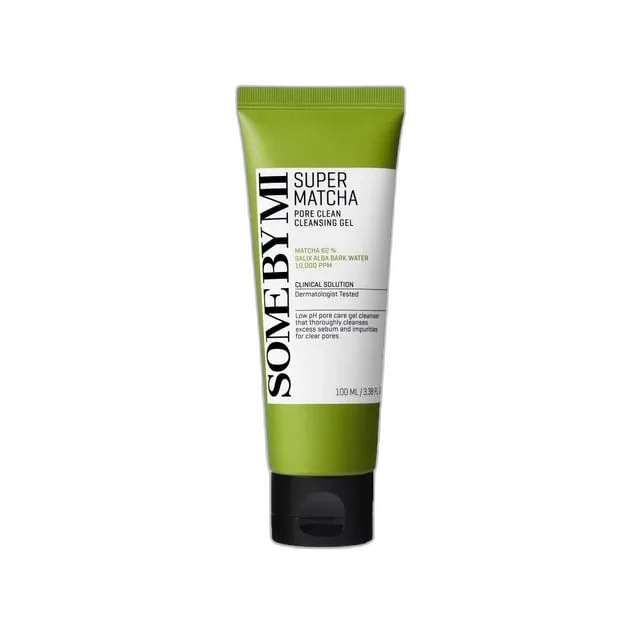
Super Matcha Pore Clean Cleansing Gel
Oily Skin Favorite
 Verified reviewer
Pros & cons.
- +Matcha used both as extract and leaf powder for real efficacy
- +Willow bark adds gentle BHA-adjacent pore clearing
- +Mild surfactant base that doesn't strip the barrier
- +pH-balanced for twice-daily use
- +Noticeable reduction in midday shine and surface congestion
- +Accessible K-beauty pricing for the ingredient quality
- +Plays well with other actives in the routine
- −Added fragrance unsuitable for fragrance-sensitive users
- −Fine matcha particles may feel gritty to some
- −Too clarifying for dry or dehydrated skin types
- −Not a heavy-duty makeup remover on its own
The full review.
The phrase ‘matcha cleanser’ tends to sound more like a wellness Instagram caption than a serious skincare category. Green powder, aesthetic packaging, vague promises about antioxidants. It’s easy to dismiss, which is what makes Some By Mi’s Super Matcha Pore Clean Cleansing Gel quietly interesting — because when you actually read the INCI, the matcha here is doing real work, and the supporting formulation around it is more considered than the marketing suggests.
Camellia sinensis leaf extract shows up twice: once as a water-soluble extract and once as finely milled leaf powder. The extract contributes the soluble catechins and EGCG that have a real body of research behind them for antioxidant and sebum-regulating activity. The powder acts as a mild physical component — not a gritty scrub, but enough fine particulate to help polish sebum out of pore openings during the contact time of cleansing. Put bluntly, you can see the green specks in the gel, and after a minute of massaging they’re doing something your average foaming cleanser isn’t.
The second headline ingredient is willow bark extract. Willow contains salicin, a natural precursor to salicylic acid, and while it’s nowhere near as potent as a true BHA treatment product, its inclusion here adds a gentle anti-congestion edge that fits the matcha theme. You won’t get the kind of chemical exfoliation a dedicated BHA toner delivers, but as a cleanser add-on, it tips the product toward clearer pores over time.
What keeps this from being a drying, acne-angled disaster is the surfactant base. Sodium lauroyl methyl isethionate and cocamidopropyl betaine do the lifting, supported by lauryl glucoside — a combination that’s among the milder foaming systems in K-beauty. The pH sits around 5.5, comfortably inside the range your skin actually wants, so you get real cleansing without the post-wash tightness that plagued drugstore gel cleansers for decades. A small dose of centella asiatica and panthenol provides a soothing buffer during the short contact window.
On the skin, it feels like a serious gel cleanser. The deep green color and herbal aroma give it a spa-shelf presence, and it foams into a soft, light lather you wouldn’t expect from its consistency. The fragrance is the one thing worth flagging — it’s added, it’s noticeable, and anyone sensitive to scented cleansers should know that upfront. It’s an herbal, clean fragrance rather than floral or sweet, but it is fragrance.
Where this product shines is on oily and combination skin that feels congested by the end of the day. It clears excess sebum without the tightness of clay-heavy cleansers, and over two or three weeks of consistent use, the pore-surface improvements are visible rather than imagined. It also pairs unusually well with whatever you put on after — retinol, vitamin C, BHA toner — because it doesn’t leave behind a residue or disrupt your skin’s pH.
It’s not the right cleanser for everyone. Dry skin types are going to find it under-hydrating relative to a creamy or milky wash, and anyone with a truly reactive barrier should weigh the fragrance and the matcha particles carefully. But for the oily, combination, and congestion-prone crowd — which is a meaningful share of K-beauty’s actual audience — it earns its spot in the routine at a price that undercuts most of its Western equivalents. Some By Mi remains an emerging brand without the deep clinical roots of the derm-pharmacy category, but as a formulation choice, this gel holds up to scrutiny.
Ingredient analysis.
Full INCI list · pH 5.5
Water, Sodium Lauroyl Methyl Isethionate, Cocamidopropyl Betaine, Glycerin, Lauryl Glucoside, Sodium Methyl Cocoyl Taurate, Sorbitol, Disodium Cocoyl Glutamate, Acrylates Copolymer, PEG-120 Methyl Glucose Dioleate, Camellia Sinensis Leaf Extract, Camellia Sinensis Leaf Powder, Salix Alba (Willow) Bark Extract, Chamomilla Recutita (Matricaria) Flower Extract, Centella Asiatica Extract, Panthenol, Allantoin, Sodium Cocoyl Glutamate, Citric Acid, Sodium Chloride, Disodium EDTA, 1,2-Hexanediol, Ethylhexylglycerin, Fragrance
Skin match.
The science.
The Science
Matcha works because Camellia sinensis has polyphenols, specifically epigallocatechin gallate (EGCG). Research in the Journal of Investigative Dermatology and Archives of Dermatological Research shows EGCG has antioxidant activity and measurable effects on sebum production and inflammation in acne-prone skin. Most studies use leave-on products instead of cleansers, but this gel uses both water-soluble extract and fine leaf powder to increase contact time for the actives.
Willow bark has salicin, which converts to salicylic acid in vivo. Its efficacy in cosmetics is debated—salicin is not a direct BHA and conversion efficiency is limited during short cleansing windows—but it provides gentle anti-congestion and anti-inflammatory effects that fit this cleanser's design.
The surfactant system is the more interesting formulation choice. Dermatological irritation studies rank Sodium lauroyl methyl isethionate among the mildest anionic surfactants, much gentler than sulfate-based systems. Combined with cocamidopropyl betaine and lauryl glucoside, this base foams well without disrupting stratum corneum lipids. This matters for oily skin users who often over-strip their barriers with harsher cleansers. Centella and panthenol further buffer the short contact time, making this one of the better-designed gel cleansers in its price range.
Dermatologist Perspective
Dermatologists usually recommend gentle, pH-balanced cleansers for oily and acne-prone skin; this formulation meets those criteria. Board-certified dermatologists note that while willow bark and green tea have limited direct clinical evidence as cleansers, they do no harm in a mild surfactant base and may add modest benefit over time. This cleanser type is a common suggestion for simple routines for oily combination skin that cannot tolerate strong medicated washes. The only clinical caution dermatologists flag is the added fragrance, which can cause problems for patients with sensitive skin or rosacea.
Where it fits in your routine.
Pump a small amount into wet hands and lather between palms for a few seconds. Massage onto damp skin in circular motions for 30-60 seconds so the matcha particles and willow bark work on the T-zone and congested areas. Rinse thoroughly with lukewarm water. Use this as a single cleanse on oily skin in AM. In PM, use it as the second step after an oil cleanser to remove sunscreen and makeup. Avoid the immediate eye area.
At around fifteen dollars for 100ml, this is an affordable K-beauty option. It costs less than boutique pore cleansers and matches mass-market drugstore prices, but uses better ingredients. It is not the cheapest gel cleanser available, but the matcha-willow bark combination and mild surfactant base justify the small premium over generic drugstore gels. For oily and combination skin users, the value is high — the formulation addresses its specific market category.
Oily and combination skin types with midday shine, visible pore congestion, or surface blackheads use this. It works for K-beauty fans seeking an alternative to clay-heavy pore cleansers and those wanting a mild, clarifying gel.
Dry and dehydrated skin types will find this too clarifying; use a cream or milky cleanser instead. Fragrance-sensitive users and those with reactive conditions like rosacea should also pass, as the added fragrance and physical matcha particles may irritate a compromised barrier.
Product details.
Dark green translucent gel with visible matcha particles
Fresh herbal green tea aroma
Green plastic squeeze tube
The first use feels refreshing and slightly cooling. Skin feels cleaner and matte after rinsing — users with drier skin may feel light tightness. Expect shine control improvements within the first week.
2-3 months with twice-daily face use
12 months
All Year
The backstory.
Some By Mi developed this cleanser as part of its 'Super Matcha' pore line, following the viral success of the AHA-BHA-PHA Miracle cleanser. The brand leaned into matcha at a moment when Korean skincare was embracing food-sourced actives for oily skin.
About Some By Mi
Emerging Brand (2–5 years)Some By Mi launched in 2017 with the AHA-BHA-PHA Miracle line. The brand makes acne-targeted K-beauty formulations and uses accessible pricing to build credibility, though long-term independent clinical validation remains limited.
Common myths.
Matcha in skincare is just a marketing gimmick.
Matcha contains EGCG and catechins that provide antioxidant and sebum-regulating effects. This formula uses both extract and leaf powder to deliver them during cleansing.
FAQ.
Does this actually shrink pores?
No cleanser permanently shrinks pores. This one uses willow bark and matcha powder to clear sebum and dead skin from pore openings, which visually minimizes pore appearance after a few weeks of consistent use.
Is it fragrance-free?
No — it has added fragrance. This matters if you have sensitive or reactive skin. The scent is herbal, not floral or perfumed, but it is there.
Can I use this if I'm also using BHA toner?
Yes, these two products complement each other. This gel cleanses to clear pores gently, while a BHA toner provides stronger chemical exfoliation on dry skin afterward. Watch for dryness if your skin is sensitive.
Does it work as a makeup remover?
This gel removes light makeup and sunscreen. Use an oil cleanser first, then this gel, for heavy waterproof makeup or SPF.
What the community says.
"Genuinely de-greases without stripping"
"Smells clean and herbal"
"Foams nicely for a gel"
"Leaves skin feeling polished"
"Fragrance is noticeable"
"Tiny matcha particles may feel gritty"
"Not ideal for dry skin"
People also looked at.