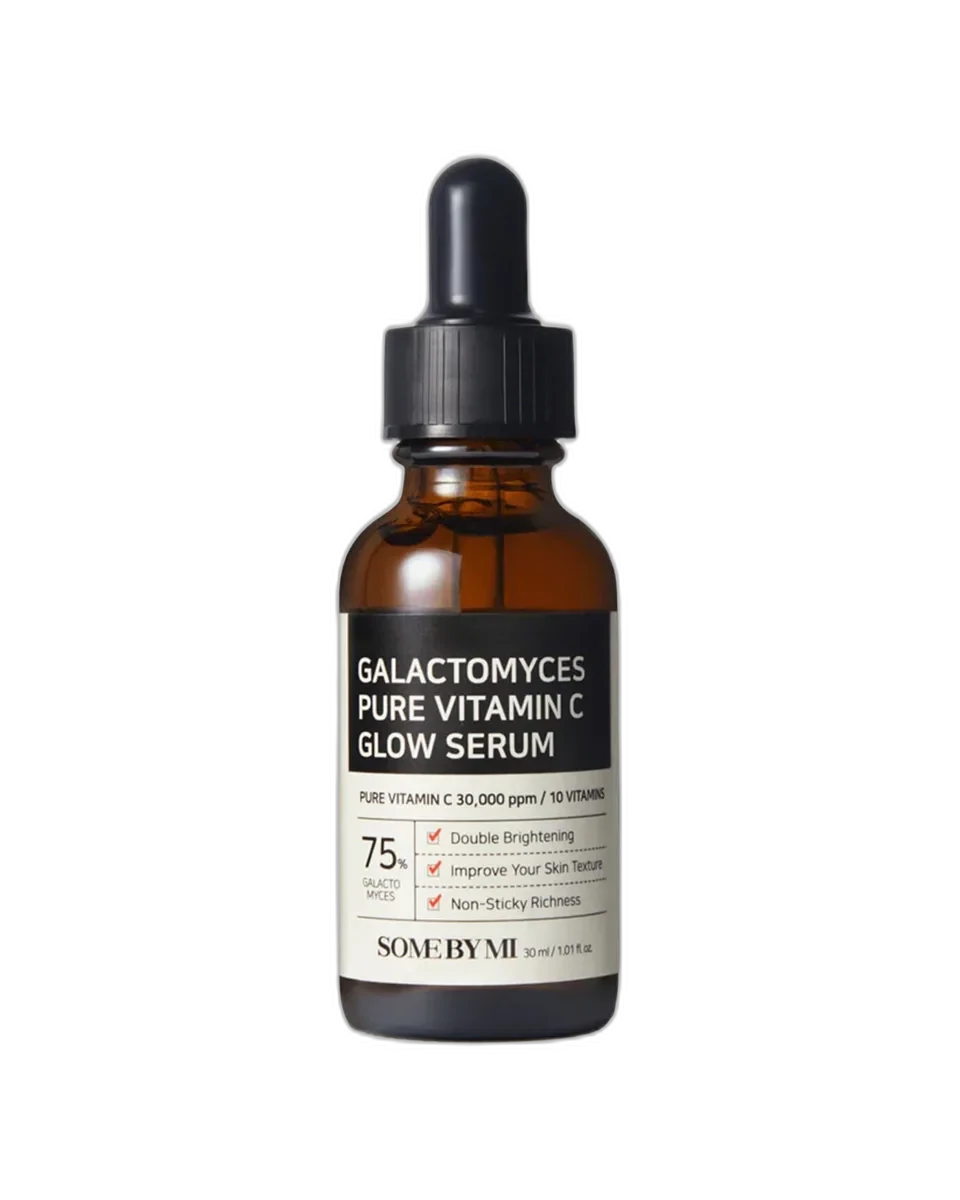
Galactomyces Pure Vitamin C Glow Serum
K-Beauty Brightening Gem
 Verified reviewer
Pros & cons.
- +75% galactomyces ferment filtrate base provides K-beauty-style radiance and nutrient delivery
- +Dual vitamin C system (ascorbic acid + sodium ascorbyl phosphate) for layered brightening activity
- +Niacinamide adds a complementary brightening pathway through melanosome transfer inhibition
- +Exceptional value at ~$22 for a ferment-based, multi-active vitamin C serum
- +Adenosine and extensive botanical blend add anti-aging and antioxidant support
- +Lightweight, fast-absorbing texture delivers immediate glass-skin glow
- −Contains bergamot and lavender essential oils — unnecessary sensitizers in a vitamin C formula
- −Fragrance allergens (limonene, linalool) limit suitability for sensitive and reactive skin
- −Dropper bottle packaging is not optimal for protecting oxidation-prone ascorbic acid
- −3% ascorbic acid is moderate — those seeking aggressive pigment correction may want higher concentrations
- −Emerging brand with limited independent clinical validation of this specific product
The full review.
Skincare has a philosophical divide. Western vitamin C approaches are clinical, isolated, and high-concentration. Korean approaches embed actives in fermented, nutrient-rich bases that treat skin as an ecosystem rather than a chemistry problem. Some By Mi’s Galactomyces Pure Vitamin C Glow Serum sits at this intersection, making it an interesting vitamin C formulation for this price point.
The 75% galactomyces ferment filtrate base is more than a solvent. Galactomyces is a yeast that produces a filtrate rich in amino acids, peptides, vitamins, and organic acids—the same ingredient category in SK-II’s Facial Treatment Essence, but at a lower price. In this serum, the galactomyces provides a nutrient-dense foundation for skin clarity and radiance regardless of the vitamin C. Users often report an immediate “glass skin” glow that lasts even before the vitamin C affects pigmentation.
The vitamin C system is nuanced. The primary active is 3% (30,000 ppm) pure L-ascorbic acid. This is moderate for a vitamin C serum but provides meaningful brightening and antioxidant activity. Sodium ascorbyl phosphate acts as a secondary vitamin C form, which elevates the formula. This more stable derivative provides brightening activity even as the ascorbic acid oxidizes during the day. This two-tier approach is smarter than loading ascorbic acid, which increases irritation without increasing long-term efficacy.
Niacinamide uses a different brightening pathway. While ascorbic acid inhibits tyrosinase (the enzyme producing melanin), niacinamide blocks melanosome transfer (the delivery of melanin to skin cells). Using both mechanisms simultaneously attacks pigmentation from two directions—production and distribution—which can produce faster results than either ingredient alone.
The supporting ingredients follow K-beauty trends. The formula includes adenosine for anti-wrinkle activity, allantoin for soothing, propolis extract for antioxidant support, a berry and botanical extract blend for antioxidant coverage, and B vitamins (pyridoxine, biotin, folic acid, cyanocobalamin, thiamine). Whether these low-concentration botanicals meaningfully affect efficacy is debatable, but they align with the Korean philosophy of nourishing skin with broad-spectrum nutrients.
One caveat: the formula contains bergamot and lavender essential oils. This is a drawback in a serum containing ascorbic acid, a known sensitizer at low pH. Essential oils add fragrance allergens (limonene, linalool) and potential phototoxicity; bergamot specifically contains bergapten, a known photosensitizer, unless the oil is defurocoumarinized. For a brightening product intended for daily use, this inclusion limits the audience. If you have sensitive skin, rosacea, or a compromised barrier, look elsewhere.
The texture is a lightweight serum with a golden-amber, almost amber-honey hue, that absorbs quickly without stickiness. A light herbal-citrus scent from the essential oils fades within a minute. The finish is dewy but not greasy, creating the glass-skin effect common in K-beauty.
At approximately $22 for 30 mL, the price-to-quality ratio is impressive. You get a galactomyces-based formula with dual vitamin C forms, niacinamide, adenosine, and an extensive botanical roster for less than most single-ingredient vitamin C serums from Western clinical brands. The brand is emerging, so it has less independent clinical validation, but the ingredient quality is clear.
The packaging is a standard dark dropper bottle. It is adequate but not optimal for protecting ascorbic acid from oxidation; an airless pump would be better. Monitor the serum’s color; if it shifts from golden to dark brown, it has degraded.
Some By Mi built its reputation on the AHA BHA PHA 30 Days Miracle line, and this vitamin C serum shows similar formula-forward thinking at an accessible price. If the brand reformulates to remove the essential oils, it would be an easy recommendation for nearly everyone. Currently, it is an excellent brightening serum for those not sensitive to fragrance compounds, but a frustrating near-miss for those who are.
Formula
 ### Texture

 The texture is a lightweight serum with a golden-amber, almost amber-honey hue, that absorbs quickly without stickiness.

 ### Scent

 A light herbal-citrus scent from the essential oils fades within a minute.

 ### Packaging

 The packaging is a standard dark dropper bottle. It is adequate but not optimal for protecting ascorbic acid from oxidation. An airless pump would be better. Monitor the serum's color; if it shifts from golden to dark brown, it has degraded.

 ### Best for

 *   Brightening
 *   Antioxidant protection

 ### Works for

 *   Most skin types, if not sensitive to fragrance compounds

 ### Not ideal for

 *   Sensitive skin
 *   Rosacea
* Compromised barrierIngredient analysis.
Full INCI list
Galactomyces Ferment Filtrate, Dipropylene Glycol, Glycerin, Ascorbic Acid, Butylene Glycol, 1,2-Hexanediol, Niacinamide, Tromethamine, Water, Trehalose, C12-14 Pareth-12, Allantoin, Hydroxyethylcellulose, Xanthan Gum, Ethylhexylglycerin, Adenosine, Citrus Aurantium Bergamia (Bergamot) Fruit Oil, Hydrogenated Lecithin, Glyceryl Acrylate/Acrylic Acid Copolymer, Sodium Hyaluronate, PVM/MA Copolymer, Polyglyceryl-10 Stearate, Lavandula Angustifolia (Lavender) Oil, Panthenol, Sodium Ascorbyl Phosphate, Phenylethyl Resorcinol, Propolis Extract, Aronia Melanocarpa Fruit Extract, Bambusa Vulgaris Extract, Aspalathus Linearis Extract, Saccharide Hydrolysate, Maltodextrin, Ficus Carica (Fig) Fruit Extract, Phoenix Dactylifera (Date) Fruit Extract, Tuber Magnatum Extract, Pyridoxine, Houttuynia Cordata Extract, Folic Acid, Biotin, Opuntia Ficus-Indica Extract, Opuntia Coccinellifera Fruit Extract, Caprylic/Capric Triglyceride, Adansonia Digitata Seed Extract, Leuconostoc/Radish Root Ferment Filtrate, Sparassis Crispa Extract, Calendula Officinalis Flower Extract, Brassica Oleracea Italica (Broccoli) Extract, Tocopherol, Cyanocobalamin, Vaccinium Myrtillus Fruit Extract, Vaccinium Macrocarpon (Cranberry) Fruit Extract, Vaccinium Angustifolium (Blueberry) Fruit Extract, Rubus Idaeus (Raspberry) Fruit Extract, Rubus Fruticosus (Blackberry) Fruit Extract, Ribes Nigrum (Black Currant) Fruit Extract, Euterpe Oleracea Fruit Extract, Spirulina Maxima Extract, Thiamine HCl, Linoleic Acid, Inositol, Astaxanthin, Caramel, Linalool, Limonene
Skin match.
The science.
The Science
The galactomyces ferment filtrate base uses research on yeast-derived bioactives. Galactomyces fermentation produces a filtrate with natural vitamins, amino acids, and organic acids that show skin-conditioning and barrier-supporting properties in several studies. Much published research on galactomyces is brand-funded (mostly by SK-II), but independent studies show yeast-fermented extracts improve skin hydration and antioxidant defense.
L-ascorbic acid at 3% sits within the effective range established by dermatological research. Studies show concentrations as low as 0.6% ascorbic acid provide measurable antioxidant protection, with efficacy plateauing around 20%. This moderate concentration reduces pH-related irritation risk while still providing tyrosinase inhibition for brightening and free radical neutralization for photoprotection.
The dual vitamin C approach — combining ascorbic acid with sodium ascorbyl phosphate — has pharmacological logic. Phosphatases in the skin enzymatically convert sodium ascorbyl phosphate to ascorbic acid, providing a slower-release vitamin C delivery that extends activity beyond the rapid initial burst of free ascorbic acid. A study in the Journal of Cosmetic Dermatology found sodium ascorbyl phosphate is effective against acne-related inflammation and oxidative stress at concentrations as low as 1%.
Niacinamide's synergy with vitamin C for pigmentation is well-supported. Vitamin C inhibits melanin synthesis at the tyrosinase level, while niacinamide reduces melanosome transfer from melanocytes to keratinocytes — blocking pigmentation through a separate mechanism. Research in the British Journal of Dermatology confirmed 5% niacinamide significantly reduced hyperpigmentation compared to vehicle over 8 weeks.
Dermatologist Perspective
Board-certified dermatologists generally view galactomyces-based formulations as promising for skin conditioning and hydration support, though the evidence base is less robust than for standalone vitamin C serums. Dermatologists note the 3% ascorbic acid concentration in this formula is a reasonable starting point for vitamin C use and works for mild to moderate pigmentation concerns. However, dermatologists consistently flag the bergamot oil as problematic — bergapten, a furanocoumarin in bergamot, is a known photosensitizer that can cause phytophotodermatitis. Dermatologists recommend confirming the bergamot oil used is bergapten-free (FCF grade) before daily use, particularly in sun-exposed routines.
Where it fits in your routine.
Apply 3-5 drops to clean, dry skin after cleansing and toning, morning or evening. Pat it into the face and neck until absorbed. Use moisturizer next. In the morning, apply SPF 30+ sunscreen afterward. If you have sensitive skin, use it every other day first and check for irritation before daily use. Store in a cool, dark place to preserve the ascorbic acid.
At about $22 for 30 mL, this serum offers great value. This galactomyces-based vitamin C serum contains niacinamide, adenosine, and a second vitamin C derivative. For this price, it captures the K-beauty value proposition in one bottle. Premium K-beauty galactomyces essences cost $50-200 for similar volumes, while Western clinical vitamin C serums start at $30-40 with simpler formulations. As an emerging brand, it lacks a heritage tax, and the ingredient list outperforms the price.
K-beauty enthusiasts want an affordable ferment-based brightening serum. It works for normal, combination, or oily skin to target dullness, mild hyperpigmentation, and early signs of aging without the irritation of high-concentration vitamin C.
The essential oils and ascorbic acid combination affects people with sensitive, reactive, or rosacea-prone skin. It also fails those with severe hyperpigmentation needing higher-concentration vitamin C, or anyone who avoids fragrance compounds in their skincare.
Product details.
This lightweight, slightly viscous serum has a golden-amber hue from the galactomyces and caramel. It absorbs quickly without stickiness and leaves a dewy, glass-skin finish.
Bergamot and lavender essential oils provide a light herbal-citrus scent. The scent is noticeable during application but fades within a minute.
The dark dropper bottle protects the ascorbic acid from light degradation. This standard K-beauty serum packaging works but offers limited protection for a vitamin C formula.
The galactomyces base provides an immediate glow and hydrated feel. The ascorbic acid causes mild tingling for some users on first use; this is normal. Essential oils cause more persistent stinging or redness in users with sensitive skin. The serum has a visible golden color but does not tint the skin.
1. 5-2 months with daily use of 3-5 drops
6 months
All Year
The backstory.
Some By Mi built its reputation on the AHA BHA PHA 30 Days Miracle line before expanding into vitamin C territory with this serum. The galactomyces base reflects the brand's K-beauty roots — fermented ingredients are a cornerstone of Korean skincare philosophy — while the vitamin C concentration targets the global demand for clinical-level brightening at accessible prices.
About Some By Mi
Emerging Brand (2–5 years)Some By Mi launched in South Korea around 2016 and grew internationally via its AHA BHA PHA 30 Days Miracle line. The brand uses a 'cleanical' philosophy that combines clean ingredients with clinical results, but independent clinical validation for its specific products is limited compared to established K-beauty brands.
FAQ.
Is Some By Mi Vitamin C Glow Serum good for sensitive skin?
Use with caution. The 3% ascorbic acid concentration is moderate, but this serum contains bergamot and lavender essential oils plus linalool and limonene — all potential sensitizers. If your skin is reactive, patch test on your inner arm for several days before face application. Users with eczema, rosacea, or compromised barriers should choose a fragrance-free vitamin C alternative.
Does this serum contain real L-ascorbic acid or a derivative?
Both. The primary vitamin C is 3% pure L-ascorbic acid (ascorbic acid), the most potent and direct-acting form. It also uses sodium ascorbyl phosphate, a more stable derivative. This dual vitamin C system provides immediate potency and sustained activity.
What does the galactomyces ferment filtrate do in this serum?
Galactomyces ferment filtrate makes up 75% of the formula. This yeast-derived fermented ingredient contains amino acids, vitamins, and minerals. It provides a nutrient-dense base that improves skin clarity, hydration, and radiance—the same ingredient type in luxury K-beauty essences like SK-II's Pitera. This creates the serum's signature 'glow' effect, separate from the vitamin C brightening.
How should I store Some By Mi Vitamin C Serum?
Store in a cool, dark place away from heat and direct sunlight. Ascorbic acid oxidizes when it hits light and air. If the serum turns dark brown or smells metallic, it has degraded and you must replace it. Use it within 3-4 months of opening to maximize effectiveness, even though the PAO is 6 months.
Can I use this serum with retinol?
Yes, but not simultaneously. Use this vitamin C serum in the morning for antioxidant protection and brightening, and your retinol at night. Both ingredients work at low pH and cause irritation if layered directly. The AM/PM split maximizes benefits and minimizes irritation risk.
What the community says.
"Noticeable brightening and glow within weeks"
"Affordable vitamin C serum for the quality"
"Lightweight texture absorbs quickly"
"Galactomyces base provides extra hydration and radiance"
"Contains essential oils (bergamot, lavender) that can irritate sensitive skin"
"Some users experience breakouts during initial use"
"Ascorbic acid formula can sting on compromised skin"
"Packaging could better protect the oxidation-prone vitamin C"
Featured in.
People also looked at.