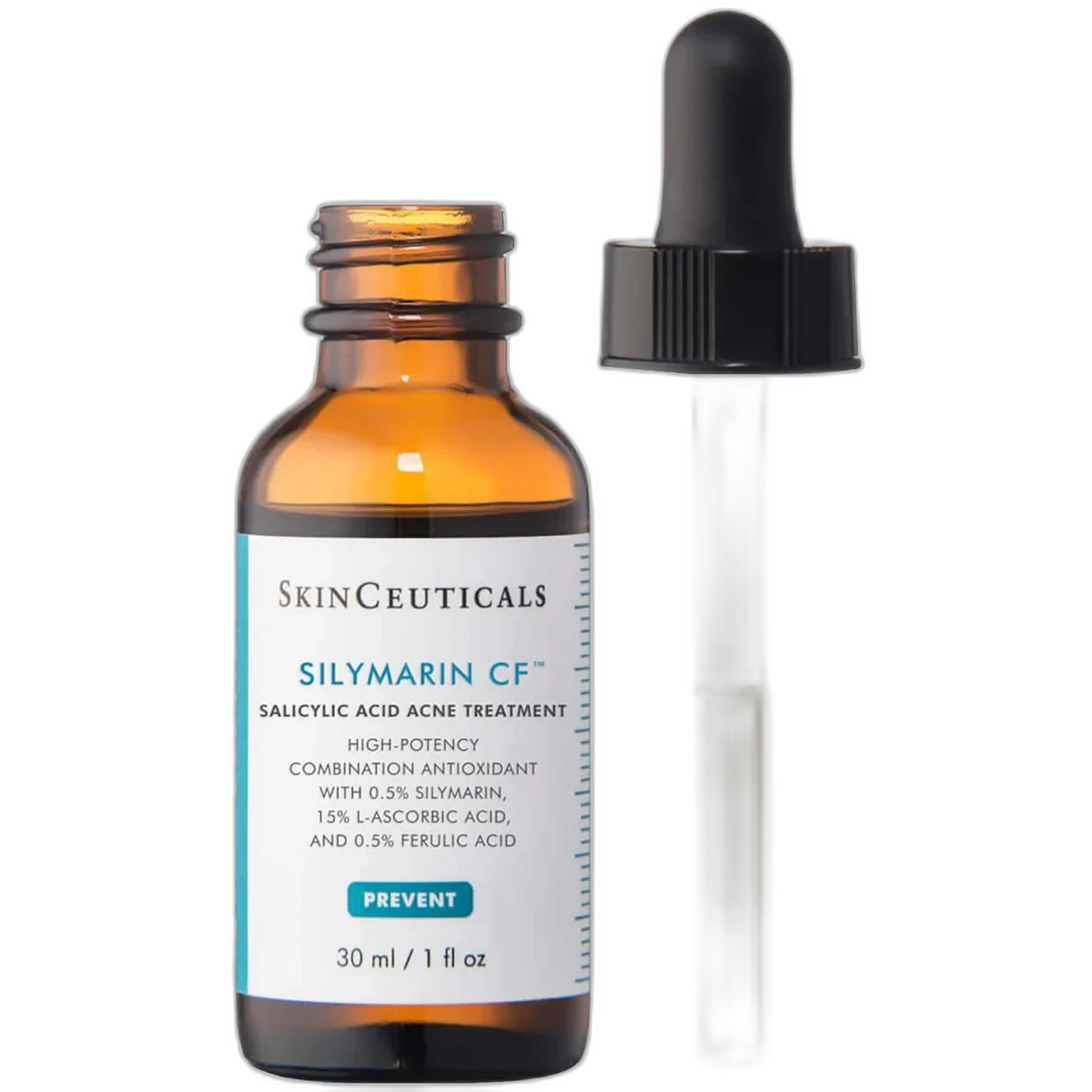
Silymarin CF
Oily-Skin Vitamin C Breakthrough
 Verified reviewer
Pros & cons.
- +First SkinCeuticals vitamin C designed specifically for oily and acne-prone skin
- +Unique silymarin mechanism targets sebum oxidation linked to acne formation
- +Oil-free aqueous vehicle genuinely lighter than C E Ferulic
- +Added 0.5% salicylic acid provides mild pore-clearing support
- +Visible reduction in breakouts and post-acne pigmentation with consistent use
- +Backed by brand-sponsored clinical research on oily-skin efficacy
- −$182 for 1 oz is a significant financial commitment
- −Not appropriate for sensitive, dry, or reactive skin
- −Salicylic acid inclusion makes pregnancy use less straightforward
- −L-ascorbic acid oxidizes within 4-6 months — demands consistent use
- −Slightly medicinal scent can be off-putting for some users
The full review.
For nearly two decades, dermatology offices gave oily-skin and acne-prone patients C E Ferulic with a caveat. It was the best-formulated L-ascorbic acid serum available, backed by clinical evidence and dermatology-office provenance. It worked, but its vehicle was thicker than ideal for very oily complexions and sometimes caused congestion in breakout-prone users. Dermatologists recommended it because alternatives were lower-quality vitamin C products lacking the same formulation stability; users accepted the tradeoff to get a real 15% L-ascorbic acid serum. In 2020, SkinCeuticals released the oily-skin version the audience requested.
Silymarin CF uses the same fundamental approach as C E Ferulic — 15% L-ascorbic acid at pH 3.2, stabilized with 0.5% ferulic acid — but replaces vitamin E with two actives better for oily skin. The main addition is 0.5% silymarin, a flavonoid complex from milk thistle. Laboratory research shows silymarin prevents the oxidation of squalene, the primary lipid in human sebum. This matters because oxidized squalene drives comedogenesis and acne formation — a chemical pathway that turns oily skin into acne-prone skin. By preventing this oxidation, Silymarin CF hits a root-cause mechanism most antioxidant serums miss. The formula also includes 0.5% salicylic acid for mild pore-clearing and uses an oil-free aqueous vehicle that feels lighter than C E Ferulic on oily skin.
Application is minimalist. The serum is a thin, water-like liquid with the acidic scent of L-ascorbic acid and a faint medicinal note from the salicylic acid. It spreads in one pass and absorbs in thirty to sixty seconds without residue. First-time users, especially those with sensitive oily skin, may feel brief stinging from the low pH — this is normal and usually stops within the first week as skin acclimates. The serum starts pale yellow and deepens over months; this color change signals oxidation and tells you when to replace the bottle.
Results follow the standard slow-and-steady vitamin C curve, plus oily-skin benefits. The first few weeks show subtle improvements in shine and slight textural smoothing from the salicylic acid. By week four to six, many users see less congestion and breakouts as silymarin and salicylic acid address sebum oxidation and pore clearance. By month three, vitamin C benefits appear: post-inflammatory pigmentation from old acne fades, tone evens, and long-term photoprotection becomes apparent. For oily skin using morning vitamin C and evening retinoids, this combination produces the compound effect that justifies dermatology-office skincare costs.
The limitations are standard for this tier. One hundred and eighty-two dollars for a one-ounce bottle is premium pricing, nearly identical to C E Ferulic. Users with dry or sensitive skin should choose softer options — Silymarin CF’s low pH, salicylic acid, and oil-free vehicle target less richness, not more gentleness. The medicinal scent may bother users expecting a neutral experience. Also, like all L-ascorbic acid formulas, the four-to-six-month open-bottle window requires daily use to get full value; sporadic use wastes money as the serum oxidizes.
Board-certified dermatologists recommend Silymarin CF for oily and acne-prone patients wanting the SkinCeuticals vitamin C system optimized for their skin type. It is valuable for patients with post-inflammatory pigmentation from past acne, combination-oily skin with photoaging concerns, and anyone using a morning vitamin C and evening retinoid routine who needs a formula that respects oily skin. If you fit this profile, this is a thoughtfully formulated vitamin C serum worth the premium. For dry, sensitive, or pregnant users, C E Ferulic or Serum 10 remains the appropriate SkinCeuticals choice.
Ingredient analysis.
Full INCI list · pH 3.2
Water/Aqua, Ascorbic Acid, Dipropylene Glycol, Propylene Glycol, Ethoxydiglycol, Glycerin, Laureth-23, Silybum Marianum (Milk Thistle) Extract, Salicylic Acid, Ferulic Acid, Panthenol, Sodium Hyaluronate, Triethanolamine, Phenoxyethanol, BHT
Skin match.
The science.
The Science
Silymarin CF uses the Duke Antioxidant Patent parameters found in the SkinCeuticals L-ascorbic acid line — 15% concentration at pH below 3.5 — but adds a mechanism for oily and acne-prone skin. Silymarin is a flavonoid complex from Silybum marianum (milk thistle) containing silybin, silydianin, and silychristin. Lab research shows silymarin prevents squalene peroxidation, the main lipid in human sebum. Clinical literature identifies oxidized squalene as a cause of comedogenesis and acne because it affects keratinization and inflammation in pilosebaceous units. Silymarin targets this oxidation process, reaching an acne pathway most topical actives miss. The 0.5% salicylic acid provides mild keratolytic and comedolytic activity to address pore congestion in oily skin. 0.5% ferulic acid stabilizes the vitamin C and roughly doubles its photoprotective capacity against UV-induced dimer formation, per peer-reviewed cosmetic dermatology literature. SkinCeuticals-sponsored clinical research shows measurable improvements in oil production, breakout frequency, and post-inflammatory pigmentation in oily and acne-prone subjects over 12-week study periods. Independent clinical evidence for topical silymarin is growing but remains thinner than for vitamin C or retinoids, placing silymarin in the 'promising' rather than 'definitively proven' evidence tier. The formulation uses a multi-mechanism approach for a skin type historically underserved by premium vitamin C products.
Dermatologist Perspective
Dermatologists often recommend Silymarin CF to oily and acne-prone patients seeking a premium daily vitamin C serum for their skin type. Board-certified dermatologists value this SkinCeuticals vitamin C option for patients who previously had to choose between the thicker C E Ferulic or less thoroughly formulated alternatives. It works for patients with active acne and hyperpigmentation, combination-oily skin with photoaging, or anyone in the SkinCeuticals ecosystem for whom C E Ferulic is a poor match. Dermatologists suggest other products for dry, sensitive, or rosacea-prone skin, for budget constraints, or when acne is severe enough to require prescription management instead of a supporting antioxidant serum.
Guidance
Where it fits in your routine.
Apply 4-5 drops to clean, dry skin every morning as your first treatment step. Pat the serum into your face, neck, and décolletage. Wait 60-90 seconds before you apply moisturizer and sunscreen. Use it daily, but users with very sensitive oily skin can start every other day and build up. Do not layer this with niacinamide or benzoyl peroxide in the same routine. Store the bottle away from direct sunlight and heat. Replace the bottle within 4-6 months of opening, or sooner if the serum turns deep amber. Always use daily broad-spectrum sunscreen — vitamin C increases photoprotection but does not replace it.
Silymarin CF costs $182 for one fluid ounce, the same price as C E Ferulic and Resveratrol B E in the SkinCeuticals line. One bottle lasts a daily user three to four months, making the annual cost $500 to $700. Timeless, The Ordinary, and Naturium offer cheaper vitamin C for oily skin, but they lack the specific silymarin-plus-vitamin-C mechanism in this formulation. Silymarin CF works for oily or acne-prone patients who want the anti-sebum-oxidation approach and can afford the premium price. The value is lower for budget-conscious users or those whose oily skin responds to simpler vitamin C formulations. Silymarin CF only comes in one size, so no larger option lowers the per-ounce cost.
Oily or acne-prone skin needs a premium vitamin C serum made for their skin type. It works for patients with post-inflammatory pigmentation from acne, combination-oily skin with sun damage, and anyone in the SkinCeuticals ecosystem who finds the C E Ferulic vehicle too thick.
Choose C E Ferulic, Serum 10, or a gentler vitamin C alternative if you have dry, sensitive, or reactive skin. Pregnant patients wanting vitamin C should use Serum 10 or C E Ferulic to avoid salicylic acid. Other brands offer cheaper vitamin C for oily skin, but they lack the specific silymarin mechanism.
Product details.
Thin, oil-free aqueous serum that absorbs in 30-60 seconds
Slightly medicinal from the L-ascorbic acid and salicylic acid
Amber glass bottle with dropper
Dispenses as a thin, water-like serum with a characteristic L-ascorbic acid scent. It absorbs almost immediately and leaves no tackiness. New users may feel brief stinging from the low pH — this usually stops within the first week of use. The color shifts from pale yellow to amber over months of exposure, showing gradual oxidation.
3-4 months with daily single-use application
6 months
All Year
The backstory.
Silymarin CF launched in 2020 as the long-awaited oily-skin counterpart to SkinCeuticals' flagship C E Ferulic. For years, dermatologists had been recommending C E Ferulic to oily-skin patients despite its slightly richer vehicle, because no dedicated oily-skin version existed in the line. The brand developed Silymarin CF specifically to fill this gap, using silymarin — a milk thistle flavonoid previously used mostly in liver supplements — because laboratory research demonstrated it was specifically effective at preventing the oxidation of squalene, the sebum lipid most implicated in acne.
About SkinCeuticals
Dr. Sheldon Pinnell's antioxidant research at Duke University founded SkinCeuticals in 1997. Silymarin CF continues that research lineage with a formulation for oily and acne-prone skin, supported by brand-sponsored clinical studies. *Established Brand (5–20 years)*
FAQ.
How is Silymarin CF different from C E Ferulic?
Both contain 15% L-ascorbic acid and 0.5% ferulic acid. C E Ferulic adds 1% vitamin E; Silymarin CF adds 0.5% silymarin (milk thistle extract) and 0.5% salicylic acid. C E Ferulic uses a thick vehicle for normal-to-dry skin; Silymarin CF uses an oil-free aqueous vehicle to target sebum oxidation.
Will it help with acne?
It can. The silymarin targets squalene oxidation, a sebum lipid linked to acne, while 0.5% salicylic acid provides mild pore-clearing activity. It does not replace acne medication but works as a daily supporting serum for oily and acne-prone skin.
How is it different from Phloretin CF?
Phloretin CF uses phloretin rather than silymarin. This makes Phloretin CF a general-purpose option for combination skin with sun damage and hyperpigmentation. Silymarin CF uses an anti-sebum-oxidation mechanism and salicylic acid for oily and acne-prone skin.
Can I use it with a retinoid?
Yes, but use them at different times: vitamin C in the morning and retinoid at night. Using both together increases irritation, especially for oily skin users who also use Silymarin CF's BHA component.
Is it safe during pregnancy?
Because this formula contains salicylic acid, pregnant patients should check with their OB. Most providers accept low-concentration topical salicylic acid during pregnancy, but some recommend avoiding it. To keep a SkinCeuticals vitamin C routine during pregnancy, C E Ferulic or Serum 10 are typically the safer picks.
Does it oxidize quickly?
Like all L-ascorbic acid formulas, Silymarin CF oxidizes after opening. Use a bottle within 4-6 months. If Silymarin CF turns deep amber or brown, the antioxidant activity has degraded. It is not harmful, but it won't deliver full benefits.
Can I use it with niacinamide?
Use them on the same face, but ideally at different times. Niacinamide works best in a PM routine; Silymarin CF is designed for morning use. Separating them avoids low-pH/niacinamide interaction concerns.
What the community says.
"Finally a SkinCeuticals vitamin C that feels right on oily skin"
"Noticeable reduction in breakouts over weeks"
"Lightweight oil-free texture that doesn't sit heavy"
"Works well under mattifying sunscreens"
"Very expensive"
"Scent is slightly medicinal"
"Can still sting for the first few uses"
"Not appropriate for sensitive skin"
People also looked at.