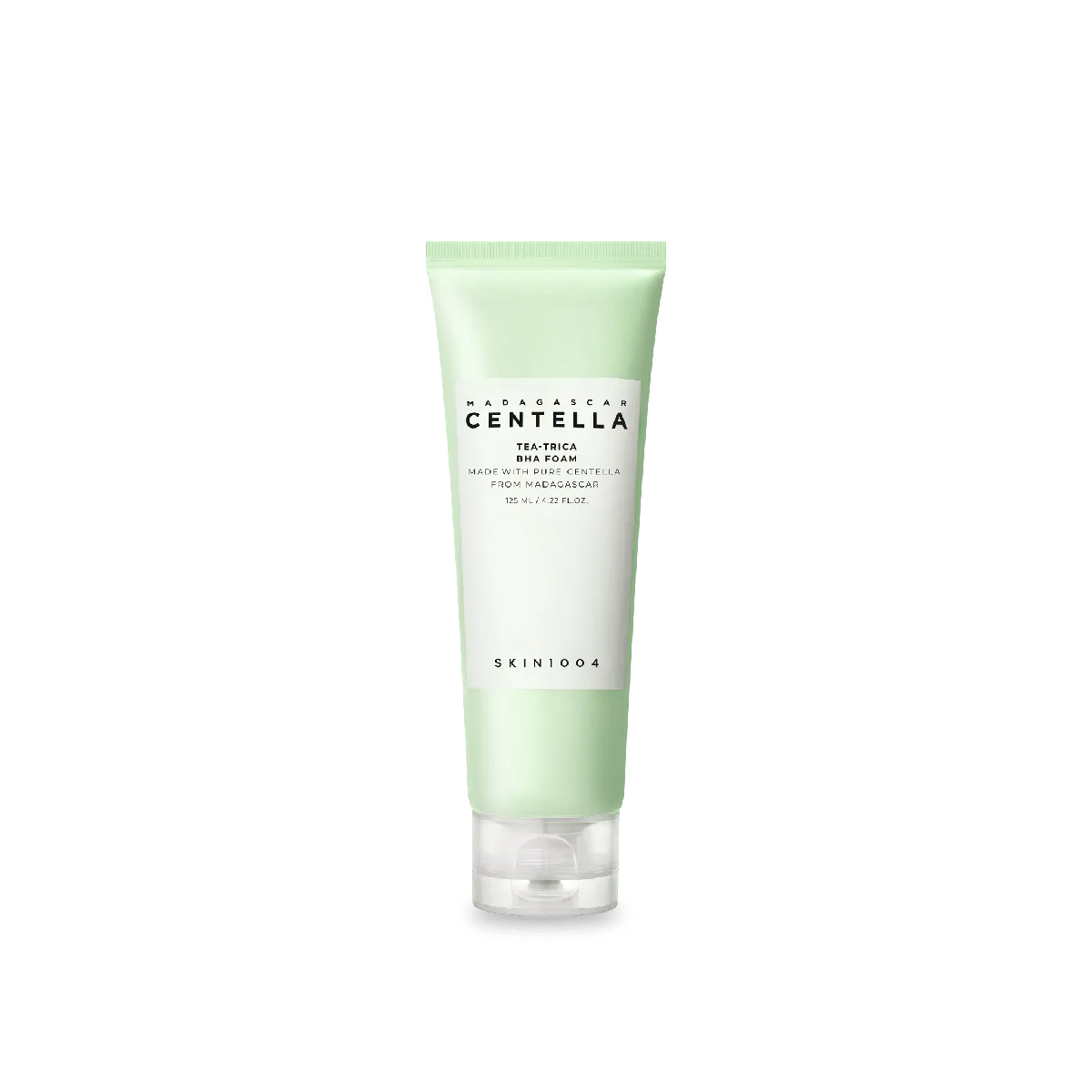
Tea-Trica BHA Foam
Oily Skin's Morning Cleanser
 Verified reviewer
Pros & cons.
- +Three-pronged acne approach: BHA for pore clearing, tea tree for bacteria, centella for inflammation
- +Dense satisfying foam that makes the cleansing step feel thorough and effective
- +0.45% salicylic acid is well-calibrated for a rinse-off format without over-exfoliating
- +Dual tea tree delivery (oil + water) provides antimicrobial action without excessive essential oil concentration
- +Leaves oily skin feeling genuinely clean without plasticky tightness
- +Competitive pricing at $13.50 for a multi-active BHA cleanser
- −Not suitable for dry, sensitive, or barrier-compromised skin types
- −Sodium olefin sulfonate is a stronger surfactant that may strip natural oils with twice-daily use
- −Tea tree essential oil scent will bother fragrance-sensitive users
- −BHA contact time in a rinse-off format limits exfoliation efficacy versus leave-on treatments
- −Contains myristic acid and oleic acid which are potentially comedogenic for some skin types
The full review.
SKIN1004’s brand identity shows a tension in the Tea-Trica BHA Foam. The company gained fame for soothing products; their centella ampoule and soothing cream calm and comfort skin without harm. The Tea-Trica line shifts SKIN1004 to offense. They include centella expertise, but this cleanser fights acne rather than just soothing it.
The formula uses myristic acid and stearic acid as the primary surfactant base, saponified with potassium hydroxide into a fatty acid soap that creates a dense, thick foam. This follows traditional K-beauty foam cleanser architecture, unlike the gentle amino acid or glucoside-based cleansers common for sensitive skin. Sodium C14-16 Olefin Sulfonate appears further down the list, adding cleansing power and marking this as a cleanser for oily skin rather than dry or compromised skin types.
Salicylic acid at 0.45% provides the BHA. This moderate concentration delivers pore-clearing exfoliation during the brief cleansing step. In a rinse-off product, this concentration works well: it dissolves sebaceous filaments and dead cell debris that clog pores without making a 60-second wash an aggressive exfoliating treatment. It acts as preventive maintenance instead of corrective therapy.
The ‘Tea-Trica’ name indicates the tea tree components: Melaleuca alternifolia leaf oil at 0.2% and tea tree leaf water at 0.09%. This dual delivery is smart formulation. The essential oil provides concentrated terpinen-4-ol, the monoterpene alcohol that gives tea tree its antibacterial activity against Propionibacterium (now Cutibacterium) acnes. The leaf water adds a gentler, hydrosol-based complement that supports antimicrobial action without increasing the essential oil concentration or irritation risk.
Centella asiatica extract is 0.2%, which is modest compared to SKIN1004’s soothing and moisturizing products. Contact time limits the centella’s role in a rinse-off cleanser, but its anti-inflammatory triterpenes still provide calming benefits during cleansing—especially for inflamed, active acne where washing can provoke redness.
Other botanical extracts complete the formula. Neem (Melia azadirachta) leaf and flower extracts add antimicrobial and anti-inflammatory properties; neem has centuries of use in Ayurvedic medicine and modern research supports its antibacterial activity. Hinoki cypress (Chamaecyparis obtusa) water and pine leaf extract add natural antiseptic properties common in Korean skincare.
The foam feels pleasant. A small squeeze lathers into thick, creamy bubbles that feel substantial on the skin. The tea tree scent is herbal, slightly medicinal, and cooling, but it is measured. Users who like spa-like aromatherapy will like it; fragrance-sensitive users should note this is a naturally scented product, not a fragrance-free one.
The cleanser leaves skin feeling clean. The T-zone feels oil-free without the plasticky tightness of harsher cleansers. However, users with dry or combination-leaning-dry skin will likely feel tightness, and twice-daily use can dry out even oily skin. Glycerin helps, but it cannot fully offset the surfactant strength on dry skin.
Results appear steadily over weeks of consistent use. Users see fewer new breakouts, cleaner pores, less oiliness during the day, and smoother T-zone texture. The combination of BHA, tea tree, and centella addresses three acne pillars—clogged pores, bacterial overgrowth, and inflammation—more comprehensively than most single-active cleansers.
The cleanser has predictable limitations. It is not for sensitive, dry, or barrier-compromised skin. The surfactant base is thorough, the BHA is active, and tea tree oil can sensitize some individuals. If your skin barrier is healthy and you want to manage oil and breakouts, use this cleanser. If your barrier is stressed, use SKIN1004’s centella products instead.
At $13.50 for 125ml, the value is competitive for a BHA foam cleanser with tea tree and centella. Most Western brands charge $18-25 for similar sizes. One tube lasts two to three months with daily use, making the monthly cost under $7.
Ingredient analysis.
Full INCI list
Water, Myristic Acid, Glycerin, Potassium Hydroxide, Stearic Acid, Glyceryl Monostearate, Propanediol, Lauryl Hydroxysultaine, Palmitic Acid, Sodium C14-16 Olefin Sulfonate, Potassium Benzoate, Salicylic Acid, Butylene Glycol, Sorbitol, 1,2-Hexanediol, Sodium Chloride, Centella Asiatica Extract, Acrylates/C10-30 Alkyl Acrylate Crosspolymer, Melaleuca Alternifolia Leaf Oil, Cetearyl Alcohol, Melaleuca Alternifolia (Tea Tree) Leaf Water, Melia Azadirachta Leaf Extract, Hydrogenated Polydecene, Arachidic Acid, Lauric Acid, Sodium Citrate, Melia Azadirachta Flower Extract, Trisodium Ethylenediamine Disuccinate, Oleic Acid, Theobroma Cacao Seed Extract, Dextrin, Citric Acid, Disodium EDTA, Pentylene Glycol, Caprylyl Glycol, Chamaecyparis Obtusa Water, Pinus Palustris Leaf Extract
Skin match.
The science.
The Science
Decades of dermatological research support salicylic acid as an effective topical acne treatment. As a beta-hydroxy acid, salicylic acid is lipophilic. It dissolves in oil to penetrate sebum-filled pores and exfoliate from within. A 2012 review in Clinical Therapeutics confirmed that 0.5-2% salicylic acid shows significant comedolytic and anti-inflammatory activity in acne treatment and is well-tolerated by most skin types.
Multiple studies validate tea tree oil's antimicrobial activity against Cutibacterium acnes. A randomized controlled trial in the Medical Journal of Australia (1990) found 5% tea tree oil gel works as well as 5% benzoyl peroxide for acne reduction but has fewer side effects. The main active compound, terpinen-4-ol, disrupts bacterial cell membranes and inhibits biofilm formation. At the 0.2% concentration in this cleanser, tea tree oil provides extra antimicrobial support during cleansing.
Combining chemical exfoliation (BHA), antimicrobial action (tea tree), and anti-inflammatory support (centella asiatica) follows the multi-modal approach dermatologists recommend for acne management. Research shows that combination therapies targeting multiple acne pathophysiology pathways — hyperkeratinization, microbial colonization, and inflammation — produce better outcomes than single-agent approaches.
Rinse-off products have limited contact time with the skin. Most BHA efficacy studies evaluate leave-on formulations. In a cleanser format, the BHA provides maintenance-level exfoliation rather than the intensive pore-clearing effect of a leave-on serum or toner.
Dermatologist Perspective
Dermatologists use BHA cleansers as maintenance tools for acne management, though they typically recommend leave-on BHA treatments for more significant acne. Board-certified dermatologists note that a cleanser combining salicylic acid with tea tree oil addresses two of the four acne pathways (hyperkeratinization and bacterial colonization) in one step. This simplifies routines for patients with mild to moderate acne. The centella extract also addresses inflammation. However, dermatologists caution that the surfactant base and essential oil content make this cleanser inappropriate for patients with rosacea, eczema, or compromised skin barriers. These patients should use a gentle, non-medicated cleanser with targeted leave-on treatments.
Where it fits in your routine.
Lather a small amount on damp hands. Massage into a wet face using circular motions for 30-60 seconds, targeting the T-zone and breakout-prone areas. Avoid the eye area. Rinse well with lukewarm water. Use a hydrating toner and moisturizer after. Start once daily in the evening. Increase to twice daily if your skin does not get excessively dry. Use a gentle, non-active cleanser on alternate days if needed.
At $13.50 for 125ml, this cleanser is competitively priced for a BHA foam with tea tree and centella. Comparable BHA cleansers from Western brands typically run $18-25 for similar sizes and active levels. The tube lasts 2-3 months with daily use, putting the monthly cost around $5-7 — very accessible for a daily cleanser with active ingredients. The value is fair rather than exceptional — the formula delivers on its promises but isn't dramatically underpriced relative to the K-beauty cleanser market.
Oily and acne-prone skin types want a cleanser that fights breakouts instead of just removing makeup. This works for mild to moderate acne users seeking multi-active ingredients, and K-beauty enthusiasts who want SKIN1004's centella soothing plus acne-fighting power.
Avoid this cleanser if you have dry, sensitive, or barrier-compromised skin. People with rosacea or eczema need a gentler, non-medicated cleanser. Adding a BHA cleanser to strong leave-on BHA or benzoyl peroxide treatments causes over-exfoliation. Skip this product if you are sensitive to tea tree oil or essential oils.
Product details.
A thick, creamy foam that lathers into fluffy bubbles. It rinses cleanly without residue.
Natural tea tree aroma smells herbal, medicinal, and cooling. It stays during application but dissipates after rinsing.
White squeeze tube with a flip-top cap. The simple, functional design matches SKIN1004's minimalist aesthetic.
Lather a small amount in your hands. The foam is dense and builds thick bubbles quickly. The tea tree scent is immediate but not aggressive. On the face, the foam feels cooling and slightly tingly from the tea tree and salicylic acid. Skin feels clean after rinsing—not stripped-tight, but fresher and less oily. Some users feel mild dryness after the first few uses, but this typically resolves as skin adjusts.
2-3 months with daily use
12 months
spring summer
The backstory.
SKIN1004 developed the Tea-Trica line to address a gap in their lineup — their centella products excelled at soothing and hydrating, but acne-prone users needed products that actively fought breakouts rather than just calming them. Tea tree oil, with its established antimicrobial research, was a natural partner for centella's anti-inflammatory properties, creating a line that treats acne on multiple fronts.
About SKIN1004
Established Brand (5–20 years)SKIN1004 launched in South Korea in 2012. It built a strong K-beauty reputation by focusing on Madagascar-sourced Centella Asiatica. The brand uses botanical science in its formulations and has a loyal following across Asia, North America, and Europe over the last decade.
Common myths.
BHA cleansers work better than leave-on BHA treatments.
Salicylic acid in a rinse-off format has limited contact time (30-60 seconds) compared to leave-on treatments that work for hours. BHA cleansers work as maintenance tools to prevent buildup between treatments; they do not replace dedicated BHA serums or toners.
Tea tree oil in skincare causes more breakouts.
Pure, undiluted tea tree oil irritates skin and causes contact dermatitis. However, the diluted tea tree oil in cosmetic products (typically 0.1-5%) has documented antibacterial activity against Propionibacterium acnes. At this cleanser's concentration, tea tree reduces acne instead of exacerbating it.
FAQ.
Can I use SKIN1004 Tea-Trica BHA Foam every day?
Users with oily or combination skin can use this cleanser daily. However, once daily often works best because BHA and tea tree oil can dry the skin with twice-daily use. If you feel tightness or dryness, use it every other day or only in the evening, paired with a gentler cleanser in the morning.
Is SKIN1004 Tea-Trica BHA Foam good for acne?
Yes — the formula uses three acne-fighting mechanisms: 0.45% salicylic acid dissolves sebum and dead cells inside pores, tea tree oil targets P. acnes bacteria with its antimicrobial terpinen-4-ol compound, and centella asiatica extract calms the inflammation that drives acne formation. This cleanser works for mild to moderate acne maintenance.
Does this BHA cleanser replace a BHA toner or serum?
Not quite. Because the BHA only contacts skin for 30-60 seconds in a rinse-off format, it offers gentle daily maintenance instead of the intensive exfoliation found in a leave-on BHA treatment. Use a leave-on BHA product in your routine to treat stubborn acne or significant clogged pores.
Is SKIN1004 Tea-Trica BHA Foam safe for sensitive skin?
This cleanser targets oily and acne-prone skin, not sensitive skin. BHA, tea tree essential oil, and olefin sulfonate surfactant may irritate very sensitive or compromised skin. If you have sensitive but acne-prone skin, patch test first and try using it once daily.
Can I use this cleanser with retinol?
Yes, but use care. Use the BHA foam cleanser in the morning and apply retinol at night, or use the BHA foam cleanser at night with a buffer moisturizer before retinol. Do not combine multiple exfoliating products in one routine to avoid over-exfoliation.
Community
What the community says.
"Effectively controls breakouts and oiliness"
"Pleasant tea tree scent that isn't overwhelming"
"Leaves skin feeling clean without excessive stripping"
"Good value for a BHA cleanser"
"Centella helps calm active acne inflammation"
"Can be drying if used twice daily"
"Tea tree scent may bother fragrance-sensitive users"
"Contains olefin sulfonate which is a harsher surfactant"
"Not gentle enough for very sensitive or dry skin"
People also looked at.