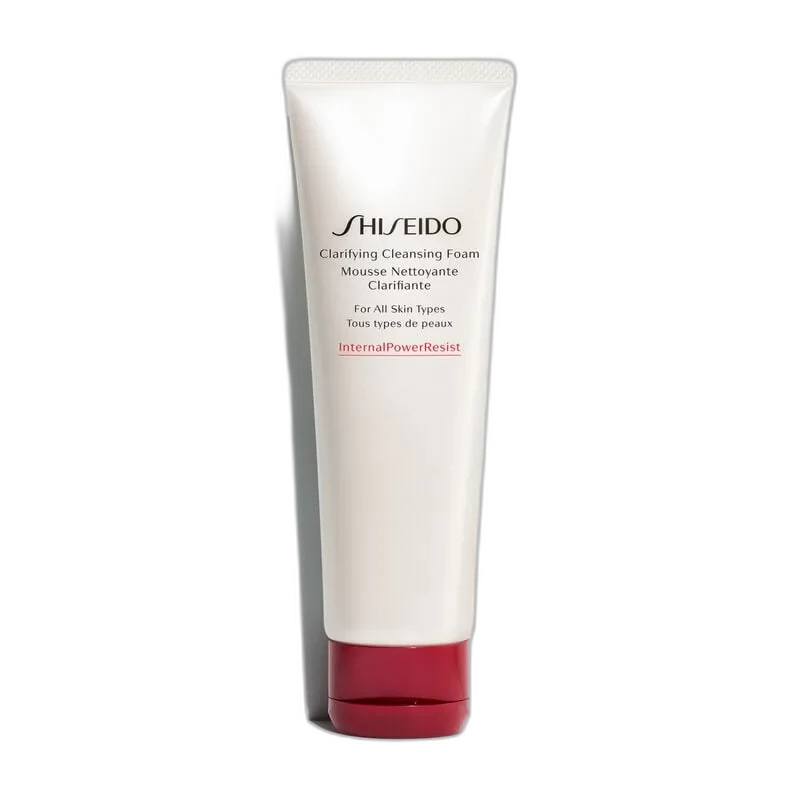
Clarifying Cleansing Foam
Japanese Cleansing Staple
 Verified reviewer
Pros & cons.
- +Kaolin clay provides genuine oil-absorbing purification beyond basic surfactant cleansing
- +Yomogi extract offers scientifically supported barrier protection during cleansing
- +Dense, luxurious lather from a small amount makes the tube last 3-4 months
- +Sodium acetylated hyaluronate deposits hydration even in a rinse-off format
- +Silicone-free and paraben-free formula with Japanese botanical heritage
- +Kirishima volcanic mineral spring water base adds a unique mineral profile
- +Post-rinse skin feel is exceptionally smooth and polished
- −Contains Sodium Lauryl Sulfate, a known irritant even at low concentrations
- −Soap-based surfactant system likely has alkaline pH in the 8-9 range
- −Fragrance plus three EU-regulated allergens rules out sensitive skin
- −Can feel drying and tight on dry skin types, especially in winter
- −Not cruelty-free — Shiseido sells in mainland China
- −Contains silk powder (animal-derived), not suitable for vegans
The full review.
Most cleansers use ordinary purified water. Shiseido uses water from Kirishima, a volcanic spring region in southern Japan. Its mineral composition—potassium, sodium, magnesium, calcium—resembles a prescription for skin health. Whether this changes results for a product you rinse off in sixty seconds is debatable, but it shows Shiseido’s approach to even the simplest skincare step.
The Clarifying Cleansing Foam launched in 2018 as part of Shiseido’s InternalPowerResist line, using 25 years of company research into skin immunity and Langerhans cell protection. This is unusual scientific backing for a cleanser, and the formula shows it. Kaolin—white clay—controls oil by absorbing excess sebum during cleansing better than surfactants alone. This ingredient gives the cleanser its clarifying identity, separating it from standard foaming face washes that rely only on detergents.
Japanese botanicals make this more than functional. Artemisia princeps—yomogi, or Japanese mugwort—has strong credentials in dermatological literature. Published research shows it upregulates filaggrin and loricrin, proteins essential for the skin’s protective barrier. Including it in a cleanser protects the barrier that cleansing threatens to disrupt. Rice germ oil adds conditioning and softening, referencing Japanese beauty traditions using rice water. Silk powder—from actual silkworm cocoons—creates a smooth, polished feeling after you rinse.
The formula also contains sodium acetylated hyaluronate, a modified hyaluronic acid with enhanced skin affinity. Finding this in a rinse-off product is unusual; Shiseido bets it deposits enough of a hydrating film to matter after the foam drains. This formulation choice distinguishes it from cleansers focused only on removal.
Reality
The surfactant system is soap-based—stearic acid and myristic acid saponified with potassium hydroxide. This produces a thick, dense foam from a pearl-sized amount, and the lather feels satisfying. But saponified fatty acid systems are alkaline, likely pushing the pH into the 8-9 range. For oily and combination skin that handles this, the thorough cleanse feels good. For dry or sensitive skin, problems arise. Multiple reviewers report a tight, squeaky-clean feeling that signals natural lipid barrier disruption.
Then there is the SLS question. Sodium Lauryl Sulfate is at the end of the ingredient list, suggesting a low concentration, but its presence in a brand with 150 years of pharmaceutical heritage is notable. SLS is a documented irritant; its inclusion—even at trace levels—is a dealbreaker for some. Add the fragrance (with linalool, geraniol, and citronellol) and this cleanser is not for reactive skin, despite its botanical elegance.
Texture
Shiseido’s craftsmanship shows in the sensory experience. The creamy paste turns into a cloud of dense, fine foam with little effort. The scent is a subtle floral—pleasant rather than aggressive, though opinions vary. For skin types that tolerate the formula, the post-rinse feeling is clean, smooth, and polished without the parched tightness of lesser cleansers.
At $39 for 125 mL, this is a premium cleanser, but the product is concentrated enough to last three to four months with twice-daily use. On a per-wash basis, the cost is reasonable. Shiseido’s legacy—Japan’s oldest and largest cosmetics company, founded in 1872—adds credibility beyond marketing, and the InternalPowerResist technology shows genuine R&D investment.
Best for
This cleanser rewards the right skin type. If you have oily or combination skin, appreciate Japanese botanical formulation, and do not mind fragrance or SLS, the Clarifying Cleansing Foam delivers a daily cleansing experience more thoughtful and pleasurable than necessary. For dry or sensitive skin, botanical ingredients cannot compensate for a surfactant system that may be too aggressive.
Ingredient analysis.
Full INCI list
Water (Aqua/Eau), Stearic Acid, PEG-8, Myristic Acid, Glycerin, Potassium Hydroxide, Dipropylene Glycol, Lauric Acid, Glyceryl Stearate SE, Sorbitol, Cocamidopropyl Betaine, PEG-60 Glyceryl Isostearate, Sodium Methyl Cocoyl Taurate, Phytosteryl Macadamiate, Fragrance (Parfum), Polyquaternium-39, Disodium EDTA, Oryza Sativa (Rice) Germ Oil, Linalool, Geraniol, Citronellol, Kaolin, Sodium Benzoate, Butylene Glycol, Acrylates Copolymer, Betaine, Silk Powder (Serica/Poudre De Soie), Tocopherol, Sodium Acetylated Hyaluronate, Artemisia Princeps Leaf Extract, Sodium Lauryl Sulfate
Skin match.
The science.
The Science
Artemisia princeps leaf extract, or yomogi (Japanese mugwort), is the most scientifically interesting ingredient here. A 2017 study in the International Journal of Molecular Sciences shows Artemisia princeps extract upregulates filaggrin and loricrin expression—two proteins essential to skin barrier structural integrity—via the AHR/OVOL1 pathway. This matters during cleansing, when the surfactant system challenges the barrier. Using a botanical that supports barrier protein expression alongside cleansing agents shows thoughtful formulation.
A 2016 study in the International Journal of Molecular Sciences found topical Artemisia leaf extract prevented epidermal hyperplasia and immune cell infiltration in a contact dermatitis model, showing anti-inflammatory potential.
Kaolin is a well-documented oil-absorbing clay. A 2023 study in PMC assessed a clay-based face mask in 75 adults with oily and acne-prone skin over four weeks; it found significant improvement in comedones, sebum content, and skin evenness. That study used a leave-on mask instead of a rinse-off cleanser, but the sebum-absorbing mechanism is the same.
Including sodium acetylated hyaluronate in a rinse-off product is an interesting choice. This modified hyaluronic acid has a greater affinity for the stratum corneum than standard sodium hyaluronate, which theoretically lets it deposit a hydrating film that stays after rinsing. The clinical significance in a 60-second cleansing window is modest, but it attempts to mitigate the surfactant system's dehydrating effects.
References
- Antioxidant Artemisia princeps Extract Enhances the Expression of Filaggrin and Loricrin via the AHR/OVOL1 Pathway — International Journal of Molecular Sciences (2017)
- Anti-Inflammatory Effects of Artemisia Leaf Extract in Mice with Contact Dermatitis In Vitro and In Vivo — International Journal of Molecular Sciences (2016)
- Comprehensive assessment of the efficacy and safety of a clay mask in oily and acne skin — PMC (PubMed Central) (2023)
Dermatologist Perspective
Dermatologists usually find soap-based cleansers like this effective for oily and combination skin but potentially problematic for dry or sensitive types. The alkaline pH of saponified fatty acid systems can disrupt the skin's acid mantle, a concern board-certified dermatologists frequently cite for patients with compromised barriers. Dermatologists commonly advise against SLS, even at low concentrations, for eczema and rosacea patients. However, the kaolin and botanical additions offer a more sophisticated approach than standard soap-based foams, and dermatologists in Japan may know Shiseido's research-backed approach to using traditional Japanese ingredients.
Where it fits in your routine.
Wet your face and hands with lukewarm water. Squeeze a pearl-sized amount into your palms and add a little water to create a thick lather. Massage the cleanser over your face in circular motions for 30-60 seconds, focusing on oily zones. Rinse well with lukewarm water and pat dry. Apply a hydrating toner immediately to restore pH balance. Use morning and evening. For a double-cleanse routine, use this after an oil cleanser at night.
At $39 for 125 mL, this cleanser is premium. However, the concentrated formula uses only a pearl-sized amount for a full lather. This stretches the tube to 3-4 months of twice-daily use, making the per-wash cost roughly $0.20. This price fits the ingredient quality and sensory experience. Shiseido's 150-year pharmaceutical heritage gives this more credibility than similarly priced cleansers from brands without comparable research backing. The value is highest for oily and combination skin types using the kaolin-enhanced purification; dry skin types get more mileage from gentler, lower-pH options even at a lower price point.
Best for oily to combination skin types that want a thorough cleanse using Japanese botanical heritage. It works for users who want thick foam and kaolin clay purification without a full mask. It is a reliable second-step foam for double-cleansing enthusiasts.
Dry and sensitive skin types should avoid this cleanser. The soap-based surfactant system and SLS inclusion disrupt the barrier. People with eczema, rosacea, or fragrance sensitivity need different options. Vegan consumers should note the silk powder ingredient.
Product details.
White creamy paste turns into a thick, dense lather when mixed with water. A small pearl-sized amount creates abundant foam.
Light floral fragrance. Most users call it clean and pleasant, but some find it slightly strong. It is not overpowering.
White plastic squeeze tube with flip-top cap. Clean, minimal design with Shiseido Ginza Tokyo branding. Hygienic dispensing format.
The skin feels squeaky-clean after the first use. Oily and combination skin types feel fresh and balanced. Dry skin types may feel tightness — use a hydrating toner immediately after. No purging or adjustment period occurs.
3-4 months with twice-daily use, as a small amount produces abundant lather
12 months
All Year
The backstory.
This cleanser emerged from Shiseido's 2018 skincare line relaunch built around 25 years of research into skin immunity and Langerhans cell protection. The use of Kirishima Mineral Spring Water — sourced from a volcanic spring in Japan — reflects Shiseido's commitment to grounding luxury skincare in Japanese natural heritage.
About Shiseido
Legacy Brand (20+ years)Shiseido started in 1872 as Japan's first Western-style pharmacy. It runs one of the world's largest cosmetic research facilities with about 600 researchers. The company has over 150 years of scientific expertise in pharmaceutical and cosmetic innovation.
Common myths.
Foaming cleansers are always bad for skin.
Some foaming cleansers are harsh, but this formula uses conditioning agents like rice germ oil, silk powder, and sodium acetylated hyaluronate to prevent stripping. The issue is the surfactant system — this uses a soap-based (saponified fatty acid) system, which is more alkaline than syndets.
A squeaky-clean feeling means your face is clean.
That squeaky feeling shows the skin's natural lipid barrier is disrupted. Oily skin tolerates this, but dry or sensitive skin signals over-cleansing. A hydrating toner restores balance immediately.
FAQ.
Can I use Shiseido Clarifying Cleansing Foam for double cleansing?
This works well as the second step in a double-cleanse routine. Use an oil cleanser first to dissolve sunscreen and makeup, then follow with this foam to remove any remaining residue. The kaolin clay adds extra purifying power to the second cleanse.
Is Shiseido Clarifying Cleansing Foam too harsh for sensitive skin?
This cleanser contains Sodium Lauryl Sulfate and fragrance, which can trigger reactions in sensitive skin. The soap-based surfactant system also has a higher pH. Sensitive skin types can use Shiseido's gentler options or sulfate-free alternatives.
What is the pH of Shiseido Clarifying Cleansing Foam?
Shiseido does not disclose the pH. However, the soap-based surfactant system (stearic acid saponified with potassium hydroxide) usually has a pH of 8-9. This is more alkaline than the skin's natural pH of 4.5-5.5.
Does Shiseido Clarifying Cleansing Foam remove makeup?
This foam removes light daily makeup and surface impurities, but it does not remove heavy or waterproof makeup. For full makeup removal, use an oil-based cleanser first and follow with this foam as your second cleanse.
What the community says.
"Leaves skin feeling clean, soft, and smooth without residue"
"A little product goes a long way with excellent lather"
"Effectively removes daily impurities and light makeup"
"Luxurious foam texture and cleansing experience"
"Skin looks clearer and more radiant over time"
"Can feel drying and stripping, especially for dry skin types"
"Contains fragrance that some users find unpleasant"
"Squeaky clean feeling indicates over-cleansing for some"
"Contains SLS which is a known irritant"
"High price for a rinse-off cleanser"
Featured in.
People also looked at.