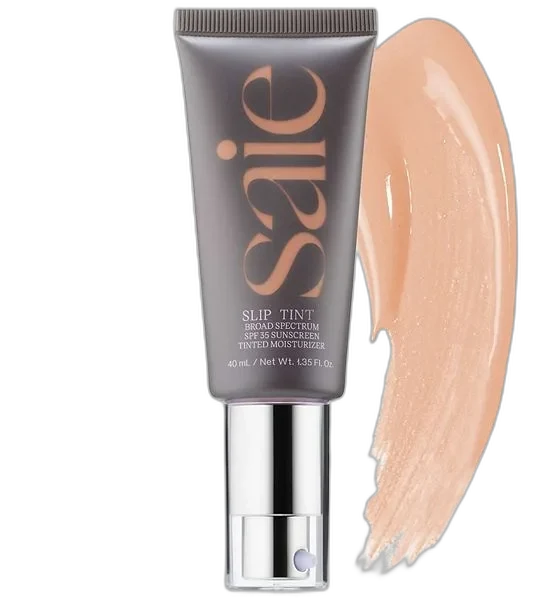
Slip Tint Dewy Tinted Moisturizer SPF 35
Dewy Daily SPF for Pigmentation-Prone Skin
 Verified reviewer
Pros & cons.
- +Genuine SPF 35 protection from 12% zinc oxide and 4% titanium dioxide
- +Iron oxides add meaningful visible-light protection for melasma and PIH
- +Buttery, lightweight texture that spreads like moisturizer
- +Truly dewy finish without greasiness or stickiness
- +Fragrance-free mineral formulation suitable for sensitive skin
- +Shade range accommodates a wide variety of skin tones
- +Clean and Planet Positive at Sephora certification
- −Too dewy for oily or very combination skin
- −Coverage is very sheer — not a foundation replacement
- −40 ml tube is small relative to daily sunscreen volume needs
- −Premium price for the size
- −Shade matching online can be difficult
The full review.
There is a specific formulation challenge that has broken dozens of tinted sunscreens over the years, and it comes down to an unforgiving triangle of tradeoffs. You want serious photoprotection, which means a meaningful mineral filter load, because chemical sunscreens don’t usually play well with pigment color correction. You want a flattering, skin-like finish, which means the formula can’t feel chalky, look ashy, or leave a cast. And increasingly, you want clean formulation — fragrance-free, cruelty-free, without the silicone-heavy bases that older tinted sunscreens leaned on for slip. Pick any two of those and the category has dozens of options. Hitting all three is genuinely hard, and most tinted mineral sunscreens end up compromising in ways that show up the moment you wear them through a humid afternoon.
Saie Slip Tint, released in 2022, is the clearest success I’ve seen in this triangle so far, and the reason is worth unpacking because the formulation choices are genuinely non-obvious.
About Saie Slip Tint
Start with the active load. This product runs 12% zinc oxide paired with 4% titanium dioxide — a combined 16% mineral filter percentage that is meaningfully higher than most tinted moisturizers with token SPF ratings. The headline SPF 35 is real and tested, not a marketing number you only hit if you apply half a bottle. What that means practically is that you can use this as your actual daily sunscreen rather than a base layer that pretends to be SPF while you still need something else underneath. For users who hate the step of separate sunscreen and want photoprotection collapsed into their morning skincare finish, this one can actually do the job.
Reality
The iron oxide inclusion is where the formulation gets more interesting. Iron oxides serve two purposes in a tinted sunscreen — they provide the shade pigmentation that makes the formula a ‘tint’ in the first place, and they provide protection against visible light in the 400-700 nm range, including the high-energy blue light that has been increasingly implicated in melasma and post-inflammatory hyperpigmentation. For anyone with pigmentation concerns, iron-oxide-containing sunscreens aren’t just a cosmetic preference — they’re an actively recommended strategy by dermatologists who treat melasma, because mineral filters alone don’t block visible light as effectively as the tint-based approach. A 2020 paper in Photochemistry and Photobiology established that iron oxides significantly extend protection into the visible range, which changed the way pigmentation dermatology talks about tinted sunscreens. This product is built around that research, and the result is a tinted SPF that earns its place in a melasma or PIH management routine rather than just looking pretty.
Texture
The texture is what will immediately distinguish this from other mineral sunscreens you’ve tried. Most 12% zinc formulations are heavy, thick, or chalky. Saie uses a squalane-and-triglyceride emollient system paired with isododecane to create a remarkably fluid, buttery slip that applies more like a lightweight moisturizer than a sunscreen. The finish is dewy — not in the sticky-shiny sense, but in the healthy-skin, just-washed-face sense that creates the impression of glow without looking oily. For normal, combination, and dry skin, this is genuinely gorgeous on skin. The coverage is light, which means it evens tone and adds subtle radiance without masking natural skin texture. If you want foundation coverage, you’ll need to layer over it; if you like minimalist makeup days, it may be the only thing you need.
Shade Range
The shade range is wider than most tinted sunscreens released by clean brands at launch, which historically have been notorious for offering four beige shades and calling it inclusive. Saie expanded the range over the product’s lifecycle and now offers meaningful options for most skin tones, though shade matching online can still be difficult — the iron oxide undertones read differently on different skin chemistries, and in-person testing at Sephora remains the best approach if you can do it.
Not ideal for
The limitations are worth being honest about. This is not the right tinted sunscreen for oily skin. The dewy finish that normal-to-dry skin loves can look too glossy on already-oily complexions by midday, and the emollient base will emphasize shine in a way that satin-finish alternatives like EltaMD UV Elements or ISDIN Eryfotona Actinica (when applied with powder) don’t. If you have oily skin, this is the wrong formulation for you and there’s nothing wrong with you — the product just isn’t built for your needs.
Works for
The coverage is sheer. If you read ‘tinted moisturizer’ and expected the kind of evening-out effect a medium-coverage foundation delivers, you’ll find this underwhelming. It provides a subtle, skin-like evening that flatters healthy skin and looks invisible on a no-makeup-makeup day, but it’s not going to cover redness, pigmentation, or acne scarring on its own. Treat it as a first layer under concealer or light foundation for coverage days, and as a standalone product for minimalist routines.
Value
The value question is where the judgment gets harder. At $36 for 40 ml, Saie Slip Tint is priced at a moderate clean-beauty premium. For buyers who value the dewy finish, the clean formulation, and the genuine photoprotection, the price is defensible. For buyers purely optimizing for SPF per dollar, a drugstore mineral sunscreen plus a drugstore tinted moisturizer can hit the same functional endpoint for less money, even if the experience won’t be as elegant. And the 40 ml tube will only last six to eight weeks of daily-correct-amount use, which means the annual cost of this as your primary sunscreen adds up.
Conclusion
All told, Slip Tint is one of the rare examples of a clean-beauty brand genuinely executing on serious formulation work rather than coasting on marketing. For the right skin type and user priority, it’s a standout recommendation. For the wrong skin type, it’s a lovely product that will disappoint you by noon.
Ingredient analysis.
Full INCI list
Active Ingredients: Zinc Oxide 12%, Titanium Dioxide 4%. Inactive Ingredients: Water, Caprylic/Capric Triglyceride, Isododecane, Glycerin, Coco-Caprylate, Cetyl Alcohol, Propanediol, Polyglyceryl-3 Polyricinoleate, Sodium Chloride, Polyhydroxystearic Acid, Glyceryl Stearate, Squalane, Isostearic Acid, Aluminum Hydroxide, Stearic Acid, Polyhydroxystearic Acid, Sorbitan Oleate, Tocopheryl Acetate, Niacinamide, Sodium Hyaluronate, Panthenol, Bisabolol, Tripeptide-1, Cocos Nucifera (Coconut) Fruit Extract, Ascorbyl Palmitate, Xanthan Gum, Caprylyl Glycol, Phenoxyethanol, Ethylhexylglycerin, Iron Oxides (CI 77491, CI 77492, CI 77499), Titanium Dioxide (CI 77891)
Skin match.
The science.
The Science
Slip Tint's formulation connects two research areas. First, mineral filter efficacy: zinc oxide and titanium dioxide are FDA Category I active ingredients with decades of validation. A 2019 review in the Journal of the American Academy of Dermatology confirmed their safety and broad-spectrum efficacy. With a combined 16% mineral filter load, Slip Tint meets its SPF 35 rating through filter coverage instead of concentration shortcuts. Second, iron oxide provides visible-light protection. A 2020 paper in Photochemistry and Photobiology shows that iron oxides extend sunscreen protection into the 400-700 nm visible light range, which conventional mineral filters handle less effectively. This matters for melasma and post-inflammatory hyperpigmentation, as visible and high-energy visible light exposure drives pigment relapse even when UV is blocked. A 2014 study in the Journal of Investigative Dermatology by Mahmoud and colleagues established that visible light induces pigmentation in darker skin phototypes. Subsequent clinical work reinforces that pigmentation-prone patients use iron-oxide-tinted sunscreens. Slip Tint's formulation uses this research, placing it in a narrow category of tinted SPFs that address clinical pigmentation concerns rather than just cosmetic tinting.
References
- Protection against ultraviolet, visible and infrared radiation with a topical antioxidant formulation — Photochemistry and Photobiology (2020)
- Impact of long-wavelength UVA and visible light on melanocompetent skin — Journal of Investigative Dermatology (2010)
Dermatologist Perspective
Dermatologists treating melasma and post-inflammatory hyperpigmentation routinely recommend iron-oxide-tinted mineral sunscreens for pigmentation management. Board-certified dermatologists note that most untinted mineral formulations lack visible light protection. Patients with pigmentation concerns who switch from clear to iron-oxide-tinted sunscreen often see improved melasma stability over several months. Saie Slip Tint is a reasonable option for patients wanting a clean, fragrance-free, dewy-finish product — especially for combination-dry skin types where the texture fits patient preferences.
Where it fits in your routine.
Apply this as the last step of your morning routine after moisturizer. Use about two finger-lengths for full face coverage to reach the tested SPF 35 rating. Warm the product between fingertips, then smooth it evenly over your face and neck. Do not skimp; underapplication causes users to miss the advertised SPF protection from any sunscreen. Reapply every two hours during sun exposure. On makeup days, layer concealer and powder over this product, not underneath it.
At $36 for 40 ml, Slip Tint sits in the mid-to-upper clean beauty tier. Value depends on use: as a tinted moisturizer, the price competes with similar hybrid products; as a daily sunscreen, the per-ounce cost is higher than a dedicated mineral SPF. For users managing pigmentation, the iron oxide visible-light protection is hard to replace with cheaper alternatives, making the value easier to justify. The lack of a larger size is the main structural limitation for heavy daily users.
Normal, combination, and dry skin users seeking a single-step hybrid tinted moisturizer and SPF with mineral filter protection. It works well for melasma, post-inflammatory hyperpigmentation, or sun damage where visible light protection matters. It also suits pregnant users and anyone preferring mineral sunscreens and minimal makeup coverage.
Oily skin, users needing medium or full coverage foundation, and anyone prioritizing price-per-ounce efficiency. Skip this if you need heavy-duty water-resistant beach sunscreen — this is a daily face product, not a marine-grade SPF.
Product details.
Lightweight cream with a buttery slip that spreads easily and absorbs into a dewy satin finish. It is more fluid than traditional mineral sunscreens.
Essentially scentless — no added fragrance.
Squeeze tube with flip cap in Saie's signature muted-color design. Travel-friendly and hygienic, protects the formula from air exposure.
The first application feels like a lightweight moisturizer with a slight tint. Iron oxide pigmentation prevents chalkiness, stinging, or a white cast on most skin tones. Skin looks more even and healthy-glowing immediately. Consistent use over weeks often reduces melasma patches and PIH relapse for users with pigmentation concerns.
Approximately 6-8 weeks with daily face application at proper sunscreen volume.
12 months
All Year
The backstory.
Saie was founded in 2019 by Laney Crowell, a former Estée Lauder executive, specifically to build clean beauty products that functioned as hybrid skincare-makeup. Slip Tint launched in 2022 as the brand's answer to the tinted-moisturizer-with-real-SPF category, designed to be the one step some users wanted between bare skin and a full foundation-plus-sunscreen routine.
About Saie
Emerging Brand (2–5 years)Laney Crowell founded Saie in 2019 as a clean beauty brand. Saie makes hybrid skincare-makeup products. The brand has credibility from ingredient transparency and Sephora's Clean+Planet Positive certification, but its scientific validation relies on formulation rather than independent clinical research.
Common myths.
Tinted sunscreens can't provide real SPF protection.
This product provides SPF 35 protection using a 12% zinc oxide and 4% titanium dioxide active load. Iron oxides provide the tint, but they do not substitute for the mineral filters. It meets its SPF rating when used at the correct amount.
Iron oxides in sunscreen are just for coverage.
Iron oxides protect against visible light, specifically blue light and HEV radiation. These drivers cause melasma and post-inflammatory hyperpigmentation. Dermatologists recommend iron-oxide-tinted sunscreens over clear formulations for pigmentation-prone skin.
FAQ.
Is this enough SPF for daily use?
Yes — SPF 35 provides strong daily broad-spectrum protection if you apply the correct amount (roughly two finger-lengths for full face). For extended outdoor activity or beach days, layer an additional sunscreen or reapply more frequently. This SPF works for daily commutes and errands, not all-day-on-the-water use.
Does this replace foundation?
It works for light coverage days, providing a subtle evening effect similar to a light tinted moisturizer finish. If you prefer medium or full coverage, use this as a skincare-SPF base under your usual foundation instead of a replacement.
Will this help with melasma?
Iron oxide pigmentation adds visible-light protection. This strategy helps manage melasma alongside prescription treatments. Dermatologists often recommend iron-oxide-tinted sunscreens like this one for melasma patients. The clean mineral formulation works for the sensitive skin that often accompanies the condition.
Does it leave a white cast?
Iron oxides counteract the zinc oxide white cast on most skin tones via color correction. For very deep skin tones, users must select the right Saie shade to avoid ashy or gray finishes. Online shade matching is difficult; test in person if possible.
Can I use this during pregnancy?
Yes — mineral sunscreens are the standard pregnancy recommendation because zinc oxide and titanium dioxide have minimal systemic absorption. This formulation lacks retinoids, salicylic acid, and other pregnancy-restricted ingredients.
How does this compare to other tinted mineral sunscreens?
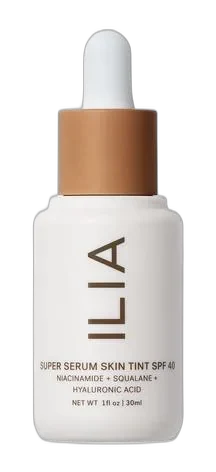
Against EltaMD UV Elements or ILIA Super Serum Skin Tint, Saie Slip Tint offers a meaningfully more dewy finish and slightly lighter coverage. EltaMD is more satin-finish and derm-recommended; ILIA has more active concentration. Saie wins on pure skincare-feel and dewy aesthetic preference.
Is this good for oily skin?
This is not the strongest match—the dewy finish looks too glossy on oily skin by midday. Satin or matte tinted mineral sunscreens work better for oily skin. This product works best on normal to dry skin, where the dewy finish complements natural skin oil.
What the community says.
"Genuinely dewy finish without greasiness"
"No white cast with iron oxides"
"Real SPF 35 protection, not token"
"Hydrating enough to skip moisturizer on good skin days"
"Shade range accommodates most skin tones"
"Coverage is very sheer, not foundation replacement"
"Too dewy for oily skin"
"Small 40ml tube for daily face sunscreen use"
"Price is high for the size"
"Shade matching can be difficult online"
Featured in.
People also looked at.