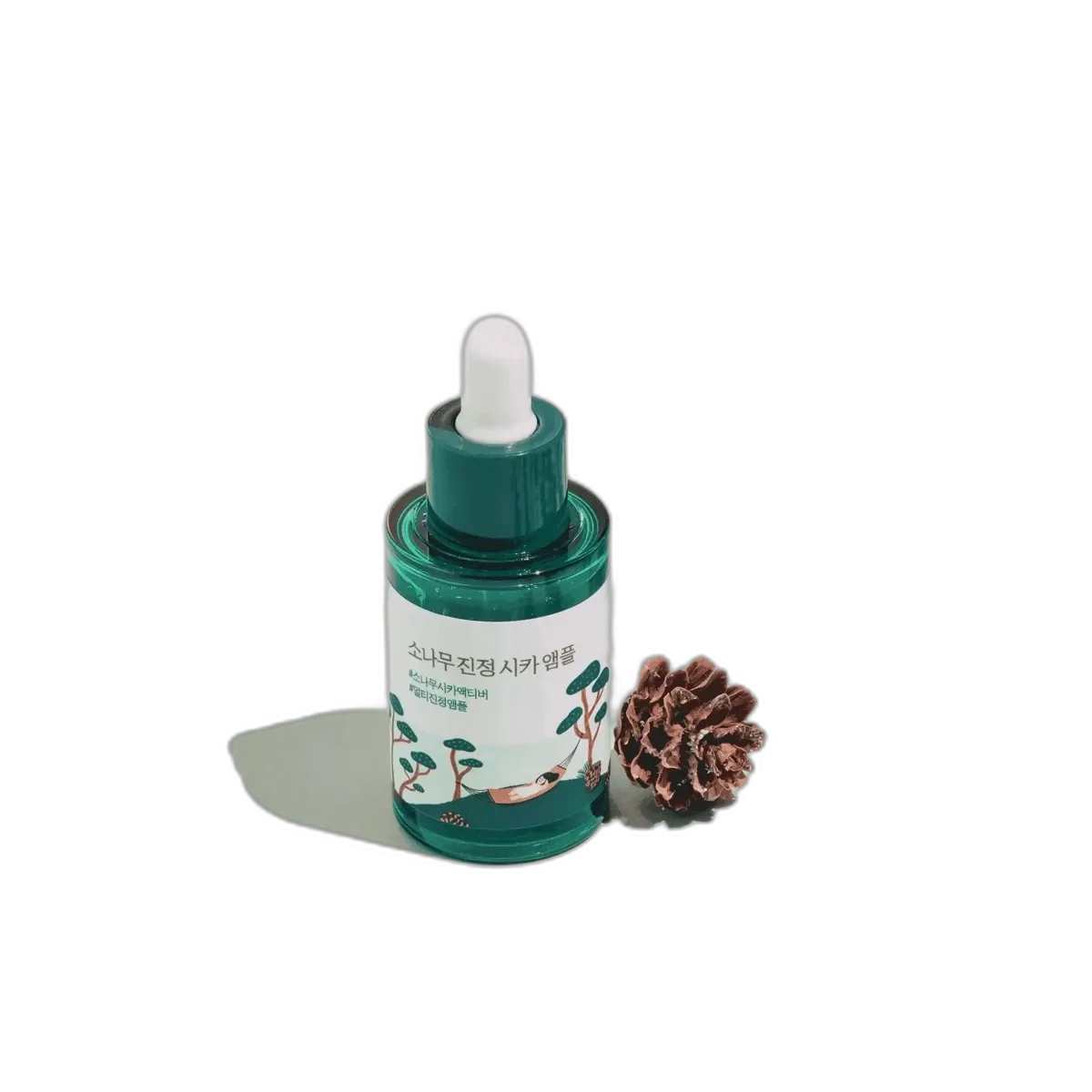
Pine Tree Calming Cica Ampoule
Derm Office Staple
 Verified reviewer
Pros & cons.
- +Includes the full TECA triterpene complex, not just generic centella extract
- +Pine extract base layers a second calming mechanism onto the cica profile
- +Panthenol + madecassoside combination has specific post-procedure evidence
- +Fragrance-free, alcohol-free, and fungal acne safe
- +Pairs niacinamide and beta-glucan for broader barrier support
- +Lightweight ampoule texture absorbs cleanly
- +Excellent buffering layer for retinol or acid routines
- −50 ml size runs out in 6-8 weeks of twice-daily use
- −Less marketing visibility than the Dokdo line
- −Pump top can clog with extended use
- −Calming effect is subtle — not a dramatic overnight transformation
- −No larger-size option available
The full review.
‘Cica’ marketing in K-beauty often obscures the ingredient’s actual function. Centella asiatica, a creeping herb used in traditional Asian medicine, relies on four triterpene molecules for topical efficacy: asiaticoside, madecassoside, asiatic acid, and madecassic acid. These molecules, called TECA, have published research for wound healing, anti-inflammatory action, and barrier repair. Most ‘cica’ products use only trace amounts of generic centella asiatica extract for marketing. Clinical effects require these isolated triterpenes.
Round Lab’s Pine Tree Calming Cica Ampoule is one of the few K-beauty cica products that uses them. The ingredient list explicitly includes all four TECA components—asiaticoside, madecassoside, asiatic acid, and madecassic acid—plus centella asiatica extract. This provides an evidence base for calming claims that generic cica formulas lack. Round Lab uses Korean red pine (Pinus densiflora) leaf extract as a base instead of purified water, adding polyphenol antioxidant support to the calming profile. This layers two calming mechanisms in one ampoule, a more sophisticated choice than most competitors.
The remaining ingredients provide targeted support. Niacinamide reinforces barrier synthesis alongside the TECA complex. Panthenol converts to pantothenic acid in the skin and has published evidence for barrier repair; research specifically supports pairing panthenol with madecassoside to accelerate post-procedure recovery. Beta-glucan is a polysaccharide humectant with immunomodulating and soothing effects. Sodium hyaluronate and glycerin provide hydration. A group of calming botanicals—houttuynia, portulaca, licorice, scutellaria, camellia sinensis, rosemary, and sage—completes the anti-inflammatory profile. The formula is fragrance-free, alcohol-free, silicone-free, and lacks fatty-acid esters or polysorbates, making it safe for fungal-acne-prone users and sensitive skin.
The ampoule’s application is subtle. The texture is light with slight viscosity, distinguishing it from a watery toner, but it absorbs in under a minute without stickiness or residue. It lacks tingling or warming sensations, which is intentional. Calming serums should feel calming. Users report less redness and tightness within the first few applications, with more substantial barrier recovery in 1-3 weeks. It works for rosacea-prone users, post-procedure recovery, or those using high-strength retinoids.
Limitations are minor. The 50 ml ampoule size means twice-daily use lasts 6-8 weeks, and Round Lab lacks a larger format. The pump-top bottle occasionally clogs, a common issue with Round Lab packaging. Also, the Pine Tree line is less famous than the Dokdo line, so users often choose the 1025 Dokdo Toner for ‘calming’ when this ampoule is the more targeted choice for acute redness or post-procedure use. This is a positioning issue, not a formulation flaw, and its anonymity keeps the price low. At around $22 for a TECA-complex cica serum with a pine antioxidant base, it is a high-value calming ampoule and a useful addition to a sensitive-skin routine.
Ingredient analysis.
Full INCI list · pH 5.5
Pinus Densiflora Leaf Extract, Centella Asiatica Extract, Butylene Glycol, Propanediol, Glycerin, Niacinamide, Panthenol, 1,2-Hexanediol, Asiaticoside, Madecassoside, Asiatic Acid, Madecassic Acid, Hydroxyacetophenone, Allantoin, Adenosine, Beta-Glucan, Tromethamine, Carbomer, Xanthan Gum, Ethylhexylglycerin, Disodium EDTA, Tocopherol, Sodium Hyaluronate, Houttuynia Cordata Extract, Portulaca Oleracea Extract, Glycyrrhiza Uralensis Root Extract, Scutellaria Baicalensis Root Extract, Camellia Sinensis Leaf Extract, Rosmarinus Officinalis Leaf Extract, Salvia Officinalis Leaf Extract
Skin match.
The science.
The Science
The TECA complex — asiaticoside, madecassoside, asiatic acid, and madecassic acid — is the most studied part of centella asiatica in topical dermatology. Published research shows these triterpenes support wound healing, modulate inflammatory cytokine expression, promote collagen synthesis, and accelerate barrier recovery. Madecassoside specifically has evidence for reducing inflammation in compromised skin. Studies show the combination of madecassoside and panthenol accelerates recovery after fractional laser and other dermatologic procedures. Niacinamide has robust evidence for barrier support; at concentrations of 2% and higher, it increases ceramide synthesis and reduces transepidermal water loss. Beta-glucan is a polysaccharide with published evidence for immunomodulating and anti-inflammatory effects, and for supporting wound healing in topical applications. Korean red pine (Pinus densiflora) extract has a smaller evidence base, but published research on pine polyphenols shows antioxidant activity and photoprotective benefits. The calming botanical tail — centella asiatica extract, houttuynia cordata, licorice root, scutellaria, sage — adds anti-inflammatory and antioxidant potential studied in dermatology research. This formulation works because it doesn't rely on one ingredient; the TECA complex, niacinamide, panthenol, and beta-glucan all have independent evidence. Their combination matches what dermatology literature recommends for calming and barrier-recovery applications.
Dermatologist Perspective
Dermatologists frequently recommend cica-based products for patients with rosacea, post-procedure recovery needs, or chronic sensitivity. However, board-certified dermatologists note that the TECA complex is the relevant active, not generic centella asiatica. Products with isolated triterpenes align better with clinical evidence than products using trace-level whole-leaf extracts. Dermatologists also recommend madecassoside + panthenol combinations for post-laser and post-peel recovery, as clinical studies show this pairing accelerates barrier recovery. The Pine Tree Calming Cica Ampoule fits this clinical frame — it includes the full TECA complex, pairs it with panthenol, and adds niacinamide and beta-glucan for broader barrier support. For patients managing rosacea, ongoing retinoid irritation, or post-procedure recovery, it is a reasonable over-the-counter calming option.
Where it fits in your routine.
Apply 2-3 pumps to clean skin after toner and before moisturizer. Press and pat the ampoule onto your forehead, cheeks, nose, and chin. Let it absorb before your next step. Use AM and PM. It works with retinoids, vitamin C, and exfoliating acids. Use daily to maintain calm skin, or use more often during sensitivity flares, post-procedure recovery, or retinoid ramp-ups. Store at room temperature; replace the bottle if the pump clogs.
At $20-24 for 50 ml, this ampoule's price matches its formulation quality. Competing TECA-complex cica serums from prestige dermatology brands cost $40-80 for similar volumes, so Round Lab is more accessible. The 50 ml size is the main drawback — twice-daily use lasts 6-8 weeks, making annual costs $150-180 for daily users. This remains reasonable for a targeted calming product, and the formulation quality justifies the price.
Users with sensitive, rosacea-prone, or reactive skin who want a real TECA-complex cica ampoule instead of marketing-grade cica products. It works well for post-procedure recovery, retinoid buffering, or chronic redness.
Users without specific sensitivity or recovery needs may not see dramatic benefits — this is a targeted calming product, not a general brightening or anti-aging serum. Very dry skin may need a richer occlusive follow-up.
Product details.
Light-to-medium ampoule consistency — thicker than water but thinner than a gel serum, it absorbs cleanly without stickiness.
Unscented.
Small plastic bottle with a pump top.
It applies cleanly without tingling or warming. Most users report a subtle calming effect within 1-2 applications. Reduced redness builds over the first 1-3 weeks.
Approximately 6-8 weeks of twice-daily use.
12 months
All Year
The backstory.
Round Lab launched the Pine Tree line in 2020, sourcing red pine extracts from Gangwon-do to complement its existing regional-sourcing concept from the Dokdo line. The Calming Cica Ampoule is the line's centerpiece, aimed specifically at users with reactive skin, post-procedure recovery needs, or chronic redness concerns.
About ROUND LAB
Established Brand (5–20 years)Round Lab launched in 2017 using regionally sourced Korean skincare. The Pine Tree line follows this by using pine extracts from Gangwon-do and a Centella asiatica (cica) base to create calming products.
Common myths.
All 'cica' products work the same way.
A cica product's efficacy depends on whether it uses isolated triterpenes (asiaticoside, madecassoside, asiatic acid, madecassic acid — together called TECA) or just generic centella asiatica extract. Round Lab includes all four, so its calming claims have more evidence than many competitors.
Pine extract is just marketing on a cica formula.
Pine extract is the first ingredient, replacing purified water as the formula's base. Korean red pine polyphenols show emerging antioxidant evidence; the inclusion shows formulation commitment rather than a trace-level claim.
FAQ.
How is it different from other Round Lab products?
Round Lab uses a pine extract base and the full cica complex in this calming serum to target redness and sensitivity. While the Dokdo line focuses on daily hydration, this ampoule works for acute calming and barrier recovery.
Can I use it after a cosmetic procedure or treatment?
People use it for this purpose often. The formulation (TECA complex, panthenol, beta-glucan, fragrance-free base) matches post-procedure calming recommendations. Always follow your dermatologist's specific protocol for procedure aftercare.
Can I use it with retinol?
Yes. The calming triterpene complex and barrier-supporting ingredients buffer the skin before retinoids or exfoliating acids. Many users layer it to reduce retinol irritation.
Is it fungal acne safe?
Yes — the formula lacks oils, esters, or polysorbates that feed Malassezia. This makes it suitable for fungal acne–prone users.
What the community says.
"visibly reduces redness"
"ideal for post-procedure recovery"
"fragrance-free formulation"
"layers cleanly under retinol"
"lightweight non-sticky texture"
"50 ml size runs out fast with twice-daily use"
"less famous than the Dokdo line"
"pump top occasionally clogs"
People also looked at.