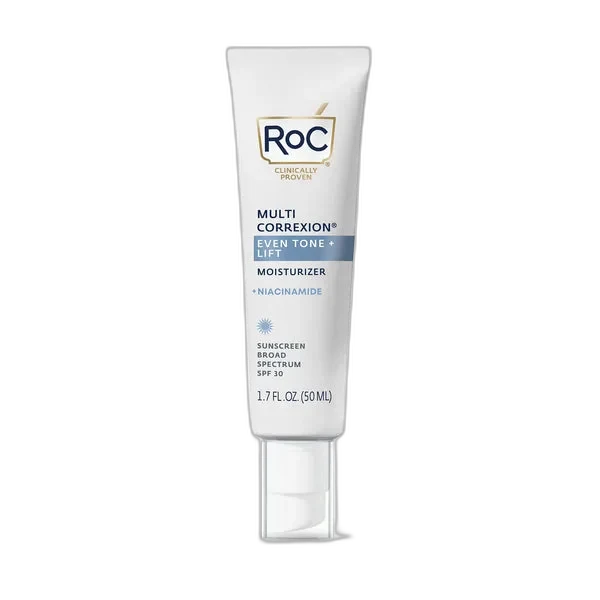
Multi Correxion Even Tone + Lift Daily Moisturizer SPF 30
Drugstore Multitasker
 Verified reviewer
Pros & cons.
- +Triple-pathway brightening (hexylresorcinol, niacinamide, ascorbyl glucoside) treats existing hyperpigmentation
- +SPF 30 broad-spectrum protection prevents new UV-triggered dark spots in the same step
- +Exceptional drugstore value — under $25 for a multi-active brightening SPF moisturizer
- +90% of clinical test subjects showed more even skin tone in 4 weeks
- +Combines moisturizer, sunscreen, and treatment in one morning product for superior compliance
- +Widely available at all major drugstores, grocery chains, and online retailers
- −Contains fragrance (parfum) — a significant drawback for a daily-use product
- −Older-generation UV filters lack the photostability of newer-generation alternatives
- −Can feel heavy or greasy on oily skin types, especially in humid weather
- −Possible subtle white cast on deeper skin tones from titanium dioxide and mica
- −Not cruelty-free or vegan certified
- −SPF 30 may be insufficient for extended outdoor sun exposure
The full review.
Hyperpigmentation treatment math is simple. You must reduce existing melanin deposits and prevent new UV-triggered melanin production. This requires two interventions, ideally used daily. Compliance is the issue—asking people to apply a brightening serum AND a sunscreen every morning for months often fails. RoC’s Multi Correxion Even Tone + Lift Daily Moisturizer SPF 30 combines both steps, which is its most important feature.
The brightening system matches RoC’s Even Tone + Lift Eye Cream: hexylresorcinol, niacinamide, and a vitamin C derivative attack melanin production and distribution through three pathways. Hexylresorcinol inhibits tyrosinase, the enzyme that catalyzes melanin synthesis. Niacinamide blocks melanosome transfer from melanocytes to keratinocytes. Ascorbyl glucoside, a stable vitamin C derivative, provides antioxidant protection and mild melanin inhibition via copper ion interaction at the tyrosinase active site.
This triple-pathway approach is pharmacologically sound. Pigmentation disorders resist single-agent treatment because the melanin pathway has multiple regulatory points. Blocking one step often causes compensatory upregulation at another. Targeting three steps simultaneously reduces compensation, increasing the chance of visible results.
The sun protection system uses four chemical filters—avobenzone (2%), homosalate (4%), octisalate (4%), and octocrylene (2%)—to deliver broad-spectrum SPF 30. These are established, older-generation filters. Avobenzone provides UVA protection, while octocrylene acts as a UVB filter and avobenzone stabilizer. The system works and has decades of safety data, though newer filters like Tinosorb S and Tinosorb M offer better photostability.
Shea butter and glycerin moisturize the skin. Dimethicone provides slip and a protective film. Mica and titanium dioxide add optical brightening—the same light-diffusing method used in the eye cream—providing immediate visible benefits while the active brighteners work on pigmentation over weeks.
Texture
The texture is a medium-weight cream that balances moisturizing and wearability under makeup. It is not as light as a dedicated sunscreen or as rich as a dedicated moisturizer, which is the standard compromise for hybrid products. It hits a comfortable middle ground for normal to dry skin. Oily skin types may find it too heavy, especially in humid conditions. The mica finish creates a subtle glow that photographs well but may look like shine on oily foreheads.
Scent
The fragrance is the product’s biggest drawback. For a daily-use product from a pharmaceutical-heritage brand, the inclusion of parfum is disappointing. Fragrance is the most common sensitizer in cosmetics. In a product for daily reapplication on potentially compromised skin, it adds unnecessary risk. Users with fragrance sensitivity should test carefully or look elsewhere.
Common Praise
RoC clinical data shows 90% of users had more even skin tone within 4 weeks. Thousands of user reviews across Amazon, Walmart, Target, and Walgreens are broadly positive. The strongest feedback comes from users seeing visible dark spot fading and improved tone after two to three months of consistent daily use.
Value
At $24.99 for 1.7 fl oz, the value is high. This includes a three-active brightening system, broad-spectrum SPF 30, shea butter moisturizer, and optical brightener from a 67-year-old pharmaceutical brand at drugstore prices. A comparable brightening SPF from a prestige or clinical brand costs $50-100 or more. The mass-market distribution in CVS and Walmart makes clinical-grade tone correction accessible.
RoC’s Multi Correxion Even Tone + Lift Daily Moisturizer SPF 30 is not perfect. The fragrance should not be there. The UV filters are functional but dated. The texture is slightly heavy for oily skin. However, it is an exceptionally good value—a triple-pathway brightening treatment and sun protection in one affordable morning step. For anyone with hyperpigmentation, dark spots, or uneven tone, the best product is the one used every single day. At this price and convenience, this product fits that role.
Ingredient analysis.
Full INCI list
Active Ingredients: Avobenzone (2.0%), Homosalate (4.0%), Octisalate (4.0%), Octocrylene (2.0%). Inactive Ingredients: Water, Propylene Glycol, Glycerin, Isononyl Isononanoate, Dimethicone, Steareth-2, Ascorbyl Glucoside, Ethylhexyl Palmitate, Steareth-21, Propanediol, Butyrospermum Parkii (Shea) Butter, Niacinamide, Hexylresorcinol, Ammonium Acryloyldimethyltaurate/VP Copolymer, Dimethicone Crosspolymer, Behenyl Alcohol, Sclerotium Gum, Titanium Dioxide, 1,2-Hexanediol, Caprylhydroxamic Acid, Sodium Hydroxide, Disodium EDTA, Mica, Fragrance
Skin match.
The science.
The Science
The Even Tone + Lift Daily Moisturizer's brightening strategy targets the melanin pathway at three regulatory points. Hexylresorcinol's tyrosinase inhibition has been documented in the Journal of Cosmetic Science (2009), demonstrating superior potency compared to hydroquinone and kojic acid at equivalent concentrations with a more favorable safety profile for daily long-term use.
Niacinamide's mechanism of action — inhibiting melanosome transfer rather than melanin production — was established by Hakozaki et al. in the British Journal of Dermatology (2002). This downstream intervention is complementary to hexylresorcinol's upstream tyrosinase inhibition, meaning the two agents work synergistically rather than redundantly.
Ascorbyl glucoside, the vitamin C derivative in this formula, offers superior stability compared to L-ascorbic acid, making it suitable for the pH environment of a sunscreen formulation. Research in the Journal of Cosmetic Dermatology has shown that ascorbyl glucoside is converted to ascorbic acid by alpha-glucosidase in the skin, providing sustained antioxidant delivery.
The sunscreen system combines avobenzone (the primary UVA filter) with octocrylene, which serves as both a UVB filter and an avobenzone photostabilizer. Research published in Photochemistry and Photobiology has documented that octocrylene extends avobenzone's photostability by absorbing the excited-state energy that would otherwise cause avobenzone degradation. While newer filter technologies offer superior photostability, this combination remains effective within its SPF 30 claim when properly applied.
References
- Hexylresorcinol as a tyrosinase inhibitor — Journal of Cosmetic Science (2009)
- The effect of niacinamide on reducing cutaneous pigmentation and suppression of melanosome transfer — British Journal of Dermatology (2002)
Dermatologist Perspective
Dermatologists emphasize that the most effective hyperpigmentation treatment combines active brighteners with rigorous sun protection — making a product that delivers both in one step inherently logical from a compliance perspective. Board-certified dermatologists note that the hexylresorcinol, niacinamide, and vitamin C combination represents a well-designed multi-pathway approach to melanin reduction. The SPF 30 is considered adequate for daily, non-extended sun exposure by most dermatological guidelines, though dermatologists treating aggressive melasma or post-inflammatory hyperpigmentation may recommend a higher-SPF dedicated sunscreen during peak UV hours. The fragrance inclusion is the most common point of clinical concern for a product intended for daily use on potentially sensitized skin.
Where it fits in your routine.
Apply 1/4 teaspoon to the face as the last step of your morning skincare routine, or more if you include the neck. This product replaces your morning moisturizer and sunscreen. Apply vitamin C or hyaluronic acid serums first and let them absorb before applying this moisturizer. Reapply every 2 hours during extended sun exposure. Use daily for brightening results.
At $24.99 for 1.7 fl oz, this offers category-leading value. A triple brightening system and SPF 30 in a moisturizing base usually costs $50-100+ from prestige or clinical brands. One tube lasts about 2-3 months with daily use, making the per-month cost roughly $8-12 for a full morning treatment-plus-protection step. RoC's 67-year pharmaceutical heritage and mass-market distribution allow this price without changing the active ingredient formula. For budget-conscious consumers with hyperpigmentation, this is the best value in the brightening SPF category.
This is for anyone with hyperpigmentation, dark spots, or uneven skin tone who wants one simple morning product that treats and protects. It works for budget-conscious consumers, routine minimalists, and people who need visible brightening benefits to motivate daily sunscreen use.
Fragrance-sensitive individuals should note the parfum in the formula. Very oily skin types will find the texture too heavy for daily wear. Those seeking maximum UV protection need a dedicated SPF 50+ sunscreen. Anyone with deep melasma should consult a dermatologist for prescription-strength treatments.
Product details.
It has a noticeable light fragrance. This is a drawback for fragrance-sensitive individuals using it daily.
Standard tube with a screw-cap lid. Compact and travel-friendly 1.7 oz size. ***
This smooth cream provides an immediate, subtle brightening effect via light-diffusing minerals. The fragrance is noticeable but not overpowering. It absorbs within a few minutes and leaves a slightly dewy, luminous finish. Most skin types experience no stinging or irritation, though those sensitive to chemical sunscreen filters may feel mild tingling. ***
2-3 months with daily facial application ***
12 months ***
All Year ***
The backstory.
The Multi Correxion Even Tone + Lift line represents RoC's application of their Hexyl-R Complex technology beyond retinol. Recognizing that uneven tone and hyperpigmentation require both treatment and prevention, they built this daily moisturizer to address existing pigmentation (via hexylresorcinol, niacinamide, and vitamin C) while preventing future damage (via broad-spectrum SPF 30) — a single-step approach that improves compliance.
About RoC
Legacy Brand (20+ years)French pharmacist Dr. Jean-Charles Lissarrague founded RoC in 1957. The brand first brought stabilized retinol and broad-spectrum sunscreen to consumers. RoC has nearly seven decades of formulation heritage, is dermatologist-recommended, and sells in pharmacies and mass retail.
Common myths.
SPF moisturizers provide less sun protection than dedicated sunscreens.
SPF testing follows the same protocol for every product format. This product delivers its full SPF 30 protection if you apply the tested amount (about 1/4 teaspoon for the face). People often apply less moisturizer than sunscreen, but the product works if used correctly.
Anti-aging actives and sunscreen do not work in the same product.
Niacinamide, hexylresorcinol, and ascorbyl glucoside stay stable within the pH range of chemical sunscreen formulations. This formula uses ascorbyl glucoside because it is stable, unlike pH-sensitive L-ascorbic acid.
FAQ.
Does the RoC Multi Correxion Moisturizer SPF 30 really help with dark spots?
Yes — the triple brightening system (hexylresorcinol, niacinamide, ascorbyl glucoside) uses three separate mechanisms to target hyperpigmentation, while the SPF 30 prevents new UV-triggered melanin production. Clinical testing shows 90% of users saw more even skin tone within 4 weeks.
Can I use this as my only morning moisturizer and sunscreen?
Yes, most users can use this product as an all-in-one morning step for hydration and SPF 30 protection. Apply about 1/4 teaspoon to the face for full SPF coverage. Users with very dry skin can use a hydrating serum underneath.
Is SPF 30 enough for daily protection?
SPF 30 blocks about 97% of UVB rays. Most dermatological guidelines consider this level adequate for daily, non-extended sun exposure. Reapply every 2 hours during prolonged outdoor exposure or use a higher-SPF dedicated sunscreen.
Can I use this RoC moisturizer with retinol at night?
Use this product in the morning (SPF only works during the day). It pairs with a retinol treatment in your evening routine — daytime brightening actives complement the nighttime cell turnover acceleration from retinol.
Does this moisturizer leave a white cast?
The titanium dioxide and mica can leave a subtle white cast on deeper skin tones. This effect is mild and usually blends with makeup, but those with dark skin tones should test before committing.
What the community says.
"Visible improvement in skin tone evenness and dark spots within weeks"
"Combines moisturizer and SPF in one step — simplifies AM routine"
"Excellent value at under $25 for a multi-active SPF moisturizer"
"Lightweight texture that layers well under makeup"
"Noticeable firming effect over time"
"Mica provides subtle instant luminosity"
"Contains fragrance — noticeable scent that some find off-putting"
"Chemical sunscreen filters may cause stinging on sensitive skin"
"SPF 30 may be insufficient for those wanting maximum UV protection"
"Can feel slightly greasy on oily skin types"
"White cast possible on deeper skin tones from the titanium dioxide"
People also looked at.