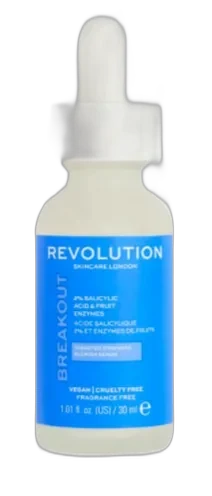
2% Salicylic Acid & Fruit Enzymes Serum
Budget Blackhead Buster
 Verified reviewer
Pros & cons.
- +Legitimate 2% salicylic acid at pH optimized for pore penetration
- +Adds papaya and mango enzymes for complementary exfoliation
- +Oil-free and fungal-acne safe
- +Widely available through drugstore channels at bargain prices
- +Generous 60ml size for the price
- +Fragrance-free and vegan
- +Visible blackhead reduction within 1-2 weeks
- −Alcohol denat. content can dry sensitive or dry skin
- −Witch hazel adds astringent load that some users find too much
- −Not appropriate for rosacea or eczema-prone skin
- −Dropper packaging can get sticky over time
- −No supporting cast for irritation mitigation beyond the enzymes
The full review.
Around 2019-2020, the TikTok skincare community repeatedly asked if a cheap version of Paula’s Choice BHA Liquid exists that works. Paula’s Choice 2% BHA Liquid was the standard blackhead-clearing recommendation, but at $30 for 4 oz, it was expensive for younger shoppers. Revolution Skincare launched this 2% Salicylic Acid & Fruit Enzymes Serum as a UK drugstore alternative at a lower price. It does not copy the Paula’s Choice formulation; the fruit enzyme addition is a distinct feature. It targets users wanting a working salicylic acid treatment at a Boots-aisle price.
The formulation is simple. Water is the first ingredient, with propanediol and polysorbate 20 solubilizing the salicylic acid (which requires help dissolving in water). Witch hazel water provides astringency, alcohol denat. aids penetration into oily skin, and glycerin and butylene glycol act as humectants. The 2% salicylic acid performs the primary work. The pH is approximately 3.5, which is low enough for the salicylic acid to be bioavailable and drive pore-level exfoliation. Papaya and mango fruit extracts provide proteolytic enzymes that cleave protein bonds between dead cells, working alongside the salicylic acid. This pairing gives the serum a more multifaceted exfoliation profile than a pure BHA at the same intensity.
The serum is thin and watery. A few drops absorb into the skin in under a minute, leaving a slightly matte finish. It feels cool and faintly tingling; the salicylic acid, witch hazel, and alcohol create a mild astringent sensation typical of drugstore BHA serums. It does not sting or burn, but it feels active. After three or four days of use, skin feels smoother. By the end of week one, t-zone blackheads loosen and congested texture improves. By week three, users with closed comedones or small breakouts see improvement, and by week six to eight, refinement is visible under side lighting.
This formulation fails for skin types that dislike drying ingredients. The alcohol denat. is the fourth or fifth ingredient on the INCI list; it is a major part of the penetration system and can cause tightness or barrier stress in dry or sensitized skin. Combined with witch hazel, the formulation is astringent and mismatches dry, rosacea-prone, or reactive skin. If only your t-zone is oily, apply it only there. If your skin is uniformly dry or sensitive, use a gentler BHA like the Inkey List Beta Hydroxy Acid Exfoliant or The Ordinary Salicylic Acid 2% Solution. For oily, congested, acne-prone skin, the astringent profile is a strength for a nightly exfoliant.
The value is the strongest argument for this serum. At roughly $10 for 60ml, the price is about $0.17 per ml, one of the lowest for a legitimate 2% BHA. One bottle lasts two to three months with nightly use, costing roughly $4-5 per month. This price is hard to beat without buying mystery brands. Revolution Skincare has enough distribution and oversight that it is a known quantity rather than a no-name AliExpress brand. For budget-conscious shoppers with oily or acne-prone skin, this is a dependable BHA.
This serum is a good formulation at a low price for its target skin type, but it is not a good pick for others. If you are oily, congested, and budget-conscious, buy it. If you are dry, sensitive, or have a compromised barrier, the ingredients work against you and a gentler formulation is better. Using the wrong formulation on the wrong skin type is always more expensive than buying correctly the first time.
Ingredient analysis.
Full INCI list · pH 3.5
Aqua (Water/Eau), Propanediol, Polysorbate 20, Hamamelis Virginiana (Witch Hazel) Water, Alcohol Denat., Glycerin, Butylene Glycol, Salicylic Acid, Cocamidopropyl Betaine, Phenoxyethanol, Xanthan Gum, Sodium Hydroxide, Sodium Chloride, Carica Papaya (Papaya) Fruit Extract, Mangifera Indica (Mango) Fruit Extract, Ethylhexylglycerin, Disodium EDTA, Leuconostoc/Radish Root Ferment Filtrate.
Skin match.
The science.
The Science
Salicylic acid at 2% is the most studied over-the-counter BHA concentration. Clinical literature supports its use for comedonal acne, blackhead reduction, and pore refinement. Its mechanism differs from alpha hydroxy acids: salicylic acid is oil-soluble, so it penetrates sebum-filled pores to exfoliate from the inside. This makes it the preferred acid for congestion. At pH 3.5-4.0, the free acid fraction is high enough for bioavailability without being harsh. This formulation uses propanediol and polysorbate 20 as solubilizers, which is standard for water-based salicylic acid serums. Alcohol denat. acts as both a penetration enhancer and a solubilizer; this works for oily skin but increases drying potential. The fruit enzyme components — papain from papaya and enzymes from mango — provide proteolytic activity through a mechanism different from acid exfoliation. Papain has studies in food and medical contexts and shows some evidence for topical exfoliation, though the evidence is weaker than for salicylic acid. Witch hazel is a traditional astringent with limited clinical evidence beyond surface tightening; it is a cosmetic addition rather than a clinically validated active. This formulation pairs a well-established primary active with a complementary mechanism that adds marginal benefit without significant risk. It lacks the anti-inflammatory or barrier-support ingredients found in premium formulations, such as niacinamide, beta-glucan, or green tea polyphenols, to mitigate irritation. This tradeoff keeps the cost low and the serum focused on its specific use case.
Dermatologist Perspective
Dermatologists often recommend 2% salicylic acid serums for patients with comedonal acne, blackheads, and oily skin requiring pore-level exfoliation. Board-certified dermatologists note that salicylic acid's oil solubility makes it better-suited for these concerns than AHAs, which work mainly on the skin surface. In clinical practice, doctors often recommend 2% salicylic acid as a nightly treatment for oily and acne-prone skin, usually paired with a gentle cleanser and a non-comedogenic moisturizer. Dermatologists consider the alcohol content and witch hazel in this specific formulation when matching a BHA product to a patient; dry, sensitive, or rosacea-prone skin usually requires a gentler formulation. Most guidelines consider 2% salicylic acid topical use acceptable during pregnancy, though some practitioners recommend caution on large body surface areas.
Where it fits in your routine.
Apply a few drops to clean, dry skin at night after cleansing. Press the liquid into areas prone to blackheads, congestion, or breakouts. Wait 1-2 minutes for absorption, then use a hydrating serum and moisturizer. Use every other night for the first 1-2 weeks to test tolerance, then move to nightly use as comfortable. Do not layer with retinoids, glycolic acid, vitamin C, or benzoyl peroxide on the same night. Use broad-spectrum SPF 30 or higher every morning during use.
At about $10 for 60ml, this offers one of the best price-to-concentration ratios for a real 2% salicylic acid serum. Nightly use costs roughly $4-5 per month, while Paula's Choice 2% BHA Liquid or premium derm-channel alternatives cost $10-15. This value works best for budget-conscious users with oily or acne-prone skin needing a reliable BHA for long-term use. For users with complex needs — sensitive skin, dry skin, rosacea — the savings disappear because the formulation isn't the right structural match, and a more expensive but better-suited alternative works better.
Budget-conscious users with oily, acne-prone, or congested skin need an effective 2% salicylic acid serum at an accessible price. It works for teenagers and young adults starting their first BHA exfoliation routine. It also suits users who tried premium options like Paula's Choice and want to save money on a formulation they know works.
Dry, sensitive, rosacea-prone, or compromised-barrier skin should avoid this formulation. The alcohol denat. and witch hazel content does not suit those skin types. Users wanting a multi-functional serum with niacinamide, peptides, or antioxidant support must pair this with other products to get that coverage.
Product details.
Thin, watery liquid — pours slightly thicker than a toner but stays close to a true liquid serum.
Essentially unscented — faint neutral note from the fruit extracts.
Amber glass dropper bottle, 60ml. Generous size for the price.
The first application causes a faint tingling that fades within a minute. Skin looks slightly tighter and pores look smaller within the first few hours. By day 3-5, t-zone blackheads loosen and skin texture feels smoother. Some users experience brief purging in weeks 2-3 as congestion surfaces.
60ml lasts approximately 2-3 months with nightly use.
12 months
All Year
The backstory.
Revolution Skincare launched this serum as part of their expanded blemish-focused lineup around 2020, responding to the TikTok-driven surge in demand for affordable BHA products that could compete with Paula's Choice BHA Liquid at a fraction of the price. The formulation has stayed stable since launch with strong performance in UK drugstore channels.
About Revolution Skincare
Revolution Skincare is the active-focused line from Revolution Beauty, a UK mass-market beauty group. Since the late 2010s, the brand has sold straightforward, affordable actives through Boots, Superdrug, and Ulta.
Common myths.
Salicylic acid dries out the skin long-term.
2% Salicylic acid does not structurally dry out the skin; it exfoliates the surface and inside pores. Other formulation components like alcohol or witch hazel, or frequent use, cause perceived dryness. Correct use does not cause persistent dryness.
Fruit enzymes and acids shouldn't be combined.
Papain and bromelain enzymes use protein-cleaving mechanisms different from acid-mediated exfoliation. These mechanisms complement each other. Combining them is a known strategy for gentler exfoliation than using either mechanism alone at the same intensity.
FAQ.
Is this a dupe for Paula's Choice 2% BHA Liquid?
The salicylic concentration and pH range are similar, but the formulations differ. Paula's Choice uses green tea extract for antioxidant support; Revolution uses witch hazel, fruit enzymes, and alcohol denat. Both work, but the texture and supporting ingredients vary—Revolution is more astringent, while Paula's Choice is gentler on sensitive skin.
How often can I use this serum?
Use every other night for the first 1-2 weeks. Most users use it nightly once tolerance builds. Nightly use works for areas with stubborn congestion. Dry or sensitive skin needs 2-3 times per week.
Does this contain alcohol?
Yes — alcohol denat. is on the INCI and appears high in the ingredient order. This helps salicylic acid penetrate oily skin but can dry or irritate sensitive or dry skin. Consider this when deciding if this product is right for you.
Will fruit enzymes cause irritation?
Generally no — papain and mango enzymes are gentler than chemical acids and cause fewer reactions. Users with latex allergies should note that papaya enzymes occasionally cross-react for highly sensitized individuals, though this is rare with topical use.
Can I use this in the morning?
You can, but always follow with a broad-spectrum SPF 30+. Salicylic acid increases photosensitivity temporarily. Using the serum with witch hazel's astringent effect in the morning can tighten skin too much under makeup. Nighttime use is usually better tolerated.
Is Revolution Skincare 2% Salicylic Acid Serum pregnancy safe?
Most dermatological guidelines consider 2% topical salicylic acid acceptable during pregnancy, but you should confirm with your OB to be safe. For more caution, use an azelaic acid or lactic acid product instead.
What the community says.
"Effective at clearing blackheads"
"Noticeably smoother skin within a week"
"Extremely affordable"
"Lightweight liquid layers well under moisturizer"
"Contains denatured alcohol which dries some users"
"Witch hazel too astringent for sensitive skin"
"60ml is generous but dropper gets sticky"
People also looked at.