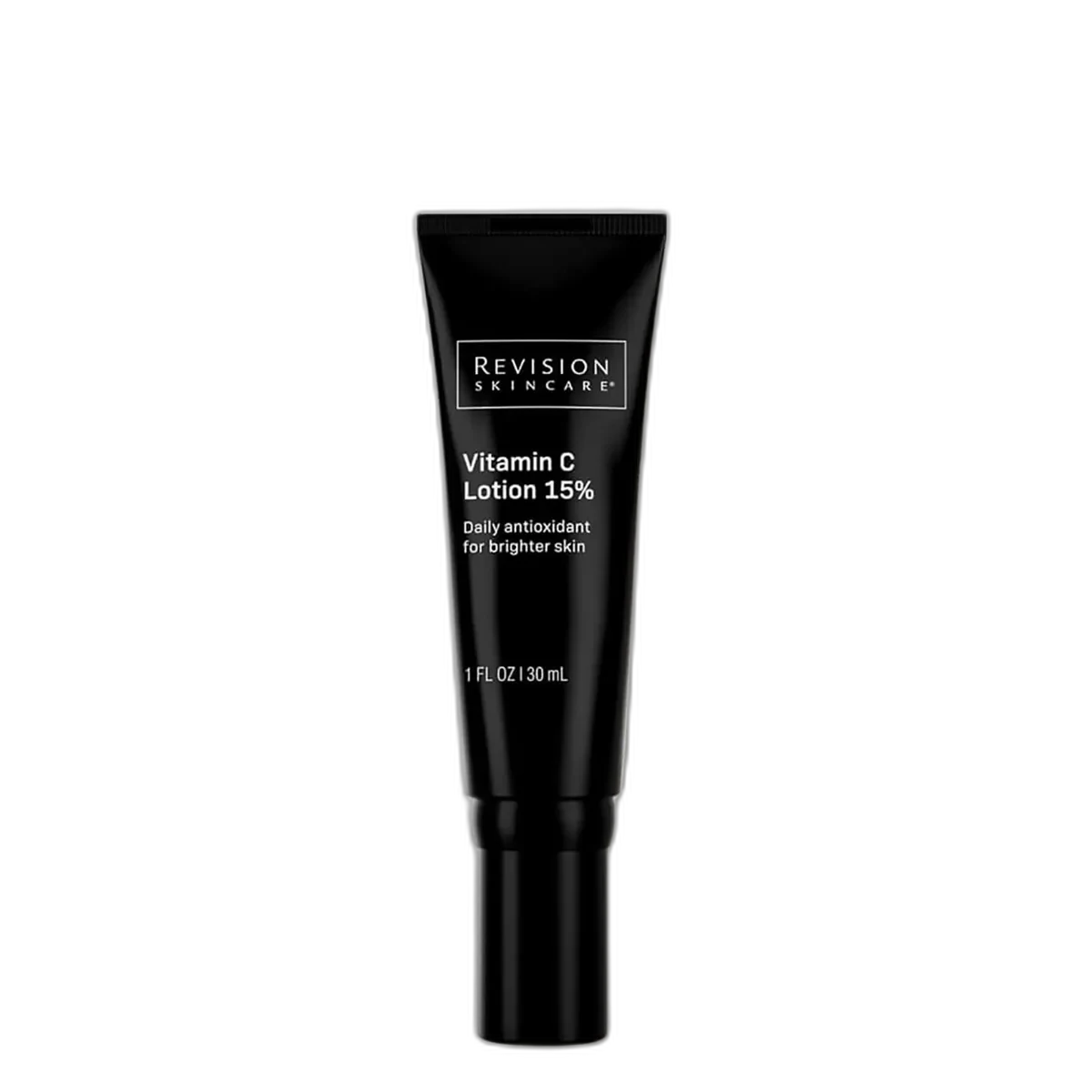
Vitamin C Lotion
Gentle Vitamin C Daily Driver
 Verified reviewer
Pros & cons.
- +THD ascorbate at 15% provides meaningful vitamin C benefits without the irritation of L-ascorbic acid
- +Triple antioxidant system (vitamin C + E + CoQ10) provides comprehensive photoprotection
- +Exceptional stability — does not oxidize or turn orange like L-ascorbic acid serums
- +Fragrance-free and gentle enough for sensitive and post-procedure skin
- +Lotion texture absorbs smoothly and layers well under sunscreen and moisturizer
- +Airless pump packaging maintains ingredient integrity from first to last use
- −Premium $114 price for 1 oz is significant for a vitamin C treatment
- −THD ascorbate requires metabolic conversion, slightly reducing immediate bioavailability versus pure L-ascorbic acid
- −Only one size available — no trial size for testing compatibility
- −Lotion texture may feel too heavy for very oily skin types
- −Results are gradual — not for those seeking immediate dramatic brightening
The full review.
The vitamin C serum market has a potency problem. Brands market 20%, 25%, or even 30% L-ascorbic acid concentrations, implying more is better. They rarely mention that L-ascorbic acid is unstable, requires a low pH of 2.5-3.5 to penetrate the skin, oxidizes fast once opened, and causes irritation at clinical doses. Revision Skincare avoided this competition by using Tetrahexyldecyl Ascorbate in their vitamin C products for pragmatic reasons.
THD ascorbate is oil-soluble, changing how it interacts with the skin. While L-ascorbic acid sits on the surface waiting for transport through the hydrophilic stratum corneum, THD ascorbate dissolves into the skin’s lipid matrix and penetrates to deeper layers to convert into active ascorbic acid. It works without a low pH. It does not oxidize into an orange mess within weeks. It also avoids the burning, tingling, and redness that make pure vitamin C serums intolerable for many. For a physician-dispensed brand treating post-laser, post-peel, and sensitive skin, this was the only logical choice.
The 15% concentration is clinically meaningful. This is a dedicated treatment product, not a token amount of vitamin C in a moisturizer; THD ascorbate is the second ingredient after water. The supporting ingredients are minimal and strategic: tocopherol (vitamin E) creates C+E synergy where each antioxidant regenerates the other, extending total antioxidant capacity. Ubiquinone (CoQ10) adds a third antioxidant layer and supports mitochondrial energy production. Squalane acts as a lipophilic vehicle to enhance THD ascorbate penetration and hydrate the skin.
The lotion texture differs from the thin, watery serums common in the vitamin C category. This light, smooth lotion absorbs quickly and leaves a soft, slightly dewy finish—more hydrating than a serum but less heavy than a cream. The lotion format offers a functional difference for those who find serums too thin or tacky. It layers under moisturizer and sunscreen without pilling, and the lack of fragrance means it has no scent during or after application.
Stability is key. Anyone who spends $30-150 on a vitamin C serum only to see it turn orange within six weeks knows the frustration. THD ascorbate in an airless pump is different; the product stays effective for months without the oxidation anxiety of L-ascorbic acid formulations. You get exactly what you paid for from the first pump to the last.
Results follow a typical vitamin C timeline. A subtle brightness boost appears within the first few weeks. Dark spots and uneven tone improve at 4-8 weeks. Collagen-supporting and photoprotective benefits accumulate over months of daily use. These results are not dramatic—vitamin C is a slow-build active—but the consistent results reflect the stable delivery system.
At $114 for one ounce, this sits in the upper tier of vitamin C treatments. The price reflects the 15% concentration and physician-dispensed positioning. Revision offers a 30% version for those wanting a more aggressive approach. For most users, especially those new to vitamin C or with sensitive skin, the 15% version balances efficacy and tolerability. The monthly cost is roughly $40-55, which competes with premium L-ascorbic acid serums that may oxidize before the bottle ends.
The limitation is that THD ascorbate requires a metabolic conversion step in the skin to become active ascorbic acid. This means immediate biological availability is slightly lower than pure L-ascorbic acid. For users with robust, non-sensitive skin who tolerate acids well, an L-ascorbic acid serum at this price may deliver marginally faster results. But for most users—especially sensitive, post-procedure, or vitamin C-naive skin—the stability, tolerability, and penetration of THD ascorbate make this the smarter long-term investment.
Ingredient analysis.
Full INCI list
Water, Tetrahexyldecyl Ascorbate, Glycerin, PPG-12/SMDI Copolymer, Corn Starch Modified, Cyclopentasiloxane, Tocopherol, Ubiquinone, Glyceryl Caprylate, Cetearyl Glucoside, Hydrogenated Lecithin, Squalane, Xanthan Gum, Chlorphenesin, Acrylates/C10-30 Alkyl Acrylate Crosspolymer, Phenoxyethanol, Benzoic Acid, Sodium Polyacrylate, Leuconostoc/Radish Root Ferment Filtrate, Triethanolamine, Butylene Glycol, Sorbic Acid, Cetyl Alcohol, Stearyl Alcohol, Tocopheryl Acetate
Skin match.
The science.
The Science
Tetrahexyldecyl ascorbate (THD ascorbate) is an esterified, lipid-soluble vitamin C. Skin penetration studies show it outperforms L-ascorbic acid. Research in the Journal of Cosmetic Dermatology shows THD ascorbate penetrates skin faster than L-ascorbic acid. Its lipophilic nature allows direct passage through the stratum corneum's lipid bilayers. Once in the viable epidermis and dermis, esterases cleave the THD ascorbate to release free ascorbic acid at the site of action.
The vitamin C + E synergy in this formula follows research by Sheldon Pinnell and colleagues at Duke University, published in the Journal of the American Academy of Dermatology (2003). Their work shows combining vitamins C and E provides greater photoprotection than either vitamin alone. The two antioxidants regenerate each other after neutralizing free radicals, creating an extended antioxidant cycle. While Pinnell's work used L-ascorbic acid, the C+E regeneration mechanism applies to the active ascorbic acid released from THD ascorbate.
Ubiquinone (Coenzyme Q10) adds a mitochondria-specific antioxidant dimension. Research in BioFactors shows topical CoQ10 reduces oxidative stress markers in UV-irradiated skin and supports cellular energy production in aging keratinocytes. In this formula, the three antioxidants work in different cellular compartments — vitamin C in the aqueous phase, vitamin E in the lipid membranes, and CoQ10 in the mitochondria — providing layered protection single-antioxidant products cannot achieve.
Dermatologist Perspective
Dermatologists often recommend this vitamin C lotion to patients who cannot tolerate L-ascorbic acid serums due to irritation, instability, or intolerance. Board-certified dermatologists note that THD ascorbate solves the two main practical problems with topical vitamin C — skin irritation and product stability — making it a more reliable daily option. The 15% concentration is the typical starting point; the 30% version is for patients who tolerate the lower concentration well and want enhanced brightening. Dermatologists value this product for post-procedure patients who need antioxidant support during healing but cannot tolerate the low pH of L-ascorbic acid.
Where it fits in your routine.
Apply one pump to clean, dry skin every morning after cleansing and toning. Spread it evenly over your face and neck. Let it absorb, then apply moisturizer and sunscreen. The vitamin C provides antioxidant defense that complements sunscreen protection — using both together offers better photoprotection than sunscreen alone.
At $114 for 1 fl oz lasting 2-3 months, the monthly cost is about $40-55. This price competes with premium L-ascorbic acid serums priced at $40-80, but this product does not oxidize before you finish it. This stability means you use 100% of what you buy, while L-ascorbic acid serums often lose efficacy before the bottle is empty. For sensitive skin users who abandoned irritating vitamin C serums, the tolerance factor adds value. The 30% version offers a stronger effect at a similar price point.
Use this for stable, gentle vitamin C brightening, antioxidant protection, and anti-aging—especially if L-ascorbic acid serums irritate you. It works for sensitive, post-procedure, and vitamin C-naive skin. It also suits users who find vitamin C products oxidize before the bottle ends.
People who tolerate L-ascorbic acid well and want the highest potency for the price. Users who prefer a light serum texture over a lotion. Budget-conscious consumers looking for effective vitamin C at lower price points.
Product details.
No fragrance added — it has almost no scent. This is a benefit of using THD ascorbate instead of L-ascorbic acid, which has an oxidized metallic smell.
An airless pump bottle protects the vitamin C from light and air, which keeps the formula stable until it expires.
The lotion feels hydrating and smooth on first application without tingling, stinging, or warmth. This differs from L-ascorbic acid serums, which often cause discomfort at similar concentrations. Skin looks subtly brighter immediately after application.
2-3 months with once-daily facial application
12 months
All Year
The backstory.
Revision Skincare chose THD ascorbate over the more common L-ascorbic acid specifically because their physician-dispensed model requires products that work for sensitive, post-procedure skin. L-ascorbic acid's instability and irritation potential made it unsuitable for their patient base, so they formulated around a derivative that sacrifices some immediate potency for dramatically better stability, tolerability, and skin penetration.
About Revision Skincare
Legacy Brand (20+ years)Revision Skincare launched in 1984. It is a physician-dispensed brand sold only through dermatologists, plastic surgeons, and medical spas.
FAQ.
What type of vitamin C is in Revision Vitamin C Lotion?
It contains 15% Tetrahexyldecyl Ascorbate (THD Ascorbate), an oil-soluble vitamin C derivative. THD ascorbate is more stable than L-ascorbic acid, penetrates the skin's lipid barrier well, and lacks the tingling or irritation pure vitamin C causes at similar concentrations. It converts to active ascorbic acid inside the skin.
What is the difference between Revision Vitamin C Lotion 15% and 30%?
Both use the same THD ascorbate derivative and supporting ingredients. The 15% concentration works for most skin types, including sensitive skin and vitamin C beginners. The 30% doubles the vitamin C concentration for more aggressive brightening and anti-aging effects. Many dermatologists recommend starting with the 15% and upgrading for more results.
Can I use Revision Vitamin C Lotion with retinol?
Yes — use the Vitamin C Lotion in the morning and your retinol product at night. THD ascorbate stays stable across a wider pH range than L-ascorbic acid, so pH conflicts are not a concern. Daytime antioxidant protection from vitamin C complements nighttime cell renewal from retinol for a complete anti-aging strategy.
Is Revision Vitamin C Lotion safe for sensitive skin?
Yes — this is one of the gentlest vitamin C formulations available. THD ascorbate works without a low pH, so it avoids the irritation L-ascorbic acid serums cause. The formula is fragrance-free, and most sensitive skin users report zero irritation. Doctors often recommend it for post-procedure skin.
Will Revision Vitamin C Lotion turn orange or oxidize?
THD ascorbate is more stable than L-ascorbic acid. It does not oxidize rapidly like conventional vitamin C serums that turn orange. The airless pump packaging protects against air and light. You will not see color changes during normal use.
What the community says.
"Noticeable brightening effect within weeks"
"Gentle formula that does not irritate sensitive skin"
"Hydrating lotion texture absorbs well"
"Does not cause the tingling or stinging of pure vitamin C serums"
"Pricey at $114 for 1 oz"
"Some users prefer a higher concentration (30% version available)"
"Lotion texture may feel too heavy for very oily skin"
People also looked at.