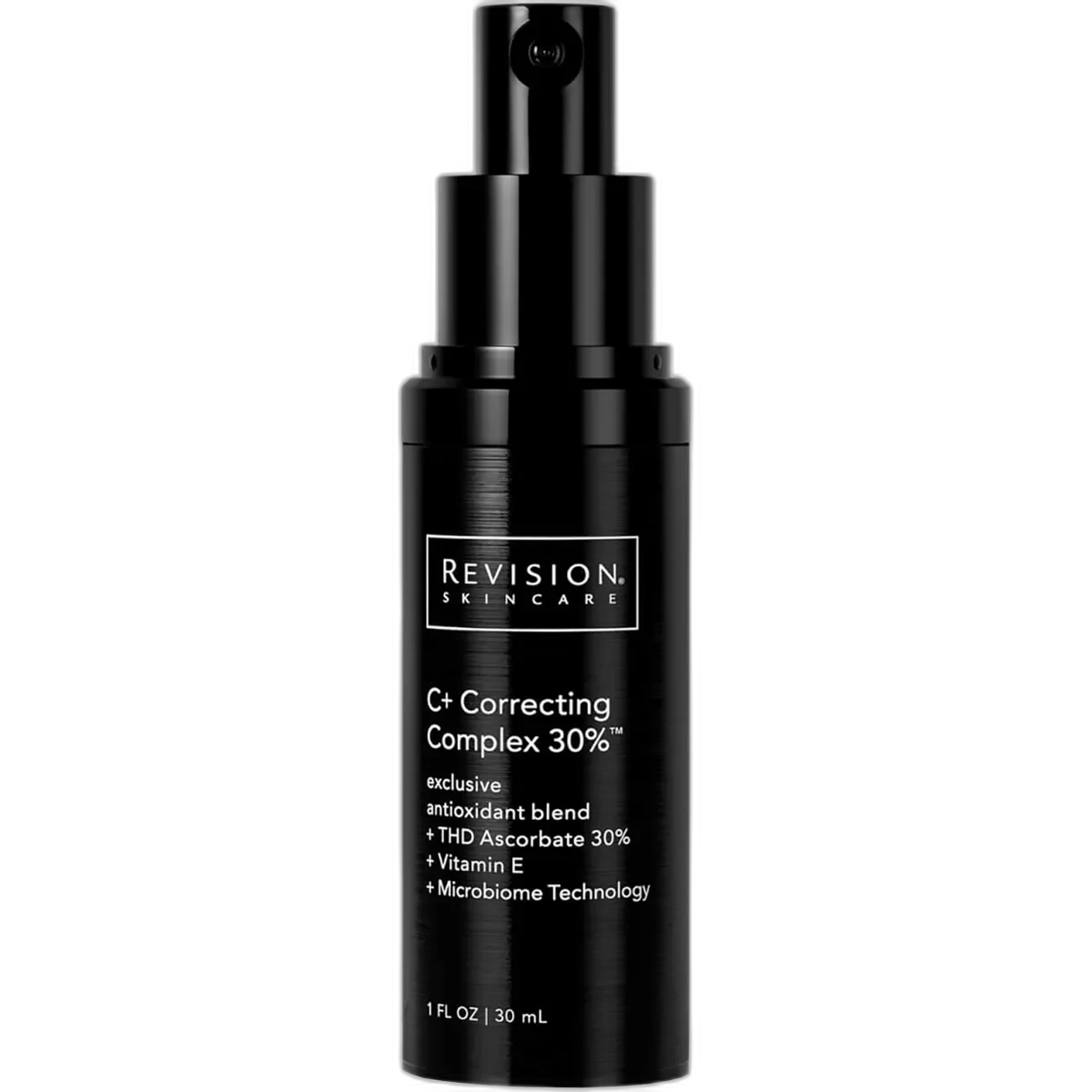
C+ Correcting Complex 30%
Clinical Vitamin C Powerhouse
 Verified reviewer
Pros & cons.
- +30% THD ascorbate — one of the highest vitamin C concentrations available in a non-irritating format
- +Zero stinging or irritation — suitable for sensitive skin types that cannot tolerate L-ascorbic acid
- +Exceptionally stable formula that resists oxidation and does not turn brown in the bottle
- +Multi-layered antioxidant system with ergothioneine, CoQ10, vitamin E, and acetyl zingerone
- +Fragrance-free with no common irritants or allergens
- +Cream-like texture layers beautifully under moisturizer and sunscreen
- +Airless pump packaging protects the formula from oxidation and contamination
- +Physician-dispensed quality with 30+ years of clinical brand credibility
- −Very expensive at $166 for 1 oz — one of the priciest vitamin C serums on the market
- −Small bottle requires careful use to last 2-3 months
- −Cream texture may feel heavier than preferred by very oily skin types
- −Available primarily through physician offices and specialty retailers
- −Results for dark spots take 4-8 weeks of consistent daily use
The full review.
There is a particular frustration that unites a large segment of skincare consumers: the vitamin C paradox. You know vitamin C works — the research on antioxidant protection, collagen synthesis, and hyperpigmentation reduction is essentially irrefutable. You also know that every L-ascorbic acid serum you have tried has either stung like a paper cut in lemon juice, oxidized to a suspicious amber by week three, or both. Revision Skincare’s C+ Correcting Complex 30% exists to resolve this paradox, and it does so with considerable sophistication.
The formula centers on tetrahexyldecyl ascorbate (THD) at 30% — a concentration that would be eye-watering in L-ascorbic acid but is perfectly comfortable here because THD operates under entirely different pharmacological rules. THD is oil-soluble, which means it crosses the skin’s lipid bilayer more efficiently than water-soluble vitamin C forms. It does not require a low pH environment for stability, eliminating the acidic conditions that cause stinging. It does not readily oxidize, which means your $166 investment will not turn brown in the bottle. And research has demonstrated that THD is converted to active ascorbic acid intracellularly — inside the skin cells where it actually needs to work.
The supporting antioxidant cast is where Revision’s formulation depth really shows. Ergothioneine, sometimes called the ‘longevity vitamin,’ is a rare amino acid antioxidant found in mushrooms that the body actively transports into cells via a dedicated transporter (OCTN1). Ubiquinone (CoQ10) provides mitochondrial antioxidant support. Tocopherol and tocopheryl acetate deliver vitamin E’s synergistic antioxidant partnership with vitamin C. Acetyl zingerone, a ginger-derived compound, was included specifically for its ability to neutralize free radicals generated by blue light and pollution — part of Revision’s proprietary MelaPATH Technology.
The additional botanicals are carefully selected rather than decoratively sprinkled. Euterpe oleracea (açaí berry) extract provides polyphenolic antioxidants. Punica granatum (pomegranate) extract contributes ellagic acid, which has independent research supporting its tyrosinase-inhibiting properties. Plantago lanceolata leaf extract brings anti-inflammatory benefits. And diglucosyl gallic acid acts as an additional brightening agent. This is not a formula with one active and twenty-eight fillers — nearly every ingredient is doing purposeful work.
The texture is a pleasant departure from the watery, sometimes oily consistency of traditional vitamin C serums. This applies like a lightweight cream — smooth, rich enough to feel nourishing, but not so heavy that it disrupts layering. It absorbs within about a minute, leaving a slightly dewy, luminous finish. The first time you apply it without experiencing any stinging or burning, there is an almost cognitive dissonance if you have spent years wincing through L-ascorbic acid applications.
Results are both immediate and cumulative. The luminous finish is visible from day one — skin genuinely looks brighter after a single application. Over the first two weeks, a general radiance builds as the antioxidant protection accumulates. By four to eight weeks, users typically report meaningful fading of dark spots, sunspots, and post-inflammatory hyperpigmentation marks. The anti-aging collagen synthesis effects are slower to manifest visually but are supported by the established mechanism of action of intracellular ascorbic acid.
The airless pump packaging is a thoughtful detail that matters more than aesthetics. Vitamin C derivatives, even stable ones like THD, benefit from protection against air exposure. The airless pump delivers a consistent dose, prevents contamination, and keeps oxygen away from the remaining product. The opaque container protects against light-induced degradation. These packaging choices extend the product’s effective life and justify part of the premium.
The honest conversation about this product is the price. At $166 for one ounce, used once daily, you are looking at roughly $55-80 per month in vitamin C serum. A 0.5 oz trial size is available for those who want to test before committing. The concentration and ingredient quality genuinely justify a premium, but the question of whether any single skincare product is worth this much is ultimately personal. What Revision delivers for that price is a formula that eliminates the compromises of traditional vitamin C — no irritation, no oxidation, no instability — while matching or exceeding the efficacy through a superior delivery mechanism.
The product is fragrance-free, paraben-free, and formulated without the common irritants that plague many vitamin C serums. The broad skin type compatibility — suitable for sensitive, dry, normal, combination, and even cautiously for oily skin — makes it one of the most universally tolerable high-dose vitamin C products available.
Revision Skincare built this product for the patient sitting in a dermatologist’s office saying: I know I need vitamin C, but everything I have tried irritates my skin. The C+ Correcting Complex 30% is the answer to that specific frustration, delivered with clinical precision and priced accordingly.
Ingredient analysis.
Full INCI list
Water (Aqua), Tetrahexyldecyl Ascorbate, Pentylene Glycol, Hydrolyzed Eruca Sativa Leaf, Glycerin, Zea Mays (Corn) Starch, Cetearyl Glucoside, Hydrogenated Lecithin, Acetyl Zingerone, Palmitoyl Glycine, Cyclopentasiloxane, Glyceryl Caprylate, Plantago Lanceolata Leaf Extract, Diglucosyl Gallic Acid, Squalane, Sodium Carboxymethyl Beta-Glucan, Euterpe Oleracea Fruit Extract, Ergothioneine, Punica Granatum Extract, Tocopherol, Ubiquinone, Acrylates/C10-30 Alkyl Acrylate Crosspolymer, Triethanolamine, Tocopheryl Acetate, Leuconostoc/Radish Root Ferment Filtrate, Phenoxyethanol, Disodium EDTA, PPG-12/Smdi Copolymer, Xanthan Gum
Skin match.
The science.
The Science
Tetrahexyldecyl ascorbate (THD), the formula's centerpiece at 30% concentration, has been the subject of increasing research attention. Unlike L-ascorbic acid, which requires a pH below 3.5 for stability and penetration, THD is oil-soluble and pH-independent. A study published in the Journal of Cosmetic Dermatology demonstrated that THD ascorbate penetrates the stratum corneum and epidermis more effectively than L-ascorbic acid due to its lipophilic nature, and is enzymatically converted to free ascorbic acid within the skin. This intracellular conversion means the active form of vitamin C is generated precisely where it needs to work — inside skin cells.
Research published in the International Journal of Cosmetic Science has shown that THD ascorbate at concentrations of 7-30% promotes collagen synthesis, inhibits melanin production via tyrosinase inhibition, and provides significant antioxidant protection against UV-induced free radicals. The higher concentration in this formula (30%) places it at the upper end of studied efficacy.
Ergothioneine, a supporting antioxidant in this formula, has attracted attention from researchers studying skin longevity. Published in Free Radical Biology and Medicine, research demonstrates that ergothioneine accumulates in cells via a specific transporter (OCTN1), providing sustained intracellular antioxidant protection. Unlike many antioxidants that are consumed during free radical neutralization, ergothioneine can be recycled, providing longer-lasting protection.
Ubiquinone (CoQ10) supports mitochondrial electron transport and protects against lipid peroxidation. Research in BioFactors has demonstrated that topical CoQ10 reduces wrinkle depth and improves skin smoothness. The synergy between vitamin C, vitamin E (tocopherol), and CoQ10 in the same formula creates a 'network antioxidant' effect where each compound helps regenerate the others, maintaining a sustained antioxidant defense.
Acetyl zingerone, part of Revision's MelaPATH Technology, has been shown in in vitro studies to neutralize free radicals generated specifically by visible light (blue light) exposure — a relevant concern given increasing screen time. This represents a forward-looking formulation choice addressing a environmental stressor that older vitamin C formulas were not designed to combat.
Dermatologist Perspective
Dermatologists who dispense this product frequently recommend it for patients who have failed traditional vitamin C serums due to irritation, sensitivity, or stability concerns. Board-certified dermatologists note that THD ascorbate at 30% represents one of the most bioavailable, stable, and tolerable vitamin C delivery systems available. The multi-antioxidant formulation with ergothioneine and CoQ10 reflects current dermatological understanding that comprehensive free radical defense requires multiple complementary antioxidant pathways. Dermatologists particularly value the fragrance-free, irritant-free profile that allows confident recommendation even for patients with rosacea or post-procedure sensitivity.
Where it fits in your routine.
Apply one pump to clean skin every morning after cleansing and toning. Spread it evenly over the face and neck. Wait 1-2 minutes for absorption before you apply moisturizer and sunscreen. Use daily for cumulative antioxidant protection and brightening. You can also use it in the evening, but morning use maximizes antioxidant defense against daytime UV and pollution exposure. Store at room temperature away from direct sunlight.
At $166 for 1 fl oz, this is a luxury investment. A 0.5 oz trial size offers a lower entry point. The per-ounce cost exceeds most vitamin C serums, even clinical brands. However, the value includes: 30% THD ascorbate (one of the highest and most stable concentrations available), a multi-antioxidant system, airless pump packaging, fragrance-free formulation, and the quality of a 30-year physician-dispensed brand. For those who wasted money on vitamin C serums that oxidized, irritated skin, or failed to work, paying more for a formula that works may be more cost-effective.
This is for anyone serious about vitamin C but frustrated by the irritation, instability, or oxidation of traditional L-ascorbic acid serums. It works for sensitive skin types needing antioxidant protection and brightening. It suits those targeting sun damage, hyperpigmentation, and photoaging with a physician-grade formula backed by clinical credibility.
Budget-conscious consumers who cannot justify $166 per ounce. Users satisfied with their current L-ascorbic acid serum who experience no irritation or stability issues. People seeking a multi-tasking product for acne or exfoliation — this is only an antioxidant and brightening treatment.
Product details.
Fragrance-free — a faint natural scent that vanishes quickly.
An airless pump bottle protects the vitamin C from oxidation. The 1 fl oz size uses an opaque container to prevent light degradation. A 0.5 oz trial size is also available. ***
The thick texture feels pleasant immediately—no stinging, tingling, or irritation. Skin looks more luminous after the first application. Users used to L-ascorbic acid serums will notice the lack of acidic sensation. The product layers smoothly under moisturizer and sunscreen. ***
2-3 months with once-daily morning application ***
12 months ***
All Year ***
The backstory.
Revision Skincare spent years developing the C+ Correcting Complex to address the limitations of traditional vitamin C serums — oxidation, instability, irritation, and the characteristic stinging of L-ascorbic acid. The 2019 launch introduced THD ascorbate at 30% in a format that physicians could confidently recommend to patients with sensitive skin. The MelaPATH Technology was specifically engineered to address blue light damage, reflecting emerging research on digital screen exposure and skin aging.
About Revision Skincare
Established Brand (5–20 years)Revision Skincare has led physician-dispensed skincare for over 30 years, selling exclusively through dermatologists and medical spas. The C+ Correcting Complex 30% uses the brand's proprietary MelaPATH Technology and THD Ascorbate, a stable and bioavailable form of vitamin C.
Common myths.
THD ascorbate is less effective than L-ascorbic acid because it's a derivative.
THD ascorbate is oil-soluble. This lets it penetrate the skin's lipid bilayer better than water-soluble L-ascorbic acid. Research shows the skin converts THD ascorbate to active ascorbic acid. It delivers comparable or superior antioxidant and collagen-stimulating effects without the stability issues and irritation of pure L-AA.
Vitamin C serums must be yellow and acidic to be effective.
L-ascorbic acid and its oxidation products cause the yellow color in traditional vitamin C serums. THD ascorbate is a white/cream-colored ingredient and does not turn brown/orange like L-AA. Efficacy depends on form, concentration, and delivery—not color or acidity.
FAQ.
What is THD ascorbate and how is it different from regular vitamin C?
Tetrahexyldecyl ascorbate (THD) is an oil-soluble vitamin C derivative that penetrates the skin's lipid layers more effectively than water-soluble L-ascorbic acid. It's far more stable — resistant to oxidation, no need for low pH, and no yellowing. It converts to active ascorbic acid within the skin cells, delivering antioxidant and collagen-stimulating benefits without the stinging or irritation of traditional vitamin C.
Can I use Revision C+ Correcting Complex with retinol?
Yes — THD ascorbate lacks the pH sensitivity issues that complicate combining L-ascorbic acid with retinol. Use the C+ Complex in the morning for antioxidant protection and your retinol product in the evening for anti-aging benefits. This combination works well for comprehensive skin aging management.
Does Revision C+ Correcting Complex 30% oxidize and turn brown?
No. THD ascorbate is more stable than L-ascorbic acid serums, which oxidize and turn yellow-brown. The airless pump packaging also prevents oxidation. If stored properly, the product stays its original cream color throughout its shelf life.
Will Revision C+ Correcting Complex sting or irritate sensitive skin?
This is one of the best-tolerated vitamin C serums available. THD ascorbate works without a low pH, so it lacks the acidic stinging of L-ascorbic acid serums. Users with sensitive skin report zero irritation, so this works for skin types that cannot tolerate traditional vitamin C.
What the community says.
"Noticeable brightening and glow within days"
"Does not sting or irritate like L-ascorbic acid serums"
"Cream texture is easier to apply than watery vitamin C serums"
"Significant improvement in sun spots and discoloration"
"Gentle enough for sensitive skin"
"Very expensive at $166 for 1 oz"
"Rich texture may feel heavy for very oily skin"
"Results take 4-8 weeks for significant dark spot fading"
"Small bottle requires careful dispensing to last"
People also looked at.