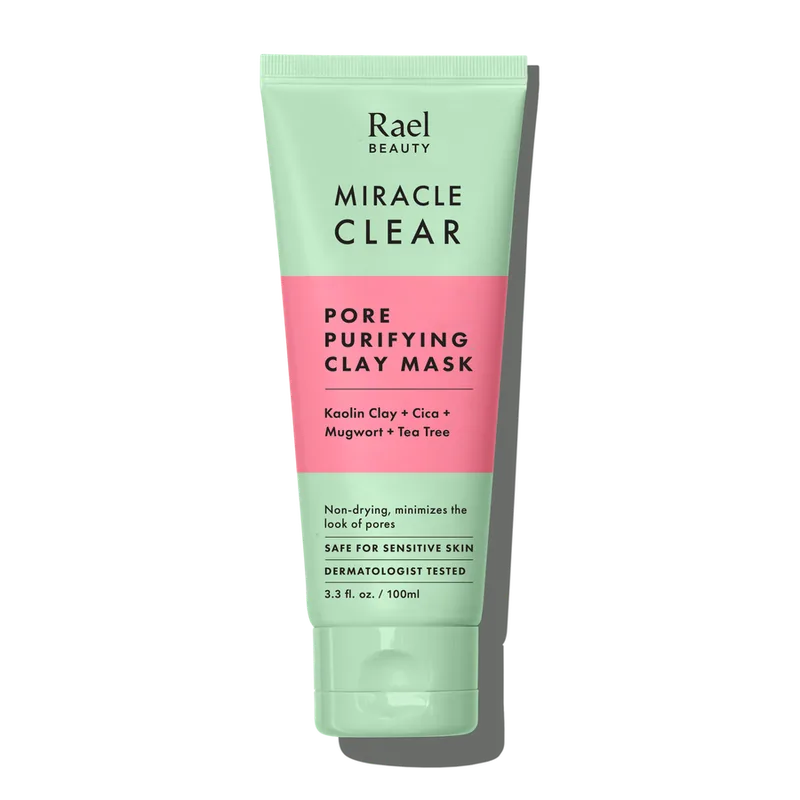
Miracle Clear Pore Purifying Clay Mask
5-Minute Kaolin Clay Mask
 Verified reviewer
Pros & cons.
- +5-minute wear time vs the typical 15–20 minutes — significantly less over-drying risk
- +Kaolin (white clay) is gentler than bentonite or French green clay, appropriate for sensitive acne skin
- +Tea tree, centella, and mugwort extracts add antibacterial + anti-inflammatory + soothing function on top of the clay absorption
- +Cream base prevents the formula from fully hardening, so removal doesn't pull at skin
- +Panthenol and glycerin offset the natural drying effect of clay masks
- +Pairs naturally with the rest of the Miracle Clear regimen as a weekly add-on
- −3.4 fl oz jar is small; at weekly use it lasts only 8–10 weeks
- −Jar packaging is less hygienic than a tube
- −Clay masks generally are a treatment, not a routine — daily use is over-drying
- −Tea tree content may trigger sensitivities (~1-2% of users)
- −Mugwort is a known sensitizer for a small fraction of users
The full review.
The Rael Miracle Clear Pore Purifying Clay Mask is the weekly clay treatment step of the Miracle Clear acne regimen — a lightweight kaolin-based wash-off mask designed for a 5-minute wear window with soothing supporting actives that take the edge off clay’s inherent drying effect. Less aggressive than traditional bentonite masks (Aztec Indian Healing Clay), more skin-friendly than most acne-marketed clay products.
The 5-minute wear time is the formulation’s smart positioning. Traditional clay-mask cycles are 15–20 minutes — a duration based on tradition rather than science. Kaolin clay’s absorption kinetics are actually concentrated in the first 3–5 minutes; after that, the mask continues to dry on skin without adding meaningful absorption, while the ongoing dehydration starts damaging the barrier. Most users find clay masks “too drying” because they wear them too long. Rael’s 5-minute claim is supported by the actual mechanism: by the time the mask would harden on a traditional cycle, it’s already done its work and is now just over-drying skin.
The kaolin choice also matters. Kaolin is the gentlest commonly-used cosmetic clay — less negatively charged than bentonite or French green clay, which means it absorbs less aggressively but also damages the barrier less. The trade-off is depth: kaolin pulls surface oil and shallow pore-mouth congestion well, but doesn’t draw out deeper sebaceous plugs the way bentonite would. For weekly maintenance on combination-to-oily skin, kaolin is the right choice. For occasional deeper cleansing on heavy congestion, a bentonite-based product is more appropriate.
The supporting actives address what clay alone doesn’t do. Tea tree leaves contribute mild antibacterial activity to the C. acnes arm of acne biology — useful for the post-absorption phase. Centella asiatica (cica) leaves provide triterpene anti-inflammatory action, offsetting the irritation that any clay mask can cause. Mugwort adds another anti-inflammatory pathway. Panthenol and glycerin in the cream base offset the inherent dehydrating effect of the clay.
At $14.99 for 3.4 fl oz, the per-ounce cost ($4.40) is comparable to mid-tier clay masks. The 5-minute wear time means less product per use than longer-wear masks, so the jar lasts longer in practice than the ounce count suggests — 8–12 weeks at once-weekly use is typical.
Not ideal for
Genuinely dry skin — no clay mask is appropriate; the absorption mechanism strips moisture from skin that’s already deficient. People with mugwort or tea tree sensitivities — both are known sensitizers for a small fraction of users. Anyone wanting a deep-cleansing high-absorption mask — go with bentonite-based options like Aztec Indian Healing Clay instead.
Ingredient analysis.
Skin match.
The science.
Why kaolin clay at 5 minutes works
Cosmetic clays absorb oil through a combination of high surface area and electrostatic attraction. Kaolin (white clay) is the gentlest commonly-used cosmetic clay — less negatively charged than bentonite or French green clay, which means it absorbs less aggressively. The trade-off is depth: kaolin pulls surface oil and shallow pore-mouth congestion well, but doesn't draw out deeper sebaceous plugs the way a more aggressive clay would.
The 5-minute wear time matches kaolin's absorption kinetics. Most of the oil-absorbing work happens in the first 3–5 minutes; after that, the mask continues to dry on skin without adding meaningful absorption, while the ongoing dehydration starts damaging the barrier. Traditional 15–20 minute clay-mask cycles are largely tradition; the actual mechanism doesn't require that wear time, and longer applications are why most users find clay masks too drying.
The supporting actives in the Rael formulation address what clay alone doesn't. Tea tree leaves contribute mild antibacterial activity to address the C. acnes arm of acne biology. Centella asiatica's triterpenes reduce inflammation, both during the mask and in the post-rinse skin state. Mugwort adds another mild anti-inflammatory pathway. Panthenol and glycerin in the base offset the inherent dehydrating effect of any clay mask.
References
- Clay masks in dermatology — International Journal of Cosmetic Science (2014)
- Centella asiatica in dermatology — Indian Journal of Pharmacology (2015)
Where it fits in your routine.
Cleanse and dry skin. Apply a thin even layer to oily/congested areas (T-zone is typical) using clean fingers or a brush. Leave 5 minutes. Rinse off with lukewarm water; pat dry. Follow with the rest of your routine. Use 1–2x weekly PM, never daily.
$14.99 for 3.4 fl oz = $4.40/oz. Comparable to mid-tier clay masks (Origins Clear Improvement at ~$7/oz, The Body Shop Tea Tree Clay at ~$5/oz). The 5-minute wear time means less product per use than longer-wear masks.
Combination and oily skin types looking for a weekly T-zone reset. Acne-prone users wanting a clay mask gentler than bentonite-heavy options.
Genuinely dry skin types (no clay mask is appropriate). People with mugwort or tea tree sensitivity. Users wanting deep-cleansing maximum absorption — go with bentonite-based options.
Product details.
Lightweight creamy clay; dries to a soft semi-matte (doesn't fully harden)
Fragrance free
3.4 fl oz jar
12 months after opening
All Year (especially helpful in humid summer for T-zone oil)
The backstory.
Rael's weekly clay mask addition to the Miracle Clear regimen — kaolin-based with cica, mugwort, and tea tree in a 5-minute wear format. Less aggressive than traditional bentonite masks; more skin-friendly than the deep-cleanse category typically allows.
About Rael
K-beauty / acne-careRael was founded in 2017 by three Korean-American women — Yanghee Paik, Aness An, Binna Won. The Pore Purifying Clay Mask was launched 2024 as the weekly treatment step in the Miracle Clear acne regimen.
Common myths.
Clay masks pull out toxins from your skin.
Clay masks pull out oil and surface debris — not "toxins." Skin doesn't store toxins; that's the liver's job. The pleasant cleansed feeling after a clay mask comes from real oil absorption, not from any detox effect.
A clay mask that doesn't fully dry isn't working.
The hard-dry phase of traditional clay masks isn't doing additional work — it's over-drying. Modern clay mask formulations (like this one) stay slightly soft through the wear window because the absorption is complete before the formula would harden, and additional drying just damages the barrier.
FAQ.
Why only 5 minutes?
Most clay masks recommend 15–20 minute wear, but the clay actually absorbs most of the oil it's going to within the first 3–5 minutes. After that, you're mostly drying out the skin barrier without additional benefit. Rael's 5-minute claim is supported by the absorption kinetics of kaolin — by minute 5 the mask has done its work.
Can I use it more than once a week?
1–2x weekly is the sweet spot. Daily clay masking — even gentle kaolin — over-dries the barrier and triggers rebound sebum production. The mask is a treatment, not a routine step.
How does it compare to Aztec Indian Healing Clay?
Aztec is pure bentonite (much more aggressive than kaolin), requires water/ACV mixing, and dries hard. Rael's formulation is much gentler — kaolin base, pre-mixed cream texture, doesn't fully harden, includes soothing actives. Aztec is the deeper cleanse; Rael is the more skin-friendly weekly maintenance.
Will it shrink my pores?
Visibly, temporarily — yes. The mask reduces the appearance of pore congestion (which makes pores look larger) and tightens skin slightly during the wear window. The "pore-shrinking" effect resets within hours; no clay mask permanently changes pore size, which is largely genetic.
Is it safe for sensitive skin?
Kaolin and the soothing actives (cica, panthenol) are well-tolerated. The tea tree and mugwort can trigger sensitivities in a small fraction of users. Patch-test on the jawline if you've reacted to plant essential oils.
What the community says.
"5-minute wear is genuinely convenient"
"T-zone visibly less congested after the first use"
"Doesn't crack or pull at skin during wear"
"Cica + tea tree leaves are a smart soothing-and-treating combo"
"Works well as a weekly addition to the Miracle Clear regimen"
"Jar packaging gets contaminated by fingers"
"3.4 oz size runs out fast"
"Tea tree scent is noticeable"
"Won't replace a more aggressive clay mask for deep cleansing"
People also looked at.