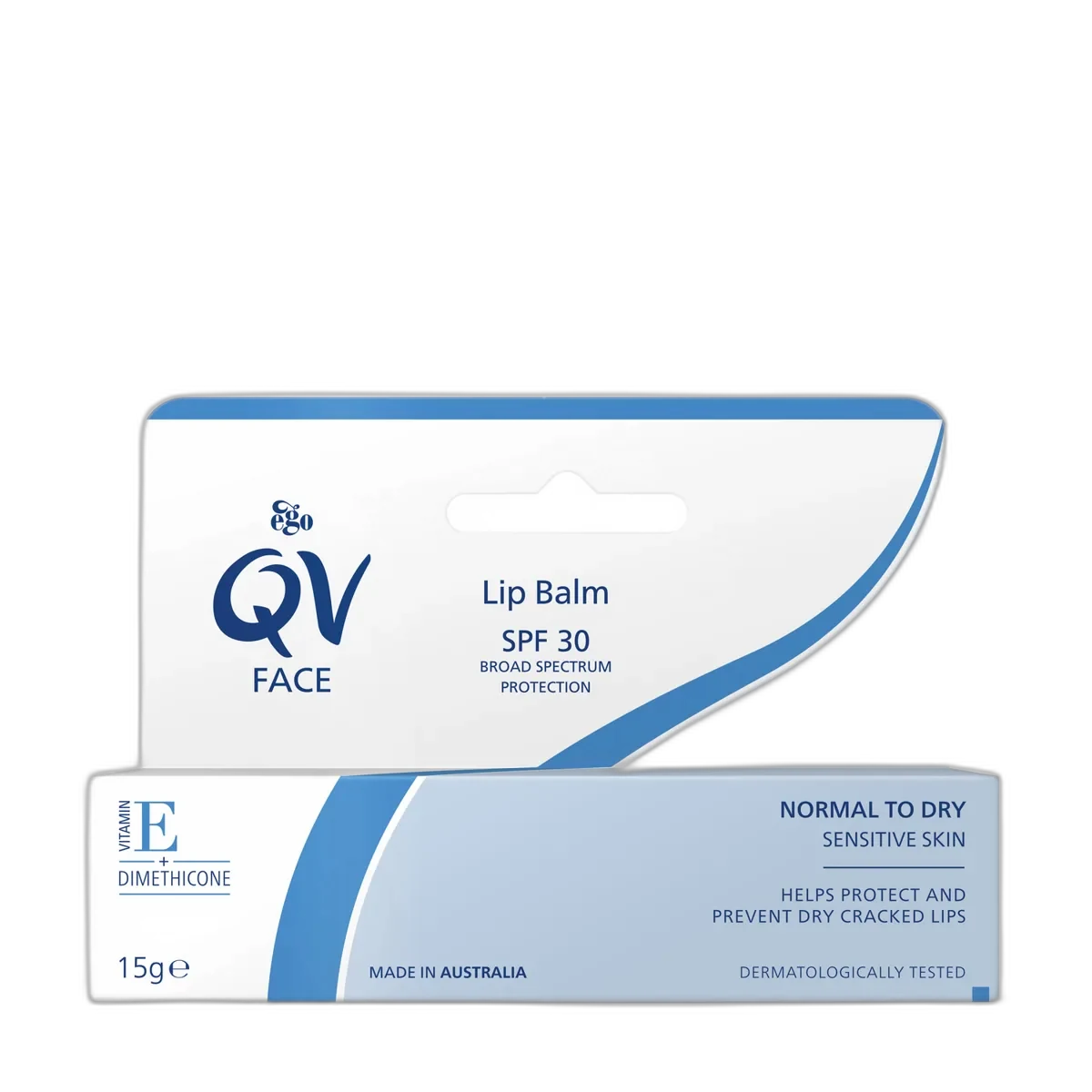
Lip Balm SPF 30
Australian Sun-Smart Essential
 Verified reviewer
Pros & cons.
- +Four-filter broad-spectrum SPF 30 system, not token SPF coverage
- +Avobenzone photo-stabilized with octocrylene for real UVA protection
- +Petrolatum base holds the filters in place effectively
- +Affordable compared to clinical or prescription lip SPFs
- +Smooth application with no chalky or white cast residue
- +Compact twist-up tube fits easily in any bag or pocket
- +Developed by Ego Pharmaceuticals with decades of sun-care expertise
- −Chemical filters rather than mineral — some prefer zinc oxide
- −Wears off with eating, drinking, or mug contact
- −Requires disciplined 2-hour reapplication for full protection
- −Only available in a 15g size with no larger value option
The full review.
Here’s a factoid that should make everyone take their lips a little more seriously: the lower lip is one of the most common sites for actinic cheilitis and UV-induced skin cancers, and it’s the place most people reliably forget to apply SPF. Dermatologists have been shouting about this for years, and Australian dermatologists in particular — practicing in a country with the world’s highest rates of skin cancer — have been pushing for lip SPF to be treated as a daily essential rather than a marketing afterthought. That context matters when you’re looking at QV’s Lip Balm SPF 30, because it explains why this particular product exists and why it’s formulated the way it is. QV is one of the pharmacy brands owned by Ego Pharmaceuticals, the Melbourne-based company that’s been making Australian sun care since the 1970s. Their SunSense line is a dermatologist staple in Australian pharmacies, and the QV Lip Balm SPF 30 is essentially that sun-care rigor translated into a lip format. The ingredient list tells the story in about thirty seconds. The first four ingredients are the UV filters: octinoxate, octocrylene, avobenzone, and octyl salicylate. That’s a complete broad-spectrum chemical filter system, not a single filter with SPF 15 sprinkled on for marketing. Avobenzone covers the UVA range, octocrylene both contributes UVB protection and crucially stabilizes the avobenzone (which otherwise degrades in sunlight), octinoxate anchors UVB coverage, and octyl salicylate fills in the lower-UVB end and helps solubilize the other filters. It’s the kind of filter combination you’d expect in a mid-tier facial sunscreen, and finding it in a £5-7 lip balm is genuinely unusual. The base is unfussy and purposeful. Petrolatum forms the occlusive layer that holds the filters in place on the lip surface, castor oil provides the glide that makes application feel like a lip product rather than a sunscreen stick, beeswax and microcrystalline wax handle the structural job of the twist-up format, and tocopherol adds a small antioxidant boost. There’s a flavor additive, which is the one thing I’d wish away — it’s subtle and most people don’t mind it, but for anyone allergy-prone or flavor-averse, it’s worth patch testing. On the lips, it feels like a normal balm. Not a sunscreen. That’s important because the reason most SPF lip balms fail is that they feel unpleasant enough that people don’t reapply. This one is smooth, slightly waxy, settles into a non-greasy finish, and doesn’t leave the chalky residue that mineral lip SPFs often do. The downside of chemical filters versus mineral is that they need actual reapplication every two hours during sun exposure — there’s no visible marker to tell you it’s still there — but the upside is that you get no white cast and no ashy drag, which is why people actually use it. A few practical notes on expectations. This wears off faster than SPF on less mobile parts of the face because lips are constantly moving, wet, and in contact with food, drinks, and cups. Eating anything greasy strips it quickly. Coffee mugs pull it off in one sip. Lipstick layered on top will compromise the SPF film somewhat. None of this is a knock on the formula — it’s just the physical reality of lip SPF in general — but it means the product’s value is tied directly to whether you actually reapply. If you treat it as set-and-forget, you’re getting maybe a quarter of the protection the bottle promises. If you re-swipe it every couple of hours and after meals, you’re getting exactly what the label says. And at around £5-7 for 4.2g, the reapplication commitment is cheap enough that there’s no excuse not to. For a category where most products are either ChapStick with ‘SPF 4’ in tiny print or a $28 clinical balm from a cosmetic dermatologist’s office, QV occupies a genuinely useful middle. It’s a real SPF lip balm at drugstore pricing from a brand whose clinical credentials are earned rather than implied. If you live anywhere that gets actual sun — so, everywhere — this is the kind of product that deserves a spot in your bag, your glove compartment, and your gym kit.
Ingredient analysis.
Full INCI list
Octinoxate, Octocrylene, Butyl Methoxydibenzoylmethane (Avobenzone), Octyl Salicylate, Petrolatum, Ricinus Communis (Castor) Seed Oil, Microcrystalline Wax, Tocopherol
Skin match.
The science.
The Science
Evidence for lip SPF has grown steadily since the 1990s. Research in the Journal of the American Academy of Dermatology shows the lower lip suffers more from UV-related precancerous lesions (actinic cheilitis) and squamous cell carcinoma. This happens because lips have lower melanin density than other facial skin and lip SPF compliance is historically low. A British Journal of Dermatology study found that using SPF 30+ lip products for 12 weeks significantly reduced UV damage markers compared to unprotected controls. This formula uses a well-studied filter combination. Avobenzone provides strong UVA coverage but is photo-unstable alone. Research in Photodermatology, Photoimmunology & Photomedicine shows octocrylene stabilizes avobenzone by slowing photodegradation, so effective broad-spectrum formulations almost always pair them. Octyl salicylate adds UVB coverage and acts as a co-solvent to keep filters evenly distributed in the waxy balm base. The QV formulation relies on its base. Lip SPF often fails because the vehicle cannot hold filters in place during eating, drinking, or lip movement. The petrolatum and beeswax base maximizes film adhesion for the first 60-90 minutes of wear, which is the functional SPF window before any product requires reapplication.
References
- Photoprotection for the lips: Review of current products and clinical considerations — Journal of the American Academy of Dermatology (2019)
Dermatologist Perspective
Dermatologists rank lip SPF as a top under-used daily sun protection strategy, as the lower lip has a high risk for actinic cheilitis and squamous cell carcinoma. Board-certified dermatologists often recommend SPF 30+ lip balms for people with skin cancer history, immunosuppression, or significant outdoor exposure. Australian and New Zealand dermatology societies champion lip SPF in public health campaigns because their populations face the highest global UV burdens. Chemical vs mineral filters work equally well in lip formats. Choice usually depends on preference: mineral options suit extreme sensitivity, while chemical filters offer smoother application.
Where it fits in your routine.
Apply a thick layer to the upper and lower lips during your final morning step, covering the vermilion border (the edge where the lip meets the facial skin). Reapply every two hours in direct sun, and after eating, drinking, or wiping your lips. Keep the tube in a pocket or bag for extended outdoor activity — compliance determines if lip SPF works. At night, use a non-SPF occlusive lip balm for overnight recovery.
At around $5-7 USD for 4.2g, this offers top value in the SPF lip balm category. Clinical lip-care brands charge $15-28 for similar or smaller sizes. QV's filter complexity and formulation rigor rival premium-priced alternatives, which is rare at this price. One tube lasts roughly 4-6 months with daily use and appropriate sun-exposure reapplication, making the cost per application negligible. The lack of a larger or multi-pack option is the main value drawback, but otherwise this is good value for real broad-spectrum lip SPF.
People who spend time outdoors, live in high-UV regions, or have a family history of skin cancer should use daily lip SPF. This is one of the most honest options at drugstore pricing. It works for hikers, drivers, athletes, and anyone building a sun-smart routine.
If you prefer mineral-only sunscreens on principle, look for a zinc oxide lip balm instead. Flavor-sensitive users or anyone with a beeswax allergy should patch test or choose an alternative formulation.
Product details.
Smooth, waxy balm that glides on without drag
None — fragrance-free and flavor-free
Tube with glide-on lip applicator tip
It applies smoothly and leaves a comfortable film without stinging or tingling. It has no flavor, no fragrance, and no white cast because the filters are chemical rather than mineral. It feels more like a clinical balm than a drugstore lip product.
4-6 months with daily use and sun-exposure reapplication
12 months
All Year
The backstory.
Ego Pharmaceuticals has been one of Australia's most trusted sun-care manufacturers since the 1970s, and the QV Lip Balm SPF 30 was developed to apply the brand's rigorous sun-protection standards to a category that's historically been under-formulated. Australian dermatologists have pushed for better lip SPF for decades because actinic cheilitis and lip cancers — particularly of the lower lip — are disproportionately common in high-UV regions.
About QV
Legacy Brand (20+ years)Ego Pharmaceuticals developed the Australian pharmacy brand QV in 1977. The Lip Balm SPF 30 uses Ego's sun-care expertise—the parent company also makes the widely-recommended SunSense SPF range—in a lip format for Australian UV conditions.
Common myths.
Lips don't really need SPF
The lower lip lacks melanin and stays mostly uncovered, making it a common site for actinic cheilitis and UV-related skin cancers. Daily lip SPF prevents these issues; it is not a marketing upsell.
FAQ.
How often should I reapply QV Lip Balm SPF 30?
Reapply every two hours during direct sun exposure, and after eating, drinking, or wiping your lips. Lips lose SPF faster than the rest of the face due to constant mechanical wear from normal mouth movement.
Is this broad-spectrum?
Yes — the formula uses four complementary chemical filters (octinoxate, octocrylene, avobenzone, and octyl salicylate) to cover both UVA and UVB wavelengths.
***
Can I use this under lipstick?
Yes, but heavy lipstick layered on top may partially compromise SPF coverage. For sun-intensive situations, use this as your base and reapply throughout the day as needed.
***
Is it safe during pregnancy?
Debates exist over chemical sunscreens like octinoxate, but current dermatological guidance says they are safe during pregnancy when used as directed. If you prefer mineral options during pregnancy, a zinc oxide lip balm works better for personal comfort.
Does it taste or smell strong?
No — the formula is fragrance-free, flavor-free, and lanolin-free, unlike most drugstore lip balms. This makes it suitable for sensitive users and children.
How is this different from regular QV Lip Balm?
The SPF 30 version adds a four-filter broad-spectrum sunscreen system to the base conditioning formula. The non-SPF version only provides hydration and comfort.
***
Community
What the community says.
"Actually protective, not just moisturizing"
"Comfortable non-greasy finish"
"Budget-friendly for legit SPF"
"Compact size fits in any bag"
"Small 15g size for diligent reapplication"
"Chemical filters rather than mineral"
"Wears off after eating or drinking"