Dermide Cica Barrier Sleeping Pack
Overnight Barrier Rescue
 Verified reviewer
Pros & cons.
- +Four isolated centella triterpenes with disclosed concentrations for targeted multi-pathway repair
- +Lightweight gel-cream texture absorbs completely without greasy pillowcase residue
- +Completely fragrance-free — critical for an occlusive product worn eight hours
- +Squalane and jojoba oil base closely mimics skin's natural sebum for better acceptance
- +Generous 80ml jar lasts 3-4 months with nightly use, excellent cost per use
- +Gentle enough for rosacea, eczema, and post-procedure skin without causing flares
- +Ceramide NP delivered via hydrogenated lecithin for improved barrier integration
- +Vegan and cruelty-free without compromising formulation efficacy
- −Single ceramide (NP) is less comprehensive than multi-ceramide barrier repair formulas
- −Jar packaging exposes product to air and contamination with each use
- −May not provide sufficient moisture alone for very dry or winter-stressed skin
- −Not suitable for fungal acne due to jojoba oil and caprylic/capric triglyceride
- −Slightly tacky feel during initial absorption before it fully sets
The full review.
There are roughly four hundred products in the K-beauty universe that put centella asiatica on the label and call themselves soothing. Most of them contain a generic extract at an undisclosed concentration, riding the cica trend like a wave they hope never breaks. The Purito Dermide Cica Barrier Sleeping Pack does something different, and the difference matters.
Flip this jar over and read the INCI list past the usual suspects — water, caprylic/capric triglyceride, glycerin, squalane — and you will find centella asiatica extract at 15,000 ppm. That alone is a respectable concentration. But keep reading. Madecassoside at 0.03 ppm. Asiaticoside at 0.02 ppm. Madecassic acid at 0.002 ppm. Asiatic acid at 0.002 ppm. Four individual triterpenes, isolated and listed separately with their concentrations. This is the centella equivalent of naming every musician in the orchestra rather than just saying “there will be music.”
Why does this matter? Because each triterpene does something slightly different. Madecassoside is the most potent anti-inflammatory of the group. Asiaticoside stimulates collagen synthesis and promotes wound healing. Madecassic acid and asiatic acid contribute to the structural repair of the extracellular matrix. Together, they cover multiple pathways of skin recovery. A generic centella extract gives you some of each in unknown proportions. This formula gives you the full quartet, tuned and balanced.
The base formula around this centella complex is smart without being flashy. Squalane and jojoba oil provide emollient occlusion that mimics sebum — your skin accepts them as familiar rather than foreign. Ceramide NP, delivered through a hydrogenated lecithin carrier for better integration, repairs the lipid matrix of the stratum corneum. Panthenol adds another layer of barrier support and anti-inflammatory action. Sodium hyaluronate draws moisture from the deeper dermis up to where you need it. Sunflower seed oil contributes linoleic acid, an essential fatty acid that compromised barriers tend to lack.
The texture is what convinces you this was formulated by people who actually use sleeping packs. It is a gel-cream — bouncy, slightly jelly-like — that melts on contact and absorbs within a couple of minutes to a thin, breathable film. There is no greasy smear on your pillowcase, no suffocating heaviness, no waxy residue in the morning. You wake up with skin that feels plumper, calmer, and somehow more cohesive, as though all the layers of your barrier decided to show up to work at the same time.
The fragrance situation is characteristically Purito: there is none. No essential oils. No parfum. Nothing. For a sleeping pack that sits on your skin for eight hours, this is not a nice-to-have — it is essential. Fragrance in an occlusive overnight product means eight hours of potential sensitization against skin that is already trying to repair itself.
For sensitive and barrier-compromised skin, this sleeping pack earns its keep quickly. Users with rosacea report visibly reduced morning redness within the first week. Eczema-prone skin finds it gentle enough for daily use without flares. Post-procedure skin — after lasers, peels, or aggressive retinoid use — gets a recovery boost that feels proportionate to the damage.
The limitations are honest ones. A single ceramide (NP) is less comprehensive than the multi-ceramide approach in products from CeraVe or some of Purito’s own other formulations. Very dry skin in harsh winter climates may find this sleeping pack insufficient on its own — it works best as a sealing layer over a richer moisturizer, not as a standalone. The jar packaging, while pretty, introduces air and finger contact with every use; a pump or tube would better preserve the sensitive actives. And those with fungal acne should proceed with caution, as the jojoba oil and caprylic/capric triglyceride may feed Malassezia.
At approximately $21.50 for 80ml, the value proposition is solid. The generous size means this jar will last three to four months of nightly use, working out to roughly five to six dollars per month for a dedicated barrier repair treatment. For a product that uses isolated centella triterpenes at disclosed concentrations alongside ceramide and squalane, the price reflects the ingredient quality without a luxury markup.
The Purito Dermide Cica Barrier Sleeping Pack does not try to be everything. It is not brightening. It is not anti-aging. It is not going to transform your skin overnight in the way that a retinoid or vitamin C serum will. What it does is create the conditions for your skin to repair itself while you sleep, using ingredients with documented mechanisms of action at transparent concentrations. For skin that has been pushed too hard — by actives, by weather, by stress, by life — this is the overnight reset it needs.
Formula
Texture
The texture is what convinces you this was formulated by people who actually use sleeping packs. It is a gel-cream — bouncy, slightly jelly-like — that melts on contact and absorbs within a couple of minutes to a thin, breathable film. There is no greasy smear on your pillowcase, no suffocating heaviness, no waxy residue in the morning. You wake up with skin that feels plumper, calmer, and somehow more cohesive, as though all the layers of your barrier decided to show up to work at the same time.
Scent
The fragrance situation is characteristically Purito: there is none. No essential oils. No parfum. Nothing. For a sleeping pack that sits on your skin for eight hours, this is not a nice-to-have — it is essential. Fragrance in an occlusive overnight product means eight hours of potential sensitization against skin that is already trying to repair itself.
Best for
For sensitive and barrier-compromised skin, this sleeping pack earns its keep quickly. Users with rosacea report visibly reduced morning redness within the first week. Eczema-prone skin finds it gentle enough for daily use without flares. Post-procedure skin — after lasers, peels, or aggressive retinoid use — gets a recovery boost that feels proportionate to the damage.
Not ideal for
The limitations are honest ones. A single ceramide (NP) is less comprehensive than the multi-ceramide approach in products from CeraVe or some of Purito’s own other formulations. Very dry skin in harsh winter climates may find this sleeping pack insufficient on its own — it works best as a sealing layer over a richer moisturizer, not as a standalone. The jar packaging, while pretty, introduces air and finger contact with every use; a pump or tube would better preserve the sensitive actives. And those with fungal acne should proceed with caution, as the jojoba oil and caprylic/capric triglyceride may feed Malassezia.
Works for
For skin that has been pushed too hard — by actives, by weather, by stress, by life — this is the overnight reset it needs.
Ingredient analysis.
Full INCI list
Water, Caprylic/Capric Triglyceride, Glycerin, Squalane, Simmondsia Chinensis (Jojoba) Seed Oil, Cetearyl Alcohol, Centella Asiatica Extract (15,000 ppm), Potassium Cetyl Phosphate, Helianthus Annuus (Sunflower) Seed Oil, Butylene Glycol, Polyglyceryl-3 Methylglucose Distearate, 1,2-Hexanediol, Panthenol, Hydroxyacetophenone, Sodium Carbomer, Hydrogenated Lecithin, Ceramide NP, Hydroxyethylcellulose, Camellia Sinensis Leaf Extract, Sodium Hyaluronate, Madecassoside (0.03 ppm), Asiaticoside (0.02 ppm), Madecassic Acid (0.002 ppm), Asiatic Acid (0.002 ppm)
Skin match.
The science.
The Science
The Dermide Cica Barrier Sleeping Pack's formulation centers on centella asiatica's four primary triterpenes, each with distinct and complementary mechanisms of action. Madecassoside, the most potent anti-inflammatory triterpene in centella, has been shown in a 2012 study published in the International Journal of Molecular Sciences to inhibit NF-κB signaling and reduce pro-inflammatory cytokine production — mechanisms directly relevant to calming reactive skin overnight.
Asiaticoside's collagen-stimulating properties have been documented across multiple studies, including research published in the Journal of Pharmacy and Pharmacology demonstrating its ability to increase type I collagen synthesis in human dermal fibroblasts. In this sleeping pack, asiaticoside works during the skin's nocturnal repair window when collagen synthesis is naturally elevated.
The ceramide NP is delivered through a hydrogenated lecithin vehicle, which research in the International Journal of Pharmaceutics has shown improves ceramide integration into the stratum corneum's lamellar structure compared to free ceramide delivery. This is particularly relevant for overnight use, as the extended contact time allows for deeper lipid matrix incorporation.
Squalane's role as an emollient that mimics the skin's natural squalene is well-established, with the advantage of greater oxidative stability than its unsaturated precursor. Combined with jojoba oil — which closely resembles human sebum in its wax ester composition — the occlusive base creates a biomimetic barrier that reduces transepidermal water loss while allowing the centella actives to work undisturbed.
References
- Madecassoside inhibits inflammation via NF-κB pathway modulation — International Journal of Molecular Sciences (2012)
- Asiaticoside-induced collagen synthesis in human dermal fibroblasts — Journal of Pharmacy and Pharmacology (2009)
Dermatologist Perspective
Dermatologists recognize centella asiatica and its isolated triterpenes as having legitimate anti-inflammatory and wound-healing properties supported by clinical evidence. Board-certified dermatologists frequently recommend cica-based products for post-procedure recovery, noting that the combination of madecassoside's anti-inflammatory action with asiaticoside's collagen-stimulating effects makes it particularly useful after laser treatments or chemical peels. The inclusion of ceramide NP and squalane aligns with dermatological guidance on barrier repair — occlusive ingredients that reduce transepidermal water loss while replenishing the stratum corneum's natural lipid structure. For patients with rosacea or eczema, dermatologists appreciate the completely fragrance-free formulation, as fragrance in overnight products represents a significant sensitization risk.
Where it fits in your routine.
Apply this as the final step of your evening skincare routine. Use the included spatula to scoop a small amount (about a pea-sized portion for the full face) once all serums and treatments absorb. Spread a thin, even layer over the face and neck. Let the gel-cream set for 2-3 minutes before lying down. Use nightly for maintenance or 2-3 times per week as an intensive treatment. It works well as a sealing layer over retinol treatments.
At approximately $21.50 for 80ml, the Dermide Cica Barrier Sleeping Pack offers strong value. The 80ml jar lasts three to four months with nightly use. This brings the monthly cost to roughly $5-6 — less than one specialty coffee per week for a barrier repair treatment. Isolated centella triterpenes at disclosed concentrations and ceramide NP in a lecithin delivery system provide ingredient quality usually found in more expensive Western skincare. No other sizes are currently available, but the 80ml size is large enough to avoid concern.
Use this for a compromised skin barrier, chronic sensitivity, rosacea redness, or post-procedure recovery. It works for dry-to-normal skin types needing an overnight repair step that soothes and seals without feeling heavy. Retinol users can use it to buffer overnight irritation.
Oily skin types who wake up slick do not need this. Those with fungal acne (Malassezia folliculitis) should avoid it because of the jojoba oil and caprylic/capric triglyceride. If you want intense moisture instead of barrier repair, a thicker night cream works better.
Product details.
This lightweight gel-cream has a slightly bouncy, jelly-like consistency that melts into skin. It sets to a breathable, non-sticky film that seals in preceding skincare layers.
Completely unscented — no detectable fragrance.
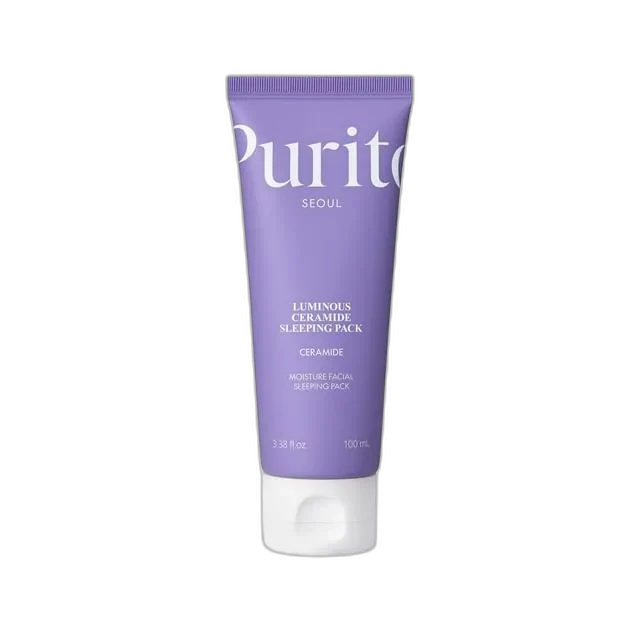
A frosted glass jar has a screw-top lid. Purito Seoul branding is clean and minimal. A small spatula allows hygienic dispensing.
It applies smoothly and feels cool and soothing. The gel-cream texture becomes a thin, breathable layer within minutes. It causes no stinging, tingling, or adjustment period. Most users see softer, plumper skin the next morning after the first use.
3-4 months with nightly use on face and neck
12 months
All Year
The backstory.
The Dermide line represents Purito's core competency — centella-based barrier repair. While the brand's sunscreen scandal grabbed headlines, their cica formulations have always been the quiet strength of the lineup. This sleeping pack distills that expertise into an overnight treatment designed to undo the accumulated damage of a full day.
About Purito
Emerging Brand (2–5 years)Purito launched in 2017 as a centella-focused K-beauty brand. Following a 2020 SPF testing scandal, the brand rebranded to Purito Seoul with stricter formulation and testing standards. Centella and cica products remain the brand's core strength.
Common myths.
Sleeping packs are just heavy moisturizers. You do not need them if you already moisturize.
This sleeping pack seals preceding skincare layers to reduce transepidermal water loss during sleep. Its centella triterpenes and ceramide NP repair skin more than a standard moisturizer; it is a treatment step, not just extra moisture.
Centella products are only useful for acne-prone skin.
Centella's triterpenes (madecassoside, asiaticoside) reduce inflammation and heal wounds. Evidence shows they work for eczema, rosacea, and general barrier compromise — not just acne. This formula targets overnight barrier repair for sensitized skin.
FAQ.
Can I use the Purito Dermide Cica Barrier Sleeping Pack every night?
Yes. This fragrance-free formula uses centella and ceramide NP for nightly use. Oily or combination skin types may use it 2-3 times per week. Dry and sensitive skin types benefit most from nightly application.
Will this sleeping pack clog pores or cause breakouts?
The formula lacks known comedogenic ingredients. The squalane and jojoba oil base mimics skin's natural sebum. However, those with fungal acne should be cautious; some oils and esters in the formula feed Malassezia yeast.
Can I use the Purito Dermide Cica Sleeping Pack with retinol?
Yes — this pairing works well. Apply your retinol treatment first, let it absorb, then seal with the sleeping pack. The centella triterpenes and ceramide NP buffer retinol-induced irritation while the occlusive layer prevents dryness.
Does the Purito Dermide Cica Barrier Sleeping Pack help with rosacea?
The four centella triterpenes (madecassoside, asiaticoside, madecassic acid, asiatic acid) have documented anti-inflammatory properties relevant to rosacea. Users with rosacea consistently report less morning redness after overnight use, but it is not a treatment for the underlying condition.
Is this sleeping pack moisturizing enough for very dry skin?
For moderately dry skin, yes — especially when layered over a hydrating serum. For very dry or winter-parched skin, you may want to apply a richer moisturizer underneath first, then use this as a sealing layer on top.
Community
What the community says.
"Noticeably calmer, less irritated skin by morning"
"Lightweight gel-cream texture that doesn't feel heavy or suffocating"
"Absorbs well without leaving greasy residue on pillowcases"
"Effective at reducing redness and strengthening barrier over time"
"Fragrance-free and gentle enough for eczema-prone skin"
"Generous 80ml size lasts several months"
"May not provide enough moisture for very dry or winter-parched skin"
"Jar packaging is less hygienic than a tube or pump"
"Only one ceramide compared to more complex multi-ceramide formulas"
"Can feel slightly tacky before fully absorbing"